DD
MM
YYYY

PAGES

DD
MM
YYYY

spot_img

PAGES

Home Blog Page 779

AI in Marketing 2025: Widespread Adoption, Growing Concerns, and Productivity Gains

0

As the wave of artificial intelligence is rising, affecting industry after industry, marketing is undoubtedly at the forefront of this transformation. To gain a comprehensive understanding of the integration of AI in marketing processes, Outcomes Rocket surveyed 1,229 marketers across various functions and company sizes. The results provide a clear image of a rapid development that sooner or later will become inseparable from the functioning of marketers, generation, and planning.

According to Outcomes Rocket research, AI implementation is transformational at scale, but it is not uniform. AI offers extraordinary opportunities; however, it also raises apprehension about accuracy, creative processes, and employment opportunities. Since the emergence of generative AI applications such as ChatGPT, the current embrace of agentic AI, the survey tracks the ways in which marketers are evolving into this new era.

The survey captures a diverse range of marketers, reflecting various professional levels and organization sizes. Around 28.4% of the participants were entry-level marketers, followed by medium-level professionals at 47.6%, senior professionals at 17.1%, C-level executives at 4.4% and at the last is 2.5% of other roles.

Regarding organization size, 43.6% of the respondents represent small businesses with 1-50 employees, 30.1% the size of medium-sized organizations with 51-250 staff, and 26.2% are the representation of large organizations with 251 and above employees.

AI adoption in marketing

The most impressive part is that 89.5% of marketers are already including AI into their processes, emphasizing how widespread this tool has become. This rate of adoption ranges across all levels and the size of organizations, especially the small ones that extensively use it to develop a competitive advantage.

Generative AI dominates the toolkit

Out of all AI technologies currently integrated into marketing, generative AI stands out as the most widely adopted, with 93.5% of marketers being active users of these tools. This is not a surprising figure, given the importance of content creation within marketing alone, and the rise of this specific method in the last few years due to the introduction of social media.

ChatGPT, Jasper, and Copy.ai are some examples that fall under this category. They allow marketers to compose their blog posts, create ad copy, brainstorm campaign ideas, and even create visuals, and in many cases, within a few minutes.

Coming in as the second is data analytics AI. Around 61.9% of the marketers have adopted platforms such as Google Analytics, Tableau, or Looker to help them obtain insights using information on customer behaviour, campaign effectiveness, and web traffic.

In the generative AI sector, ChatGPT is the dominant force since 94.8% of generative AI users say that it is their primary tool. Its user-friendly interface, a set of powerful features, and its cross-disciplinary potential have earned it a place as a ready-to-go resource among both low-level marketing personnel and senior strategists.

Generative AI is mainly applied to create content: 82.4% of marketers are utilizing it to write articles, create social media captions, develop creatives, and generate ideas like headlines or taglines. However, that is not their limit, with data analysis, research, and personalization coming very close behind.

Agentic AI: still early, but growing interest

Only 24.3% of marketers have used agentic AI, which is capable of executing marketing campaigns with minimal human input. However, the market has been seeing positive improvement with rising awareness and experimentation. One in every three (33%) respondents indicates that their organization has already implemented or tried agentic AI, meaning that this movement should be closely observed in the next 12 to 24 months.

Global Markets Rattle as Trump Announces New Wave of Tariffs

0

U.S. President Donald Trump’s sweeping new wave of tariffs—described as the most aggressive trade intervention since the 1930s—has triggered global market turmoil and sent dozens of trading partners scrambling to negotiate exemptions or better terms.

The new policy, which imposes import duties as high as 50%, comes into effect August 7 and is already redrawing the map of global trade.

According to a presidential order released Thursday, 69 countries will face import duties ranging between 10% and 41%, pushing the U.S. effective tariff rate from 2.3% to nearly 18%, analysts at Capital Economics said.

The White House argues the tariffs are part of a broader effort to rebalance trade and protect national security. But for many nations—and investors—the move is an economic shock that is already reverberating across industries and global equity markets.

Market Reaction and Job Shock

The immediate fallout was sharp. U.S. stocks plunged, with the Dow Jones Industrial Average closing down 1.23%, the S&P 500 falling 1.6%, and the Nasdaq tumbling 2.24%. European stocks were hit even harder: the STOXX 600 sank 1.89%, reflecting fears of an escalating trade war.

Market anxiety was amplified by a disappointing U.S. jobs report. July employment numbers came in weaker than expected, and June’s figures were revised downward, signaling a possible slowdown in the labor market. Trump responded by ordering the firing of Erika McEntarfer, the commissioner of the Bureau of Labor Statistics, and alleged—without offering evidence—that the job numbers were “rigged.”

Who’s Hit—and Who’s Relieved

Among the hardest-hit countries:

  • Switzerland, stunned by a 39% tariff, is pushing for emergency negotiations. “We are really stunned,” said Jean-Philippe Kohl of Swissmem, which represents Switzerland’s mechanical and electrical engineering sector.
  • Canada faces a 35% tariff on goods tied to fentanyl-linked restrictions, up from 25%. Trump accused Ottawa of failing to help stop illicit drug flows.
  • Brazil was slapped with a 50% tariff on select exports.
  • India, facing a 25% duty that could impact $40 billion in exports, has opened talks with Washington in a bid to de-escalate.
  • Taiwan, which got a 20% rate, said the tariff was “temporary” and expected a reduction after further discussions.
  • South Africa faces a 30% levy, prompting its Trade Minister, Parks Tau, to call for “real, practical interventions” to shield jobs.
  • Some Southeast Asian nations, however, saw unexpected relief. Thailand’s tariff was cut from a threatened 36% to 19%, a move praised by Finance Minister Pichai Chunhavajira as one that “boosts investor confidence and opens the door to economic growth.”
  • Australia was also spared deeper cuts, with its minimum 10% tariff maintained, giving its exporters a relative edge in U.S. markets, according to Trade Minister Don Farrell.

Still, most analysts were clear-eyed about the broader impact. “There are no real winners in trade conflicts,” said Thomas Rupf, CIO Asia at VP Bank in Singapore. “The tariffs hurt the Americans and they hurt us.”

Businesses Scramble to Cope

Some companies are already searching for ways to soften the blow. European firms in the fashion and cosmetics sector, including L’Oreal, are exploring an obscure U.S. customs loophole known as the “First Sale” rule. This allows import duties to be applied to a product’s factory price rather than its final retail price, significantly lowering costs in some cases.

Others are looking to restructure supply chains or seek trade diversification. Canadian Prime Minister Mark Carney called Trump’s decision “deeply disappointing” and promised to protect Canadian jobs and pivot to new markets.

“We’re not going to wait passively while punitive tariffs harm our industries,” he said.

Trump administration officials defended the tariffs as a calculated tool to extract better trade deals. “The uncertainty with respect to tariffs was critical to getting the leverage we needed,” said Stephen Miran, chair of the Council of Economic Advisers, during an interview on CNBC.

That leverage, Miran argued, had already produced “monumental” deals in recent weeks, though details remain sketchy. The European Union, for instance, is still awaiting further orders from Trump’s office to finalize carve-outs on cars and aircraft after reaching a framework agreement last Sunday.

There is also confusion about how the White House will define and enforce transshipment rules—a practice in which exporters route products through third countries to mask their origin. The new order includes provisions for 40% tariffs on shipments deemed to have violated these rules, particularly those hiding Chinese origins.

While full effects will take time to cascade through the economy, early signs show the tariffs are already inflating prices. The U.S. Commerce Department reported that prices for home furnishings and durable household goods rose 1.3% in June, the biggest monthly increase in over two years. That jump is widely attributed to rising import costs due to previous rounds of tariffs.

Outlook Shows A Redrawn Trade Map

Trump’s latest tariff offensive marks a dramatic shift in how the U.S. engages economically with the world. Though framed as an effort to restore fairness and economic sovereignty, the rollout has jolted markets, upset allies, and raised fears of supply chain disruptions.

With the tariffs set to take effect August 7 at 04:01 GMT, many countries are still in the dark on key implementation details. Meanwhile, businesses from winemakers in Germany’s Moselle Valley to tech exporters in Taiwan are bracing for the fallout.

While Trump’s team insists the approach will yield favorable deals, many question whether the cost—in higher prices, disrupted trade, and global uncertainty—will prove worth the gamble.

U.S. SEC Announces ‘Project Crypto’ To Move US Capital Markets On-chain

0

SEC Chair Paul Atkins announced “Project Crypto,” a bold initiative to modernize U.S. securities regulations and integrate blockchain technology into capital markets. The initiative aims to position the U.S. as the global leader in blockchain finance by enabling on-chain trading, custody, and fundraising while aligning with President Trump’s vision to make America the “crypto capital of the world.”

Replace outdated, analog-era rules with clear, blockchain-native policies. This involves drafting new securities rules for tokenized assets like stocks and bonds, and providing exemptions and safe harbors for crypto fundraising methods such as ICOs and airdrops.

Move away from the vague Howey Test to establish “bright-line rules” distinguishing digital collectibles (NFTs), stablecoins, and investment contracts, with most crypto assets not classified as securities. Update regulations to support self-custody wallets and institutional providers, facilitating blockchain-based settlement and smart contract use.

Introduce “innovation exemptions” to allow startups to launch products with principles-based compliance, reducing legal uncertainty and encouraging crypto firms to operate in the U.S. rather than offshore. Authorize platforms combining securities and non-securities trading, staking, and lending under a single regulatory framework, fostering competition and growth in the digital asset ecosystem.

The initiative builds on the GENIUS Act for stablecoin oversight and recommendations from the President’s Working Group on Digital Asset Markets. Led by Commissioner Hester Peirce’s Crypto Task Force, Project Crypto aims to shift the SEC from regulation-by-enforcement to a clear, supportive framework, addressing past criticisms of stifling innovation.

Atkins emphasized that the SEC will not let U.S. markets stagnate while global innovation advances, with plans to modernize rules like Reg NMS and support tokenized securities to keep pace with global trends. This move has sparked interest from firms like BlackRock, Coinbase, and JPMorgan, who are already exploring tokenized assets and on-chain infrastructure.

Tokenizing securities (stocks, bonds, etc.) on blockchain could streamline trading, settlement, and custody, reducing costs and delays. Blockchain’s near-instant settlement (T+0) could replace the current T+2 system, boosting liquidity and reducing counterparty risk. Clear rules for tokenized assets and DeFi platforms could democratize access to investments, enabling retail investors to participate in markets previously dominated by institutions.

By legitimizing on-chain trading and fundraising (ICOs, airdrops), Project Crypto could attract billions in capital to U.S.-based crypto markets, reversing the trend of firms moving offshore to jurisdictions like Singapore or Dubai. Authorizing “super apps” that combine trading, staking, and lending could foster new financial products, spurring competition among platforms like Coinbase, Kraken, and traditional firms like JPMorgan entering the tokenized asset space.

Replacing the Howey Test with clear token classification rules (e.g., distinguishing NFTs, stablecoins, and securities) reduces legal ambiguity, potentially lowering compliance costs and litigation risks for crypto firms. Moving away from regulation-by-enforcement to principles-based compliance via “innovation exemptions” could encourage startups to operate in the U.S., fostering a more predictable regulatory environment.

Modernized custody rules for self-custody wallets and institutional providers could set a global standard, balancing decentralization with investor protection, but may face scrutiny over security and fraud risks. As the U.S. aims to be the “crypto capital,” Project Crypto could shape international standards, pressuring jurisdictions like the EU or Asia to align with U.S. blockchain regulations or risk losing market share.

While the initiative promises to foster innovation, the ambitious scope raises questions about implementation timelines, potential regulatory gaps, and whether the SEC can balance investor protection with decentralization. The success of Project Crypto will depend on the clarity and practicality of the new rules, as well as cooperation with industry stakeholders.

Treepz Expands to North America, Launches Operations in Canada

0

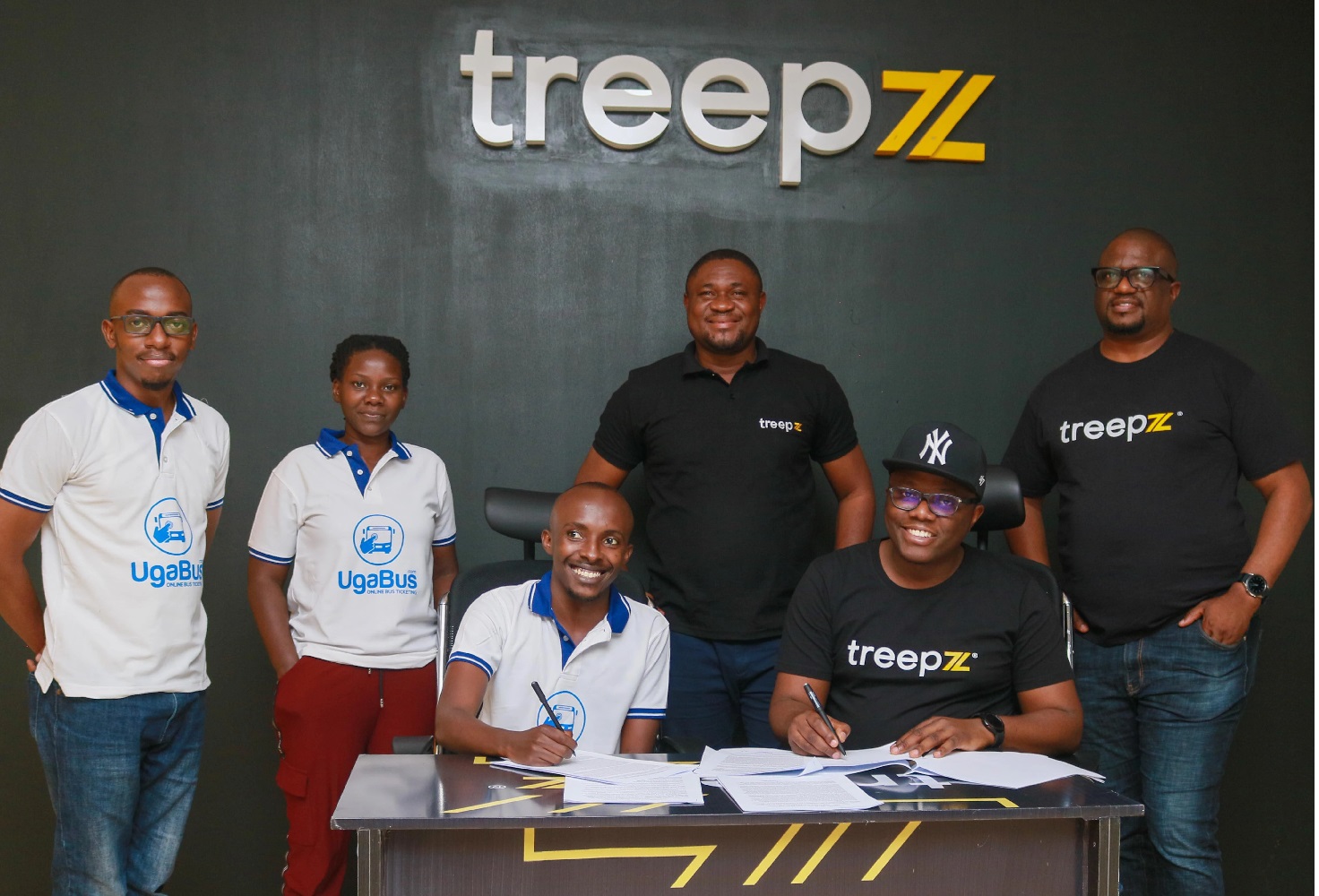
Africa’s leading corporate travel startup Treepz has officially expanded into North America, starting with operations in Canada.

What began as a bold vision to transform mobility across Africa has now crossed continents as Treepz brings its mission of safe, reliable, and convenient transportation to even more people. This milestone is more than just geographical growth; it’s a testament to the team’s resilience, innovation, and hard work, as well as the trust of its partners and community.

With its Canadian launch, the company is opening up new opportunities to connect people, empower drivers, and offer seamless mobility experiences in Canada, just as we’ve done across Nigeria, Ghana, Kenya, and Uganda. Onyeka Akumah, Founder and CEO of Treepz, also shared his excitement at the launch of Treepz in Canada.

In his words,

“The launch of Treepz Canada is a strong positive statement of intent for not just our company but how we represent all African startups. We can truly build globally acceptable and reputable brands right from the streets of Lagos, and Treepz is just one more startup that proves this. We are proud Nigerians who have worked tirelessly to make this happen. So today, I celebrate my co-founders, Johnny and Atums. I celebrate my board of directors, I celebrate my stakeholders and investors, and most importantly, I celebrate my team that supports us. We are now a global brand directly serving customers on 2 continents, including Africa and North America”.

Treepz’s entry into the Canadian market is the result of long-term planning and meaningful relationships built over time. The startup participated in the Techstars Toronto accelerator in 2021, during which CEO Onyeka Akumah first engaged with Mayor Patrick Brown to explore potential expansion opportunities. With Canada’s substantial commuter population and travel volume over 16.5 million daily commuters and 38.7 million international travelers in 2024—Treepz identified a clear opportunity to apply its innovative mobility model in North America.

Treepz’s milestone is a testament to the bold leadership of its founders Onyeka Akumah Enagwolor Johnny John Shaibu and the incredible efforts of our team, partners, and community who continue to drive this vision forward. To commence operations, Treepz announced a 2-year

partnership with the African Impact Initiative, supported by the University of Toronto at its launch of Treepz Canada.

This partnership will see Treepz provide corporate travel solutions to this group, who will be traveling to 4 African countries every year from more than countries globally, including Canada. Treepz will provide all flights, accommodation, experience, and its trademark ground transportation service across South Africa, Kenya, Ghana, and Rwanda.

Treepz was founded in 2019 by four entrepreneurs who were tired of the broken transport system in Africa and wanted to make a change. Starting with a successful car rental app, the founders saw an even greater potential for impact in corporate mobility. This vision led to the creation of Treepz.

Since then, the company has served over 4 million customers, saved 900,000 kg of CO2 emissions, and signed up 688 vehicles. Treepz is backed by prominent investors which include Google, Techstars, ODBA, SOSV, amongst others, and is on a mission to empower 1 million daily commuters with the options to move better in Africa.

TikTok Pro Debuts in Europe as a New App for Charity-Driven Engagement

0
The brand is growing

TikTok has launched a new app, TikTok Pro, in Germany, Spain, and Portugal, unveiling a streamlined version of its main platform that offers a fresh model for digital engagement—this time with a philanthropic twist.

Announced on July 30, 2025, TikTok Pro strips away advertising, e-commerce, and creator monetization while maintaining the familiar short-form video experience that made the original app a global powerhouse. In place of commercial incentives, the app introduces a feature called Sunshine, a reward system that lets users convert their in-app activity into donations made by TikTok to real-world charities.

This marks a notable shift as the company faces increasing pressure from European regulators. With scrutiny intensifying under the Digital Services Act, which imposes strict rules on content moderation, data handling, and algorithmic transparency, TikTok is responding with a socially responsible alternative aimed at rebuilding trust. TikTok Pro, the company says, is designed to “inspire and reward good.”

At the heart of TikTok Pro is the Sunshine Programme, a pilot initiative that transforms ordinary app engagement into meaningful support for nonprofit work. Users generate sunshine points by liking or sharing videos from verified charities, following nonprofit accounts, inviting friends to download the app, or engaging with educational and awareness content. These digital interactions are tallied and redeemed for real donations, all funded directly by TikTok. The program is age-restricted, with only users aged 18 and above permitted to activate sunshine rewards, and daily caps are in place to prevent gaming of the system.

So far, TikTok has partnered with several humanitarian and environmental organizations, including Médecins Sans Frontières, WaterAid, NABU (Germany’s nature conservation group), and Aktion Deutschland Hilft. The company plans to add more charity partners in the coming weeks as it expands the program.

Unlike the flagship app, TikTok Pro does not allow creators to earn income through livestream gifting, branded content, or in-app purchases. There are no shoppable videos or targeted ads. The absence of commercial incentives and revenue-driven features is meant to reset the app’s focus, steering attention away from monetized virality and toward civic engagement, social awareness, and goodwill.

This move appears to be part of a broader strategic pivot for TikTok. By voluntarily launching a non-commercial version of the platform, the company is positioning itself ahead of further regulatory clampdowns in the European Union. Since regulators began investigating TikTok for its influence on youth, the spread of harmful trends like #SkinnyTok, and its in-app shopping expansion, the company has come under repeated fire. TikTok Pro, in this context, functions both as a realignment of priorities and a preemptive response to calls for platform reform.

Despite being a separate app, TikTok Pro retains many of the familiar visual elements of the original. There is a personalized For You feed, a Discover section for trending and educational content, and a familiar scroll-and-watch interface. However, content is curated with a slightly different emphasis, promoting charity, sustainability, wellness, and humanitarian causes over entertainment or trend-based content.

The launch comes at a time when rival social media platforms are also experimenting with alternate content models. Industry watchers have speculated that TikTok Pro could eventually be adapted to serve older users, educators, or civic organizations seeking safer and purpose-driven online spaces. According to analysts, the app could function as a reputational cushion, allowing TikTok to test content formats that emphasize positivity while sidestepping accusations of promoting addictive behavior, commerce-first design, or controversial content.

However, TikTok Pro has its unique challenges. By removing creator monetization, it risks losing the participation of high-quality content makers who drive most engagement on the main app. The separation between TikTok and TikTok Pro may also confuse some users, particularly younger audiences unsure of the difference between the two platforms. And while the Sunshine Programme is well-intentioned, it places a financial burden squarely on TikTok itself, meaning the more the program becomes popular, the more the company will have to pay in donations.

Ultimately, TikTok Pro represents more than a test app—it reflects a new direction in how platforms might align user engagement with public service. In a digital landscape driven by metrics and monetization, the idea of turning scrolls into donations could reframe what social media can be.

However, some analysts say whether TikTok Pro remains a regional experiment or becomes a global initiative will depend on how well users embrace it and how regulators respond.