

DD
MM
YYYY

PAGES

DD
MM
YYYY

spot_img

PAGES

Home Blog Page 7802

Technology will rule Nations and Algorithms will be the Constitutions

0

Over the last few decades, new technology applications have become very central to the process of socioeconomic development of nations.  Successful ones like information and communication technologies have accelerated productivity by integrating people, processes and tools cheaply and efficiently. They continue to revolutionize all aspects of human existence, both in the public and private sectors, by connecting individuals, organizations and countries electronically in mutually dependent global relationships.


Increasingly, the world is experiencing new dimensions in knowledge acquisition, creation, dissemination and usage. Microelectronics, the engine of modern commerce and industry, directly or indirectly, is enabling these revolutionary changes. When this technology advances, a dawn emerges in global economy in speed, efficiency and capacity. Yet, despite its pervasive impacts on daily lives and businesses, it remains to be diffused in Africa. A vision of knowledge workers cannot be achieved in this continent without a creative microelectronics program.


Though software technology has been advancing in the developing countries, the hardware is largely non-existent. Inability of these nations to develop competence in hardware has stalled their institutional capacities to compete in the world.

Around the world, technical education has become a vital instrument for wealth and national prosperity. In any developed nation, this education occupies a key strategic position. It is understood that new (successful) technologies are important to a healthy economy. Consequently, technical education is well funded to drive innovation in the economy. Arguably, it is hard to see any successful economy without a sound educational system. No wonder, some of the most innovative and revolutionary technologies are created in the university dorms: the Google, the Yahoo, the Facebook, the Microsoft, the Dell, and so on and on. University is the epi-center of raw dreams where minds are liberated and prepared to shape the world. It remains an organic system that sustains national policy and vision and no succession plan can survive without those students and professors.


Today, there is a limit to national wealth creation without science and technology. Experiences have shown that natural resources in form of crude oil, diamond, tin and others may not create the needed national growth for stability and prosperity in many African nations. An alternative would be to support technological innovation if the continent must survive the intense competition of the 21st century fueled by globalization. Technology diffuses only when it is developed or acquired. For many years, Africa has been slow to the development of the most pervasive industry of our time- semiconductor. The major challenge has been the human capital to drive the industry.

At AFRIT, we are engineers who major in semiconductor related areas. We understand the concepts which are used to build computer processors and other cutting edge technologies. We are poised to facilitate the diffusion of new technologies in Africa through quality training and consulting. Providing this service bridges the knowledge gap. This is not IT, which in many African nations is synonymous with technology. With all its glory, IT is an offspring of semiconductors. It cannot exist independently of semiconductors. Above all, the IT in Africa is not the creative IT, but the consumptive IT. We need the wealth that comes from  IT creation and that is what AFRIT stands. We stand that Africa should have technology policy that would have broad perspectives involving medical, geophysical, agricultural technology, semiconductors and other technologies and not just information technology which has been promoted by the media and governments disproportionally.

Our operational logistics is very simple. Invite us to develop a curriculum in your institution; organize a workshop/seminar, educate your students/staff on the use of VLSI CAD tools and software, program robots, design in FPGA, VHDL and many more. With our skills, we would train these students/staff with current and comprehensive programs which would enhance performance and capabilities. We understand the spirit of this century. It is a century where “Technology will rule Nations and Algorithms will be the Constitutions”.

Imagine firms outsourcing jobs to Africa in 2020 because we have talented labour force with the advantage of competitive wage structure when compared with India and China. It cannot be wished; someone has to make it happen. Join us; and let’s get our young men and women back to the labs.


This is the mission of AFRIT with this Ten Year Strategic Plan.
Wireless Charging Revenue To Reach $23.7 Billion in 2015

0

We all hate the cords and the problems they bring. They cluster everywhere. Seeing that opportunity, portable electronics markets have since gone to work to make most of our devices to be charged wirelessly. IHS iSuppli estimates that the market will grow 616% this year.

The wireless charging market is set to soar this year to $885.8 million, up more than sevenfold from $123.9 million in 2010. The massive upsurge this year of wireless charging will dwarf the market’s 60 percent expansion attained in 2010, the first year of meaningful growth for the space, and also will tower above next year’s sizable 276 percent increase. Growth then will begin to taper off, slowing to a still-robust 48 percent in 2015 when revenue hits $23.7 billion.

According to the report, the  market for wireless charging is divided into three segments: product-specific solutions, aftermarket receivers and aftermarket charging pads or stations.  The adoption of this technology has not been great because of cost implications associated with the technology.

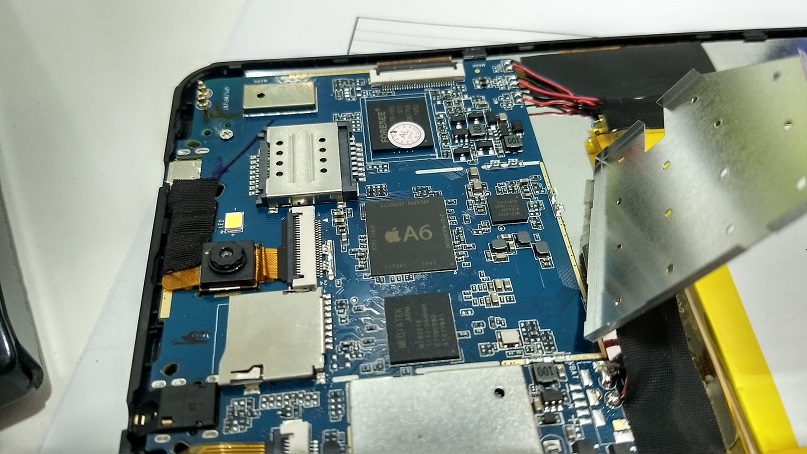
So there is a bottleneck, though wireless charging is poised for major growth in 2011 and beyond. It will take several years for manufacturers to fully implement the technology in their devices, IHS believes. In particular, manufacturers will need to consider how to integrate wireless charging into the design of printed circuit boards, and significant adoption of wireless charging technology will be needed to drive down costs.

Falun Gong Practitioners Sue Cisco Over ‘Golden Shield’ Firewall Scandal

0

While the architect of China’s infamous Internet Firewall was pelted with a shoe by a citizen, a lawsuit was being filed in San Francisco against Cisco for its alleged part in it. Practitioners of a religion known as Falun Gong filed the complaint on recently against Cisco, its CEO John Chambers, two of its China executives, and others. The suit claims that Cisco helped design the Chinese Internet surveillance/censorship system known as the Golden Shield.


A lawsuit filed in US federal court in the northern California city of San Jose calls for the computer networking gear giant to pay damages and stop helping China find Falungong supporters. Cisco “designed, supplied and helped maintain a censorship and surveillance network known as Golden Shield” used by Chinese officials to identify Falungong practitioners who were detained, tortured and sometimes killed, a lawyer for the group said in court documents filed last week.


It also accuses Cisco of using inflammatory language in order to convince Chinese officials to purchase its products, of helping to design the system and as a result, Falun Gong were found, tortured and killed. Cisco denies the validity of the suit, saying in a statement, “There is no basis for these allegations against Cisco, and we intend to vigorously defend against them.  Cisco does not operate networks in China or elsewhere, nor does Cisco customize our products in any way that would facilitate censorship or repression.  Cisco builds equipment to global standards which facilitate free exchange of information, and we sell the same equipment in China that we sell in other nations worldwide in strict compliance with US government regulations.”


The civil lawsuit seeks unnamed financial damages from Cisco. In a 52-page court document, the suit says:


“Cisco refers to the Golden Shield system in its internal literature as ‘Policenet.’ As a direct result of the Defendants’ creation, development, and maintenance of the Golden Shield technology with Chinese authorities, Plaintiffs, Falun Gong practitioners, have suffered severe and gross abuses, including false imprisonment, torture, cruel assault, battery, and wrongful death, for which judicial relief is warranted in the form of compensatory and punitive damages. “


The Golden Shield, and the role of Cisco and other U.S. tech giants in it, has been an ongoing battle for years. The Foundation for Defense of Democracy hosts a transcript from a Congressional hearing on the matter from April 19, 2006, given by a former consultant to American corporations operating in China and a former vice-chair of the Government Relations Committee for the American Chamber of Commerce Beijing. The transcript says:


“Three companies were competing for the Chinanet contracts in 1997: Bay Networks, Sun Microsystems, and Cisco Systems. Cisco prevailed by selling the authorities a “firewall box” at a significant discount, which would allow the Chinese authorities to block the forbidden web. Cisco’s General Counsel denies selling any special configuration.


Chinese engineers who actually worked on the firewall project are equally adamant that it was custom-made. Either way, as early as 1998, any industry-wide restraints on the transfer of censorship technologies were already being weighed against Cisco’s capture of 80% of the China router market, an unprecedented success story. Yet Cisco’s success may be more closely linked to a Cisco manager’s statement that ‘We have the capability to look deeply into the packets.'”


In 2008, a Cisco marketing PowerPoint presentation surfaced. On slide #57 of the 90-slide PowerPoint, created in 2002, during a section where the slides were covering the Golden Shield project, it described the project’s three purposes …To crack down on Internet crimes, To ensure the security of public Internet services, and To combat the Falun Gong cult and other hostiles.


Cisco distanced itself from the slides at the time, saying they were to help educate its employees about the Chinese landscape. So then, why the lawsuit now? Perhaps because in the past few months, the country’s censorship has escalated as online protests threatening revolution have. In March, Google said the Chinese government was blocking Gmail access. VPNs were also reportedly blocked.


If Cisco knew the Chinese government would be using this technology to ultimately hunt down and hurt its citizens, how much responsibility does it have in the matter? Cisco clearly understood the reality of Chinese censorship.

The Nature of Student Undergraduate Projects in Nigeria

1


I have a real problem with the Nigerian educational system’s approach to student undergraduate project. The basic truth is this, the aim for the student is simply to graduate, and the aim for some lecturers is simply to maximize their last chance to frustrate the student, while for others it’s just the student’s last assignment on campus.


Now I strongly believe this has to change.


Solution Based projects

The fundamental technologies that brought about the creation of the semiconductor industry at Stanford University many years ago were the result of student works. If the industry is to collaborate with the institutions, the work cannot be left to the lecturers, it must be the students who transform industrial challenges to project works. Projects need to be selected based on relevance to industry and the community, basically they must be solution based.


Project Continuity

We know things are not at their best in our educational sector, equipments are not sufficient, and students don’t have access to all the information and knowledge they need. Due to this, a real solution based project will most likely be too much for a student or group in one session to start and finish; but if the essence of the project shifts from “finishing at all cost” to making a significant contribution to the work, it no longer becomes a problem to finish the task, simply do your best to get a significant head way, and leave the rest of the work to the next set of students coming in the following year.


This is how student projects should be handled, why don’t we handle them that way here?


I know this is happening in some quarters, like my company is in collaboration in a number of institutions in Lagos, having students work on projects in the energy sector that are significant to the transformation in that sector that we are. We need a whole lot more of it, and we need it FAST!


In Q1, Excessive Inventory Mitigated Japan Disaster In The Global Semiconductor Sector

0

Usually the problem is having excessive inventory especially in this era  of Just In Time which was popularized by the Japanese. Yet, that excessive inventory was the key fact that saved the semiconductor industry from the supply shock after the Japan disaster  in the last few months, IHS iSuppli research indicates. The key point is that days of inventory stood at 80.3 in Q1 of 2011 and that was able to keep the world semi moving without undue disruption from the aftermath of the earth quake.

“Efforts by suppliers to build inventory during the seasonally slow period from the fourth quarter of 2010 through the first quarter of 2011 proved to be fortuitous,” said Sharon Stiefel, analyst for semiconductor market intelligence at IHS. “These efforts resulted in a two- to-four-week cushion of raw materials, work-in-process goods and finished products, which came in handy when chip supplies were disrupted by the Japan disaster. While a large inventory overhang can be a negative development for the semiconductor industry—fueling excess supply, dampening pricing and reducing profits—it turned out to be a positive factor during the first quarter as the overall industry contended with supply shortages.”

And because the Japan disaster occurred so late in the first quarter, with the quake hitting on March 11, the number of weeks of direct disruption to the supply chain was limited during the first quarter, Stiefel added.

The report continues:

The second quarter may also experience a more muted effect from the Japan disaster than previously thought. Many semiconductor manufacturing facilities initially damaged or affected by lack of steady electricity supply have returned to normal operations, narrowing the negative impact on semiconductor revenue during the second quarter. And in cases where damage was severe, manufacturing has been transferred to other company facilities or to outside foundries.

Notice that the Days of inventory (DOI) among chip suppliers—excluding memory companies—was 80.3 days in the plot at the end of Q1, about 1.1% up from Q4 of 2010 which was 79.4%. This inventory which was close to record high was enough to mitigate the supply chain disruption from Japan disaster.