DD
MM
YYYY

PAGES

DD
MM
YYYY

spot_img

PAGES

Home Blog Page 782

TikTok Pro Debuts in Europe as a New App for Charity-Driven Engagement

0
The brand is growing

TikTok has launched a new app, TikTok Pro, in Germany, Spain, and Portugal, unveiling a streamlined version of its main platform that offers a fresh model for digital engagement—this time with a philanthropic twist.

Announced on July 30, 2025, TikTok Pro strips away advertising, e-commerce, and creator monetization while maintaining the familiar short-form video experience that made the original app a global powerhouse. In place of commercial incentives, the app introduces a feature called Sunshine, a reward system that lets users convert their in-app activity into donations made by TikTok to real-world charities.

This marks a notable shift as the company faces increasing pressure from European regulators. With scrutiny intensifying under the Digital Services Act, which imposes strict rules on content moderation, data handling, and algorithmic transparency, TikTok is responding with a socially responsible alternative aimed at rebuilding trust. TikTok Pro, the company says, is designed to “inspire and reward good.”

At the heart of TikTok Pro is the Sunshine Programme, a pilot initiative that transforms ordinary app engagement into meaningful support for nonprofit work. Users generate sunshine points by liking or sharing videos from verified charities, following nonprofit accounts, inviting friends to download the app, or engaging with educational and awareness content. These digital interactions are tallied and redeemed for real donations, all funded directly by TikTok. The program is age-restricted, with only users aged 18 and above permitted to activate sunshine rewards, and daily caps are in place to prevent gaming of the system.

So far, TikTok has partnered with several humanitarian and environmental organizations, including Médecins Sans Frontières, WaterAid, NABU (Germany’s nature conservation group), and Aktion Deutschland Hilft. The company plans to add more charity partners in the coming weeks as it expands the program.

Unlike the flagship app, TikTok Pro does not allow creators to earn income through livestream gifting, branded content, or in-app purchases. There are no shoppable videos or targeted ads. The absence of commercial incentives and revenue-driven features is meant to reset the app’s focus, steering attention away from monetized virality and toward civic engagement, social awareness, and goodwill.

This move appears to be part of a broader strategic pivot for TikTok. By voluntarily launching a non-commercial version of the platform, the company is positioning itself ahead of further regulatory clampdowns in the European Union. Since regulators began investigating TikTok for its influence on youth, the spread of harmful trends like #SkinnyTok, and its in-app shopping expansion, the company has come under repeated fire. TikTok Pro, in this context, functions both as a realignment of priorities and a preemptive response to calls for platform reform.

Despite being a separate app, TikTok Pro retains many of the familiar visual elements of the original. There is a personalized For You feed, a Discover section for trending and educational content, and a familiar scroll-and-watch interface. However, content is curated with a slightly different emphasis, promoting charity, sustainability, wellness, and humanitarian causes over entertainment or trend-based content.

The launch comes at a time when rival social media platforms are also experimenting with alternate content models. Industry watchers have speculated that TikTok Pro could eventually be adapted to serve older users, educators, or civic organizations seeking safer and purpose-driven online spaces. According to analysts, the app could function as a reputational cushion, allowing TikTok to test content formats that emphasize positivity while sidestepping accusations of promoting addictive behavior, commerce-first design, or controversial content.

However, TikTok Pro has its unique challenges. By removing creator monetization, it risks losing the participation of high-quality content makers who drive most engagement on the main app. The separation between TikTok and TikTok Pro may also confuse some users, particularly younger audiences unsure of the difference between the two platforms. And while the Sunshine Programme is well-intentioned, it places a financial burden squarely on TikTok itself, meaning the more the program becomes popular, the more the company will have to pay in donations.

Ultimately, TikTok Pro represents more than a test app—it reflects a new direction in how platforms might align user engagement with public service. In a digital landscape driven by metrics and monetization, the idea of turning scrolls into donations could reframe what social media can be.

However, some analysts say whether TikTok Pro remains a regional experiment or becomes a global initiative will depend on how well users embrace it and how regulators respond.


Ethereum’s 10-Year Plan Dubbed ‘Lean Ethereum’ Positions It As A Leader In Scalability, Security, and Resilience

0

Ethereum’s 10-year plan, dubbed “Lean Ethereum,” was unveiled by researcher Justin Drake, aiming to maintain the network’s 100% uptime while scaling performance and implementing quantum-resistant defenses.

The plan targets 10,000 transactions per second (TPS) on Layer 1 and 1 million TPS on Layer 2, leveraging hash-based cryptography, real-time zero-knowledge virtual machines (zkVMs), and data availability sampling. It includes upgrades across three Layer 1 sublayers:

Beacon Chain 2.0 for rapid finality and security, Blobs 2.0 for post-quantum data efficiency, and EVM 2.0 for optimized execution, possibly using RISC-V. These changes aim to protect Ethereum from quantum computing threats and ensure resilience against nation-state interference, while preserving decentralization and achieving full chain verification across devices.

The vision emphasizes minimalism, modularity, and long-term security to sustain Ethereum’s role as a global value transfer network. Ensuring uninterrupted service strengthens Ethereum’s appeal for decentralized finance (DeFi), enterprise applications, and global payments, potentially attracting more institutional and retail users.

Achieving 10,000 TPS on Layer 1 and 1 million TPS on Layer 2 could rival centralized payment systems like Visa, enabling Ethereum to handle global transaction volumes. This could drive mass adoption for dApps, NFTs, and tokenized assets. Implementing hash-based cryptography and other post-quantum measures future-proofs Ethereum against quantum computing threats, ensuring the security of funds and smart contracts.

Early adoption of quantum resistance could set a standard for other blockchains, pressuring competitors to follow suit or risk obsolescence. Features like full chain verification on consumer devices (e.g., laptops, phones) and data availability sampling enhance decentralization, allowing more users to run nodes and participate in the network. This could counter centralization risks from staking pools or large validators.

The minimalist and modular approach (e.g., Beacon Chain 2.0, Blobs 2.0, EVM 2.0) simplifies development and maintenance, potentially lowering barriers for developers and node operators. Ethereum’s plan could widen its moat against rivals like Solana, Cardano, and Polkadot, which also aim for high TPS and scalability. By combining quantum defense, uptime guarantees, and Layer 2 scaling, Ethereum may solidify its dominance in smart contract platforms.

The focus on real-time zkVMs and RISC-V could attract developers from other ecosystems, fostering innovation in dApps and Layer 2 solutions. Higher throughput and efficiency could reduce transaction fees on Layer 2, making Ethereum more cost-effective for users. However, Layer 1 fees may remain high due to its focus on security and data availability.

Continued emphasis on energy-efficient proof-of-stake (post-Merge) aligns with environmental concerns, appealing to ESG-focused investors and users. Defending against nation-state interference (e.g., via quantum attacks or censorship) ensures Ethereum remains a neutral, global platform. This could make it a preferred infrastructure for cross-border finance and decentralized governance.

The plan prioritizes Layer 2 for ultra-high TPS (1 million), while Layer 1 focuses on security and modest scaling (10,000 TPS). This may frustrate users and developers who prefer low-cost, high-speed transactions directly on Layer 1, as Layer 2 solutions like rollups often involve trade-offs. Layer 2 ecosystems (e.g., Arbitrum, Optimism) may dominate user activity, potentially creating a two-tiered Ethereum.

While the plan emphasizes decentralization (e.g., lightweight verification), scaling to 1 million TPS via Layer 2 and relying on advanced tech like zkVMs could concentrate development and infrastructure in the hands of well-funded teams or entities. Large staking providers or rollup operators might gain outsized influence.

Community debates over governance and control may intensify, with fears that Ethereum could drift toward oligarchy despite its decentralized ethos. Smaller validators or node operators may struggle to keep up with technical demands. The shift to EVM 2.0, possibly using RISC-V, and the integration of real-time zkVMs require developers to adapt to new tools and paradigms. This could create a skills gap, favoring those with resources to retrain while sidelining smaller or less-funded developers.

Ethereum could attract capital and talent from less-prepared competitors, but it may also face pressure to assist smaller chains in transitioning, potentially straining its resources or focus. High Layer 1 fees and the cost of interacting with advanced Layer 2 solutions (e.g., rollup gas fees) could exclude less-wealthy users, particularly in developing regions. Meanwhile, institutional players with deep pockets may dominate high-value use cases.

However, it risks deepening divides between Layer 1 and Layer 2 users, centralized and decentralized stakeholders, advanced and legacy developers, and Ethereum versus its competitors. Bridging these divides will require careful governance, inclusive design, and community engagement to ensure Ethereum remains a unified, accessible platform while achieving its ambitious goals.

Ether Machine’s Ascent As A Major ETH Holder Signals Ethereum’s Growing Mainstream Appeal

0

The Ether Machine has indeed surpassed the Ethereum Foundation to become the third-largest institutional holder of Ethereum (ETH). It recently acquired 15,000 ETH for $56.9 million, bringing its total holdings to 334,757 ETH, valued at approximately $1.28 billion. This move has positioned it ahead of the Ethereum Foundation, which holds around 234,000 ETH.

The purchase, timed with Ethereum’s 10th anniversary, reflects The Ether Machine’s long-term strategy to build a robust institutional-grade ETH treasury, with plans for further acquisitions using its remaining $407 million reserve. The firm, formed through a merger between The Ether Reserve, LLC and Dynamix Corporation, aims to list on NASDAQ under the ticker “ETHM” in Q4 2025.

This shift highlights growing institutional confidence in Ethereum’s role in digital finance, driven by its staking and DeFi capabilities. The Ether Machine’s aggressive accumulation of 334,757 ETH ($1.28 billion) signals strong institutional belief in Ethereum’s long-term value, particularly its role in decentralized finance (DeFi), staking, and smart contract infrastructure. This could attract more institutional players, boosting Ethereum’s legitimacy and market stability.

The planned NASDAQ listing under “ETHM” in Q4 2025 could further bridge traditional finance and crypto, potentially drawing in retail and institutional investors seeking exposure to ETH without direct custody. Large-scale ETH acquisitions, like the 15,000 ETH purchase for $56.9 million, reduce circulating supply, which could exert upward pressure on ETH prices, especially if demand grows. This aligns with Ethereum’s deflationary mechanisms post-EIP-1559, where ETH is burned with network activity.

However, concentrated holdings by institutions like The Ether Machine could increase market volatility if they liquidate positions, especially in a bearish market. The Ethereum Foundation, historically a steward of Ethereum’s development, now holds less ETH (~234,000) than The Ether Machine. This shift suggests a potential rebalancing of influence, where profit-driven institutions may prioritize financial strategies over the Foundation’s focus on protocol development and decentralization.

The Ether Machine’s $407 million reserve for further ETH purchases could amplify its influence, potentially shaping market sentiment and Ethereum’s adoption trajectory. With significant ETH holdings, The Ether Machine could become a major player in Ethereum’s proof-of-stake (PoS) network, where staked ETH secures the blockchain. Large-scale staking by institutions could enhance network security but also centralize validator power, raising concerns about governance concentration.

Entities like The Ether Machine focus on building treasuries, maximizing returns, and integrating with traditional finance (e.g., NASDAQ listing). Their strategies often prioritize profit and market influence, which may not always align with Ethereum’s open-source, decentralized vision. The Ethereum Foundation and grassroots developers emphasize protocol upgrades (e.g., sharding, rollups), accessibility, and decentralization. Their focus is on long-term scalability and inclusivity, often funded by ETH grants rather than profit motives.

Institutional involvement may legitimize Ethereum for traditional investors but risks alienating retail users who value crypto’s anti-establishment roots. Large ETH accumulations could drive prices higher, making it harder for smaller investors to participate. The Ethereum Foundation’s reduced holdings (relative to institutions) may limit its ability to fund development, potentially slowing progress on upgrades like Ethereum 2.0 scaling solutions, which the community sees as critical for accessibility.

The crypto community often views institutions with skepticism, fearing they dilute the ethos of decentralization. The Ether Machine’s corporate merger (The Ether Reserve, LLC and Dynamix Corporation) and NASDAQ ambitions amplify this tension, as they represent a corporate encroachment into a historically libertarian space.

While institutional investment could drive price appreciation and network security, it risks centralizing influence and diverging from Ethereum’s original vision. The Ethereum Foundation’s role as a counterbalance will be crucial to maintain equilibrium, but its reduced holdings may limit its clout. The ecosystem’s future hinges on whether these forces can coexist without compromising Ethereum’s core principles of decentralization and innovation.

“How Can We Trust You?” China Demands Proof of Security From Nvidia Over AI Chips

0
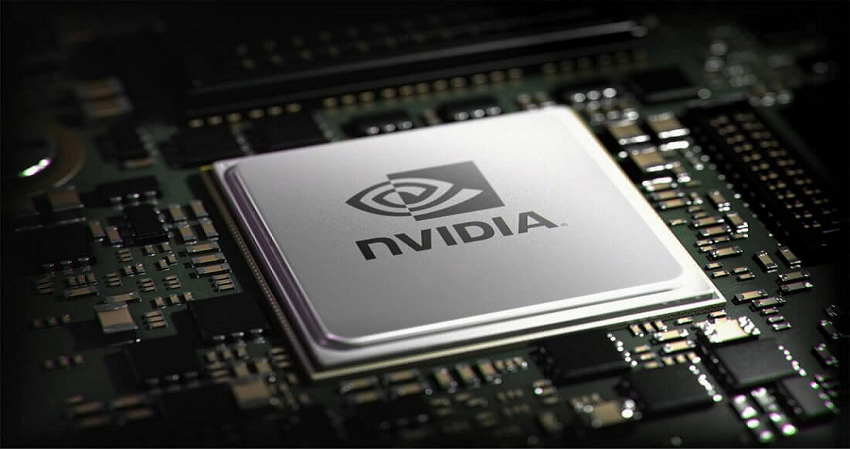
Nvidia chip

China has asked U.S. chipmaker Nvidia to “comply with requests and provide convincing proof of security,” in a dramatic development that threatens to upend recent progress in U.S.-China tech trade.

The Cyberspace Administration of China (CAC), the country’s powerful internet regulator, raised what it called “serious security issues” tied to Nvidia’s H20 chips, just days after the United States approved their export to China.

The chip in question, the H20, was a redesigned version of Nvidia’s high-end AI hardware, built specifically to comply with Washington’s tightened export restrictions aimed at limiting China’s access to advanced semiconductor technology. After months of regulatory hurdles, the U.S. recently gave the green light, allowing Nvidia to proceed with plans to ship the chip to Chinese clients.

The approval was viewed as a rare opening in an increasingly closed-off market and a strategic win for Nvidia, which has been caught in the crossfire of U.S.-China tech rivalry.

But in a move that has raised eyebrows across the industry, Beijing suddenly flipped the script. On Thursday, the CAC said U.S. artificial intelligence experts had discovered hidden “back doors” in Nvidia’s chips, including built-in location tracking and remote shutdown functionalities. Without citing the source of these claims or providing any Chinese-led verification, the CAC said the alleged capabilities posed a threat to national security.

“The safety of computing hardware relates to the core of national security,” the CAC said in a statement. The regulator demanded that Nvidia provide detailed explanations and technical documentation to address these “serious concerns.”

The intervention has taken on a sharply political tone. China’s state mouthpiece, the People’s Daily, followed up with an editorial titled “How can we trust you, Nvidia?” warning that so-called “sick chips” had no place in China’s technology systems.

It likened digital infrastructure to sovereign territory and urged Nvidia to meet government demands swiftly. The article also pointed to past disruptions — including malfunctions in Russia’s cyber and satellite systems — as justification for the heightened scrutiny of foreign-made hardware.

In its response, Nvidia denied the accusations unequivocally. “Nvidia does not have ‘back doors’ in our chips that would give anyone a remote way to access or control them,” a company spokesperson told the South China Morning Post.

However, the timing of China’s move has sparked speculation of retaliation. The decision to summon Nvidia and publicize alleged vulnerabilities comes on the heels of a modest diplomatic opening — the U.S. allowing Nvidia to resume some shipments to China. Many observers see Beijing’s shift as part of a broader tit-for-tat strategy, particularly as Chinese companies like TikTok face intensifying pressure in the United States over national security concerns. The parallels between the TikTok saga and this latest action against Nvidia are difficult to ignore.

While China continues to assert it welcomes foreign investment and is committed to further market liberalization, its actions underscore growing skepticism toward American tech giants. Nvidia, one of the few remaining U.S. semiconductor firms permitted to do business in China under strict conditions, now finds itself under attack on both sides — from Washington’s restrictions and Beijing’s mistrust.

This week’s development is especially significant given China’s reliance on Nvidia’s chips for powering artificial intelligence systems and training large language models. The H20 was meant to serve as a workaround — compliant enough to pass U.S. regulations but still advanced enough to remain competitive in China’s AI race.

Now, with the CAC casting doubt over the chip’s integrity, the future of that workaround appears fragile. Nvidia’s position in China is more uncertain than ever, and with Chinese regulators turning increasingly nationalist in tone, the pressure on multinational tech firms to prove their loyalty — or face exclusion — is intensifying.

While many Chinese companies need Nvidia’s graphics processing units to help power computing infrastructure used in artificial intelligence projects, Beijing remains committed to the long-term goal of tech self-sufficiency and reducing the country’s reliance on US and other foreign technologies.

Shares of Nvidia dipped nearly 3% in early trading on Friday, reflecting investor concern over the company’s prospects in a market that once accounted for a quarter of its revenue.

The geopolitical fallout could extend far beyond Nvidia. The episode reinforces the deepening fault lines between the U.S. and China over national security and control of next-generation technologies — from AI to semiconductors.

Palantir Bags $10bn Army Software and Data Contract

0

Palantir Technologies has secured a landmark contract with the U.S. Army worth up to $10 billion, in what is shaping up to be one of the most significant government software deals of the decade.

The agreement is aimed at consolidating and modernizing the military’s digital operations and will span the next ten years.

Under the terms of the arrangement, Palantir will replace 75 existing contracts with a single enterprise deal designed to streamline software procurement, reduce bureaucratic friction, and increase agility across the Army’s data infrastructure. The deal forms what the Army calls a “comprehensive framework for its future software and data needs,” providing not just a roadmap for digital modernization, but also reducing contract-related fees and shortening procurement timelines.

According to the U.S. Army, the new framework will allow for a modular procurement structure, enabling military agencies to buy mission software on demand—an arrangement that eliminates rigid procurement cycles and offers greater financial and operational flexibility. The Army says the contract is part of a broader strategy to modernize operations by relying on artificial intelligence and integrated data systems to anticipate and respond to threats more effectively.

The deal marks another milestone in Palantir’s growing influence in U.S. national security circles, particularly under President Donald Trump’s administration, where cost-cutting and technological modernization have been key priorities. Trump’s Department of Government Efficiency has slashed funding for outdated programs while pivoting toward AI-driven platforms, a shift that has strongly benefited private-sector partners like Palantir.

CEO Alex Karp, a longstanding advocate of U.S. national interests and public-private collaboration on AI, said the contract highlights the increasing role of software in warfare. “Software is now as essential as bullets,” Karp said earlier this year, when the company delivered the first two AI-powered systems under its $178 million defense contract.

Palantir’s role in military transformation is part of a larger pattern. Defense contracts are emerging as a key revenue stream for AI firms, with competition intensifying as governments ramp up spending to keep up with rival nations. The U.S. Department of Defense has already expanded its Maven Smart Systems program—an initiative to infuse AI into battlefield intelligence—by an additional $795 million, with Palantir as a lead contractor.

Other tech giants are also benefiting from this surge. Anduril Industries recently won a contract with the U.S. Special Operations Command worth up to $1 billion to provide AI-driven surveillance and autonomous systems. Anthropic has partnered with Palantir and AWS to embed its Claude AI models within classified environments for intelligence and defense analysis. Some of these models operate at the Pentagon’s Impact Level 6 (“secret” clearance) environment.

The U.S. Department of Defense’s Chief Digital & Artificial Intelligence Office (CDAO) has awarded up to $200?million contracts each to OpenAI, Anthropic, Google, and Elon Musk’s xAI to prototype “agentic AI” capabilities tailored for warfighting, logistics, intelligence, and enterprise operations.

Meanwhile, Microsoft and Amazon are participating in the Pentagon’s Joint Warfighting Cloud Capability (JWCC), a $9 billion program to upgrade cloud computing and AI capabilities across all branches of the military. In May, Scale AI secured a $250 million contract to provide data labeling services and AI model testing for the defense department.

Palantir’s new contract reflects the increasing dependence of modern militaries on commercial AI and software solutions. As warfare shifts toward digital and data-heavy strategies, AI companies are rapidly becoming central players in defense planning, turning battlefield intelligence, logistics, and operations into a race for computing superiority.

Shares of Palantir have more than doubled this year, buoyed by growing investor confidence in its government portfolio and expanded AI footprint.