DD
MM
YYYY

PAGES

DD
MM
YYYY

spot_img

PAGES

Home Blog Page 784

4 Best Cryptos To Buy Before Prices Rocket: BlockDAG, Sui, Bitget Coin, And VeChain Explode 

0

Price spikes come and go, but finding true value in altcoins requires more than chasing charts. BlockDAG (BDAG), Sui (SUI), Bitget Coin (BGB), and VeChain (VET) are making waves for all the right reasons. These aren’t short-term hype plays. Each one is building solid use cases, from fast and scalable networks to enterprise-grade blockchain tools.

While crypto discussions are often filled with noise, a few projects keep standing out with real innovation and practical utility. This article breaks down four serious contenders among today’s best cryptos to buy, offering a closer look into how each is creating long-term value. Keep reading to explore what makes these projects different and why they’re gaining traction in real markets.

1. BlockDAG: Real Growth, Real Numbers, Real Potential

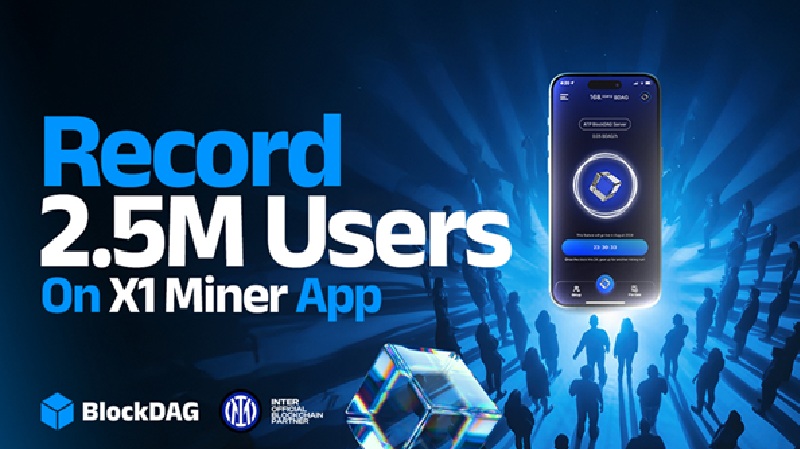
While many projects talk about adoption, BlockDAG is showing it in action. More than 2.5 million users are mining BDAG coins daily through the X1 app. Over 200,000 unique holders are steadily adding to their holdings. Behind this activity, over 4,500 developers are actively preparing more than 300 Web3 projects to run on the BlockDAG network.

Despite this strong ecosystem, BlockDAG remains highly accessible. As part of its GLOBAL LAUNCH release, the current price is just $0.0016 until August 11, far below the expected launch price of $0.05. That’s a possible 3,025% return from day one of trading. Buyers from Batch 1 have already seen a 2,660% gain as prices rose from $0.001 to the Batch 29 rate of $0.0276. So far, BlockDAG has raised $358M and sold over 24.6 billion coins.

With a growing community, solid infrastructure, and long-term upside potential, BlockDAG makes a strong case among the best cryptos to buy this quarter. Those entering now do so at a key moment, just before prices return to their original levels post-August 11.

2. Sui: Built for Speed and Built to Scale

Sui stands out for its fresh approach to blockchain design. Created by former Meta developers, it avoids the outdated models that cause delays and congestion in other chains. Instead, it uses a unique object-based structure and parallel transaction processing. This setup allows it to handle high-volume usage without slowing down.

Such architecture is a big plus for DeFi, gaming, and real-time apps. With near-instant confirmation times, Sui is one of the few Layer 1 chains built for serious, real-world usage. It can scale without sacrificing performance, which is essential for broader adoption.

Even as markets fluctuate, SUI has held steady. This consistency shows how it’s building strength quietly while expanding its ecosystem. With technology that supports both speed and scalability, Sui is gaining more attention as one of the best cryptos to buy in the current market.

3. Bitget Coin: Gaining Value With Every New Use

Bitget Coin (BGB) is linked to one of the top-performing derivatives platforms. It does more than just offer fee discounts. BGB unlocks a range of features such as exclusive project launches, staking access, and reward systems that appeal to active users. As Bitget grows globally, BGB grows with it. The coin’s functions keep increasing in line with the platform’s expansion. 

This makes it less of a speculative asset and more of a tool with purpose. In a space where other exchange-based coins like BNB have shown long-term value, BGB is proving its worth. Its steady growth, linked directly to platform adoption, makes it one of the best cryptos to buy for those who see the power of practical utility driving price performance.

4. VeChain: Enterprise-Focused and Widely Adopted

VeChain (VET) continues to make real-world progress by focusing on business solutions. Its technology helps with supply chain management and ensures data accuracy across global networks. Major names like BMW, PwC, and Walmart China are already using VeChain’s system in daily operations. One of its strongest features is a dual-coin setup that keeps transaction costs stable. 

That predictability makes it easier for large companies to trust and integrate VeChain’s blockchain into their workflow. VET hasn’t seen the wild price jumps that some projects rely on for attention. But its steady performance and consistent partnerships show strong fundamentals. It’s a coin that earns its place through adoption, not hype, making it a smart pick among today’s best cryptos to buy for those who prioritize reliability over volatility.
Final Thoughts

With crypto markets often dominated by trend cycles and speculation, these four projects bring something different to the table. BlockDAG’s ecosystem is already active, with millions of users and a GLOBAL LAUNCH release price offering up to 3,025% ROI. Sui is redefining how fast and scalable Layer-1 networks can be. Bitget  Coin grows directly with one of the leading exchanges, and VeChain continues building deep enterprise relationships. 

These are not just coins on a chart. They’re systems with strong foundations and proven functionality. Each of them holds its own place among the best cryptos to buy, especially for those looking beyond the noise and into real-world application.
BlockDAG Rockets With $358M and 4,500 Builders While Litecoin Eyes $150 and Hedera Targets $0.308 Strong Rebound

0

Crypto market trends are shifting again, with familiar patterns drawing renewed attention. Litecoin is back in focus as it trades just under $110, showing signs of strength. If it climbs past $150, it may head toward the $296 zone. Hedera is testing support near $0.24, while caution spreads among traders. But one project stands out from the rest, BlockDAG.

With over 4,500 builders and 300+ real-world applications, it is quickly becoming a top crypto performer. BlockDAG has already raised $358M and is now offering a $0.0016 GLOBAL LAUNCH release price until August 11. With a projected return of 3,025%, it’s making serious waves. While many are still watching for signals, BlockDAG is already creating the future of crypto.

Litecoin Price Pattern Aims For $150 Breakout Opportunity

Litecoin’s price setup hasn’t changed much in the last few years, but that’s exactly why it’s back on traders’ radar. Over the past three years, Litecoin has traded between $50 and $115, forming a strong and steady price base. At the moment, it is holding at $107, resting just below the $110 resistance level.

A solid push above $150 could be a game changer. According to Daan Crypto Trades, breaking that point could clear the path toward $296, Litecoin’s pre-2021 high. The 50-day EMA has already moved above the 200-day EMA, giving more support to a possible upward move. If volume increases and momentum builds, Litecoin may be ready to break out of its long-standing range. This well-known coin might finally be preparing for a big shift.

Hedera Price Movement Nears $0.24 Key Support Level

Hedera’s price is facing pressure again as it sits close to the $0.24 support level. It has fallen 3.07% in the last 24 hours and 3.06% over the past week. This matches the wider market’s downturn, which is mostly being led by Bitcoin’s recent pullback. Trading volume has dropped by 21.77%, down to $867.41M, and open interest also slipped by 8.57%, now at $407.69M. This points to a noticeable slowdown in trading interest and risk-taking.

Market watchers are paying close attention. If Hedera fails to hold $0.24, more downward movement may follow. However, there are signs of hope too. Some indicators suggest a bounce could happen, with the next targets at $0.308 and $0.322. While caution is high, the flattening of the OI-weighted figure hints at reduced leverage. If the mood in the market changes, Hedera might turn upward again. Right now, traders are waiting to see what happens next.

BlockDAG Booms: $358M Raised With 4,500 Builders & 300 Apps In The Works!

BlockDAG is turning heads with more than just rising numbers, it’s growing through real development. Over 4,500 builders are actively building inside its ecosystem, working on more than 300 functional apps. These include DeFi tools, games, payment platforms, and more, all made to solve real-world issues. The reason builders keep coming is clear: BlockDAG’s structure is fast, simple, and ready for new ideas.

What separates BlockDAG from others is that these creators are focused on building, not on hype. This isn’t just another coin. It’s a working system with real builders making daily improvements.

The numbers also show BlockDAG’s rise. It has raised $358M and sold 24.6 billion coins across 29 batches. The Batch 29 price is currently $0.0276. However, with the GLOBAL LAUNCH release active, a special price of $0.0016 is available until August 11. Once it ends, the coin will return to its original price of batch 29, which is $0.0276. Those who joined in Batch 1 have already gained a 2,660% return compared to Batch 29 pricing. For new buyers at $0.0016, there’s a possible 3,025% return.

BlockDAG isn’t just growing in size; it’s becoming one of the most active crypto projects in the space. With thousands of real builders and a clear focus on usable apps, it’s turning potential into real progress. These builders are helping shape a strong foundation that sets BlockDAG apart.

Wrap Up!

There’s never a dull moment in crypto, especially when familiar names get close to big moves and new projects rise fast. Litecoin may be quiet, but with its price closing in on $150, it might be getting ready to break out. Hedera is under pressure near $0.24, but it still holds promise if a bounce occurs.

Then there’s BlockDAG, with $358M raised, 4,500 builders at work, and a current GLOBAL LAUNCH release price of $0.0016, offering a massive 3,025% upside compared to its $0.05 launch level. While some projects are stuck and othersare waiting, BlockDAG is already pushing forward. Three different stories. Three different paths. With August 11 approaching, each move counts.

Presale: https://purchase.blockdag.network

Website: https://blockdag.network

Telegram: https://t.me/blockDAGnetworkOfficial

Discord: https://discord.gg/Q7BxghMVyu

Meta is Pouring $72bn on AI Infrastructure in 2025

0

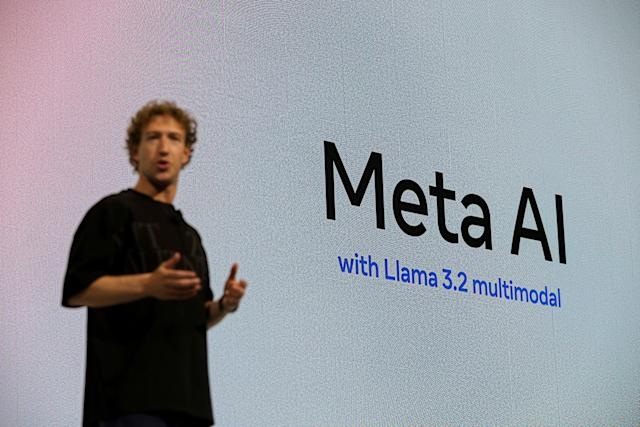
Meta is throwing unprecedented sums into artificial intelligence, with a capital expenditure plan that sets the stage for what could be the largest infrastructure buildout in tech history.

In its second-quarter earnings report released Wednesday, the company revealed plans to spend between $66 billion and $72 billion in 2025 on data centers, compute clusters, and technical infrastructure — a staggering increase of nearly $30 billion year-over-year at the midpoint.

The social media giant is not only doubling down — it’s preparing for a multi-year escalation. CFO Susan Li confirmed during the earnings call that 2026 will see an even more aggressive ramp-up as Meta pushes to dominate the AI frontier.

“We expect that developing leading AI infrastructure will be a core advantage in developing the best AI models and product experiences,” said Li. “So we expect to ramp our investments significantly in 2026 to support that work.”

Meta’s strategy hinges on scale and speed. The company is pouring capital into what it calls “titan clusters” — next-gen AI compute facilities that rival the scale of national power grids.

The first such cluster, Prometheus, located in Ohio, is expected to reach 1 gigawatt of compute power by 2026 — enough to support several large-scale AI models concurrently. Hyperion, the second, will rise in Louisiana and could eventually scale up to 5 gigawatts, with a land footprint comparable to Manhattan, according to CEO Mark Zuckerberg. Several more titan-scale projects are quietly underway.

Energy and Resource Concerns Mount

But Meta’s ambitions are raising red flags in the communities where these clusters are being built. In Newton County, Georgia, where one of Meta’s newer data center projects is under construction, residents have reported water taps running dry — a symptom of the immense stress placed on local infrastructure. Energy consumption is another flashpoint. A single gigawatt can power around 750,000 homes, and Meta is planning multiple clusters of this magnitude.

Critics say Meta’s expansion reflects a Silicon Valley-driven resource grab, one that prioritizes data and compute over sustainability and equity.

While Meta has said it’s exploring external financing models to co-develop some of these data centers, Li admitted there’s “nothing finalized” yet. Still, she noted that the company sees “significant interest from financial partners” and believes shared development models could provide flexibility in case infrastructure needs shift in the future.

AI Talent War and Superintelligence Labs

In tandem with infrastructure, Meta is spending lavishly on AI talent, naming employee compensation as its second-largest driver of growth. Its recently unveiled Superintelligence Labs unit is luring engineers and researchers with premium packages that, according to insiders, are pushing the industry’s pay ceiling.

Zuckerberg has cast the effort as building toward “personal superintelligence” — AI models that interact with people via smart glasses, VR headsets, and other wearables, with the aim of helping them “live their best lives.”

But these ambitions are not without cost. Meta’s Reality Labs, the division responsible for its metaverse and VR work, reported a $4.5 billion loss in Q2 — a reminder that while the company’s future-facing bets may excite Wall Street, they are bleeding money for now.

Stock Surge and Q3 Optimism

Investors shrugged off the Reality Labs loss. Meta’s stock surged more than 10% in after-hours trading, buoyed by $47.5 billion in Q2 revenue and a bullish outlook for the third quarter, where Meta expects $47.5 billion to $50.5 billion in revenue. Advertising, once again, was the engine, thanks in large part to Meta’s AI-powered ad tools, which help marketers auto-generate content and better target audiences.

AI has seeped into every layer of Meta’s business model — from user-facing products to ad infrastructure — but now, the company is making it clear that compute power is the next battleground. Meta believes the company that owns the most servers, data centers, and models will shape the future of not just advertising, but entertainment, communication, and knowledge.

With its $72 billion moonshot, Meta is betting it will be the one.

Nvidia’s Hope to Revive Foothold in China Takes A Hit As Beijing Alleges H20 AI Chips Are Compromised

0
Nvidia chip

Nvidia’s efforts to revive its foothold in China took a hit on Thursday after Beijing summoned the U.S. chip giant over what it claimed were “serious security issues” tied to its made-for-China artificial intelligence chips.

The move by China’s cyberspace watchdog, the Cyberspace Administration of China (CAC), throws a fresh shadow over Washington’s recent easing of export restrictions on Nvidia’s H20 chip, a product redesigned to comply with U.S. rules.

In a statement, the CAC alleged that U.S. AI experts had exposed alarming capabilities within Nvidia’s hardware — including built-in location tracking and remote shutdown functions — prompting a formal summons to the company for explanation and documentation. Beijing’s regulators did not specify which experts made the discovery, nor did they cite any verification by Chinese authorities. Nvidia has not publicly responded.

The H20 chip, part of Nvidia’s Hopper architecture, was introduced as a compromise to stay within the bounds of U.S. export curbs, which were tightened to block China’s access to advanced semiconductors seen as critical to AI and military development. Earlier this month, the Trump administration approved H20 exports to China, a move that was met with backlash in Washington over fears the sales would bolster Beijing’s AI capabilities.

Nvidia CEO Jensen Huang had swiftly followed up on the policy shift by visiting Beijing, meeting with Chinese officials and clients in a bid to reassure the government of the company’s commitment to the market. During his trip, Huang also unveiled a GPU based on the latest Blackwell series, tailored to meet U.S. compliance standards while still serving Chinese demand.

But the CAC’s surprise intervention suggests Nvidia’s path to rebuilding in China may be fraught with internal resistance. The timing — coming just weeks after Washington relaxed its position — raises questions over whether Beijing truly welcomes the re-entry of U.S. chip giants, or whether it is leveraging regulatory pressure to accelerate the growth of its domestic semiconductor industry.

Indeed, Beijing has quietly encouraged its tech sector to reduce dependence on foreign chipmakers like Nvidia and instead ramp up purchases from domestic alternatives. Huawei, along with emerging Chinese chip firms such as Biren and Cambricon, has benefited from this push to localize the AI hardware supply chain. These companies stand to gain further if Nvidia’s market access is obstructed again.

Adding to the uncertainty, Nvidia has stated that it will take approximately nine months from restarting production to begin shipping the H20 to Chinese customers. But industry insiders say some buyers remain hesitant, unsure whether the U.S. might reverse course under political pressure. That fear is not unfounded. In Washington, lawmakers have floated legislation that would mandate chipmakers embed tracking features in export-controlled AI hardware — the very feature Beijing is now complaining about.

Nevertheless, Paul Triolo, a tech expert and partner at consultancy DGA-Albright Stonebridge Group, cast doubt on the CAC’s claims.

“I’m skeptical about the notion of a deliberate backdoor in Nvidia’s hardware,” Triolo said, noting that the CAC’s announcement lacked technical details or evidence.

Yet, Triolo acknowledged the broader tensions. “There are strong factions on both sides of the Pacific that don’t like the idea of renewing H20 sales,” he said. “In the U.S., the opposition is clear. But in China, there are also voices warning that relying on Nvidia again could delay the transition to an indigenous chip ecosystem.”

As the geopolitical battle over AI dominance intensifies, the CAC’s move could signal a shift from China, not just in terms of supply chain independence, but also as a bargaining chip in the ongoing tug-of-war with the U.S. over technology control. For Nvidia, that means the security accusations, however vague, may be less about cybersecurity and more about national interest.

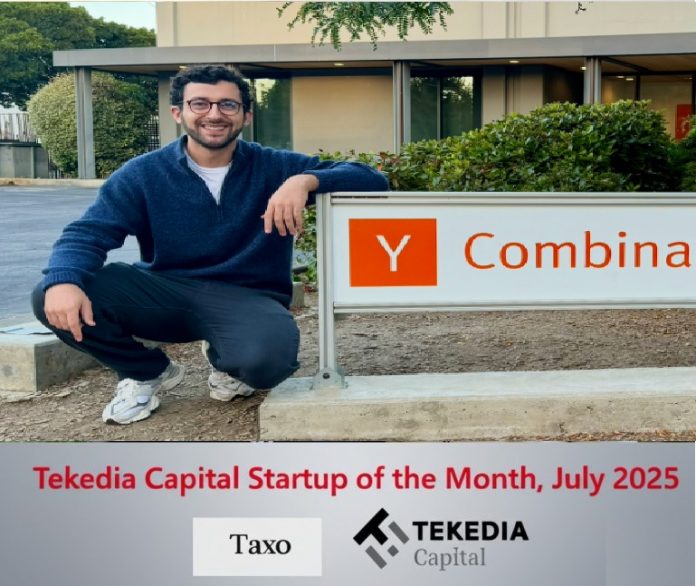
Tekedia Capital Honours Taxo As Startup of the Month, July 2025

0

We are excited to announce that Taxo is Tekedia Capital portfolio startup of the month, July 2025. Taxo is one of the world’s fastest growing AI-anchored healthtech startups with operations in major global markets. It invented Apex, a proprietary language model engineered for the healthcare domain.

Apex leverages advanced augmentative techniques such as ensemble modelling and consensus decision making, trained on billions of medical entities, to produce the world’s fastest, most accurate data extraction and reasoning engine dedicated to healthcare administration.

Upon that engine is a category-king healthcare administrator, Taxo. It uses AI to automate administrative tasks in the healthcare industry, with a focus on revenue cycle management. The primary goal is to reduce the burden of paperwork on healthcare professionals, allowing them to spend more time on patient care. Taxo is big in the Kingdom of Saudi Arabia, USA, and major global markets.

For exceptional revenue growth, Tekedia Capital recognizes and commends Ahmed Kerwan for executing the mission. Win more markets, Taxo. For more about Taxo, visit www.taxo.ai . To become a member of Tekedia Capital, visit capital.tekedia.com