

DD
MM
YYYY

PAGES

DD
MM
YYYY

spot_img

PAGES

Home Blog Page 7886

What Is Embedded System? Why Nigeria Needs More Trained Practitioners

2

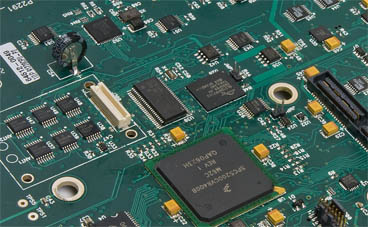
An embedded system is a computer system designed to do a few dedicated and specific functions often with real-time computing constraints. It is embedded as part of a complete device which often includes hardware and mechanical parts. They range from portable devices such as MP3 players and digital watches to large equipment such as automobiles and medical equipment to mention a few.  

Justification for trainees

The design and implementation of embedded systems require a broad knowledge in areas traditionally not covered in any one discipline. These areas include (i) Computer Science, which deals mainly with high-level software, (ii) Electrical and Computer Engineering, which deals mainly with hardware and low-level software, and (iii) other engineering disciplines, which deal with application development and numerous other peripherals. In order to effectively train students with various engineering backgrounds to design and implement real-time embedded systems, an interdisciplinary curriculum is needed.  

By taking this course, students will receive a unique, highly concentrated training on real-time embedded system design without taking an excessive number of courses. The requirement for additional courses from the selected course list for the training scheme will provide students from different engineering disciplines with depth and breadth on applications of real-time embedded systems in various engineering fields. 

The number of embedded electronic systems used in automobile, tractors, and other control systems continue to increase dramatically. The need for engineers well trained in this area is urgent. One of the goals of this training scheme is to provide opportunities for engineers working in industry to keep up with the state-of-arts of the real-time embedded system design. To accommodate this need, the real-time embedded system course sequence will be offered through concentrated short courses and workshops. 

Benefits of Training to Participant(s)

–      increased capacity to create wealth

–      self employment

–      consultancy to both local and international firms

Benefits to Economy

–      fast track to national 20-20-20 target

–      diversification of economy

–      job creation

 Adapted from Fasmicro Proposal to a national agency in Nigeria

Tablet War In Nigeria – Etisalat Cuts Price of Samsung Galaxy Tab

2

The Nigerian tablet market is moving to the commodity trajectory. Prices are going down and the pressure from the local players on the MNCs is visible. Today, we are happy to announce that Etisalat has cut its price of Galaxy Tab in Nigeria.


Etisalat Nigeria has cut the price of its Samsung Galaxy Tab. The tablet was launched in 2010 for over N125,000. With the improved pricing, subscribers can now buy the device for NGN 99,999. The new package offers customers a free Etisalat SIM card with 360 minutes of voice calls, 360 text messages and 6GB data over a period of 12 months. This breaks down to 30 minutes of voice calls, 30 text messages and 500MB every month for one year.


Of course, this is till more than N81,000 of the Huawei tab from MTN and the N50,00 Ovim from Microscale/Fasmicro.

Google Event Kicks Off Today in Lagos

1

Google-Nigeria Day kicks off today with the theme  Growing Local, Going Global


We at Google are excited to meet with Nigeria’s software developers, tech businesses and digital marketeers. With a successful G-Nigeria 2010, we look forward to demonstrating the Google web and mobile tools that are driving technological and business innovation here in Africa and across the globe.


Venue of the conference would be:

The Civic Center

Ozumba Mbadiwe Avenue, Opposite 1004

Victoria Island,  Lekki Peninsula, Lagos


3rd May 2011: For Developers

4th May 2011: For Businesses and Entrepreneurs. (registration is full)


Time: 9am both days.


Conference content will include Google’s developer and business technologies, ranging from Android, mobile development and AppEngine to Google Maps for business, website optimisation and online advertising. Google tools for the development of the news industry in Nigeria will also be highlighted, through tailor-made workshops for journalists and news webmasters.

IPv6-Join The Players, MUSON Centre, June 6 – You Are Invited

0

The Chairman Board of Trustees (BOT) of the Nigeria Internet Group (NIG), Chief Olawale Ige, former minister of communications,  will on June 8, this year preside over  Nigeria Internet Protocol Version 6 (IPV6) Roundtable to be hosted by DigitalSENSE Africa in Lagos.


According to the Executive Director, DigitalSENSE Africa, Mrs. Nkemdilim Nweke, the one-day roundtable for stakeholders of the Nigerian Internet community will be held at the Digital Bridge Institute (DBI) Lagos campus located at the former NITEL Training School Cappa-Oshodi.


We just got an information that the Nigeria IPv6 Roundtable will be at the Musical Society of Nigeria (MUSON) Centre Onikan-Lagos  on June  6 this year, with the theme: IPv6-Join The Players.

This Is Where The Funds Are Located For Nigerian Startups

6


The Small and Medium Enterprises Development Agency of Nigeria (SMEDAN) was established by the SMEDAN Act of 2003 to promote the development of the MSME sector of the Nigeria Economy. The Agency positions itself as a “One Stop Shop” for Micro, Small and Medium Enterprises Development. Micro Enterprises are included in the clientele of the Agency since they form the bedrock for SME’s


VISION
To establish a structured and efficient micro, small and medium enterprises sector that will enhance sustainable economic development of Nigeria


MISSION
To facilitate the access of micro, small and medium entrepreneurs/investors to all resources required for their developent. Justification for our existence. Poverty, due to lack of access to incom-earning opportunities and lack of capacity to take advantage of the opportunities, is a social malaise that is threatening global prosperity in general and national economi growth and development in particular. a well developed MSMEs sector has proven to be one of the most veritable channels to combat poverty. The establishment of SMEDAN is therefore justified by the need to trigger the development of Nigeria’s MSMEs in a structured and efficient manner.


FUNCTIONS

The functions of SMEDAN as contained in the enabling Act can be summarized as follows:

  • Stimulating, Monitoring and Coordinating the development of the MSMEs sector,
  • Initiating and articulating policy ideas for micro, small and medium enterprises growth and development,
  • Promoting and facilitating development programmes, instruments and support services to accelerate the development and modernization of MSME operation.
  • Serving as vanguard for rural industrialization, poverty reduction, job creatioin and enhance sustainable livelihoods.
  • Linking SMEs to internal and external sources of finance, appropriate technology, technical skills as well as to large enterprises.
  • promoting information and providing access to industrial infrastructure such as layouts, incubators, industrial parks.


Intermediating between MSMEs and the Government. SMEDAN is the voice of the MSMEs.
Working in concert with other institutions in both public and private sectors to create a good enabling environment of businesses in general, and MSME activities in particular


THOSE SERVED
Our target beneficiaries include:

Micro, Small and Medium Enterprises
Prospective entrepreneur
SMEs support institutions
Non-Governmental Organization (NGOs) and Business Membership Organization (BMOs) in the MSME sub-sector of the economy.
The Federal Government (through a functional feedback mechanism)