DD
MM
YYYY

PAGES

DD
MM
YYYY

spot_img

PAGES

Home Blog Page 79

MrBeast is Entrying into FinTech, Launching “MrBeast Financial” and Beast Mobile

0

YouTube’s biggest creator, MrBeast real name Jimmy Donaldson, is officially expanding his empire into financial services. This was confirmed on December 3, 2025, at The New York Times’ DealBook Summit by Beast Industries CEO Jeffrey Housenbold, who joined Donaldson onstage for the announcement.

Beast Industries, MrBeast’s holding company which generated over $400 million in revenue last year, is diversifying beyond entertainment into regulated sectors like fintech and telecom.

The platform will operate under the “MrBeast Financial” name. It includes a mobile app and online services for banking, financial advisory, cryptocurrency exchange, insurance, student loans, credit insights, and potentially credit cards.

It’s designed to target MrBeast’s massive Gen Z and millennial audience over 450 million YouTube subscribers, emphasizing financial literacy to “do good while doing well.” A trademark application was filed with the US Patent and Trademark Office on October 13, 2025, laying the groundwork.

No exact launch date was specified at the summit, but it’s positioned as an “upcoming” initiative alongside other ventures. To navigate regulations, credit risks, and capital needs, Beast Industries plans to partner with established fintech companies rather than building everything in-house.

This mirrors MrBeast’s past successes, like Feastables chocolate and Lunchly snacks, which leverage his distribution power. Housenbold bundled the fintech launch with Beast Mobile, a new mobile phone service likely an MVNO leasing infrastructure from major carriers.

It aims to provide affordable access to global information, integrated with financial tools—potentially offering bundled banking perks for subscribers. MrBeast’s diversification isn’t new: He’s already behind “Beast Games” on Amazon, Viewstats, and a planned Saudi theme park called Beast Land.

With Beast Industries valued at around $5 billion, this move reduces reliance on YouTube amid algorithm changes and platform fragmentation.

However, fintech’s heavy regulations and the company’s ongoing lawsuits could pose hurdles. The news has sparked buzz on X, with users calling it a “level up” for the influencer economy and speculating on its potential to make banking as viral as MrBeast’s giveaways.

Beast Industries CEO Jeffrey Housenbold explicitly framed the platform as “wrapped in financial literacy,” underscoring a mission to blend accessible financial tools with education to empower users—particularly MrBeast’s young, global audience of over 450 million subscribers.

This focus isn’t just a tagline; it’s a strategic response to the well-documented gaps in financial knowledge among Gen Z and millennials, who often turn to influencers for advice over traditional institutions.

MrBeast’s brand has always thrived on spectacle—think massive cash giveaways and viral challenges—but the pivot to fintech signals a shift toward sustainable impact. Financial illiteracy affects billions worldwide.

Surveys show that only about 57% of U.S. adults are financially literate, with even lower rates among younger demographics, leading to issues like high debt, poor investing habits, and vulnerability to scams.

By “doing good while doing well,” as Housenbold put it, the platform aims to use MrBeast’s entertainment prowess to make complex topics like budgeting, investing, and crypto approachable and fun.

This aligns with a broader trend in the creator economy, where influencers like MrBeast are filling educational voids left by schools and banks. As one X user noted, “Influencers launching fintech will do more for financial literacy than half the banks and most schools combined.”

The platform’s investor pitch deck from earlier in 2025 explicitly ties customized services like student loans, credit insights, and insurance to supportive literacy content, ensuring users aren’t just accessing tools but learning how to use them effectively.

While exact details on rollout are pending no firm launch date beyond “upcoming”, the trademark filing and summit remarks provide clues on implementation. Expect bite-sized videos, interactive challenges, or gamified modules embedded in the app—think “Survive 30 Days on a Budget” challenges mirroring MrBeast’s YouTube style.

This could cover basics like compound interest or crypto risks, tailored for Gen Z’s short-attention-span preferences. Literacy won’t be siloed; it’ll underpin offerings like banking apps, crypto exchanges, and advisory tools. For instance, before approving a loan, users might complete a quick quiz on repayment strategies, promoting informed decisions.

Linked to Beast Mobile the upcoming phone service, it could provide “access to the world’s information” via affordable data plans, enabling low-income users in underserved areas to engage with financial education on the go.

Overall, the buzz leans positive, with calls for it to address the “worldwide plague” of low literacy. If executed well, this could democratize finance. MrBeast’s reach dwarfs most banks’ marketing budgets, potentially onboarding millions into healthy habits.

Partnerships with established fintechs to handle regulations will be key, ensuring accuracy over hype.

Risks include oversimplification (e.g., glamorizing high-risk crypto) or regulatory scrutiny, but the literacy-first approach positions it as a force for good in a space ripe for disruption.In essence, financial literacy is MrBeast Financial’s secret sauce—turning a profit-driven platform into a tool for real empowerment, one viral lesson at a time. As the launch nears, it’ll be fascinating to see how this evolves beyond the hype. If it launches successfully, it could redefine how creators disrupt traditional industries. Stay tuned—MrBeast’s track record suggests it’ll be explosive.
Implications of US Treasury Buying Back $12.5B Treasury Securities

0

The US Department of the Treasury executed a historic debt buyback operation, repurchasing $12.5 billion in older Treasury securities. This marks the largest single-day buyback in US history, surpassing the previous record of $10 billion set on June 3, 2025.

The operation accepted offers totaling $12.5 billion across 23 issues, out of $34.6 billion in bids submitted by market participants, with settlement completed the following day. The Treasury targeted off-the-run (older, less liquid) nominal coupon securities and Treasury Inflation-Protected Securities (TIPS). It does not typically buy back bills, floating rate notes, or STRIPS.

Conducted through the Federal Reserve Bank of New York’s FedTrade system, the buyback involved primary dealers and other approved institutions. The Treasury paid for the securities at accepted prices, effectively retiring older, lower-yield debt.

The US last ran large-scale buybacks from 2000–2002 totaling about $67.5 billion across multiple operations during budget surpluses. After a hiatus until 2014, buybacks resumed on a smaller scale for cash management and liquidity support.

The Treasury formalized a “regular buyback” program in 2024 to improve market functioning amid rising debt levels now over $36 trillion. By removing older bonds from circulation, the Treasury injects fresh cash into the banking system, easing short-term funding pressures and tightening bid-ask spreads in the Treasury market.

It allows the government to retire low-interest debt early and reissue new securities at current rates, optimizing the maturity structure of the $36+ trillion national debt. This proactive move addresses potential strains from high interest rates, global investor sentiment, and upcoming auctions (e.g., a $39 billion 10-year note auction shortly after the June buyback).

It’s not quantitative easing that’s the Fed’s tool but complements it by reducing supply ahead of new issuance. A Treasury spokesperson emphasized commitment to “short-term flexibility and long-term sustainability” in managing finances.

The buyback boosts systemic liquidity, which historically supports risk assets. Bond yields may dip slightly due to reduced supply, while banks gain balance-sheet relief. Coming amid rate cuts, the end of quantitative tightening (QT), and ongoing repo operations, this adds to a “massive wave of fresh liquidity.”

Analysts see it as a bullish macro signal, potentially lowering yields and spurring year-end rallies. Increased liquidity often flows into high-beta assets like Bitcoin and Ethereum. Experts like Ash Crypto called it a “bullish move” for Q1–Q2 2026, with potential temporary boosts amid 2019-like conditions.

No major controversy emerged, though some Reddit discussions speculated on timing ahead of CPI data, viewing it as preemptive auction support.This operation underscores the Treasury’s evolving toolkit in a high-debt environment, with eyes now on the next quarterly refunding announcement typically early February 2026.

On June 3, 2025, the US Department of the Treasury conducted its largest debt buyback operation to date at the time, repurchasing $10 billion in older Treasury securities.

This marked a significant escalation in the Treasury’s regular buyback program, which had been formalized in 2024 to enhance market liquidity and optimize debt management amid a national debt exceeding $35 trillion.

The operation accepted bids totaling $10 billion out of $22.87 billion submitted, across 22 issues from 40 eligible securities, with settlement completed on June 4, 2025. This surpassed prior small-scale test buybacks typically under $5 billion and set the stage for even larger operations later in the year.

The buyback targeted off-the-run nominal coupon securities and Treasury Inflation-Protected Securities (TIPS) with maturities ranging from July 15, 2025, to May 31, 2027. It excluded bills, floating rate notes, and STRIPS. The operation was executed via the Federal Reserve Bank of New York’s FedTrade system, involving primary dealers and approved institutions.

Bids were submitted competitively, with the Treasury accepting offers at weighted average prices to retire lower-yield, less liquid debt. Results, including par amounts accepted per security and average prices, were published on TreasuryDirect in an updated XML format starting with this operation—improving transparency with detailed breakdowns.

Buybacks were last used extensively from 2000–2002 totaling ~$67.5 billion during surpluses. and resumed modestly in 2014 for cash management. The June 2025 event was part of a quarterly refunding strategy, with plans to resume cash management buybacks around the June tax due date.

It was followed by a second $10 billion buyback on June 10 settling June 11, bringing the two-week total to $20 billion, under a weekly program capped at $10 billion per operation potentially scaling to $30 billion quarterly.

Removing older securities injected cash into the financial system, narrowing bid-ask spreads and supporting smoother auctions amid high interest rates and debt limit pressures extraordinary measures were in use since January 2025.

Debt optimization enabled refinancing at current yields, reducing long-term interest costs and smoothing maturity profiles to avoid peaks in upcoming redemptions.

A Treasury official noted the move promoted “short-term flexibility” in a high-debt environment, with no intent to influence yields directly given the modest scale relative to total debt.

The buyback eased funding strains, slightly compressing yields 10-year notes dipped ~2 basis points post-announcement and bolstering bank reserves. It signaled proactive management, boosting confidence ahead of summer volatility.

As part of a “wave of liquidity” with Fed repo operations, it was viewed as bullish for risk assets, echoing 2019 dynamics. Analysts projected lower volatility in Q3 2025 auctions and potential flows into equities and crypto.

At $10 billion, it was ~0.03% of outstanding debt—significant operationally but not transformative, per bond observers.

No notable controversies arose, though some speculated on political timing near debt ceiling talks. This June operation paved the way for the December 2025 record, underscoring the Treasury’s expanding toolkit.

Economists Expect Fed to Cut Rates Again Despite Deepening Policy Rift

0

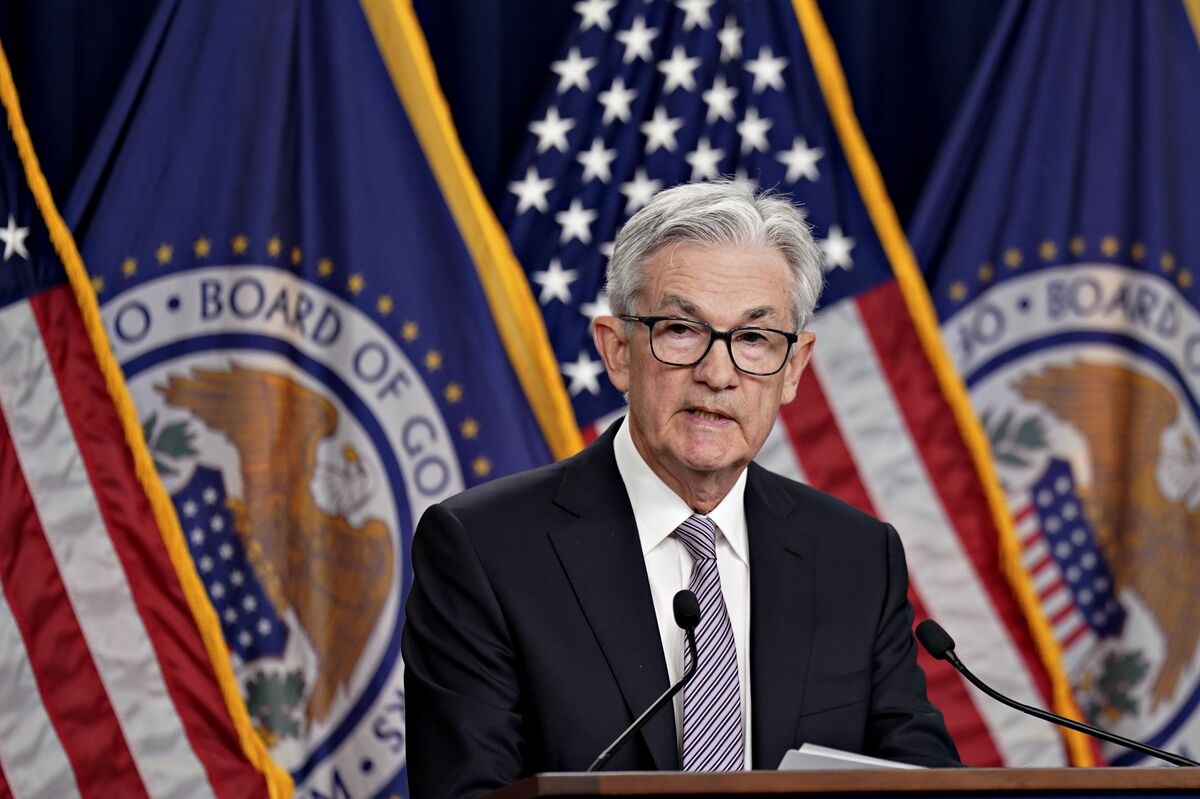
The U.S. Federal Reserve is expected to trim its benchmark interest rate by a quarter percentage point at the December 9-10 policy meeting, with a large majority of more than one hundred economists surveyed by Reuters predicting another round of easing to support a cooling labor market.

That strong consensus mirrors November’s poll and aligns with the nearly eighty-five percent chance of a cut implied by futures markets, even as policymakers themselves have grown increasingly divided over whether the world’s largest economy needs further stimulus.

The split within the central bank stands in stark contrast to the unity among economists surveyed. The Fed delivered a quarter-point cut in October, but Chair Jerome Powell has repeatedly warned against risking a resurgence of inflation. Powell has stressed that a December cut was far from a “foregone conclusion,” a message sharpened by the fact that inflation has remained above the Fed’s two percent target since March 2021.

Complicating matters further, a forty-three-day government shutdown delayed key economic data releases, leaving policymakers to operate with partial visibility at a time when clarity on inflation, wages, and consumer spending is vital. Minutes from the October meeting revealed deep internal fractures, with some FOMC members saying rates should remain unchanged and several openly opposing the cut that was ultimately delivered.

Still, the November 28-December 4 poll showed an overwhelming eighty-two percent majority—eighty-nine of 108 economists—expecting another twenty-five basis point reduction next week.

Thomas Simons, chief U.S. economist at Jefferies, said the October caution came partly from a lack of available data during the shutdown. He argued that Powell is now unable to rely on that same justification, especially after several Fed governors signaled support for continued easing.

New York Fed President John Williams recently joined governors Michelle Bowman, Christopher Waller, and Stephen Miran in backing rate cuts, saying easing could be done without jeopardizing the inflation goal and would offer insurance against further weakness in the labor market.

Even so, as many as five of the twelve voting FOMC members have publicly opposed further cuts, widening the policy rift at a time when financial markets are clamoring for clarity.

The disagreement among central bankers is also echoed in forecasts for 2026, where divisions are striking. Median projections from the poll point to two additional cuts that would bring the federal funds rate to between 3.00 and 3.25 percent by the end of that year, yet no single quarter shows a clear majority. Concerns tied to the administration’s large tax-cut and spending bill, tariff uncertainties, and questions about the Fed’s institutional independence have all contributed to the fog surrounding long-term rate expectations.

Kevin Gordon, head of macro research and strategy at the Schwab Center for Financial Research, said reflationary forces rooted in fiscal policy and tariff-driven goods prices will constrain how far the Fed can ease. He warned that the so-called “big beautiful bill” risks keeping price pressures higher than expected. Conflicting public signals from FOMC members on the timing and scale of future cuts have also fueled hedging flows, with investors ramping up protection against policy uncertainty in recent weeks.

A wide gap has also emerged in inflation expectations across the economy. The University of Michigan’s consumer surveys show inflation expectations near four percent, while market-based measures such as breakevens and Treasury Inflation-Protected Securities remain far lower. Gordon said the disconnect is problematic because inflation perceptions remain central to affordability concerns, which have become a dominant issue for households.

Poll medians showed the Personal Consumption Expenditures index—the Fed’s preferred inflation gauge—running above two percent through 2027, suggesting a prolonged, stubborn descent toward the target. Growth expectations also signal a slower trajectory. The U.S. economy is expected to have expanded three percent in the third quarter, shifting sharply to 0.8 percent this quarter. Economists expect growth to average two percent both this year and in 2026.

The tension between cooling economic momentum, sticky inflation expectations, and a splintered central bank lies at the heart of the risks looming over 2026. If fiscal policy maintains its expansive stance while tariffs continue to prop up goods prices, the Fed may find itself trapped between growth concerns and persistent inflation. A sustained disconnect between consumer inflation expectations and market pricing could also force policymakers to take a more cautious route on rates, even as labor markets soften further.

Markets broadly expect the December cut, but the fractures inside the Fed and the uncertainty surrounding the economic path highlight that next week’s move may not signal a smooth easing cycle. Instead, it could mark the beginning of a more contentious debate over how much support the U.S. economy can expect as the effects of this year’s slowdown carry into the next political and fiscal cycle.

Microsoft To Raise Prices for Commercial Office Subscriptions in July as Competition Escalates and AI Upgrades Accelerate

0

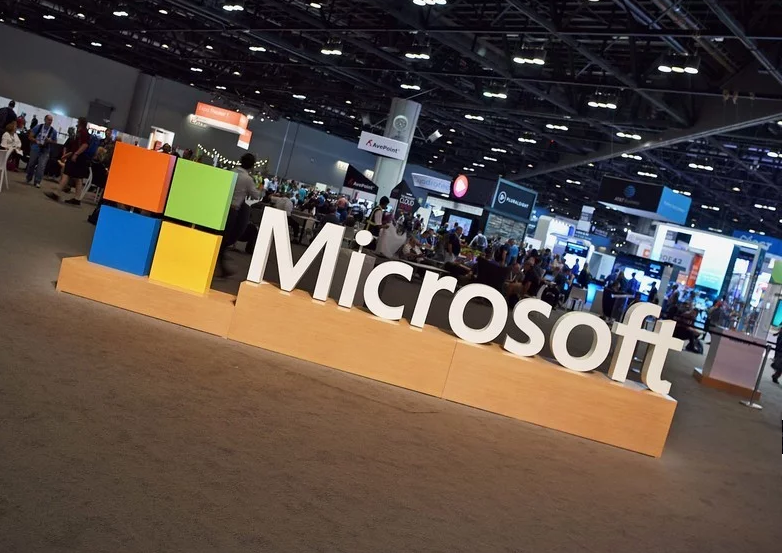
Microsoft will raise the prices of its Office productivity software subscriptions for commercial and government clients on July 1, marking a significant shift for one of the company’s most profitable franchises.

The adjustment comes as Microsoft pushes deeper into AI-driven workplace tools, faces stronger competition from Google, and continues positioning Microsoft 365 as a premium, enterprise-grade ecosystem.

Nicole Herskowitz, corporate vice president for Microsoft 365 and Copilot, said in a statement that the company has delivered more than 1,100 new features across Microsoft 365, Security, Copilot, and SharePoint in the past year. She argued that those additions strengthened the overall value of the suite and justified the upcoming changes.

Office remains central to Microsoft’s dominance in enterprise software, though Google Workspace has become a tough rival in areas such as small business, education, and cloud-native companies. With both companies embedding generative AI across their tools, the competition has shifted from basic productivity to automation, writing assistance, and analytics — and Microsoft wants customers to pay a premium for features it sees as foundational to modern work.

Price increases are relatively uncommon for the company. Microsoft last adjusted commercial Office pricing in 2022, the first major shift since Office 365 launched in 2011. The bundles were rebranded to Microsoft 365 in 2020. Earlier this year, Microsoft announced higher prices for consumer-grade Office subscriptions.

The new changes affect nearly all commercial offerings. Microsoft 365 Business Basic will rise to seven dollars per user per month, up from six. Microsoft 365 Business Standard will increase to fourteen dollars from twelve fifty. Business Premium remains at twenty-two dollars. Office 365 E1 stays at ten dollars, while Office 365 E3 rises to twenty-six dollars from twenty-three. Microsoft 365 E3 will go to thirty-nine dollars from thirty-six, and Microsoft 365 E5 climbs to sixty dollars from fifty-seven. Microsoft 365 F1 for front-line workers rises to three dollars from two twenty-five, and Microsoft 365 F3 increases to ten dollars from eight. Government clients will face similar percentage increases.

None of the price points include Microsoft 365 Copilot, the thirty-dollar AI add-on that offers generative capabilities across apps. Adoption of Copilot varies widely. Some companies have begun large deployments, while others are still studying cost and workflow impact.

Although many large organizations negotiate discounts that reduce the sting of list price adjustments, Microsoft has recently scaled back some categories of volume deals. That shift means certain customer groups will absorb more of the increase directly.

The productivity division remains one of the company’s most important businesses. In the first quarter of its fiscal year, the Productivity and Business Processes segment contributed almost 43 percent of Microsoft’s seventy-seven point seven billion dollars in revenue. The company also reported seventeen percent growth in Microsoft 365 commercial cloud revenue in October, with seats up six percent, driven largely by small and midsize businesses and front-line worker deployments.

How Previous Price Hikes Have Affected Microsoft’s Retention Rates

Microsoft has historically been able to raise prices for Office-based products with minimal impact on overall customer retention. While the company does not publish detailed churn figures for specific subscription tiers, several structural factors have consistently kept retention high after past adjustments.

The company’s last major commercial price increase in 2022 is a clear example. After the change, Microsoft reported continued growth in commercial seat counts, steady expansion among small and medium-sized businesses, and increasing adoption of Microsoft 365 bundles that include Windows and security features. The absence of any reported decline in seats or revenue growth suggests the price hike did not cause a broad pullback.

A large part of that stability comes from the nature of Office itself. Most enterprises have deeply integrated Word, Excel, Outlook, and Teams into their internal processes, training cycles, and compliance frameworks. Migrating tens of thousands of users to alternative platforms would require retraining, rewriting workflows, revising document templates, and recertifying security systems — steps that are costly and time-consuming even before technical differences are considered.

Another factor is contractual structure. Many organizations operate under multi-year enterprise agreements, meaning short-term fluctuations in list prices have a limited immediate effect. Changes typically take hold at renewal, not mid-contract, giving customers time to budget and plan.

The broader context is that Office remains a standard across corporate environments. Even when Google Workspace adds users in specific segments, most large enterprises maintain Microsoft 365 as their primary suite. The company’s integration of cloud security, mobile device management, and Windows licensing into higher-tier bundles has also reduced the likelihood of customers peeling away individual components.

Microsoft’s track record suggests that while price hikes draw criticism and increase budget pressure, they have not triggered meaningful waves of customer departures. Instead, the company has consistently retained — and continued to grow — its commercial base during previous adjustments.

This history forms a key backdrop to the July 1 changes. Microsoft is betting that long-standing customer stickiness, combined with sharply expanding AI capabilities, will keep retention high even as organizations face rising software costs and more aggressive competition from Google.

Binance Launches Binance Junior, A Parent-Controlled Crypto Savings Tool for Kids

0

Binance officially announced the launch of Binance Junior today, December 3, 2025, as a dedicated app and sub-account system aimed at introducing children and teens ages 6–17 to cryptocurrency in a controlled, educational way.

This move positions Binance as a pioneer in family-focused crypto education, blending savings features with strong parental oversight to promote financial literacy while mitigating risks like speculative trading.

Parents who must be verified Binance users with KYC and 2FA create and link a child’s sub-account. They can deposit funds from their main account or via on-chain transfers, set daily spending/transfer limits, and receive real-time notifications for every transaction. Parents can instantly freeze or disable the account if needed.

Kids can access Binance’s Flexible Simple Earn product to grow savings through interest-bearing crypto holdings, but no spot trading, futures, or high-risk activities are allowed. For teens 13+, limited use of Binance Pay enables peer-to-peer transfers between siblings or parents, restricted by parental limits and regional regulations.

The app features a simplified interface for family use, with built-in tools to teach basics like blockchain and security. Binance also released a companion illustrated book, “ABC’s of Crypto”, to make learning fun and accessible at home.

It’s rolling out initially in select markets via the Apple App Store and Google Play, with global expansion pending regulatory approvals. Transfers to non-family adults are blocked for safety.

Binance Co-founder Yi He emphasized this as a step toward “preparing the next generation for a digital financial future” by encouraging healthy saving habits over gambling-like trading.

The launch has ignited lively debate on X, with over a dozen posts in the last hour reflecting a split in opinions, some see it as a “huge step for real adoption,” praising the controls as a responsible way to onboard the next generation.

One user called it a “smart financial education move.” Others highlighted its potential to build long-term family wealth. Detractors worry it’s “crazy and irresponsible,” accusing Binance of “targeting kids” and turning them into “exit liquidity” for the market. Jokes about “future moonboys in training” underscore fears of early exposure to volatility.

French-language posts noted the app’s controls for deposits and withdrawals, while others tied it to broader trends like Trump-era family finance initiatives. While supporters view it as innovative and empowering, skeptics argue the crypto space isn’t mature enough for minors—echoing ongoing global discussions on youth financial literacy.

The ABC of Crypto released alongside the Binance Junior app launch, “ABC’s of Crypto” is a self-published educational book by Binance designed to demystify cryptocurrency for children, teens, and crypto newcomers.

Structured as an A-to-Z children’s book, it uses simple rhymes, colorful illustrations, and everyday analogies to make complex topics “as easy as ABC,” aligning with Binance’s family finance initiative to foster early financial literacy without overwhelming jargon.

An illustrated hardcover or digital book available for free in the Binance app, aimed at ages 6–17 but accessible to all beginners. It features fun, engaging visuals—like cartoon characters explaining concepts—to encourage family reading sessions.

Each letter of the alphabet spotlights a core crypto idea, turning learning into an alphabetic adventure. The book breaks down essentials like: A for Assets: What digital money is and why it matters in everyday finance.

B for Blockchain: The “digital ledger” that keeps everything secure and transparent. W for Wallets: How to store and protect crypto safely. Basics of staying safe online, types of cryptocurrencies (e.g., Bitcoin as “digital gold”), and avoiding risks.

It emphasizes healthy habits like saving over speculation, tying into Binance Junior’s controlled savings features. Part of Binance’s push for “preparing the next generation for a digital financial future,” the book promotes shared learning to build confidence in crypto as mainstream finance evolves.

It’s not about trading tips but foundational knowledge to prevent common pitfalls like scams. Download the digital version directly in the Binance mobile app under educational resources or access physical copies via Binance’s family finance hub. It’s free, with no purchase required, and integrates with Binance Academy for deeper dives.

Global rollout matches Binance Junior’s phased approach, starting in select markets. This book stands out in a space often criticized for complexity—it’s a refreshing, low-pressure entry point.