DD
MM
YYYY

PAGES

DD
MM
YYYY

spot_img

PAGES

Home Blog Page 791

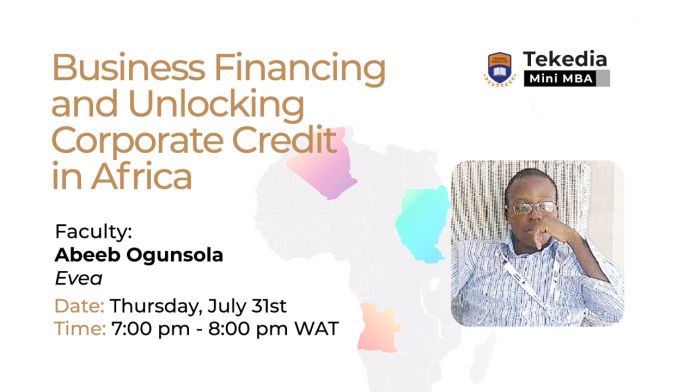
Business Financing and Unlocking Corporate Credit in Africa | Tekedia Mini-MBA

0

Access to business financing remains a critical challenge for many enterprises in Africa. Despite the continent’s entrepreneurial spirit and a growing pool of SMEs, traditional financing systems often exclude these businesses due to high collateral demands, limited credit histories, and fragmented financial markets. This exclusion stifles innovation and scalability, leaving many promising ventures underfunded and unable to expand. Informal financing still dominates, but it lacks the structure and sustainability necessary to drive long-term growth.

To unlock corporate credit across Africa, stakeholders must build robust credit infrastructure, deepen financial inclusion, and embrace innovative models such as fintech lending, invoice factoring, supply chain finance, and credit guarantees. Credit bureaus and digital identity systems can improve creditworthiness assessments. Public-private partnerships and regulatory reforms must also support more transparent and accessible lending ecosystems. By rethinking credit mechanisms and reducing structural barriers, Africa can catalyze entrepreneurship and industrial growth across its markets.

Tomorrow, at Tekedia Mini-MBA, Abeeb Ogunsola, CEO of Evea, a pioneering corporate credit company in Nigeria will educate on this, explaining the core difference between using a corporate credit card and a business loan – and how the firm has been funding companies via credit.

Thur, July 31 | 7pm-8pm WAT | Business Financing and Unlocking Corporate Credit in Africa – Abeeb Ogunsola, Evea | Zoom link https://school.tekedia.com/course/mmba18/

Generative AI Apps Soar in Usage and Revenue, With ChatGPT Leading the Surge

0

Generative AI apps are enjoying an unprecedented surge in popularity, as both user downloads and in-app spending reached record highs in the first half of 2025, according to a report released by market intelligence firm Sensor Tower.

Between January and June 2025, users downloaded generative AI apps 1.7 billion times—up from 1 billion in the latter half of 2024—signaling a staggering 70% growth. The category also recorded a dramatic spike in in-app purchases, with revenue nearly doubling to $1.87 billion from $932 million in H2 2024.

Users are not just downloading these apps; they’re spending more time than ever inside them. Sensor Tower reported that Gen AI apps saw over 15.6 billion hours of usage in H1 2025, a sharp rise from 8.5 billion hours in the second half of 2024. These figures spanned 426 billion sessions, a sign of increasing user engagement.

Asia Emerges as the AI Frontier

Asia outpaced all other regions in download growth, accounting for 42.6% of global Gen AI app installs in the first half of the year. Much of this momentum was driven by rising adoption in markets like India and Mainland China, with the region’s overall download growth reaching 80%, far ahead of 51% in Europe and 39% in North America.

When it comes to in-app purchases, Latin America registered the highest growth, though North America still holds the largest market share, pulling in 40% of total Gen AI in-app revenues.

ChatGPT Dominates Global Market—Except China

The growth of ChatGPT stood out in nearly every category. The app led in-app revenue rankings globally, except in China, where DeepSeek, a local competitor, topped the charts shortly after launch. While DeepSeek took the lead in downloads in China, ChatGPT maintained its dominance elsewhere, becoming the most-used generative AI assistant.

According to Sensor Tower, ChatGPT was used for an average of 12.1 days per month in H1 2025. That frequency places it alongside top social platforms like X and Reddit, with only Google having a better usage rate. Notably, weekend usage of ChatGPT also rose, suggesting that users now rely on the app not only for work-related tasks but also for lifestyle needs and personal support.

Beyond traditional uses like writing and coding, users are increasingly turning to ChatGPT for help with health and wellness, shopping recommendations, personal finance, and meal preparation. In Q2 2025 alone, over one-third of prompts were related to lifestyle and entertainment, demonstrating the app’s expanding role as a versatile assistant.

The report also found that 15% of ChatGPT users in the U.S. access it across both mobile and web, a multi-platform engagement that outpaces popular platforms like Temu and Threads, but still lags behind tech giants such as Google, Facebook, YouTube, and Amazon, where 25% or more of users interact across devices.

Generative AI Turns into a Branding Trend

The AI boom has also sparked a naming frenzy. The term “AI” now appears in over 100,000 app descriptions across the App Store and Play Store. In H1 2025, apps with “AI” in their names or descriptions were downloaded 7.5 billion times, accounting for about 10% of all app downloads globally.

Sensor Tower noted that developers across multiple categories—from photo editing and nutrition to test prep, translation, and hobby apps—are adding AI references to gain traction. This strategy has delivered measurable, though often short-lived, spikes in downloads.

“Apps that added terms like ‘AI’ or ‘LLM’ to their names or descriptions experienced a notable boost in downloads over the subsequent months,” the report stated, adding that while the term offers short-term visibility, it doesn’t guarantee long-term engagement unless backed by robust AI capabilities.

What It Means

The Sensor Tower report reinforces what many in the tech industry have anticipated—generative AI is not just a trend but a transformation. With increasing engagement times, cross-platform adoption, and diversified use cases, apps like ChatGPT are shifting how users interact with digital tools.

This means that as regional players like DeepSeek gain traction and new apps flood the market, the global generative AI space is setting the stage for even fiercer competition and innovation in the second half of the year.

Fintech Reclaims Dominance in African Startup Funding with $640M in H1 2025

0

The Fintech sector has once again taken the lead in African startup funding, attracting 45% of all investments (excluding exits) in the first half of 2025, securing approximately $640 million, according to a report by Africa; The Big Deal.

This performance is consistent with 2024’s 47% share and marks a rebound from a relative decline in previous years, when fintech’s share had dropped to 28%. Over the past 12 months, fintech has accounted for 51% of total funding, nearing its historical peak.

The five largest fintech deals in H1 2025 include;

Wave Money’s $137 million debt raise

Wave, a digital payment and mobile financial services provider, delivering secure, accessible, and reliable financial payments, secured $137 million in debt financing. The deal was led by Rand Merchant Bank, with backing from global development finance giants like British International Investment (BII), Finnfund, and Norfund.

The funding will help scale its mobile money operations and broaden financial access for underserved communities across the continent, the company said in a statement.

Bokra’s $59 million sukuk issuance in Egypt

Bokra, an Egyptian fintech successfully raised 3 billion Egyptian pounds ($58.9 million) through its inaugural sukuk issuance. The Mudaraba sukuks were issued for Aman Project Finance, a subsidiary of Aman Holding. This marked a key milestone for Bokra as it ventures into the project finance sector with Sharia-compliant debt instruments.

Stitch’s $55 million Series B in South Africa

South African payments infrastructure startup Stitch, secured a $55 million Series B funding round, bringing its total funding to $107 million. This investment according to the company will be used to expand its in-person payment offerings, enhance its online payment solutions, and facilitate its entry into card acquiring.

The round was led by QED Investors and included participation from Norrsken22, Flourish Ventures, Glynn Capital, and angel investor Trevor Noah. Existing investors like Ribbit Capital and PayPal Ventures also contribute

LemFi’s $53 million Series B in Nigeria

LemFi, a Nigerian-born fintech startup secured a $53 million Series B funding round. This investment, led by Highland Europe, will be used to expand LemFi’s global operations and introduce new financial products, particularly for the African diaspora.

The funding round also included participation from existing investors like Left Lane Capital, Palm Drive Capital, Y Combinator, and Endeavor Catalyst. This brings LemFi’s total funding to $85 million. 

MNT-Halan’s Tasaheel $50 million bond issuance in Egypt

Egyptian fintech giant MNT-Halan tapped into public debt markets after its subsidiary Tasaheel Holding Company successfully issued EGP 2.5 billion (approximately $49.4 million) in corporate bonds.

The move highlighted a growing trend among African credit-focused startups to seek alternative financing beyond traditional venture capital, increasingly looking towards local public debt markets and potential initial public offerings (IPOs) to fuel their growth and achieve sustainability.

Regional Deals

In terms of regional funding, Kenya stood out as an exception among the continent’s “Big Four” markets, raising just $23 million compared to over $100 million each for Nigeria, South Africa, and Egypt. The limited fintech funding in Kenya is likely due to the country’s uniquely robust mobile money ecosystem, where 95% of adults own a mobile money account and 82% use it weekly (GSMA).

Notably, Fintech deals also outpaced non-fintech transactions in size, with a median value of $1.7 million and an average of $10 million, compared to $0.5 million and $4.8 million, respectively, for non-fintech deals.

While fintech represented only 27% of total deal volume in H1 2025, its share increases to 31% for deals above $1 million and 46% for deals exceeding $10 million.

Palo Alto Networks to Acquire CyberArk in $25bn Bid to Dominate AI-Era Identity Security

0

Palo Alto Networks is set to acquire Israeli identity security firm CyberArk in a landmark deal valued at approximately $25 billion, signaling a strategic shift by the California-based cybersecurity giant to deepen its footprint in the fast-evolving identity protection space.

The move also underscores the heightened pace of consolidation in the cybersecurity industry, as companies scramble to fortify AI-era defenses.

The deal, expected to close during Palo Alto Networks’ fiscal year 2026, will see shareholders of CyberArk receive $45 per share, or 2.2005 shares of Palo Alto stock per CyberArk share. The offer represents a 26% premium over CyberArk’s closing share price on Friday. News of the acquisition, first hinted at in a Wall Street Journal report that sent CyberArk shares soaring 13%, now marks the latest megadeal in the red-hot cybersecurity M&A space.

Shares of Palo Alto Networks, however, took a hit, falling 7% on Wednesday after dropping 5% a day earlier, as investors digested the scale of the transaction. CyberArk’s stock, meanwhile, dipped slightly by 1%, following its initial rally earlier in the week.

Palo Alto Networks Chairman and CEO Nikesh Arora described the deal as both timely and essential, noting in an interview with CNBC’s Squawk on the Street that identity protection has reached an inflection point amid the rise of agentic AI systems.

“They are poised to go and disrupt this market and create the platform we need and also solve the upcoming problem with agentic AI,” Arora said. “From all those factors, we believe this is the right time to do something like this and be ready for the market in the next 12 to 18 months.”

Founded more than a decade ago and publicly listed since 2014, CyberArk is a pioneer in identity security—a branch of cybersecurity focused on protecting access credentials and privileges across cloud platforms, enterprise applications, and sensitive IT systems. Its software tools are critical to ensuring that only authorized personnel can access key infrastructure, a function made even more vital in an age where generative AI systems are rapidly being embedded into corporate networks. CyberArk competes with the likes of Okta and Microsoft in this sector.

With the acquisition, Palo Alto Networks aims to integrate identity security into its existing suite of cybersecurity solutions, a strategic leap that positions the company to offer comprehensive, AI-ready protection to clients. Arora believes Palo Alto’s global scale and enterprise reach will supercharge CyberArk’s platform, expanding its market presence far beyond its current capabilities.

This isn’t the first bold move by Palo Alto in the AI-driven cybersecurity race. In 2023, the company acquired Israeli startups Talon Cyber Security, Dig Security, and Zycada Networks, followed by the 2024 purchase of Protect AI to reinforce its AI toolkits. These acquisitions have helped Palo Alto build a powerful platform that addresses threats across cloud, data, and endpoint security domains, now intersecting more than ever with identity and access control.

Google’s $32 billion acquisition of cloud security startup Wiz in March—its biggest purchase to date—also sent shockwaves through the sector, emphasizing how big tech and cybersecurity players alike are pouring resources into shoring up digital defenses amid growing geopolitical and corporate threats.

Since taking over Palo Alto in 2018, Arora has aggressively expanded the company’s capabilities and grown its market value to around $120 billion. He says the CyberArk acquisition won’t be the last.

“I expect consolidation in the cybersecurity space to continue over the next five years,” Arora told CNBC. “Our job is to get this done, execute, deliver to the market and show our shareholders that we have the ability to execute these kinds of transactions, which I firmly believe we do.”

The integration of identity security into broader defense frameworks is no longer optional—it’s essential as businesses brace for more sophisticated AI-driven attacks and stricter compliance demands. With this acquisition, Palo Alto is making a $25 billion bet that it can lead the charge.

Trump Slaps India With 25% Tariff, Threatens Penalty Over Russia Ties and ‘Unfair’ Trade Practices

0

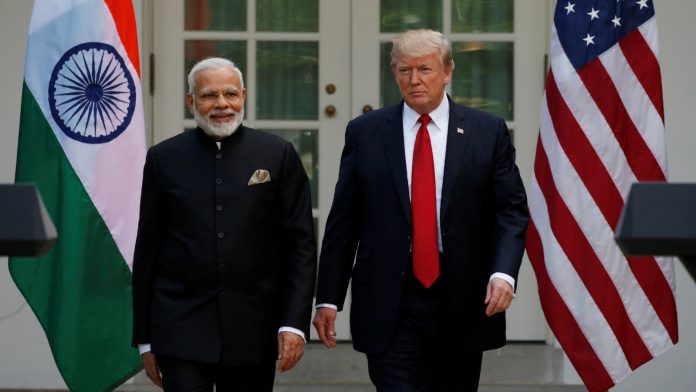
President Donald Trump announced Wednesday that India will face a 25% tariff on its exports to the United States starting August 1, along with an unspecified penalty over what he described as decades of unfair trade practices and its deepening ties with Russia.

The move marks another escalation in Trump’s sweeping tariff regime and could strain relations with one of Washington’s most strategic Asian partners.

The 25% tariff rate comes just weeks after Trump imposed a 26% levy on India during what he branded “Liberation Day.” While the latest figure is just one percent lower, it effectively revives the threat under a different banner.

“India will therefore be paying a tariff of 25%, plus a penalty for the above, starting on August first,” Trump wrote on Truth Social, insisting the measures are a response to both India’s protectionist policies and its purchase of Russian oil and military equipment.

“Remember, while India is our friend, we have, over the years, done relatively little business with them because their tariffs are far too high, among the highest in the world, and they have the most strenuous and obnoxious non-monetary trade barriers of any country,” Trump said, reiterating long-standing complaints about India’s import regime.

While India appeared to have dodged the 26% tariff earlier this year following high-level discussions and backchannel diplomacy, Trump’s latest move effectively brings that threat back to life, raising questions about the durability of any reprieve. Analysts say India now finds itself boxed in, facing growing pressure over its geopolitical balancing act and trade posture.

It’s not clear how India will handle the situation, especially as it continues to rely heavily on discounted Russian crude and legacy Russian military hardware amid its broader strategic autonomy doctrine.

The additional penalty Trump mentioned remains undefined, though observers speculate it could take the form of targeted duties on specific sectors, or even financial restrictions aimed at curbing energy trade with Moscow. Earlier this month, Trump threatened to impose secondary tariffs of up to 100% on countries buying Russian oil unless a ceasefire is reached in Ukraine—an unprecedented escalation that would hit major energy importers like India and China.

“India is Russia’s largest buyer of energy, along with China,” Trump added. “All things not good!”

The announcement also came with a warning about the United States’ trade deficit with India, which Trump described as “massive.” He has frequently justified his unilateral tariffs as necessary to reduce the deficit and protect American industry, despite broad skepticism from economists. Many of them have argued that higher tariffs ultimately raise costs for U.S. consumers, while failing to bring back low-skilled manufacturing jobs that have long since migrated to cheaper labor markets.

“Exporters won’t lower prices to offset tariffs. If Americans want to keep buying their products, they will have to pay the tariffs. If they don’t want to pay higher prices, exporters will just sell their products to consumers outside the U.S. who do not have to pay the tariffs,” Peter Schiff, chief economist at Euro Pacific, noted.

Earlier in the year, Trump declared America’s global trade deficit a national emergency, a move that gave him expanded legal authority to impose tariffs without congressional approval. It also signals how trade may continue to be a central pillar of Trump’s policy platform heading into the 2026 midterms, especially as he doubles down on economic nationalism.

India has not formally responded to the tariff decision, though New Delhi is likely weighing its options as it tries to preserve trade ties with Washington while continuing its pragmatic energy and defense partnerships with Russia. However, with no sign of Trump softening his tone, and the penalty still looming, the pressure on Prime Minister Narendra Modi’s government is likely to intensify in the coming weeks.