DD
MM
YYYY

PAGES

DD
MM
YYYY

spot_img

PAGES

Home Blog Page 795

Implications of Interactive Brokers Allowing Stablecoins and Crypto for Funding Accounts

0

Interactive Brokers Group, a major discount brokerage with a market value of approximately $110 billion, is exploring the integration of stablecoins to enable instant, 24/7 funding for brokerage accounts and to support transfers of commonly traded cryptocurrencies. Founder Thomas Peterffy has confirmed that the firm is considering either issuing its own stablecoin or allowing customers to use credible third-party stablecoins, such as those issued by Paxos, with whom they already have a partnership.

No final decision has been made on the implementation, and Peterffy has expressed caution about the fundamental value of cryptocurrencies, noting their volatility and regulatory risks. This move aligns with broader industry trends, as seen with competitors like Robinhood, which recently launched the USDG stablecoin via the Global Dollar Network. The initiative reflects Interactive Brokers’ strategy to enhance client convenience and adapt to the growing adoption of blockchain-based assets, supported by recent U.S. regulatory clarity, such as the GENIUS Act signed in July 2025.

Stablecoins enable instant, round-the-clock account funding, unlike traditional banking systems with delays from ACH transfers or bank hours. This could attract active traders needing rapid liquidity. Stablecoins, being blockchain-based, facilitate cross-border transactions with lower fees and faster settlement compared to wire transfers, appealing to Interactive Brokers’ international client base.

Allowing crypto transfers could position Interactive Brokers as a bridge between traditional finance and decentralized finance (DeFi), potentially attracting younger, crypto-savvy investors. By adopting stablecoins, Interactive Brokers could stay ahead of competitors like Charles Schwab or Fidelity, which have been slower to integrate crypto. It aligns with moves by platforms like Robinhood, which launched the USDG stablecoin in 2025.

Offering crypto funding could reduce client churn to crypto-native platforms like Coinbase or Binance, which already support digital asset transactions. This move signals innovation, reinforcing Interactive Brokers’ reputation as a forward-thinking brokerage amid growing blockchain adoption.

The GENIUS Act (signed July 2025) and other U.S. regulatory advancements provide a clearer framework for stablecoin integration, reducing legal risks. However, compliance with anti-money laundering (AML) and know-your-customer (KYC) regulations will be critical. While stablecoins are less volatile, broader crypto support introduces risks tied to price fluctuations, as noted by Thomas Peterffy. Robust risk management systems will be needed.

Relying on third-party stablecoin issuers like Paxos introduces counterparty risk, requiring careful vetting and oversight. Integrating stablecoin and crypto transfers requires significant investment in blockchain technology, wallet management, and cybersecurity to prevent hacks or fraud. Clients unfamiliar with crypto may need guidance, increasing customer support demands.

Handling high transaction volumes on blockchain networks could strain systems if not properly scaled. Mainstream brokerages adopting stablecoins could normalize digital assets, driving broader market acceptance and potentially stabilizing crypto prices. Crypto-funded accounts could increase trading volume on Interactive Brokers’ platform, boosting revenue from commissions and margin interest.

Widespread crypto integration might amplify market swings if investors rapidly move funds between crypto and traditional assets. Conservative clients may view crypto integration skeptically, citing volatility, security risks, and regulatory uncertainty. They may prefer Interactive Brokers to maintain a focus on traditional assets like stocks and bonds. Interactive Brokers risks alienating one group while appealing to the other. A balanced approach (e.g., optional crypto features) could mitigate this.

Regulators and risk-averse clients may demand stringent oversight, fearing stablecoins could enable illicit activities or destabilize financial systems. Some crypto users may resist KYC/AML requirements or prefer decentralized stablecoins over centralized ones like Paxos-issued tokens, creating friction with Interactive Brokers’ compliance-driven approach.

Leadership, like Thomas Peterffy, expresses caution about crypto’s value, reflecting a divide between embracing innovation and maintaining financial stability. This could lead to a conservative rollout, focusing on stablecoins rather than volatile assets like Bitcoin. A cautious approach may slow adoption compared to crypto-native platforms, but it could protect Interactive Brokers’ reputation for reliability among traditional clients.

Interactive Brokers’ potential adoption of stablecoins and crypto could transform its platform by enhancing funding speed, global access, and market relevance, but it faces challenges in regulatory compliance, infrastructure costs, and bridging the divide between traditional and crypto-focused clients. The firm’s cautious approach, likely focusing on stablecoins like Paxos’ offerings, aims to balance innovation with stability, but it must carefully manage client expectations and operational risks to succeed in this evolving financial landscape.


Tron’s Price Surges & HBAR’s Breakout Finds No Takers as Cold Wallet Reveals $2 Potential Post Listing

0

Why are Tron and Hedera suddenly among the top crypto gainers this week? It’s not a coincidence. The Tron (TRX) price surge followed its Nasdaq debut, while the Hedera (HBAR) price action spiked after its Robinhood listing. Both showed how quickly momentum can shift when real utility meets accessibility. But while traders chase the next breakout, Cold Wallet is doing something different, it’s building value in every transaction.

Its native token, CWT, is more than a utility asset. It’s a cashback engine that turns usage into passive earnings. With the token still priced at just $0.00924, and a live wallet already delivering gas, swap, and ramp rewards, CWT is a fully working part of a reward loop. The launch price is set at $0.35171, with targets around $2 post-listing. This isn’t speculation, it’s function tied to upside. Cold Wallet didn’t follow hype. It built its own.

Cold Wallet Is Turning Utility Into 285x Cashback Power

Most tokens promise utility. Cold Wallet’s CWT actually delivers it, and then pays you for using it. At just $0.00924, CWT is the only token tied to a real cashback economy where every gas fee, swap, and bridge gives you something back. The wallet is already live, the referral rewards are working, and the cashback tier system is active. This isn’t a concept waiting to launch. It’s a fully functioning ecosystem where your activity becomes passive income, and that makes it a serious contender among the next top crypto gainers.

What sets Cold Wallet apart isn’t just what it does, but how tight the reward loop is. You use the wallet ? earn CWT ? hold more ? unlock higher tiers ? earn even more. At the top Diamond tier, users can get up to 100% of gas fees and 50% of swap/ramp costs back in CWT. That’s not staking. That’s real-time usage getting returned to you, automatically.

Now combine that with the presale details. Cold Wallet is running a 150-stage presale, starting at $0.00924 and climbing with every stage. 40% of the 10B CWT supply is allocated to this sale, with 10% unlocked at TGE and the rest vesting over three months. Referral bonuses pay out 10% to referrers and 5% to referees, both from a dedicated bonus pool. And with a confirmed launch price of $0.35171, that’s already a 50x, with projections aiming toward $2, a 285x upside.

While others chase listings and speculation, Cold Wallet is quietly building the model that could make it one of the next top crypto gainers, powered by actual usage, not just hype.

Tron (TRX) Price Surge Fueled by Nasdaq Debut and Stablecoin Dominance

The Tron (TRX) price surge picked up serious momentum after Tron Inc completed a reverse merger with SRM Entertainment and listed on Nasdaq on July 24. Founder Justin Sun rang the opening bell, pushing TRX into the spotlight. The token saw a volume spike of over 30%, with 24-hour trading crossing $1.6 billion. TRX hit $0.32, up 1.5%, while analysts watched for a key breakout above $0.33 that could push the token toward $0.35 in the near term.

Beyond headlines, the fundamentals backed the move. Q2 revenue hit $915.9M, up 20.5%, and TRX’s market cap now sits around $26.5 billion. Tron now powers over 50% of global USDT transactions, with $81.7 billion in stablecoin value on-chain. The Tron (TRX) price surge isn’t just hype-driven, it’s riding on real network growth, strong financials, and broader visibility from a major U.S. listing.

Robinhood Listing Triggers Hedera (HBAR) Price Action Surge

The latest Hedera (HBAR) price action was sparked by its July 25 listing on Robinhood, which immediately pushed the token up by 12–14%. HBAR hit $0.2661 within hours, with daily volume crossing $900 million and over 713 million tokens traded in a single hour. That momentum lifted HBAR into the top 20 by market cap, now around $10.7 billion. The token also broke through key resistance levels, with traders eyeing $0.30 as the next target.

Technically, Hedera (HBAR) price action is now sitting above its 20- and 50-day SMAs, with a breakout from a falling wedge pattern suggesting further upside. RSI is near 66, bullish, but not overheated. Analysts say a sustained move above $0.299 could lead toward $0.327 or $0.373 in the near term. While short-term pullbacks are possible, especially if volume cools, the listing effect has given HBAR a strong boost at just the right time. 

Final thoughts

The Tron (TRX) price surge and Hedera (HBAR) price action show how fast utility and visibility can drive real gains. TRX got its boost from a Nasdaq debut and stablecoin volume dominance, while HBAR spiked after landing on Robinhood with record-breaking volume. Both now rank among the top crypto gainers, but there’s another project offering more than just price movement, it’s delivering value on every transaction.

Cold Wallet and its CWT token are building a working cashback economy. At just $0.007, with a confirmed $0.35171 launch price and a projected $2 upside, the math points to 285x potential. You don’t need to guess here, the wallet is already live, referrals are paying out, and users are earning cashback just by interacting with crypto. While others chase hype, Cold Wallet is quietly becoming the one ecosystem where more use actually means more return.


Explore Cold Wallet Now:

Presale: https://purchase.coldwallet.com/

Website: https://coldwallet.com/

X: https://x.com/coldwalletapp

Telegram: https://t.me/ColdWalletAppOfficial

U.S-EU Tariffs; EU Secures U.S. Market Access At The Cost of Significant Concessions

0

The U.S. and EU reached a trade deal on July setting a 15% tariff on most EU goods entering the U.S., down from a threatened 30%, with the EU committing to $750 billion in U.S. energy purchases and $600 billion in investments. This agreement, announced by President Donald Trump and EU Commission President Ursula von der Leyen, averted a potential trade war, bringing market stability. U.S. equity futures rose, with Nasdaq futures up 0.52% and S&P 500 futures up 0.4%.

In pre-market trading, defense stocks like Kratos Defense (+2.7%) and Lockheed Martin (+1.3%) gained due to EU military equipment purchase commitments, while LNG companies like Cheniere Energy (+4%) and Venture Global (+5.5%) surged on energy deal optimism. However, some analysts note the deal’s “unbalanced” nature may favor the U.S., potentially impacting EU economies, with lingering uncertainties in sectors like pharmaceuticals. Markets remain cautious amid upcoming economic data and Federal Reserve decisions.

The deal reduces tariffs on EU goods to 15%, down from a threatened 30%, stabilizing trade flows and benefiting U.S. consumers with lower prices on European imports like cars, luxury goods, and machinery. The EU’s $750 billion commitment to U.S. energy (primarily LNG) and $600 billion in investments, including military equipment, directly supports U.S. industries. Sectors tied to exports (e.g., agriculture, tech) benefit from reduced uncertainty, though gains may be tempered by upcoming Federal Reserve rate decisions and inflation data.

The deal strengthens U.S. influence over EU markets, particularly in energy, where the EU’s shift from Russian gas to U.S. LNG locks in long-term demand. This enhances U.S. strategic positioning but risks over-reliance on energy exports if global prices fluctuate. Lowered tariffs preserve EU access to the U.S. market, critical for exporters like Germany’s automotive sector (e.g., Volkswagen, BMW).

However, the 15% tariff still raises costs compared to pre-2025 levels, potentially squeezing profit margins for EU firms. The $1.35 trillion in energy and investment commitments strains EU budgets, particularly for smaller economies. The EU’s pivot to U.S. LNG reduces reliance on Russian energy but increases exposure to U.S. pricing and supply chain risks. This could raise energy costs for European consumers and industries, exacerbating inflation in countries like Italy and Spain.

European equities face mixed signals. While the deal avoids a worst-case scenario, the “unbalanced” terms favoring the U.S. could weaken EU competitiveness in sectors like pharmaceuticals, where U.S. firms may gain market share. European markets may lag U.S. counterparts until clarity emerges on implementation.

The deal is perceived as U.S.-centric, with Trump’s negotiation tactics securing significant EU commitments while offering relatively modest tariff reductions. This imbalance may strain U.S.-EU relations long-term, as EU leaders face domestic backlash over perceived capitulation. U.S. energy, defense, and agriculture sectors are clear winners, while EU manufacturers and consumers face higher costs.

Within the EU, wealthier nations like Germany may absorb tariff impacts better than southern or eastern member states, deepening intra-EU economic divides. The deal may pressure other trading partners (e.g., China, UK) to renegotiate terms with the U.S., potentially escalating global tariff tensions. Emerging markets reliant on EU trade could face secondary impacts from reduced European spending power.

Implementation details, such as tariff exemptions and timelines for EU investments, remain unclear, creating risks of disputes. The Federal Reserve’s next moves and EU economic data (e.g., Eurozone PMI) could overshadow trade deal optimism, affecting market trajectories. Political fallout in the EU, especially ahead of national elections, may lead to pushback against the deal, risking renegotiations.

In summary, the U.S. gains economically and geopolitically, with markets reflecting short-term optimism, while the EU secures market access at the cost of significant concessions, highlighting a divide that could reshape transatlantic trade dynamics.

Chipmaker Groq Nears $6bn Valuation with Fresh $600m Raise Amid Growing AI Hardware Momentum

0

AI chipmaker Groq is on track to close a major funding round that would raise approximately $600 million, boosting its valuation to nearly $6 billion—more than double its worth from just a year ago.

According to sources familiar with the matter, quoted by Bloomberg, the raise is being led by Austin-based venture firm Disruptive, which is reportedly contributing over $300 million to the round. Although the deal is not yet finalized and terms may shift, it signals one of the most aggressive jumps in valuation for an AI hardware startup in recent memory.

Groq last raised capital in August 2024, pulling in $640 million at a $2.8 billion valuation in a round led by BlackRock. That investment round also drew participation from major players, including Neuberger Berman, Cisco Investments, Samsung Catalyst Fund, KDDI, and Type One Ventures. With this new deal, Groq would bring its total funding to well over $2 billion.

Founded in 2016 by Jonathan Ross, a former Google engineer who helped design the search giant’s Tensor Processing Unit (TPU), Groq emerged from stealth with the goal of building high-performance chips specifically tailored for AI inference tasks that rely on running pre-trained AI models efficiently and at high speed. Ross’ vision materialized in Groq’s Language Processing Unit (LPU), a custom-designed processor built for ultra-fast and deterministic inference. The LPU has since become a core part of Groq’s pitch to clients looking for scalable, low-latency infrastructure to support large language models.

The company’s recent growth has been powered by landmark partnerships. In April, Groq signed a deal with Meta to provide AI infrastructure aimed at accelerating inference performance for Meta’s Llama 4 model. The following month, Groq announced a strategic partnership with Bell Canada to support the telecom giant’s nationwide AI infrastructure initiative. But perhaps most notably, Groq reportedly secured a $1.5 billion commitment from Saudi Arabia earlier this year, part of a sovereign initiative to build national AI capacity. That deal alone is expected to generate about $500 million in revenue for Groq in 2025.

These moves have positioned Groq as one of the most formidable challengers to Nvidia, which dominates the AI chip market with its GPUs. While Nvidia controls much of the training and inference pipeline, startups like Groq are beginning to carve out a niche by focusing on inference acceleration, an increasingly crucial aspect of AI deployment at scale.

Groq’s LPU has been benchmarked running Meta’s Llama?2?70B model at over 100 tokens per second, a figure that highlights the company’s ability to support large-scale real-time applications, from AI chatbots to edge computing tasks.

Despite its technical progress, Groq has remained a relatively quiet force compared to other hardware players. The company employs around 250 people, with operations across the U.S. and an expanding international presence. But the latest raise—if completed—marks a coming-of-age moment for Groq, elevating it into a rare class of privately-held AI infrastructure companies with multibillion-dollar valuations and active deployments.

Disruptive’s lead investment is also seen as a notable shift in investor appetite toward highly specialized AI hardware solutions. The firm’s reported $300 million commitment suggests strong confidence in Groq’s ability to scale quickly, even as the broader venture market remains cautious amid geopolitical tension and volatility in the chip supply chain.

Groq’s ambition is nothing short of global. CEO Jonathan Ross has said he expects the company to ship up to 2 million LPUs by the end of 2025, aiming to power more than half of the world’s inference computing needs. Whether that target is achievable remains to be seen, but the sheer magnitude of the company’s partnerships and funding suggests Groq is no longer just a startup with an experimental chip—it’s emerging as a cornerstone of next-generation AI infrastructure.

Neither Groq nor Disruptive has publicly commented on the deal, but sources close to the negotiations expect the funding round to close in the coming weeks.

India Overtakes China as Top Smartphone Exporter to U.S., Fueled by Apple’s Supply Chain Shift

0

India has emerged as the leading exporter of smartphones to the United States for the first time, overtaking China in a sweeping shift driven by Apple’s accelerating pivot away from Beijing.

According to research firm Canalys, smartphones assembled in India accounted for 44% of all U.S. imports in the second quarter of 2025, up from just 13% during the same period last year. In contrast, China’s share of U.S. smartphone imports collapsed to 25%, down sharply from 61% a year earlier. Vietnam’s share now stands at 30%, also ahead of China.

The figures reflect a broader realignment in the global electronics supply chain, particularly among top smartphone makers, as the trade war initiated under President Trump’s first term continues to reshape business decisions. A key driver of this shift is Apple’s deepening presence in India, spurred by persistent threats of tariffs on Chinese-made products and political pressure to manufacture closer to U.S. shores.

The surge in shipments from India was primarily driven by Apple’s accelerated shift toward the country at a time of heightened trade uncertainty between the U.S. and China, said Sanyam Chaurasia, a principal analyst at Canalys.

This marks the first time India exported more smartphones to the U.S. than to China.

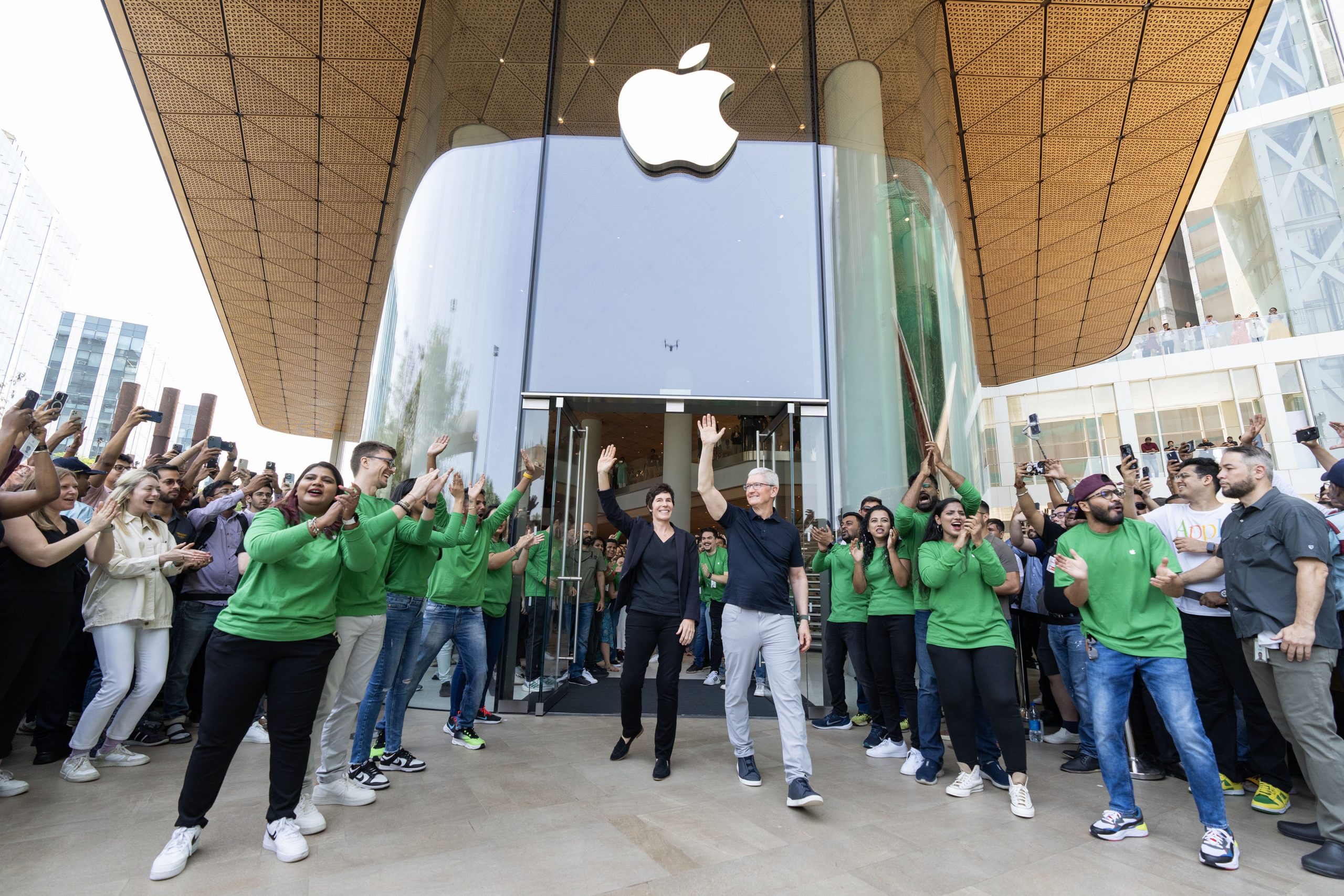
Apple, which began assembling iPhones in India in 2017, is now pushing to manufacture a quarter of all iPhones in the country within the next few years. Already, it has started trial production of the iPhone 16 Pro in India — a model historically manufactured almost exclusively in China due to the complexity of its components and high yield requirements. While these early units are not expected to fulfill the entirety of U.S. demand, the company’s move is significant in underlining India’s growing importance in Apple’s global strategy.

President Trump, who has made “Made in America” a cornerstone of his economic policy, has repeatedly urged Apple CEO Tim Cook to relocate more production to the United States. Although Cook has resisted calls to move core assembly stateside, citing feasibility and cost barriers, Apple has taken a middle path by expanding in India, a country with a large labor pool and government incentives for electronics manufacturing.

Trump’s administration earlier imposed high triple-digit tariffs on China-made electronics but opted for a more restrained 26% levy on Indian imports in April. While those tariffs are currently paused, the administration has warned that they could be reinstated after the August 1 deadline if trade talks with New Delhi don’t yield results. Despite the pause, the risk of unpredictable tariff policy continues to shape strategic decisions for global tech firms.

Meanwhile, Apple’s global peers such as Samsung and Motorola have also increased their assembly footprint in India, though their transition has been slower and more limited in scope. According to Canalys, Apple’s shift is unmatched in speed and scale.

Manufacturing firms like Agilian Technology, based in Guangdong, China, are also moving rapidly to reposition. The company is currently renovating a facility in India to begin partial production.

“The plan for India is moving ahead as fast as we can,” said Renaud Anjoran, Agilian’s executive vice president. Trial runs are scheduled in the coming weeks, with the goal of ramping to full-scale output.

However, the shift is not without hurdles. Industry executives say yield rates — which measure production efficiency — remain lower in India and Vietnam compared to China. Anjoran attributed these challenges to quality-control issues, an inexperienced workforce, and logistical inefficiencies.

Even as India captures a growing share of U.S.-bound smartphone assembly, the overall U.S. market is showing signs of cooling. iPhone shipments to the U.S. dropped by 11% in the second quarter to 13.3 million units, reversing strong growth earlier in the year. Globally, iPhone shipments fell 2% to 44.8 million units in the April-June period.

Investors have responded with caution. Apple shares have declined 14% in 2025 amid concerns about its heavy reliance on geopolitically fraught supply chains and rising competition in both hardware and artificial intelligence.

Still, analysts say the rebalancing of the supply chain is likely to continue. With Apple leading the charge and Washington maintaining pressure on China, India’s role as a key manufacturing base for the global smartphone market appears more solidified than ever.