DD
MM
YYYY

PAGES

DD
MM
YYYY

spot_img

PAGES

Home Blog Page 795

Coca-Cola Sells Chivita|Hollandia to UAC of Nigeria in Strategic Shift Toward Asset-Light Model

0

The Coca-Cola Company has announced a major divestment in Nigeria, entering into a definitive agreement to sell its wholly owned subsidiary, Chivita|Hollandia (CHI Limited), to UAC of Nigeria PLC.

The transaction marks a significant restructuring in Coca-Cola’s Africa strategy as the company intensifies its shift toward an asset-light business model while maintaining a firm presence in one of its key growth markets.

CHI Limited, the maker of Chivita and Hollandia, has established itself as a dominant force in Nigeria’s food and beverage sector. The Chivita line leads in the fruit juice segment, while Hollandia dominates the evaporated milk and drinking yoghurt market. The company also produces a range of snacks and still drinks, with a workforce of over 5,000 employees and a strong nationwide distribution network.

The sale, which is pending regulatory approval, aligns with Coca-Cola’s global strategy to focus on brands with the greatest potential to scale and to reduce ownership of capital-intensive operations. In its statement, the U.S. beverage giant reaffirmed its long-term commitment to Nigeria, referencing a planned $1 billion investment over the next five years, contingent on the existence of a stable and enabling environment.

“This transaction further supports The Coca-Cola Company’s strategy to operate a flexible and asset-light model and focus on brands that have the greatest potential to scale,” the company said.

UAC of Nigeria, a prominent holding company with interests across consumer goods, paints, logistics, and real estate, will absorb CHI Limited into its portfolio. With nine manufacturing facilities and multiple logistics hubs across Nigeria, UAC sees the acquisition as a chance to broaden its reach in the food and beverage space.

Fola Aiyesimoju, Group Managing Director of UAC, called the acquisition a strategic win, stating: “As a company with a strong presence in Africa, we are deeply committed to the continent’s growth. We are pleased to announce the acquisition of Chivita|Hollandia (CHI Limited), a leading dairy and juice business in the region. This acquisition presents significant potential to build on Chivita|Hollandia’s (CHI Limited’s) legacy of excellence and innovation.”

This acquisition presents significant potential to build on CHI Limited’s legacy of excellence and innovation.”

CHI Limited’s managing director, Eelco Weber, also expressed optimism about the deal, noting the company’s recent achievements and the strong position of its brands in the market. He praised the team of over 5,000 employees, calling the company a “Gold-rated Great Place to Work,” and added: “We see a bright future for Chivita|Hollandia (CHI Limited). With the strength of our team, coupled with the dedication of UAC, there will be exciting opportunities for further growth.”

Coca-Cola acquired full ownership of CHI Limited in 2019 after gradually increasing its stake, positioning itself to gain greater control over the value-added dairy and juice segments in Nigeria. However, with increasing cost pressures, currency volatility, and broader macroeconomic headwinds affecting multinationals operating in the region, Coca-Cola appears to be recalibrating its approach.

This move mirrors similar retrenchments by other multinational giants such as Unilever and PZ Cussons, who have either divested or reduced exposure to certain operations in Nigeria amid declining margins and operational inefficiencies.

The financial details of the CHI Limited transaction were not disclosed. However, Citi served as the exclusive financial advisor to The Coca-Cola Company, while McDermott Will & Emery acted as legal counsel. UAC was advised by Fasken Martineau LLP and Nigerian law firm Templars.

The deal adds to UAC’s growing footprint in the Nigerian consumer market, potentially positioning the company to capitalize on rising demand for branded dairy and juice products as consumer habits evolve. For Coca-Cola, it marks another step toward a leaner operating model while continuing to support its presence in Africa through strategic investments and partnerships.
Foxconn Bets Big on $1tn AI Data Center Boom With Strategic Stake in TECO

0

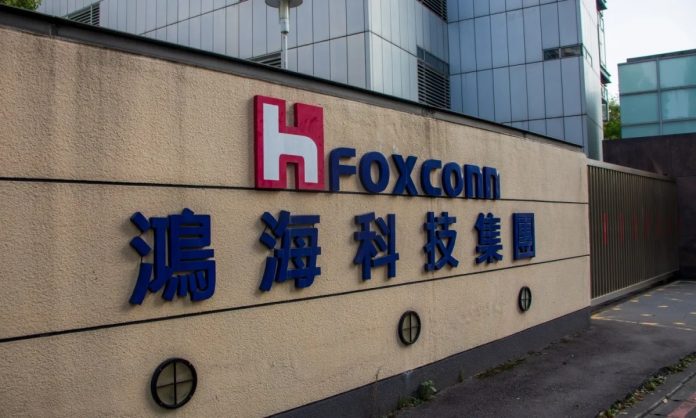
Foxconn is ramping up its push into artificial intelligence infrastructure, announcing on Wednesday that it is taking a 10% stake in TECO Electric & Machinery Co.

The move marks a strategic pivot for the Taiwanese electronics giant—formally known as Hon Hai Precision Industry—as it eyes a dominant role in the global race to build next-generation AI data centers.

The share-swap deal deepens cooperation between the two companies and comes at a moment of massive investment in data infrastructure, with analysts at Counterpoint Research estimating global spending on data centers could top $1 trillion in the coming years. Foxconn, best known for assembling Apple’s iPhones, is now attempting to leverage its manufacturing expertise into new markets, particularly AI, where it also partners with Nvidia to build servers designed for high-performance computing.

The new alliance with TECO is intended to create a “one-stop shop” for AI data centers, ranging from the design and manufacturing of server components to full-scale infrastructure deployment. TECO, which began as a motor manufacturer, now has experience in electric vehicles, energy storage systems, and large-scale industrial construction. The companies say the joint initiative will focus on Taiwan, parts of Asia, the Middle East, and the United States, where both firms already have a manufacturing footprint.

“The strategic partnership extends the two companies’ cooperation in the fields of low-carbon smart factories and energy services, toward being a one-stop solution for data centers going forward,” said TECO Chairman Morris Li in a statement.

Foxconn’s ambitions in this space are driven by the booming demand for AI processing power. The company previously forecast that its AI server revenue would double in the second quarter of 2025, driven by surging global demand for infrastructure supporting large language models and generative AI tools. Its servers are purpose-built for AI workloads, which require enormous amounts of computation and storage, far more than traditional enterprise applications.

Neil Shah, partner at Counterpoint Research, described the TECO-Foxconn alliance as a tightly integrated supply chain play.

“With the AI infrastructure boom, Hon Hai with a strategic alliance with TECO aims to extend and tightly integrate the server components and racks value chain from co-design, manufacturing to engineering and infrastructure construction services,” he said. “Hon Hai aims to become a one-stop shop for all the data center needs.”

Beyond server racks and chips, Foxconn is betting that full-stack offerings will be key to winning major contracts. That includes everything from the physical hardware to the energy-efficient cooling and power systems needed to operate hyperscale data centers. By pairing TECO’s energy and infrastructure engineering capabilities with its own electronics manufacturing capacity, Foxconn believes it can offer a vertically integrated solution that rivals global players like Siemens, ABB, and Mitsubishi Electric.

The partnership also ties into broader geopolitical shifts in supply chains. Both companies indicated their joint project will support U.S. manufacturing and help “reshape the global supply chain,” reflecting the increasing importance of localized production in sensitive technology sectors such as AI, semiconductors, and energy systems.

With tech giants like Microsoft, Amazon, and Google committing tens of billions of dollars to AI infrastructure in 2025 alone, Foxconn is aggressively positioning itself to become a crucial supplier not just of components, but of entire data center ecosystems. The tie-up with TECO underlines its intent to go beyond its legacy role in consumer devices and become a central player in the physical foundation of the AI age.

Trump Administration Confirms Approval for Limited Nvidia Chip Exports to China

0

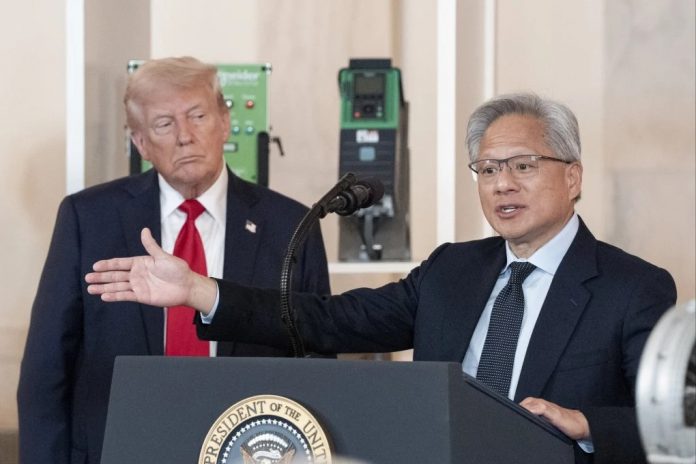
President Donald Trump’s administration has confirmed its approval for the controlled export of Nvidia’s H20 artificial intelligence chips to China, reversing months of uncertainty and raising fresh questions about how Washington intends to balance its desire for tech dominance with national security.

White House National Economic Adviser Kevin Hassett confirmed the decision in an interview with Fox News, saying the administration made a calculated call to let Nvidia resume chip shipments to prevent China from gaining a strategic foothold in the AI chip race.

“President Trump and his team decided to let the NVIDIA chips go” to maintain America’s technological edge, Hassett said. “One of the risks that you have to take seriously is that if China’s not buying chips from us, then they’re innovating, making their own chips. And the one thing we don’t want is for them to jump ahead in the race for chips.”

The chips in question are Nvidia’s H20 graphics processing units (GPUs), a version designed specifically for the Chinese market that complies with U.S. export restrictions by omitting some of the high-end capabilities found in versions sold elsewhere. The company confirmed earlier this month that it had filed applications with U.S. authorities to resume H20 shipments and has since been assured that licenses would be granted.

These chips represent the most powerful AI hardware that Nvidia can legally sell to Chinese customers under current restrictions. They were developed as a workaround after Trump’s earlier executive orders, later expanded under President Joe Biden, placed strict limits on exporting cutting-edge semiconductors and related technologies to China.

While the H20 chips are not as capable as Nvidia’s flagship AI models like the H100 or the A100—used to train large language models and power supercomputing applications—they remain among the most advanced options available to Chinese firms.

This marks a tactical shift for the Trump administration, which has steadily ratcheted up export controls to choke off Beijing’s access to high-performance computing tools. However, the latest decision reflects a growing concern within U.S. policy circles that locking China out entirely could backfire. Rather than halting its AI ambitions, China could double down on developing indigenous alternatives, potentially leading to an uncontrollable arms race in chip innovation.

Some analysts agree that it is strategically smarter to sell something slightly less advanced to China, so they stay on the U.S. playing field. It is believed that forcing China to innovate in isolation will cause the U.S. to lose the upper hand.

For Nvidia, the clearance to resume sales is a financial relief. China remains one of its biggest markets, and U.S. export controls have already affected billions in potential revenue. The company had reported a substantial drop in sales to China after restrictions intensified in late 2023, and CEO Jensen Huang had previously warned that overly aggressive bans could result in “permanent loss of opportunity” in a market too big to ignore.

Still, the decision has reignited criticism from hawks in Washington who argue that any export to China risks strengthening a geopolitical rival. Lawmakers who back stronger tech decoupling have called for tighter scrutiny of export waivers, fearing they could erode the effectiveness of America’s sanctions regime.

Despite those concerns, the Trump administration’s move underscores a broader strategic calculation—one that leans toward managed engagement rather than blanket exclusion.

Nvidia has not publicly commented on the political aspect of the clearance but said it expects to begin shipments once it receives final approval. Industry analysts predict a modest but meaningful revenue boost in the current quarter, though they caution that regulatory uncertainty remains a long-term challenge for chipmakers operating across U.S.-China lines.

The move also adds to the broader context of President Trump’s aggressive trade and technology strategy. From sweeping tariffs scheduled to begin August 1 to sweeping export bans on critical technology, Trump’s policies continue to reshape global supply chains and test the limits of globalization.


OpenAI Introduces Study Mode in ChatGPT to Enhance Active Learning

0

Artificial Intelligence company OpenAI has launched a new feature called study mode in ChatGPT, designed to transform students’ engagement with the AI tool.

Study mode is handy for homework help, test prep, and helps students learn new topics. With Study Mode, ChatGPT will ask users questions to test their understanding and, in some cases, refuse to offer direct answers unless students engage with the material.

ChatGPT has no doubt become one of the most widely used learning tools globally, assisting students with challenging homework, exam preparation, and exploring new concepts. However, its role in education has sparked an important question: how can AI ensure genuine learning rather than simply providing answers?

This has spurred the company to roll out study mode, a feature that aims to address this concern by guiding students through problems step by step, using interactive prompts and tailored support. Built with input from teachers, scientists, and pedagogy experts, the feature reflects a core set of evidence-based teaching strategies.

These strategies encourage active participation, manage cognitive load, promote self-reflection, spark curiosity, and provide actionable feedback. Essentially, study mode encourages students to engage with the material, reflect on what they’ve learned, and retain knowledge, making ChatGPT a tool for meaningful education rather than just a shortcut to answers.

Speaking on the launch, Robbie Torney, Senior Director of AI Programs at Common Sense Media said,

“Instead of doing the work for them, study mode encourages students to think critically about their learning. Features like these are a positive step toward effective AI use for learning. Even in the AI era, the best learning still happens when students are excited about and actively engaging with the lesson material.”

Starting today, the feature is available to all logged-in users across the Free, Plus, Pro, and Team plans, with ChatGPT Edu set to receive it in the coming weeks.

Key Features of Study Mode

Interactive prompts: Combines Socratic questioning, hints, and self-reflection prompts to guide understanding and promote active learning, instead of providing answers outright.

Scaffolded responses: Information is organized into easy-to-follow sections that highlight the key connections between topics, keeping information engaging with just the right amount of context and reducing overwhelm for complex topics.

Personalized support: Lessons are tailored to the right level for the user, based on questions that assess skill level and memory from previous chats.

Knowledge checks: Quizzes and open-ended questions, along with personalized feedback to track progress, support knowledge retention, and the ability to apply that knowledge in new contexts.

Flexibility: Easily toggle study mode on and off during a conversation, giving you the flexibility to adapt to your learning goals in each conversation.

Currently, study mode is powered by custom system instructions, allowing OpenAI to gather real-time student feedback and improve the experience quickly, even if it leads to occasional inconsistencies. Over time, OpenAI plans to train these behaviors directly into its main models, refining them through iteration and user insights.

The launch of this feature marks the first step in OpenAI’s broader mission to make ChatGPT a more effective educational tool, helping students not just complete tasks, but truly understand and retain what they learn.

Best Crypto to Buy Right Now: BlockDAG, SUI, XRP & PI Set the Pace for 2025

0

With crypto activity picking up again, many are exploring the best crypto to buy right now before the next price wave. Whether the focus is on scale, active communities, or broader adoption, several altcoins are beginning to stand out.

The second half of 2025 shows strong signs of growth in the altcoin space. From base-layer blockchains to financial platforms, interest is building quickly. BlockDAG (BDAG) has moved to the center of attention with a fast-selling presale and growing network. At the same time, SUI, XRP, and Pi Network are moving forward with new updates, market news, and more users joining in.

If you’re still observing the market, here are four names being closely watched as the best crypto to buy right now in 2025.

BlockDAG (BDAG) 

BlockDAG is gaining attention as one of the best cryptos to buy right now, and recent figures show why. More than $355 million has been raised in its current presale, with over 24.4 billion BDAG already sold. The price is $0.0016 now, with a confirmed listing at $0.05, showing a possible 3,025% gain before launch.

What makes it different is the usage already happening. More than 2 million people are mining BDAG each day using the X1 app. The X10 home miner, linked to the app, has sold 18,800 units and can earn up to 200 BDAG per day. This setup is running now, before the August 11 GLOBAL LAUNCH release.

Also, BlockDAG’s No Vesting Pass means all BDAG bought during this time will be fully unlocked at launch. With more than 4,500 developers already building over 300 apps, this Layer 1 chain is not waiting to grow. It’s showing progress in real time.

SUI (SUI)

SUI is gaining attention as one of the best crypto to buy right now after a sharp 15% rise that sent it above $4.23. With 62% growth over the past month, traders are now watching resistance levels between $4.35 and $4.50. Some analysts are tracking the AB=CD harmonic pattern, with projected targets ranging from $7 to $10 if the trend continues.

SUI also got a boost from a recent 21Shares ETF application that is now under SEC review. This filing points to growing interest in SUI’s setup and its position in a changing regulatory environment. RSI indicators are strong, and the $4.12 area remains a solid support zone. If the ETF advances, SUI could continue to climb.

With rising total value locked, increased stablecoin use, and steady on-chain development, SUI is earning attention as one of the best cryptos to buy right now for those looking into next-gen Layer 1s with active ecosystems.

XRP (Ripple)

Even with a recent 14% pullback, XRP is still considered one of the best cryptos to buy right now thanks to its expanding use in larger financial systems and ETF-related buzz. XRP trades near $3.18 after falling from $3.60. A $175M transfer by co-founder Chris Larsen and increased whale activity drew notice, while futures volume climbed to almost $4 billion, showing higher trader activity.

Support has returned at $2.00, and if XRP can move back to $3.60 with strong volume, it may re-enter a bullish zone. Meanwhile, talk around its potential use in future U.S. digital reserves continues to grow, building on its long-term narrative.

For those following trends in access, rules, and payment-focused networks, XRP remains in the conversation for the best crypto to buy right now. The recent drop may give short-term room for position planning.

Pi Network (PI):

Pi Network is drawing attention in 2025 with major user growth and new listings. With over 13 million users now on its mainnet and more apps joining the Pi App Studio, it’s becoming one of the most active user-built crypto platforms.

Recent listings on Gate.io, Swapfone, and OKX have improved how users can access PI. Wallet upgrades now offer direct on-ramps and a built-in “Buy” option, removing some barriers for new users. More than 10.8 million PI are about to unlock, which may briefly affect the price but also add trading volume.

While short-term moves may face some pressure, Pi’s size and steady updates make it a notable ecosystem to follow in 2025.

What’s Next: Exploring the Best Crypto to Buy Right Now

With so many projects making noise, only a few are pushing forward with real progress and active growth. BlockDAG stands out with its strong presale and live mining tools. SUI is gaining from institutional signals. XRP continues to make its case in global finance. Pi Network is growing through its large user base and platform updates.

Among them, BlockDAG is shaping its own path. The 3,025% ROI window, combined with the No Vesting Pass and active developer network, places it in a rare group. With millions mining daily and a working system already in motion, it is gaining attention ahead of the GLOBAL LAUNCH release.

For anyone exploring the best crypto to buy right now, these four projects are leading the way. As the market moves quickly, early choices could shape the rest of the year.