DD
MM
YYYY

PAGES

DD
MM
YYYY

spot_img

PAGES

Home Blog Page 8

OpenAI Dominates Congress’ AI Spending As ChatGPT Becomes The Default Tool on Capitol Hill

0

OpenAI has established an early lead in the race for influence on Capitol Hill, accounting for nearly 90% of identifiable artificial intelligence spending by the U.S. House of Representatives, making ChatGPT the default generative AI platform for lawmakers and congressional staff.

A CNBC analysis of House disbursement records shows OpenAI captured roughly nine out of every 10 dollars spent on named AI tools between April 1, 2025 and March 31, 2026. The spending records, while incomplete, offer one of the clearest public snapshots yet of how generative AI is being integrated into the daily operations of Congress.

The analysis identified at least $113,740 spent on identifiable AI vendors during the period. OpenAI accounted for $100,580 across 798 transactions, representing approximately 88% of total spending and 96% of all AI-related purchases. Rival Anthropic ranked a distant second, with Claude generating $13,160 from just 37 transactions.

The figures likely understate AI adoption across Congress because they exclude free chatbot accounts, AI capabilities bundled into broader software subscriptions such as Microsoft Copilot, reimbursements that do not identify the underlying software, and nearly all Senate usage. Even so, the data indicates that at least one-sixth of House offices have already purchased dedicated AI tools, suggesting that generative AI is rapidly becoming embedded in legislative work.

The spending race is strategically significant because the companies competing for congressional adoption are the same firms lobbying lawmakers and regulators over AI policy, procurement rules and future regulation.

Congressional offices are increasingly relying on AI to summarize legislation, prepare policy briefings, draft constituent correspondence, produce hearing materials, analyze bills and organize research, allowing staff to process growing workloads with limited resources.

Representative Julie Fedorchak, a Republican from North Dakota, said ChatGPT has transformed how her office prepares legislative materials.

“My staff used to spend hours writing memos to prepare me for the dozen-plus meetings I would have in a day,” Fedorchak said.

She said her office created a searchable database containing legislation, constituent submissions and policy materials that now enables ChatGPT to generate briefing documents automatically.

“It’s saving dozens and dozens of hours every week of staff time,” she said.

The productivity gains come as congressional offices face mounting pressure from growing volumes of information, a trend that AI itself is accelerating.

Marci Harris, chief executive of the POPVOX Foundation, said staff are confronting an unprecedented information overload.

“Staffers are famously overwhelmed, and actually AI is exacerbating that,” Harris said, noting that lobbyists, advocacy groups and constituents are themselves using AI to produce longer, more detailed and more frequent communications directed at Congress.

While OpenAI enjoys a commanding lead, Harris cautioned that Congress should avoid becoming dependent on a single platform as lawmakers prepare legislation governing the industry.

“It’s going to be their job to regulate it, so they need to be able to get their hands on all of them and understand the way that they work,” she said.

The political breakdown of AI spending reveals another notable trend. Democratic House offices accounted for $54,165 in identified AI purchases, more than three times the $15,782 spent by Republican offices.

ChatGPT subscriptions appeared in 44 Democratic offices and 27 Republican offices, while Anthropic’s Claude appeared in five Democratic offices and just one Republican office.

The figures are striking because many Democratic lawmakers have simultaneously raised concerns about AI’s potential impact on employment, privacy, elections, misinformation, civil rights and market concentration.

Congressional officials stress that AI is intended to assist staff rather than replace human judgment.

Representative James Walkinshaw, a Democrat from Virginia, said AI can streamline administrative work but should never make decisions affecting constituents.

“Our caseworkers in our district office can use AI to help organize casework requests, maybe expedite them, move things along faster,” Walkinshaw said.

“But when they’re making decisions related to a constituent’s case — are we going to advocate for our constituent with the Social Security Administration or with IRS? — that has to be a human decision, not an AI decision.”

OpenAI’s dominance appears to stem from its early entry into Congress.

In 2023, the House Digital Service launched an AI working group and distributed the first 40 ChatGPT Plus licenses to bipartisan congressional staff, giving OpenAI a significant first-mover advantage before competing products gained traction.

Marci Harris compared ChatGPT’s early brand recognition to household consumer products.

“OpenAI was the firm that they heard about,” she said.

“In the early days, ChatGPT was almost synonymous with AI — the way Kleenex is with tissues or Band-Aid is with bandages.”

The company also strengthened its presence through training initiatives. The Congressional Management Foundation partnered with OpenAI to provide ChatGPT training sessions for House and Senate staff, with OpenAI engineers participating directly in the programme. Some congressional offices have also received product training from OpenAI and Microsoft.

Meanwhile, AI companies are intensifying their lobbying efforts in Washington as Congress and federal agencies determine how the technology should be regulated.

According to Issue One, OpenAI spent $1 million on federal lobbying during the first quarter of 2026, an 82.5% increase from a year earlier. Anthropic spent nearly $1.6 million during the same period, more than tripling its lobbying expenditure year-on-year.

Interest in Anthropic also rose after a high-profile dispute with the U.S. Department of Defense earlier this year.

“After the whole Department of Defense-Anthropic blowup, we had people calling us saying, ‘I want to use Claude. Tell me about Claude,'” Harris said.

The concentration of congressional AI spending has also prompted governance questions.

Eric Petry of the Brennan Center for Justice said government institutions should ensure AI purchasing decisions remain driven by performance rather than politics.

“It may be the case that one product is better suited for the government applications, or maybe one product is better than the other,” Petry said.

“But if it’s based on partisan preferences, or there’s politics at play, then it becomes really concerning.”

He added that the same principle should apply whether the government is purchasing enterprise-scale AI systems or individual software subscriptions.

“We want to make sure that taxpayer dollars are being used to give the government the best tools available, and not to reward political favorites,” Petry said.

Although the available spending records represent only a partial picture of AI adoption across Congress, they illustrate OpenAI’s significant first-mover advantage at a time when lawmakers are shaping the regulatory framework that will govern the industry’s future. The data also suggests that ChatGPT has evolved beyond a productivity tool into core legislative infrastructure, positioning OpenAI with substantial influence as artificial intelligence becomes increasingly embedded in policymaking on Capitol Hill.


What Makes an Online College Basketball Community Welcoming and Worth Joining

0

College basketball gives fans endless reasons to talk. A single evening can produce a major upset, a disputed call and a result that changes the tournament picture. An online community becomes valuable when it helps fans understand those moments together. Members should be able to celebrate, question predictions, compare teams and learn without fearing that every disagreement will become personal.

Fans arrive with different backgrounds, interests and levels of knowledge. Online, people look up all kinds of things: bracket predictions, news updates, or even senior dating with LadaDate. That range of interests reminds us that a sports community contains complete people, not identical profiles. Some members track every conference, while others mainly appear during March. A welcoming group gives both types a clear way into the conversation.

Clear Rules Create Predictable Conversations

Community rules should explain what members may discuss and how they should behave. General instructions such as be nice are difficult to enforce because everyone interprets them differently. Useful rules identify conduct that crosses the line. Examples include personal insults, discriminatory language, threats, doxxing, spam, repeated trolling and links to illegal streams.

The distinction between criticism and abuse must also be clear. Saying that a coach managed the final possession poorly is sports analysis. Calling another member stupid for defending that decision is a personal attack.

A practical rule page should answer three questions:

  • Which behaviour leads to a warning or removal?
  • How can members report a serious problem?
  • Who makes the final moderation decision?

Visible answers reduce confusion and help newcomers participate without studying months of old arguments.

Good Moderation Feels Consistent and Present

Moderation means reviewing posts, comments and user behaviour to keep a community usable. Effective moderators do more than remove offensive material after damage has spread. They set expectations before major games, monitor busy threads and respond when members report problems.

Consistency matters more than severity. A moderator who ignores insults from popular users but punishes newcomers creates a private club, not a healthy community. Similar behaviour should receive a similar response regardless of team loyalty, seniority or posting history. When a decision may seem confusing, a brief explanation can prevent rumours about bias.

Strong moderation usually includes several simple practices:

  • Game threads receive closer attention during heated moments.
  • Repeat offenders face stronger consequences than first-time offenders.
  • Members can question decisions without attacking the moderators.

Moderators should also understand the college basketball calendar. Selection Sunday, rivalry games, conference tournaments, coaching changes and transfer announcements create sudden traffic spikes. Extra attention during those periods can stop one reckless comment from controlling the discussion.

Knowledge Should Be Shared Without Showing Off

A worthwhile basketball community helps members understand the sport. Experienced fans can explain NET rankings, quadrant records, automatic bids and at-large selections in plain language. A quadrant record groups results according to opponent quality and game location. It helps describe a team’s résumé, but it does not decide a tournament bid by itself.

Members should support factual claims with reliable information. When discussing an injury, coaching report or schedule change, citing the school, conference or an established reporter is better than repeating an anonymous screenshot. Opinions still belong in the conversation, but members should identify them as opinions. A prediction about a bubble team differs from a confirmed committee announcement.

Welcoming groups also make space for basic questions. A person asking why a 25-win team missed the tournament may not understand schedule strength or automatic qualifiers. A useful answer explains those factors instead of mocking the question. That response can turn an occasional visitor into a regular contributor.

Rivalries Need Limits

Rivalries add humour and energy when members criticize teams, traditions or past results. Trouble begins when discussion targets private individuals, family members, appearance, identity or personal information. Fans can dislike a program without harassing its supporters.

Healthy rivalry usually follows three boundaries:

  • Criticize performances, decisions and public sports claims.
  • Avoid wishing injuries or physical harm on anyone.
  • Do not enter rival communities only to provoke reactions.

These limits protect the fun rather than weakening it. Members argue more freely when they trust moderators to stop threats, discrimination and coordinated harassment.

Participation Should Offer More Than Reactions

The best communities give people several ways to contribute. Live game threads serve quick reactions, while longer posts allow careful analysis. Bracket challenges, prediction threads, conference previews and newcomer questions create different entry points.

Recognition should reward useful participation rather than sheer volume. A thoughtful explanation, accurate correction or well-researched mid-major preview adds more value than dozens of repetitive comments. Regular members can strengthen the culture by welcoming first-time posters, crediting original work and correcting mistakes without humiliation.

A community becomes worth joining when people leave with something useful. They may understand a team better, discover a smaller conference, improve a bracket or enjoy a close game with others. Clear rules, steady moderation and generous discussion turn temporary traffic into a group that fans choose to revisit.

i1RM Casino Free Credit 2026: Malaysia’s Top Bonus Guide

0

When it comes to finding value in the Malaysian online gaming scene, promotions are everything. Players are constantly looking for platforms that reward their loyalty and give them a head start without forcing them to risk too much of their own money right away. If you are tracking the best promotional offers available this year, i1rm has established itself as a major standout, particularly known for its extensive lineup of free credit deals.

Let us take a comprehensive look at the promotional ecosystem at i1rm, what kind of bonuses you can expect to find, and how you can maximize them.

The Appeal of Casino Bonuses in Malaysia

Online gaming platforms compete fiercely for local players, and the most effective way they do this is through promotional rewards. For players, these bonuses act as a crucial buffer. Whether it is a small trial credit to test a new slot or a rebate that cushions losses, these perks change the entire gameplay experience.

Platforms that offer a wide variety of structured incentives usually attract more active communities because players feel they are getting extra mileage out of their time and deposits.

Overview of Popular Promotional Angles

Looking closely at what platform reward structures typically offer, several types of bonuses catch the eye of Malaysian players:

1. New Register Free Credits

For absolute beginners, finding a platform that offers a registration bonus without requiring an upfront payment is the ultimate goal. These introductory amounts let you set up an account, test the platform speed, and try out a few games completely on the house.

2. Daily and Timed Free Credits

Some of the most popular incentives involve recurring daily claims. Platforms often release scheduled free credit drops during specific time windows. This keeps active players returning daily to check out the latest drops, spinning reels or trying table games without reaching for their wallets.

3. Rebates and Cashback Offers

Even the luckiest players experience cold streaks. A dependable lose rebate program ensures that a percentage of your losses over a specific period (such as a 2 day or weekly cycle) is returned to your account. It keeps your bankroll alive and gives you a second chance to bounce back.

4. Referral and Share Bonuses

Spreading the word can also be profitable. Many reward frameworks include free share bonuses or downline deposit rewards. When you invite friends to join via your link or trusted channels, you receive extra credits to boost your balance.

Strategic Tips for Claiming Free Credits

Claiming free credits is exciting, but turning those promotional funds into withdrawable cash requires a smart approach. Keep these pointers in mind:

  • Understand the Turnover Rules: Every free credit or bonus comes with a wagering requirement. Make sure you check how many times you must play through the bonus amount before hitting the cashout button.
  • Check Game Eligibility: Some bonuses apply strictly to specific online slots, while others can be used across live dealer tables or sportsbooks. Always verify where you can use your credits.
  • Stay Updated: Promotional lineups change frequently. Keeping an eye on official announcement channels or trusted community updates ensures you never miss out on limited time credit drops.

Conclusion

Navigating the world of online promotions does not have to be complicated. Platforms like i1rm keep things engaging by providing a diverse mix of registration rewards, daily credit opportunities, and loss rebates tailored to the local market.

By understanding how these bonuses work and keeping a close eye on the terms, Malaysian players can significantly enhance their gaming sessions, test new strategies safely, and enjoy a much more rewarding overall experience.

BlockDAG Announces RedotPay Partnership To Power Super App With Global Transfers As Uniswap & Ethereum Stay Range-Bound

0

Recent network upgrades and scaling benchmarks highlight a growing industry emphasis on sustainable execution speed and utility. Uniswap reflects this trend through expanding multi-chain deployment while maintaining historical price ranges between $3.80 and $12.00, whereas Ethereum consolidates within its typical $1,800 to $3,500 boundaries while optimizing secondary rollup performance.

Stepping beyond basic decentralized finance, BlockDAG bridges on-chain capabilities with everyday consumer transactions through a groundbreaking infrastructure expansion.

By integrating its features into a unified Super App alongside RedotPay payments, BlockDAG enables users to spend digital assets seamlessly across millions of worldwide merchants. Currently offered at an entry price of $0.000000017, BlockDAG combines impressive scaling metrics over 7,000 transactions per second with expanding global holder growth to redefine practical real-world usability.

Uniswap Price Analysis Reflects Multi-Chain DeFi Growth

Uniswap is a leading decentralized finance automated market maker, enabling permissionless token swaps through open-source smart contracts. Its expanding Earn module and Layer-2 liquidity support aim to increase adoption and attract institutional trading activity.

Investors tracking Uniswap price movements often focus on execution efficiency, fee mechanisms, and total value locked. Historically, Uniswap has traded within a range of approximately $3.80 to $12.00. While multi-chain growth supports adoption, challenges like Ethereum costs and execution limits continue to impact its long-term potential.

Ethereum Price Prediction Focuses On Infrastructure Progress

Ethereum continues serving as a foundation for smart contract development, powering a large portion of decentralized applications, DeFi protocols, and asset tokenization projects. Its ongoing upgrades focus on improving scalability through Layer-2 rollup architecture, data availability improvements, and blob space optimization designed to reduce transaction costs across secondary networks.

Ethereum price predictions often consider validator activity, gas usage, and staking performance to assess adoption and market trends. Historically, Ethereum has consolidated between $1,800 and $3,500 during major cycles. Despite its strong ecosystem and decentralization, network congestion and slower settlement speeds remain challenges.

BlockDAG Partners With RedotPay To Build A Real-World Payment Ecosystem

BlockDAG is expanding beyond traditional blockchain functions through a major partnership with payment infrastructure provider RedotPay. The collaboration is designed to transform the BlockDAG ecosystem into a practical spending network where users can manage and use their digital assets in everyday situations.

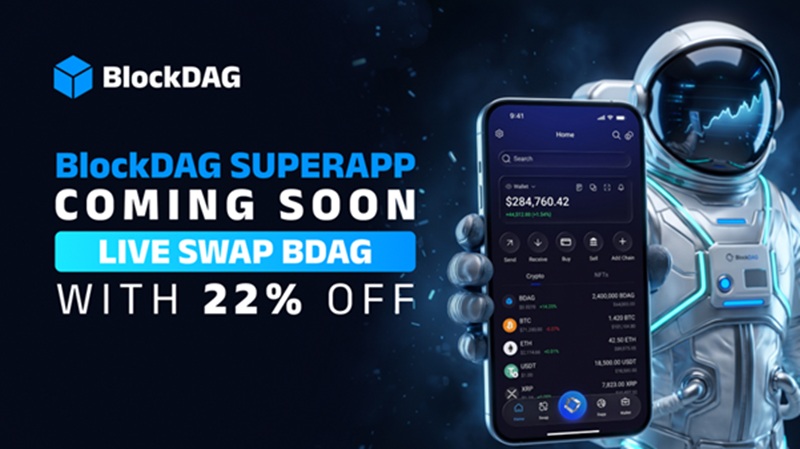
Through the upcoming BlockDAG Super App, users will have access to multiple features within a single mobile environment, including mobile mining, BDAG token claiming, staking opportunities, multi-asset storage, Web3 gaming, and international wire transfers.

By integrating RedotPay’s debit card issuing technology, BlockDAG holders will be able to spend BDAG holdings across millions of global point-of-sale locations and online merchants. The project highlights a focus on connecting blockchain ownership with real-world financial activity.

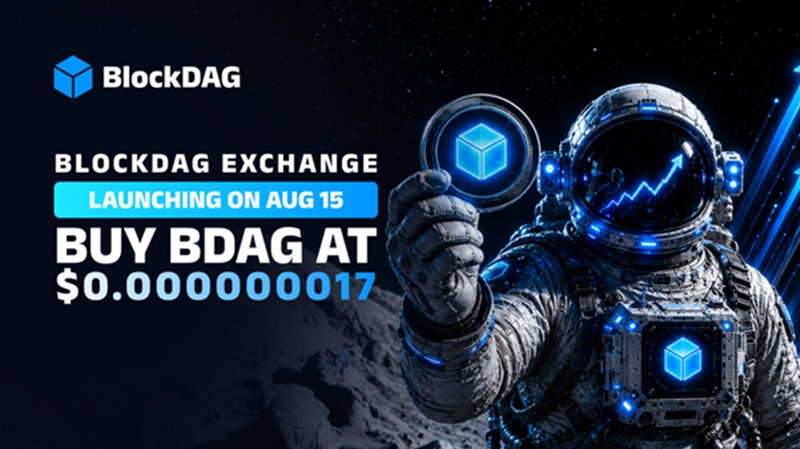
BlockDAG’s current pricing campaign presents an entry price of $0.000000017 per coin, alongside a 22% off Live Swap promotion and a $0.025 Buyback liquidity mechanism. The project has positioned this stage as an opportunity for users following its rapid ecosystem expansion.

The network’s growth metrics demonstrate increasing community participation. BlockDAG reports more than 312,000 unique coin holders, gaining over 1,000 new accounts daily. Additionally, 4 million users are engaging with the X1 mining app, while 20,000 hardware miners are being shipped internationally.

Supporting this growth, BlockDAG completed a major RPC infrastructure upgrade capable of handling 100,000 transactions within 24 hours. The updated architecture uses AWS deployment, optimized mempools, dynamic gas pricing, and enhanced execution environments to improve performance.

The result is a high-speed blockchain engine delivering more than 7,000 transactions per second with two-second consensus finality. This infrastructure is designed to support large-scale commercial usage while providing the speed required for a broader consumer-focused crypto ecosystem.

Conclusion

The crypto landscape continues evolving as users demand faster, simpler, and more practical blockchain solutions. Uniswap price trends and Ethereum price prediction insights remain important for understanding established decentralized ecosystems and their future direction.

However, BlockDAG combines high-performance blockchain technology with real-world payments through its RedotPay partnership and Super App vision. With 7,000+ TPS, mining, staking, and spending features, it aims to drive blockchain adoption beyond speculation toward everyday utility. Its integrated ecosystem highlights a future where digital assets become more efficient, accessible, and practical.

Presale: https://purchase.blockdag.network

Website: https://blockdag.network

Telegram: https://t.me/blockDAGnetworkOfficial

Discord: https://discord.gg/Q7BxghMVyu

Exchange & Super App Arriving Soon: Why BlockDAG’s Journey Toward 3000x Returns Is Leaving Ondo & Pi Behind

0

Ondo recently approved the permanent burn of 100 million tokens, equal to 10% of its total supply. Despite the move, ONDO remains near $0.38, proving that a major token burn alone is not enough to drive price gains.

Pi Network, meanwhile, is struggling to stay above its all-time low as node operators rush to meet the August 11 compliance deadline. Rather than building momentum, both projects are focused on holding their current positions.

BlockDAG, however, is preparing for something on an entirely different scale. Rather than waiting for the market to react, it has two major launches lined up in quick succession. The BlockDAG Exchange is scheduled to debut in August, followed by the Super App in September.

Together, these launches could become the driving force behind a potential 3000x price expansion after more than two years of steady development. That combination is exactly why BlockDAG continues to dominate conversations about the next crypto to explode.

BlockDAG Sets the Stage With 2 Powerful Launches

Some crypto projects wait years for a defining moment. BlockDAG has two of them arriving almost back-to-back. The first milestone lands in August with the official launch of the BlockDAG Exchange.

This is not simply another exchange listing on an existing platform. It is a fully owned BlockDAG trading ecosystem designed to support spot trading, perpetual contracts, staking opportunities, VIP membership levels, and discounted trading fees that are paid directly using BDAG. Every transaction completed on the platform contributes to strengthening BDAG demand inside the ecosystem itself.

Then, only weeks later, September introduces the BlockDAG Super App, bringing together mining, wallet services, staking, trading, casino access, and payment functionality into one connected ecosystem. Users will be able to Mine, Earn, Store, Stake, Trade, Swap, Play, Spend, and Repeat without leaving the platform.

Instead of value constantly flowing outward, the entire system is designed to keep activity circulating within the BlockDAG ecosystem. That is one of the biggest reasons BlockDAG continues appearing on lists highlighting the next crypto to explode as the final months of the year approach.

Even more exciting is the fact that these developments are already backed by real progress rather than future promises. The BlockDAG mainnet is already operational using GHOSTDAG consensus. Physical mining hardware is actively shipping, with the X30 miner now in full production. BlockDAG Casino has already generated more than $200 million in wagers across a library of over 100 games.

On top of that, claims are already available for Batches 1 through 7. Staking is fully operational with more than 10 billion BDAG currently locked, while the presale remains available at just $0.000000017. The project is also supported by a planned $0.025 buyback, creating a projected return of up to 135x from current levels.

After spending two years building every major component step by step, BlockDAG has now arrived at eight weeks, where everything begins coming together. For investors searching for an early position before the biggest milestones unfold, this rare alignment of events is exactly why many believe BlockDAG has the potential to become the next crypto to explode with long-term upside reaching as high as 3000x.

Ondo Price Continues Searching for Momentum

Ondo remains one of the crypto market’s most interesting projects, with strong fundamentals despite limited price movement. This year, its tokenized US Treasury products helped push the sector to a record $8 billion valuation.

OUSG now manages around $680 million in total value locked alongside BlackRock’s BUIDL fund, while the platform’s total TVL has grown to nearly $3.5 billion. In July, the community approved burning 100 million ONDO tokens, removing 10% of the total supply to improve long-term token economics.

Even with these achievements, ONDO continues trading around $0.38, nearly 80% below its 2024 peak. The project keeps expanding its ecosystem, but broader market recognition has yet to translate its strong fundamentals into sustained price growth.

Pi Network Price Faces Supply Pressure

Pi Network is approaching a critical deadline, but unlike BlockDAG, its focus is on network stability rather than growth. The PI token is trading near $0.08, only slightly above its mid-July all-time low and far below its nearly $3 peak in February 2025. On July 30, the Pi Core Team introduced Protocol 26, requiring all node operators to complete migration before the August 11 deadline to stay connected to the network.

Beyond that, Pi faces another major hurdle. Around 775.8 million PI tokens are set to unlock by December, adding significant supply to an already weak market. Although the network continues progressing with its roadmap, the token remains under strong selling pressure and faces ongoing price challenges.

Final Thoughts

Looking beyond the headlines, both Ondo and Pi Network share a common situation. Each represents a legitimate project with meaningful development taking place, yet both continue waiting for the moment that could finally transform market sentiment. BlockDAG is no longer waiting.

Its biggest milestones already have confirmed timelines. The upcoming Exchange launch and the Super App release, arriving only six weeks apart, are expected to channel trading activity, VIP participation, and the benefits of a fully integrated ecosystem directly back into BDAG. Combined with live staking, active claims, more than 10 billion BDAG already locked, and a presale price of just $0.000000017, the project has assembled multiple powerful drivers at exactly the right time.

When two major catalysts arrive almost consecutively while the ecosystem is already operational, it becomes much easier to understand why so many investors continue identifying BlockDAG as one of the next cryptos to explode during this market cycle.

Aftersale: https://purchase.blockdag.network

Website: https://blockdag.network

Telegram: https://t.me/blockDAGnetworkOfficial

Discord: https://discord.gg/Q7BxghMVyu