DD
MM
YYYY

PAGES

DD
MM
YYYY

spot_img

PAGES

Home Blog Page 8

Wall Street Rally Takes on FOMO Fuel as Options Markets Flash Bullish Signals

0

Fear of missing out (FOMO) is becoming an increasingly important force behind Wall Street’s latest advance, with options-market indicators showing some of the strongest demand for upside exposure in years as investors rush to participate in a rally that has pushed U.S. stocks to record highs.

Easing tensions in the Middle East, lower oil prices and stronger-than-expected corporate earnings have provided fundamental support for equities. But derivatives markets suggest that positioning and momentum are now playing a larger role, as investors who had remained cautious during the earlier market consolidation scramble to increase their exposure.

“There are several factors, but FOMO is a part of it,” said Mark Hackett, chief market strategist at Nationwide.

“Most of the core tenets of the bear thesis have broken down, and being short on an absolute or relative basis is a risk that many are unwilling to take,” Hackett said.

The shift has been striking because the S&P 500 spent much of the past three months moving within an unusually narrow range. Before its 5.8% gain over the four sessions through Aug. 4, the benchmark had traded within a 5.7% range for roughly three months, compared with an average rolling three-month range of 12.5% since 2006.

The sudden breakout has created a powerful incentive for investors who had reduced positions or stayed on the sidelines to chase the market higher.

That dynamic became even more pronounced after a sharp sell-off in artificial intelligence stocks in late July. Rather than triggering a prolonged retreat, the decline was followed by a rapid recovery, reinforcing a pattern that has rewarded investors for buying market dips.

Options activity provides some of the clearest evidence of the change in sentiment.

The one-month average daily ratio of S&P 500 call options to put options has climbed to 0.9, one of the most bullish readings in at least four years, according to a Reuters analysis of Trade Alert data. Call options give investors the right to buy an asset at a predetermined price, making heavy call demand an indication of increased appetite for upside exposure.

Short-term call skew, another measure of investor demand for rapid gains in stocks, reached a two-year high last week, according to Susquehanna Financial Group. The measure tracks how much investors are willing to pay for calls relative to downside protection, offering an indication of how aggressively traders are positioning for a sharp move higher.

Market breadth is sending a similar warning.

The Bullish Percent Index, which measures the share of S&P 500 companies displaying bullish technical patterns, moved above 70%, a level that can indicate increasingly overbought conditions, according to Adam Turnquist, chief technical strategist at LPL Financial.

Together, the indicators suggest that the rally is no longer being driven solely by investors gradually increasing allocations based on improving fundamentals. Momentum, positioning and the fear of being left behind are now contributing to the buying pressure.

“FOMO never left. It just wasn’t in the forefront of the market,” said Steve Sosnick, chief strategist at Interactive Brokers.

“There are plenty of institutional investors who are more concerned with missing a rally than they are about the market going down,” Sosnick said.

That dynamic is expected to create a self-reinforcing cycle. As stock prices rise, investors who are underweight equities face increasing pressure to catch up with benchmarks. Buying call options offers one way to gain upside exposure quickly without committing as much capital as an outright stock purchase. If stocks continue rising, those positions can generate additional demand and reinforce the rally.

The behavior is also visible in volatility markets.

Typically, volatility measures such as the Cboe Volatility Index, or VIX, decline when stocks rise because demand for downside protection falls. Recently, however, volatility has at times increased alongside equities.

On Aug. 4, for example, the S&P 500 gained nearly 2%, while the VIX rose by almost one point.

“If you’ve got this strong demand for calls, you can get the VIX increasing when the market is going up,” said Garrett DeSimone, head of quantitative research at OptionMetrics.

The combination of rising stocks, higher volatility and stronger demand for calls is significant because it suggests that investors are not simply becoming more confident about the outlook. Some may be aggressively buying upside exposure because they fear that staying underinvested could prove more costly than taking on additional risk.

“The combo of volatility increasing and call skew also increasing suggests that investors were generally under-exposed and thus at risk of underperforming to the upside, hence the need to aggressively buy upside calls,” said Christopher Jacobson, a strategist at Susquehanna.

That creates an important distinction for investors. Strong call demand can be a sign of confidence, but it can also indicate that positioning has become stretched.

Some market participants therefore view the options signals as a contrarian warning. When investors become heavily concentrated on upside bets, the market can become more vulnerable to a reversal because expectations and positioning have moved ahead of underlying fundamentals.

DeSimone said the strength of the rally could lead investors to conclude that risks previously weighing on stocks have disappeared, when some of the market’s recent gains may instead have been amplified by technical factors in the options market.

The concern becomes relevant after such a rapid move. A 5.8% increase in the S&P 500 in just four sessions represents a significant acceleration after months of unusually limited movement. If economic data or corporate earnings fail to justify the elevated expectations, investors who entered late could become sellers just as quickly as they became buyers.

Still, the bullish case has not disappeared.

Investors continue to point to resilient economic conditions, strong corporate earnings and sustained spending on artificial intelligence infrastructure as fundamental support for U.S. equities. The recent decline in oil prices and reduced geopolitical tensions have also eased some of the inflation and growth risks that had weighed on markets.

“While leverage issues and how much further the market can rally through year-end are open for debate, U.S. fundamentals sit on a very solid base, in our view,” said Anthony Saglimbene, chief market strategist at Ameriprise.

The immediate question for Wall Street is therefore whether the current burst of FOMO is bolstering a fundamentally supported rally or pushing equities into increasingly crowded territory.

SPCX Gains 30% in Three Days, Reclaiming Its IPO Price

0

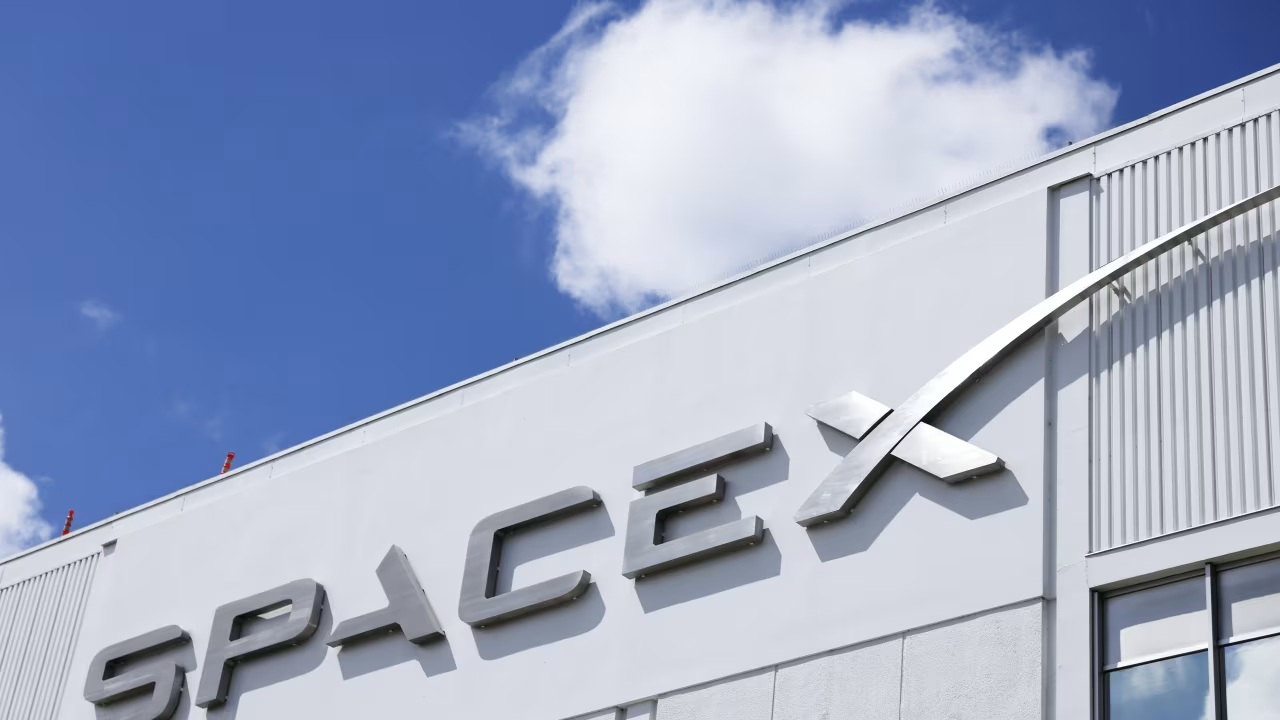
SpaceX’s public-market debut has entered another dramatic chapter, with shares trading under the ticker SPCX surging roughly 30% over three days and moving back above the company’s $135 initial public offering price.

The rebound marks a significant turnaround for a stock that had fallen sharply below its IPO level just days earlier, highlighting the extraordinary volatility surrounding one of 2026’s most closely watched public listings.

SpaceX priced its IPO at $135 per share, raising approximately $75 billion through the sale of 555.6 million Class A shares. The company began trading on Nasdaq on June 12, making the offering one of the largest IPOs ever conducted.

The initial market response was explosive. SPCX climbed dramatically after listing, eventually reaching an intraday peak of about $225.64. That rally briefly pushed SpaceX into the ranks of the world’s most valuable public companies.

However, the enthusiasm did not last. Profit-taking, concerns about valuation and questions surrounding the company’s enormous capital requirements contributed to a prolonged decline.

By August 3, SPCX had fallen to approximately $104.83, putting the stock substantially below its $135 IPO price. The decline represented a sharp reversal from the optimism that surrounded the listing and raised questions about whether investors had overestimated SpaceX’s near-term earnings potential.

The latest rally therefore carries symbolic importance. Reclaiming the IPO price means investors who bought at the original offering level are once again around breakeven, while those who purchased during the post-IPO collapse have experienced a substantial recovery.

It also suggests that buyers remain willing to step into the market despite the stock’s enormous valuation and history of extreme price swings. Several factors may be contributing to the renewed momentum.

A major post-IPO share unlock recently increased the number of shares available for trading, while investor attention has also focused on SpaceX’s ambitions beyond rockets and satellite communications.

The company’s Starlink business, launch infrastructure and expanding interest in artificial intelligence and semiconductor technology have helped maintain the narrative that SpaceX could become a much broader technology and infrastructure company.

The rebound illustrates the difference between an IPO price and a sustainable valuation. An offering price is established through the IPO process and investor demand before public trading begins.

Once shares enter the open market, however, price discovery becomes continuous, with expectations, liquidity, sentiment and new information influencing the stock every trading session. That distinction is particularly important for SPCX.

The company entered public markets with enormous expectations, meaning investors are not simply valuing its existing businesses. They are also assigning substantial value to future opportunities involving Starlink expansion, reusable launch systems, artificial intelligence infrastructure and other long-term projects.

For SpaceX, moving back above $135 is therefore more than a technical milestone. It represents a test of whether the market is prepared to restore some of the confidence that accompanied its historic IPO.

Yet the 30% three-day recovery should not automatically be interpreted as evidence that the stock has entered a durable long-term uptrend. SPCX remains highly volatile, and its rapid movement from above $225 to below $105 demonstrates how quickly sentiment can change.

The immediate challenge for SpaceX is to convert renewed investor enthusiasm into sustainable financial performance. If the company can demonstrate strong revenue growth, improving profitability and progress across its ambitious technology businesses, the latest rally could become the beginning of a broader recovery.

If expectations again outrun fundamentals, the stock could face another period of intense volatility. SPCX’s return above its IPO price represents a powerful reminder of the market’s continuing fascination with SpaceX—and the extraordinary expectations attached to Elon Musk’s most ambitious company.

Bitcoin Selling, Hyperliquid’s Revenue Race and the Rise of Stonkbrokers

0

The cryptocurrency market is entering another phase in which capital flows, decentralized trading activity and speculative culture are increasingly intertwined.

Three developments highlight this shift: Marathon Digital’s reported $1.6 billion Bitcoin sale, Fomo flipping Hyperliquid in 24-hour revenue, and the continued surge of Stonkbrokers, whose NFT floor price has climbed to 12.9 ETH.

These developments show how quickly liquidity and attention can move across different parts of the digital-asset ecosystem.

Marathon Digital’s sale of approximately $1.6 billion worth of Bitcoin represents the most consequential of the three developments because of its potential implications for market sentiment.

Large-scale selling by a major Bitcoin miner can create pressure on the market, particularly when investors interpret the transaction as a sign that miners are becoming more willing to monetize their reserves.

While a sale does not necessarily signal a bearish outlook, the scale of the transaction demonstrates how institutional Bitcoin holders can materially influence short-term liquidity.

For miners, selling Bitcoin can be a strategic decision rather than a vote against the asset. Mining businesses face substantial expenses related to electricity, infrastructure, equipment and expansion.

Converting part of their Bitcoin holdings into cash can strengthen balance sheets, fund capital expenditure or provide flexibility during periods of market volatility.

When the market is already sensitive to whale activity, a multibillion-dollar sale can amplify concerns about additional supply entering exchanges.

The competition for revenue among decentralized applications is becoming increasingly intense. Fomo reportedly surpassed Hyperliquid in 24-hour revenue, an important milestone because Hyperliquid has emerged as one of the most successful decentralized trading platforms in the market.

Its dominance has been built around perpetual futures, deep liquidity and a user experience that has attracted both retail and sophisticated traders. Fomo’s ability to overtake Hyperliquid for a 24-hour period demonstrates that crypto revenue is no longer concentrated among a small number of established protocols.

Sustainable dominance depends on retaining users, maintaining liquidity and generating consistent economic activity after the initial wave of excitement fades.

The Stonkbrokers phenomenon illustrates another dimension of this attention economy. With its NFT floor reaching 12.9 ETH, the project’s continued momentum demonstrates that speculative capital is still willing to move aggressively into digital collectibles when a compelling narrative develops.

NFT markets have repeatedly shown that price appreciation can accelerate as traders anticipate further demand, creating a feedback loop between visibility, scarcity and speculation.

These developments reveal a crypto market increasingly driven by competition for liquidity and attention. Bitcoin remains the foundation asset, but capital is simultaneously searching for opportunities in decentralized finance, trading protocols and NFTs.

The bigger question is whether these moves represent durable structural growth or another cycle of short-lived speculation. Marathon’s Bitcoin sale highlights the influence of large holders, Fomo’s revenue surge shows how quickly protocol rankings can change.

While Stonkbrokers demonstrates the enduring power of NFT narratives. As the market matures, the projects capable of converting temporary attention into sustainable usage and revenue are likely to separate themselves from the rest.

Bitcoin ETFs Rebound as BIP-110 Struggles to Gain Traction

Bitcoin entered the latest week with two contrasting narratives shaping its market structure.

On one side, institutional demand showed renewed strength as U.S. spot Bitcoin exchange-traded funds recorded their best week since April, attracting approximately $865 million in net inflows.

On the other, a proposed Bitcoin protocol change known as BIP-110 failed to generate enough support to establish meaningful momentum.

The developments highlight the growing divide between Bitcoin’s expanding institutional investment market and the highly conservative culture surrounding changes to the underlying network.

The $865 million in ETF inflows represent an important signal for Bitcoin investors. Spot Bitcoin ETFs have become one of the most significant bridges between traditional finance and the cryptocurrency market.

Allowing institutional and professional investors to gain exposure without directly managing wallets, private keys or exchange accounts. When these products experience sustained inflows, they can create an additional source of spot demand and reinforce confidence in Bitcoin as an investable asset.

The strength of the latest weekly inflows is particularly notable because ETF demand can fluctuate significantly alongside macroeconomic expectations, interest-rate forecasts and Bitcoin’s price performance.

A strong week suggests that investors were willing to increase exposure despite the broader uncertainty surrounding digital assets. It also demonstrates that institutional participation remains an important component of Bitcoin’s market structure.

The enthusiasm surrounding investment products contrasts sharply with the response to BIP-110. Bitcoin Improvement Proposals are mechanisms through which developers and community participants can propose changes to the protocol.

Yet proposing an upgrade is very different from securing broad consensus. Bitcoin’s decentralized governance model places a premium on extensive review, testing, compatibility and community agreement.

BIP-110’s failure to gain traction therefore illustrates one of Bitcoin’s defining characteristics: resistance to rapid change.

Supporters of protocol upgrades may argue that improvements are necessary to address technical limitations or expand Bitcoin’s capabilities.

Opponents often prioritize stability and predictability, particularly when changes could affect network security, decentralization or the economic incentives surrounding miners and users.

The lack of momentum behind BIP-110 does not necessarily mean that the ideas associated with the proposal are permanently rejected. Bitcoin development can be slow by design.

Proposals may evolve, attract new supporters, be incorporated into alternative approaches or eventually return to the discussion under different circumstances. The process can be frustrating for developers seeking rapid implementation, but it also reduces the likelihood that controversial changes will be adopted without substantial scrutiny.

The juxtaposition between ETF inflows and BIP-110 is revealing. Bitcoin is becoming increasingly integrated into conventional financial markets while its underlying protocol remains remarkably conservative.

Institutional investors can enter the asset through regulated financial products, but changing the network itself remains an extraordinarily difficult task.

That tension could define Bitcoin’s next phase. Its investment infrastructure is evolving rapidly, while its base-layer governance continues to favor caution.

The $865 million ETF inflow demonstrates that demand for Bitcoin exposure can accelerate quickly. BIP-110’s struggle demonstrates that changing Bitcoin itself requires something much harder to obtain: broad, durable consensus.

For investors, developers and policymakers, both developments matter. One reflects growing acceptance of Bitcoin as a financial asset; the other reinforces the principle that Bitcoin’s rules cannot easily be rewritten.

The combination underscores the unusual nature of the network—rapidly institutionalizing on the outside while remaining deliberately resistant to change at its core.

Intel Plans $15bn Share Sale as AI Boom Fuels Costly Foundry Turnaround

0
Pat, new Intel boss

Intel said on Monday it plans to raise about $15 billion through a share offering, turning to investors to help finance an expensive expansion of its contract chip manufacturing business as a sharp recovery in its stock gives the struggling semiconductor giant an opportunity to strengthen its balance sheet.

Intel shares fell more than 4% in early trading after the announcement, as investors weighed the potential dilution against the company’s need for capital to execute its foundry strategy. The stock had nearly tripled this year through Friday’s close, substantially outperforming AMD and Nvidia and the roughly 75% gain in the Philadelphia Semiconductor Index.

The planned equity raise comes at a critical point in Intel’s attempt to rebuild its manufacturing capabilities and establish itself as a credible alternative to Taiwan Semiconductor Manufacturing Co. in contract chip production.

Intel has been investing heavily in new fabrication plants, advanced packaging and next-generation manufacturing processes as it seeks to reverse years of manufacturing setbacks and compete for business from companies that historically relied on Asian foundries.

Intel’s shares have surged on expectations that Chief Executive Lip-Bu Tan’s turnaround strategy can restore the company’s position in advanced chip manufacturing. That rally has also substantially lowered the relative cost of raising equity compared with doing so when the stock was trading near its recent lows.

“Intel is a capital-intensive business that went a long way to wrecking its own balance sheet and prospects by focusing on financial engineering rather than physical engineering,” said Russ Mould, investment director at AJ Bell, referring to the company’s $82 billion of share buybacks during the 2010s.

“Especially after a five-fold increase in the stock price since last August,” he said, raising capital now makes sense.

The capital-intensive nature of Intel’s strategy is becoming increasingly apparent. The company raised its 2026 capital expenditure forecast to $20 billion from $18 billion in July as demand for central processing units increases alongside the expansion of AI agents and other AI workloads.

Intel is simultaneously trying to finance a major transformation of its manufacturing operations while developing products capable of competing in an AI market dominated by Nvidia.

The company’s foundry strategy is arguably the more consequential part of the turnaround. Intel wants to manufacture chips designed by other companies, effectively competing for business with TSMC while using its own manufacturing infrastructure to restore the economics of its semiconductor operations.

That strategy requires enormous upfront investment before revenue from customers reaches sufficient scale. Intel’s latest capital raise therefore provides additional financial capacity at a time when the company is committing billions of dollars to facilities that may take years to reach full commercial utilization.

The company has also made progress in securing potential customers for its most advanced manufacturing technology. Intel said it had committed to high-volume production using its 14A process in 2028, reversing an earlier warning that the technology could be abandoned without a major external customer.

Tesla has been identified as a 14A customer, while expectations of another major customer increased after President Donald Trump said Apple would manufacture processors with Intel. Neither Apple nor Intel has confirmed that arrangement.

If Apple ultimately becomes a major Intel foundry customer, it could significantly strengthen the credibility of Intel’s strategy. Apple is one of the world’s largest semiconductor buyers and has extensive experience using TSMC for the manufacture of its processors.

Intel is also expanding its international manufacturing footprint. Last month, it announced a €5 billion ($5.77 billion) investment to upgrade and expand its chip manufacturing operations in Ireland. The project represents more than a quarter of the company’s planned capital spending for 2026. That spending highlights the scale of the challenge facing Intel. The company is effectively trying to rebuild its manufacturing advantage while also creating a new business model around producing chips for external customers.

Some analysts believe that the equity offering could help reduce the pressure on Intel’s balance sheet as it finances those investments. However, existing shareholders will bear dilution from the new shares, which explains at least part of the negative initial market reaction.

Intel has also granted underwriters a 30-day option to purchase as much as $2.25 billion of additional shares at the offering price, less underwriting discounts. JPMorgan Securities, Goldman Sachs, Morgan Stanley and Citigroup Global Markets are serving as joint book-running managers.

The fund-raising also marks a notable reversal from Intel’s capital allocation strategy of the previous decade. The company spent tens of billions of dollars buying back its own shares while underinvesting in the manufacturing infrastructure needed to maintain its technological lead. It is now asking shareholders for fresh capital to fund precisely the physical expansion required to rebuild that position.

The broader AI boom gives Intel an important opportunity, but it also raises the stakes. Demand for computing infrastructure is expanding rapidly, creating opportunities for CPU suppliers and semiconductor manufacturers. Yet much of the economic value of the AI hardware cycle has accrued to companies such as Nvidia and TSMC, leaving Intel under pressure to demonstrate that its manufacturing turnaround can generate competitive returns.

Intel’s ability to win major external foundry customers will therefore be critical. A successful foundry business would provide a new source of recurring revenue and improve utilization of Intel’s expensive manufacturing facilities. Failure to secure sufficient customers could leave the company carrying substantial fixed costs while competing against established foundry leaders with greater scale.

The $15 billion offering gives Intel additional financial firepower, but it does not by itself resolve the company’s fundamental challenge. Monday’s share sale is therefore both a financing event and a test of confidence in Intel’s recovery. The company is using a dramatically higher share price to fund a manufacturing gamble that could determine whether it returns to the ranks of global semiconductor leaders or remains a distant competitor.

SpaceX Shares Rebound Toward $135 IPO Price as AI, Starlink Fuel Bullish Outlook

0
  • Deutsche Bank says $100 billion revenue run-rate target is “likely very achievable,” while analysts warn valuation remains tied to Starship milestones

Shares of Elon Musk’s SpaceX rebounded on Monday, moving back toward their $135 initial public offering price as investors digested stronger-than-expected quarterly revenue and bullish forecasts for the company’s Starlink and artificial-intelligence businesses.

The stock briefly reached the $135 benchmark in early trading, marking a recovery from a volatile post-IPO period in which shares fell as low as $108.27 only days earlier. The rebound comes after SpaceX’s first earnings report since its historic Nasdaq debut in June gave investors an early look at the financial performance underpinning the company’s lofty valuation.

SpaceX reported second-quarter revenue of $7.81 billion, well above the $6.93 billion analysts had expected. The result provided an early indication that the company’s rapidly expanding satellite communications operation and emerging AI businesses are generating substantial commercial momentum.

The company has also set an ambitious target of reaching $100 billion in annualized recurring revenue by the end of the year. Chief Financial Officer Bret Johnsen reiterated the target during last week’s earnings call.

Deutsche Bank analysts said Monday that the goal is “likely very achievable”, although SpaceX’s second-quarter revenue run-rate was only about $31 billion.

The gap between the current run-rate and the year-end target highlights the scale of the growth SpaceX is projecting. Deutsche Bank expects much of the increase to come from its neocloud business and the acquisition of artificial-intelligence coding company Cursor.

The forecast also underpins how rapidly SpaceX’s investment case is expanding beyond its traditional rocket-launch and satellite-internet businesses. Starlink remains a major source of revenue, but Musk is increasingly positioning SpaceX as an AI infrastructure company with large-scale computing capacity and data-center operations.

Lockup Expiry Adds Volatility

The share rebound comes after a major test for the stock market debut. SpaceX’s first post-IPO lockup period expired last Thursday, making more than 911 million shares available for trading by early investors. That amount is substantially larger than the 639 million shares sold in the IPO itself.

The release of such a large pool of previously restricted shares raised concerns that early investors could lock in gains or reduce their holdings, increasing selling pressure and volatility.

The potential supply of additional shares had already contributed to a more cautious trading environment. Ahead of the earnings release and lockup expiry, notional short interest in SpaceX surpassed that of Tesla, Musk’s electric-vehicle company and one of the most heavily shorted stocks on Wall Street.

The fact that SpaceX shares have recovered toward the IPO price despite the additional supply suggests that investors are focusing increasingly on the company’s operating performance and future growth opportunities rather than simply the technical effects of the lockup expiration.

Several analysts maintained a constructive view following the earnings report.

Citi analysts said Sunday they had raised their 2026 and 2027 forecasts after incorporating the sources of SpaceX’s second-quarter earnings beat. The bank reiterated its buy rating.

“Given the dependency of out-year forecasts/valuation on successful Starship milestones, we leave our PT unchanged at $200 and plan to adjust our target ratably toward the $900+ long term valuation level we outlined in our initiation as major milestones are hit,” Citi analysts wrote in a Sunday note.

That assessment highlights the central risk embedded in SpaceX’s valuation. Much of the company’s longer-term upside depends not simply on the continued expansion of Starlink or AI computing, but on the successful development and deployment of Starship, its next-generation reusable spacecraft.

Starship is expected to play a central role in SpaceX’s plans to deploy larger numbers of next-generation Starlink satellites and expand the company’s capabilities in space. Successful milestones could therefore strengthen the investment case across several parts of the business simultaneously.

Failure or prolonged delays, however, could have the opposite effect by raising costs, delaying projected revenue streams and forcing investors to reassess the valuation attached to SpaceX’s longer-term ambitions.

Caution Remains over Ambitious Targets

Wolfe Research also acknowledged the strength of SpaceX’s second-quarter performance while warning investors against treating management’s longer-term ambitions as guaranteed outcomes.

“There was a lot to like in SpaceX’s first earnings report but as always we would advise not misunderstanding aspirations of mgmt from most likely outcomes,” Wolfe analysts wrote Sunday.

That distinction has become relevant given the enormous capital requirements behind SpaceX’s expansion.

The company is simultaneously scaling Starlink, developing next-generation spacecraft, building AI computing infrastructure and expanding into businesses that require substantial upfront investment. But analysts have noted that the ability to convert those investments into recurring revenue and sustainable cash flow will be critical to justifying the company’s valuation over time.

For now, the earnings report has given SpaceX bulls additional evidence that the underlying businesses are growing rapidly. The immediate share-price recovery toward $135 suggests investors are willing to look beyond the stock’s volatile debut and focus on the company’s expanding revenue base.

Industry analysts believe the next test will be whether SpaceX can turn its ambitious $100 billion revenue run-rate target into measurable results while delivering the Starship milestones on which much of its longer-term valuation depends.