DD
MM
YYYY

PAGES

DD
MM
YYYY

spot_img

PAGES

Home Blog Page 815

Microsoft CEO Addresses Emotional Toll of Layoffs Amid Strategic Shift Toward AI

0

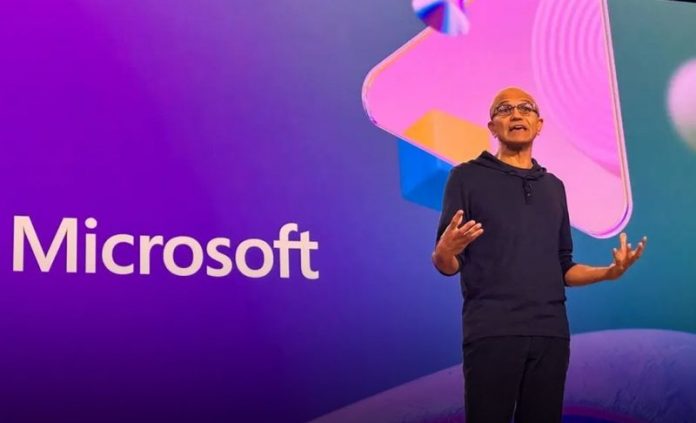
Microsoft CEO Satya Nadella has expressed deep concern over the tech giant’s recent wave of job cuts, admitting that the decision has been “weighing heavily” on him.

In a candid reflection, Nadella acknowledged the personal and emotional toll of laying off employees, even as the company navigates shifting market dynamics and realigns its strategic priorities. His comments come amid broader industry-wide restructuring as major tech firms grapple with economic uncertainty and a renewed focus on efficiency.

In a heartfelt company-wide memo, he wrote,

“As we begin a new fiscal year, I’ve been reflecting on the road we’ve traveled together and the path ahead. Before anything else, I want to speak about what’s been weighing heavily on me and what I know many of you are thinking about: the recent job eliminations. These decisions are among the most difficult we have to make. They affect people we’ve worked alongside, learned from, and shared countless moments with—our colleagues, teammates, and friends.

“I want to express my sincere gratitude to those who have left. Their contributions have shaped who we are as a company, helping build the foundation we stand on today. And for that, I am deeply grateful. I also want to acknowledge the uncertainty and seeming incongruence of the times we’re in.

“By every objective measure, Microsoft is thriving our market performance, strategic positioning, and growth all point up and to the right. We’re investing more in CapEx than ever before. Our overall headcount is relatively unchanged, and some of the talent and expertise in our industry and at Microsoft are being recognized and rewarded at levels never seen before. And yet, at the same time, we’ve undergone layoffs.”

Microsoft employed 228,000 people as of June 2024. This calendar year, the company has held several rounds of layoffs. In January, it cut less than 1% of headcount based on performance. Fast forward to June 2025, Microsoft laid off about 9,000 employees. The move affected less than 4% of its global workforce across different teams. The 50-year-old software company slashed more than 6,000 jobs in May and then at least 300 more in June. The tech giant is reshaping how it works streamlining management, investing heavily in AI, and transitioning to a more agile organization that can compete in a rapidly changing tech landscape.

One major reason behind the job cuts is Microsoft’s goal to flatten its corporate hierarchy. By reducing layers of management, the company hopes to respond faster to market demands, improve decision-making, and cut operational costs. Notably, the incessant job cut comes as it plans to invest roughly $80 billion this fiscal year in AI infrastructure. This includes expanding Azure data centers, developing new tools like Copilot, and enhancing machine learning capabilities. Such investments, while essential for long-term competitiveness, require reallocation of resources. 

Talking about the company’s priority, Satya noted that Microsoft is focused on the business priorities which include, security, quality, and AI transformation. The company is doubling down on fundamentals while continuing to define new frontiers in AI. As AI becomes more central to Microsoft’s operations, new roles will likely open up in cloud computing, machine learning, and data engineering.
LetsBONK’s 1% Revenue Allocation For Token Buybacks Is A Strategic Move to Strengthen Its Ecosystem

0

LetsBONK, a Solana-based memecoin launchpad, has announced it will allocate 1% of its total revenue to buy back top tokens within the BONK ecosystem, such as Useless Coin and ANI (xAI’s Grok AI Companion token). This initiative, funded from the team’s marketing budget, aims to bolster liquidity and support token value through weekly buybacks. For instance, with $1.5 million in daily fees, approximately $15,000 is earmarked for these purchases.

The strategy is part of LetsBONK’s broader effort to foster a sustainable ecosystem, with revenue also supporting BONKsol staking, token burns, and ecosystem growth initiatives. The platform recently surpassed Pump.fun in daily trading volume and token issuance, with tokens launched on LetsBONK exceeding a $1 billion market cap.

By committing 1% of revenue (e.g., $15,000 daily from $1.5 million in fees), LetsBONK aims to increase liquidity and reduce volatility for ecosystem tokens. Regular buybacks can create a price floor, supporting token values and incentivizing holding over speculative selling. This move strengthens the BONK ecosystem by redistributing value to key projects, fostering confidence among investors and developers building on the platform.

LetsBONK’s strategy differentiates it from competitors like Pump.fun, which it recently surpassed in daily trading volume and token issuance. By reinvesting revenue into the ecosystem, LetsBONK signals a long-term commitment to sustainability, potentially attracting more projects and users. The focus on ecosystem growth (via staking, burns, and buybacks) could position LetsBONK as a more community-driven alternative to other Solana-based launchpads.

While buybacks support token prices, they could raise concerns about market manipulation, as the team controls which tokens are purchased. If not transparently managed, this could alienate some community members who prioritize decentralization. The reliance on team-driven initiatives (funded from marketing budgets) may spark debates about governance and whether community input should guide buyback decisions.

The buyback program could set a precedent for other memecoin launchpads, encouraging similar revenue allocation models to bolster ecosystem tokens. This could drive competition but also risks inflating token prices artificially across the sector. Increased liquidity and market cap ($1 billion+ for LetsBONK-launched tokens) may draw more institutional interest to Solana memecoins, bridging retail and professional investors.

Many memecoins, including some on Pump.fun, thrive on hype and short-term price pumps, often lacking utility or long-term viability. This fuels volatility and risks rug pulls, eroding trust. LetsBONK’s approach, with buybacks, staking, and burns, reflects a shift toward creating self-sustaining ecosystems. By reinvesting revenue, it aims to align incentives between the platform, token holders, and developers, contrasting with purely speculative models.

The buyback program, while beneficial, introduces a degree of centralization, as the LetsBONK team decides which tokens to support. This contrasts with fully decentralized platforms where community governance dictates resource allocation. LetsBONK’s success on Solana underscores the chain’s dominance in memecoin innovation due to low fees and high throughput.

Solana’s growing memecoin ecosystem could pull liquidity and attention away from other chains, deepening the divide between Solana-based projects and competitors. Memecoins have historically been retail-driven, but initiatives like LetsBONK’s, which add structure and predictability (via buybacks and staking), may attract institutional players seeking exposure to high-growth DeFi sectors. This creates a divide between retail-driven hype cycles and institutional demand for structured investment opportunities.

LetsBONK’s 1% revenue allocation for token buybacks is a strategic move to strengthen its ecosystem, enhance token stability, and differentiate itself in the competitive memecoin launchpad market. However, it also highlights tensions in the broader crypto space: speculation vs. sustainability, centralization vs. decentralization, and Solana’s dominance vs. other blockchains.

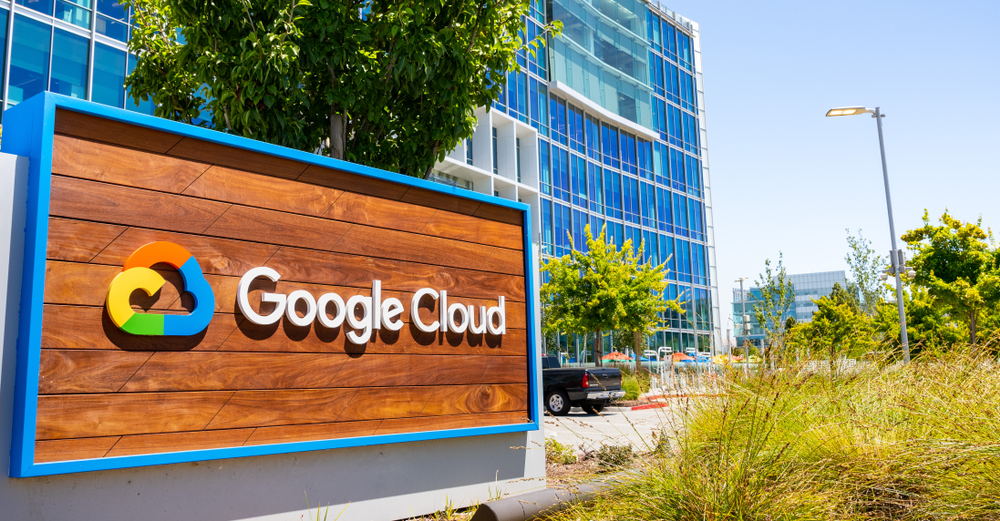
Google Secures $1.2 Billion Cloud Deal With ServiceNow

0

Google has landed a major $1.2 billion cloud computing deal with enterprise software firm ServiceNow, marking one of its largest cloud contracts yet and giving Google Cloud a key victory in its fight to gain ground on dominant rivals Amazon Web Services and Microsoft Azure.

The agreement, which spans five years, will see ServiceNow deepen its use of Google Cloud’s infrastructure to host parts of its software platforms that help businesses automate workflows across HR, IT, and customer service functions. The deal was first reported by Bloomberg and later confirmed in ServiceNow’s SEC filing on Thursday, which disclosed $4.8 billion in total cloud commitments through 2030.

Although neither company publicly disclosed the contract’s value, a source familiar with the matter confirmed to Bloomberg that the $1.2 billion figure is accurate.

The deal represents a significant endorsement for Google Cloud, which has trailed AWS and Azure for years but is increasingly leveraging targeted partnerships to narrow the gap. In this case, Google may have benefited from ties at the executive level through Amit Zavery, ServiceNow’s Chief Product Officer since October 2024, who previously served as a top executive at Google Cloud.

For ServiceNow, the agreement is part of a broader multicloud strategy. While the company confirmed ongoing relationships with all three major cloud providers, including AWS and Azure, this latest commitment to Google underscores a deepening technical partnership. ServiceNow CEO Bill McDermott noted the growing importance of AI in enterprise software and said the company is prioritizing partnerships that can support its long-term innovation roadmap.

“ServiceNow is committed to working with partners that help us accelerate innovation at scale,” McDermott said in a statement, though he stopped short of naming specific contract values. “This is about delivering real outcomes for our customers in a fast-changing environment.”

The expanded partnership comes at a critical time in the cloud infrastructure market, as companies increasingly migrate workloads to the cloud but look for vendors that offer AI, analytics, and flexible infrastructure pricing. Google Cloud’s recent gains—including deals with the likes of Deutsche Bank and Shopify—signal that it’s finding traction by pitching itself as an innovation-centric alternative to the legacy dominance of AWS and Microsoft.

The AI race has seen cloud providers leaning into relationships that position them at the heart of enterprise transformation. This new deal between Google and ServiceNow sends a strong signal that Google Cloud is becoming a more serious contender, particularly as AI-ready cloud platforms become more important to corporate buyers.

BlockDAG with $351M Presale Faces Off with Cardano: Who’s Gaining Users and Real-World Traction Faster?

0

The crypto world keeps changing, and so do the projects that aim to shape what comes next. While older platforms like Cardano stick to long-term plans, newer names are starting to pull more attention. One of them is BlockDAG, which has already raised over $351 million during its presale.

As the space grows, both builders and users are looking for platforms that offer more than just ideas. Real-time use, faster tools, and easier access are becoming top priorities. In this comparison, we look at what Cardano offers, how BlockDAG (BDAG) takes a different path, and why so many developers are turning toward BDAG before it even launches its mainnet.

Cardano: Slow and Careful with a Strong Focus on Research

Cardano is well-known in the crypto space. It was started by Charles Hoskinson, who was also a co-founder of Ethereum. From day one, Cardano has taken a careful, research-driven route. Each update is reviewed by experts before being added to the system.

Its network runs on Ouroboros, a form of Proof-of-Stake. This keeps things energy-efficient and supports decentralisation, meaning no single group has full control. That setup is solid, but not always fast.

Cardano also uses tools like Plutus and Haskell for building apps. These tools are powerful but not simple to use. Developers coming from platforms like Ethereum often find them hard to learn. Because of this, the pace of new apps being launched has slowed down.

There has been steady progress. By 2023 and into 2024, Cardano stayed among the top coins by market value. A few apps like Djed and SundaeSwap are working on the network. It’s seen as secure and dependable, which is important to many. Still, user activity builds slowly. Many apps remain in testing or are not yet live. Cardano keeps improving, but its path is slower. The focus is more on being right than being first.

Why BlockDAG Is Catching Attention While Others Take It Slow

Cardano is known for its step-by-step method, but BlockDAG is heading in a faster direction and getting results quickly. It works using a system called a Directed Acyclic Graph, or DAG. This setup lets it process many transactions all at once, rather than one after another. That means BlockDAG can move faster and serve more users than some of the older networks.

Another part of BlockDAG’s appeal is that it works with Ethereum tools. Developers who already use Ethereum can build here without starting from scratch. It also offers a low-code smart contract builder. This means even people with little coding experience can build apps, which is useful for small teams or individuals who don’t write code for a living.

What stands out most is the early activity happening before the full launch. Over 4,500 builders are already working on more than 300 real projects using the testnet. These apps include things like finance tools, AI projects, payment platforms, and other useful tech. These aren’t just ideas; they’re being tested and updated right now.

The presale has brought in a lot of support. So far, the project has raised over $351 million and sold more than 24 billion BDAG coins. The price is now $0.0016 as part of the GLOBAL LAUNCH release, which lasts until August 11. If the listing hits $0.05, that could mean a 3,025% return. Since batch 29 started at $0.0276, early buyers have already seen gains of 2,660%. Many are taking notice, and the activity around BlockDAG keeps growing every day.

Two Blockchain Projects, Two Very Different Journeys

BlockDAG and Cardano both want to improve blockchain, but they take different routes. Think of them like runners. One moves with perfect form, slow and steady. The other runs fast, learning while moving forward. That’s the difference between Cardano and BlockDAG.

Cardano is based on research and long-term goals. It is secure and uses little energy. The team tests every step carefully. This gives the project a strong base, but it also slows progress. Its coding tools are not simple to learn, which makes building apps harder. Because of this, Cardano has fewer live projects and lower network use than newer networks.

BlockDAG chooses a path that is more open and easier to use. It supports Ethereum-based tools that many developers already know. It also has a smart contract builder that needs little coding. This means more people can build apps without expert skills.

What really stands out is how much activity is already happening on BlockDAG. Over 4,500 builders are working on more than 300 real apps using the test system. The presale has brought strong attention too, raising over $351 million. That is a big deal for a project still before its launch. When compared to Cardano’s slower steps, BlockDAG looks busier and faster-moving.

Which One Connects More With Builders and Users?

Cardano is trusted for its careful planning and strong goals. It works well for those who want structure and safety. But today, people are more focused on networks that are easier to use and give real access now. This is where BlockDAG fits in. It is quick, simple to build on, and already active even before launch.

With thousands of builders already working and over $351 million raised in crypto presale, it is seeing strong early traction. For anyone who wants something that works today, not just in the future, BlockDAG brings a ready-to-use setup that’s already getting results.

Presale: https://purchase.blockdag.network

Website: https://blockdag.network

Telegram: https://t.me/blockDAGnetworkOfficial

Discord: https://discord.gg/Q7BxghMVyu

Web3 Set to Surge as 4,500 Builders Join BlockDAG, While POL Rallies & AVAX Eyes $30

0

The Polygon (POL) price surge is catching attention with a 95% rise, supported by a $2.76 billion jump in stablecoin supply, a level last reached in 2021. Meanwhile, the Avalanche (AVAX) price forecast remains strong, with AVAX gaining 18% and now aiming to push past the $30 mark.

At the same time, BlockDAG (BDAG) is becoming one of the top crypto projects to follow. More than 4,500 builders are developing over 300 active projects, boosting network activity. Its presale is also gaining traction, nearing $351 million raised. With BDAG priced at $0.0016 and the launch price confirmed at $0.05, the potential 3,250% return before its GLOBAL LAUNCH release is drawing growing interest.

Polygon (POL) Price Surge Hits 95% Following Big Stablecoin Growth

The Polygon (POL) price surge has picked up pace as its stablecoin volume reached $2.76 billion, a figure not seen since 2021. This recovery suggests stronger user confidence in the network. Since its recent upgrades, Polygon has seen steady growth in NFT activity, DeFi use, and daily transactions. The stablecoin jump supports the idea that more people are backing Polygon’s future.

POL, which is replacing MATIC, is now showing a bullish wedge on the charts. This pattern often hints at a potential price jump. If POL moves above $0.50, the current price of $0.2559 could rise to $1. The Polygon (POL) price surge may still have more room to grow.

Avalanche (AVAX) Price Forecast Looks to Break $30 Soon

The Avalanche (AVAX) price forecast is rising after AVAX climbed 18% in a week. As of Tuesday, it was trading over $25, with analysts watching closely for a break above $30. Open Interest hit $796 million, showing new capital entering the market. At the same time, Avalanche’s Total Value Locked has grown from $1.49 billion to $1.93 billion since July 1, a sign of more user activity.

The network handles 600,000 blocks each day, showing consistent usage. Technical signs are also pointing up, with key support levels holding and positive readings from indicators like RSI and MACD. The Avalanche (AVAX) price forecast now puts $30 within reach unless a dip slows it down.

4,500 Builders Join BlockDAG, Pushing Real Projects Before Mainnet

BlockDAG, a platform gaining steady traction, reached a key milestone with the launch of its public testnet. This version gave both users and developers a chance to explore, test smart contracts, and start building well ahead of the mainnet launch. That early access quickly turned into real activity.

And now, that activity is rising fast. More than 4,500 builders are working on over 300 live projects using BlockDAG. These projects include DeFi tools, AI systems, payment solutions, and real-world apps, many of which are almost ready to go live. Since the testnet mirrors the actual network, it has helped teams build quickly and with more confidence.

BlockDAG supports different kinds of creators. It is built with Ethereum’s EVM, so developers can use Solidity and existing tools without learning new systems. At the same time, a low-code builder makes it easier for people with no coding skills to build apps through drag-and-drop tools, helping small teams and solo builders take part too.

So far, BlockDAG has raised more than $351 million during its presale and sold over 24.3 billion BDAG coins. The current GLOBAL LAUNCH release price is $0.0016, which may offer a 3,250% return based on its expected listing at $0.05. With the tools running, builders active, and projects moving ahead, BlockDAG is doing something few platforms manage before launch; it’s already being used.

Final Thoughts

The Polygon (POL) price surge shows strong signs of recovery, helped by stablecoin activity and higher user trust. The Avalanche (AVAX) price forecast also points to growth, with a strong move toward the $30 level. These two are gaining interest, but when looking at what’s coming next, BlockDAG stands out.

With 4,500 builders developing over 300 working projects, the platform is already showing real-world progress before launch. Its presale is also building momentum, closing in on $351 million raised, with a price of $0.0016 offering a possible 3,250% gain. BlockDAG is shaping up to be one of those top crypto projects that might turn early interest into real success.

Presale: https://purchase.blockdag.network

Website: https://blockdag.network

Telegram: https://t.me/blockDAGnetworkOfficial

Discord: https://discord.gg/Q7BxghMVyu