DD
MM
YYYY

PAGES

DD
MM
YYYY

spot_img

PAGES

Home Blog Page 822

Online Casino Technology Trends: The Future of Gambling

0

Technology never sits still, and the online casino scene proves it every single day. For Kiwi players ready to fund an account, they can easily get started with Poli casino and soon explore bonus buy slots. Meanwhile, kiwi casinos often highlight the safest path to spinning reels; after just a little research, anyone will find an online casino nz that effortlessly supports POLi payments. Fans of real-time action are especially thrilled that live dealers now greet them from high-definition studios, with Bizzo bringing jackpot games straight to their screens. These quick examples hint at a bigger story: powerful technology is reshaping everything from how bets are made to how winnings reach a player’s bank. This article looks ahead at the freshest trends—streamed tables that feel like Vegas, cryptographic wallets that slash fees, and smart software that knows which game a user might love before the spin begins. By understanding today’s breakthroughs, one can see where the future of gambling is clearly headed.

Immersive Live Streaming and Augmented Reality Tables

Live streaming of high quality has already revolutionized how people experience blackjack tables; its next phase promises even greater immersion. Improved 4K cameras, lower latency networks and adaptive bit rates allow croupiers to interact with online bettors nearly in real-time without experiencing delays that once broke their illusion of real time gambling. Furthermore, experimental lobbies now include AR overlays. With just their phone or lightweight headset, players can project a digital roulette wheel onto a coffee table and rotate it with just the flick of their wrist to experience real roulette action – with balls falling like they are real! Providers are increasingly adding statistics to the felt: bright numbers illuminate, dim ones fade away and side bets go live when odds improve; voice chat plug-ins enable friends to celebrate victories together instantly online. As these visuals are rendered client-side, the casino server remains stable while still providing an engaging gaming experience. All of this points to one goal that many developers aim for: making staying home feel as exciting, social, and authentic as visiting an upscale resort.

Blockchain Wallets and Transparent Transactions

Cryptocurrencies used to be on the fringes of online gambling, but technological innovations have propelled it firmly into mainstream usage. Modern blockchain wallets settle deposits instantly thanks to layer two protocols built onto public ledgers such as Bitcoin and Ethereum. This not only expedites access to chips faster but also significantly decreases network fees – making micro-stakes practical. Smart contracts take the next step by codifying the rules of wagers into code; winners are paid automatically without staff intervention, and audit trails are accessible by anyone capable of reading hashes. Even players who prefer national currencies are benefitting, since many casinos now encase standard cards and bank transfers inside tokenized rails for ease of use. Many veteran gamblers say the process now feels similar to sending an email message. That means a New Zealand dollar could become an international stablecoin without hidden charges or weekend delays; regulators are watching closely; however, several jurisdictions have begun crafting frameworks which treat distributed ledgers as features rather than threats – suggesting wider adoption over time.

Artificial Intelligence Personalization and Fairness

Behind every lobby carousel there exists a recommendation engine which determines which slot, card room, or sports market a user notices first. As technology improves these recommendations engines are rapidly progressing from rule-based filters towards full artificial intelligence solutions. Machine-learning models can analyze thousands of spins, session lengths and stake sizes in order to predict when someone may be open to trying a different theme or placing smaller bets. Players benefit from having a lobby that feels cleaner and surprisingly relevant; for the house it means better retention without pushing marketing emails directly at players and improved fairness issues. AI also plays an integral part of these solutions. Pattern-detection algorithms monitor for collusion at poker tables, irregular roulette sequences or bot-driven play. If suspicious activity reaches certain thresholds, accounts can be immediately suspended in real-time to protect both casual visitors and the site’s reputation. To maintain trust, several studios are publishing simplified white papers detailing how an algorithm works along with contact emails for independent researchers to test its math. At the same time, reinforcement learning models adjust payouts appropriately in the background – transparency has become the competitive edge!

The Road Ahead: Responsible Innovation

Every groundbreaking innovation carries with it an equal measure of responsibility; and online casino technology will be judged according to how successfully it balances these opposing forces over the coming decade. Geolocation plugins already offer protection in restricted markets; in future systems will use real-time biometric logins to confirm players’ age and identity without forcing them to upload bulky documents. Limit dashboards will continue to evolve; instead of being tied to static numbers, adaptive caps will learn how long people typically play for, suggesting breaks when patterns shift unexpectedly. Governments, universities and industry groups are sharing data in order to train protective models that cannot be altered simply in favor of increasing revenue. On the entertainment front, 5G and edge servers will bring heavy rendering closer to users, opening the way for cinematic virtual reality tournaments with hundreds of avatars cheering within replicated stadiums. Yet trust will ultimately remain paramount: casinos that deploy new code ethically while publishing audit reports and encouraging community feedback will likely do well in tomorrow’s global lobby.


From Entertainment to Ecosystems: When Online Casinos Start Feeling Like Places

0

You can tell something has changed the moment you log in and hesitate.

Not because you’re unsure what to play—but because there’s already something happening. A chat scrolling. A tournament ticking down. Someone celebrating a win you didn’t see but somehow feel part of. It’s subtle, but it shifts the mood entirely.

Online casinos used to feel like vending machines. Insert money, pull lever, hope for magic. Now they feel more like late-night cafés. A bit noisy. A bit alive. You don’t always know who’s there, but you’re aware you’re not alone.

And that changes everything.

Loyalty Isn’t Points Anymore—It’s Identity

The old loyalty system was painfully dull. Spend money, earn points, exchange for something mildly useful. It had all the charm of a supermarket receipt.

Now? It’s closer to a role-playing game.

You climb tiers. You unlock things that sound almost dramatic—“VIP status,” “exclusive tables,” “private tournaments.” The platform begins to treat you differently, and more importantly, you begin to feel different.

There’s a quiet psychological trick at play. You’re no longer just a player. You’re someone with a rank. A history. A kind of digital reputation, even if it’s only visible through badges and perks.

And once you have that, walking away feels… slightly wasteful. Like abandoning progress in a game you didn’t realize you were playing.

The Chat Box: Chaos, Comfort, and Unexpected Humanity

Spend five minutes in a live dealer room and watch the chat. It’s a strange mix.

Someone complains about losing five hands in a row. Someone else drops a joke that barely lands. Another player types “good luck everyone” like a ritual before the spin. It’s messy, repetitive, sometimes absurd—but also weirdly comforting.

Because it feels real.

You start recognizing patterns. Not full personalities, not quite friendships, but fragments. A username you saw yesterday. A tone you remember. The digital equivalent of nodding at the same stranger on your morning commute.

And suddenly, you’re not just playing against odds. You’re sharing a moment.

It’s easy to underestimate how powerful that is.

Tournaments: The Moment the Room Wakes Up

Then come the tournaments, and everything speeds up.

The quiet, individual rhythm of play gets replaced by something more collective. There’s a clock. A leaderboard. A sense that everyone is pushing at the same time, even if you never speak to each other.

It’s not just about money anymore. It’s about position.

You glance at the rankings more often than you’d like to admit. You calculate. You chase. You stay a little longer than planned because you’re “almost there.” And even when you’re not, it still feels like you’re part of an event rather than just passing time.

There’s a kind of electricity in that shared urgency. You don’t get it when you’re alone.

Small Social Features, Big Subtle Impact

What’s interesting is how none of this feels forced.

There’s no loud announcement saying, “Welcome to the community.” It just… builds itself around you.

A few things quietly doing their job:

Public win notifications that make big moments visible

Referral bonuses that turn friends into participants

Group challenges that nudge players toward shared goals

Tiny interactions that accumulate into familiarity

Individually, they’re nothing special. Together, they create an atmosphere.

You start to feel like you’re returning to a place, not just opening a website.

Somewhere in the Middle, TonyBet Gets It Right

Around the middle of this shift, platforms like TonyBet seem to understand the assignment without making a big show of it.

The tonybet casino experience does not yell out to the community, it just has one created about you. You can see it in the way tournaments are designed, and the interface pushes the interaction without imposing it, and the perks of loyalty are more like rewards than ones that are arbitrary.

A restraint there is of a sort. It does not have anything that is too engineered, yet it is obvious. And that is likely the reason that it works. You are not instructed to study it–you just get to doing it.

Almost by accident.

When a Platform Begins to Seem Like Home

Here is where it becomes interesting.

Since familiarity is a mighty thing. When you become aware of a space, its beat, its inhabitants, its minor peculiarities, you start to cling to it, which you never thought possible.

You log in not because you feel like playing but because you are curious:

Who’s online right now?

Is it still the same tournament going on?

Did anyone hit something big?

They are minor questions, though they make you go back.

And gradually, the platform ceases to be fungable. It is made your place, though you may well never have made a conscious choice of that.

The Slightly Uncomfortable Truth

Something a little disturbing here is the smoothness of this.

This is due to the fact that there is a thin boundary between entertainment and immersion. When a platform is animated, abandoning it is not similar. No longer closing a tab, it is leaving a space in which in some little sense you have begun to be acknowledged.

That’s not necessarily bad. It is able to make it more enjoyable, less mechanical.

But it’s worth noticing.

The more human something is the less one can remember that it is designed.

So What Are We Actually Doing Here?

Maybe the better question isn’t about gambling anymore.

Maybe it’s about presence.

You log in for a game, sure. But you stay for something harder to define. A mix of noise, interaction, progress, and familiarity that makes the experience feel… inhabited.

Not quite a community in the traditional sense. Not quite a game either.

Something in between.

And once you’ve felt that shift—even briefly—it’s hard to go back to the old version, where it was just you, a screen, and silence.

Xiaomi Unveils Hunter Alpha as Early Test Build of MiMo-V2-Pro, Confirming Chinese Origin After Viral Speculation Linked It to DeepSeek V4

0

Xiaomi Corp. confirmed on Wednesday that the mysterious AI model Hunter Alpha — which appeared anonymously on the OpenRouter platform on March 11 and quickly sparked widespread speculation it was a stealth test of DeepSeek’s anticipated next-generation system — is in fact an early internal test build of Xiaomi’s flagship MiMo-V2-Pro model.

The announcement came from Xiaomi’s AI model team MiMo, led by former DeepSeek researcher Luo Fuli. In an X post on Thursday, Luo described the rapid shift from chat-based to agentic AI paradigms as a “quiet ambush” that caught even her team off guard.

“People ask why we move so fast. I saw it firsthand building DeepSeek R1,” Luo said.

MiMo-V2-Pro is positioned as the “brain” for advanced AI agents capable of executing complex, multi-step tasks with minimal human prompting and supervision — a significant leap beyond traditional chatbots. The model will partner with five major agent frameworks, including the viral open-source OpenClaw, offering developers worldwide a week of free access upon launch.

Xiaomi’s Hong Kong-listed shares surged as much as 5.8% on Thursday, reflecting investor enthusiasm for the company’s aggressive push into frontier AI capabilities.

Hunter Alpha’s Viral Emergence and Speculation

Hunter Alpha surfaced without attribution on OpenRouter, a popular AI gateway aggregating dozens of models, and was initially described by the platform as a “stealth model.” Reuters reported that during its testing last week, the chatbot identified itself as “a Chinese AI model primarily trained in Chinese,” with knowledge extending to May 2025 — the same cutoff reported for DeepSeek’s models.

When pressed on its creator, it replied: “I only know my name, my parameter scale and my context window length.”

The profile advertised a 1-trillion-parameter scale and a context window of up to one million tokens — specifications that fueled speculation it was an early preview of DeepSeek-V4, which Chinese media had rumored could launch as soon as April. The combination of massive scale, long context, strong reasoning, and free access drove rapid adoption: Hunter Alpha surpassed one trillion tokens in total usage and topped OpenRouter leaderboards, according to MiMo.

Independent AI benchmark tester Umur Ozkul noted the speculation linking it to DeepSeek was understandable given the timing and advertised capabilities.

Nabil Haouam, an engineer building AI agent systems, highlighted the standout combination, saying: “Hunter Alpha’s 1-million-token context paired with reasoning capability and free access. Most frontier models with that context window come with real cost at scale.”

Stealth Launches as Industry Practice

Anonymous or “stealth” model releases on platforms like OpenRouter are increasingly common, allowing developers to gather unbiased feedback before official announcements. A similar pattern occurred in February when Pony Alpha appeared anonymously before Zhipu AI confirmed it as part of its GLM-5 system five days later.

Hunter Alpha’s profile included a standard notice that all prompts and completions are logged by the provider and may be used to improve the model — a routine disclosure in the industry.

Xiaomi’s confirmation positions MiMo-V2-Pro as a direct competitor to frontier agentic systems from OpenAI, Anthropic, Google, and DeepSeek. The company has aggressively expanded its AI efforts in recent years, integrating generative capabilities into smartphones, IoT devices, and its growing ecosystem of apps and services.

The announcement aligns with China’s broader push to lead in agentic AI — systems that reason, plan, and act autonomously — amid intense domestic competition and U.S. export restrictions on advanced chips. OpenClaw’s viral adoption in China earlier this year demonstrated strong local demand for accessible, messaging-integrated agents, further accelerating investment in the space.

Xiaomi’s stock surge is seen as a reflection of investor optimism that MiMo-V2-Pro — backed by the company’s hardware ecosystem and global distribution reach — could carve out a significant position in the fast-evolving agentic AI market. The free developer access period and framework partnerships are seen as an indication of an aggressive go-to-market strategy aimed at rapid ecosystem adoption.

However, the revelation ends weeks of speculation while underscoring the speed at which Chinese AI labs are closing the gap with Western frontrunners. As agentic systems move from experimental to mainstream, the race for compute, data, talent, and developer mindshare is intensifying — with Xiaomi’s entry adding another formidable contender to an already crowded field.

Nomba Launches Global Payout API Enabling Nigerian Fintechs to Handle Cross-Border Disbursements Without FX Complexity

0

Nigerian payments infrastructure company, Nomba, has officially launched its Global Payout API. This developer-friendly solution is designed to simplify one of the biggest pain points in African cross-border payments: fragmented liquidity, manual FX sourcing, and high operational friction.

The new API allows fintechs, remittance platforms, payment operators, and other cross-border businesses to collect funds in naira or stablecoins on one side and instantly disburse to recipients in five key markets which include;

– United Kingdom (via Faster Payments).

– Europe (via SEPA).

– Canada (via Interac and bank transfers).

– Democratic Republic of Congo (via mobile money and bank transfers).

– Nigeria (domestic payouts).

The GlobalPayout enables cross-border fund disbursements, giving fintechs full control over international transfers from initiation to completion.

According to announcements shared across tech media and Nomba’s own channels, the product eliminates the classic “dual liquidity trap”, where operators must pre-fund accounts in both origin and destination currencies while removing the need for manual foreign exchange sourcing and fragmented compliance across jurisdictions.

Why This Matters for African Fintechs

Running cross-border payments from Nigeria has historically been expensive and capital-intensive.

Operators often lock up large amounts of money on both sides of each corridor, manually source FX at unpredictable rates, and navigate separate regulatory regimes (FCA in the UK, SEPA/GDPR in Europe, FINTRAC in Canada, Banque Centrale du Congo rules in the DRC, and CBN requirements domestically).

Nomba’s Global Payout API automates FX conversion at competitive, locked rates and handles the underlying settlement rails. It significantly lowers capital requirements, reduced FX risk, faster settlement times, and the ability for smaller operators to scale corridors without massive upfront investment.

Building on Recent Momentum

This launch follows several strategic moves by Nomba to expand its global footprint. This includes;

– Acquisition of a licensed Canadian payment service provider, enabling direct CAD flows.

– Regulatory licenses in the DRC (Messenger Financier and Aggregator licenses), unlocking mobile money, bank, and cash-pickup networks.

– Partnerships with international players like Volume (UK open banking), Clear Junction, NIUM, and Bridge to strengthen inbound and outbound rails.

These steps position Nomba as one of the few African-origin companies building regulated, bidirectional payment infrastructure connecting Sub-Saharan Africa with major global economies.

Founded in 2016, Nomba leverages modern technology to deliver fast and secure transactions. Its infrastructure is built to handle high transaction volumes while maintaining uptime—an essential requirement in Nigeria’s fast-paced payment environment.

The company also focuses on data-driven insights, enabling businesses to better understand customer behavior and optimize operations.

At its core, Nomba provides an all-in-one platform that helps businesses accept payments, manage transactions, and streamline operations. Its offerings include:

•Payment Solutions: Businesses can accept payments via cards, bank transfers, USSD, and QR codes.

•Point-of-Sale (POS) Systems: Nomba supplies smart POS terminals designed for reliability and ease of use.

•Business Management Tools: Merchants can track sales, manage inventory, and access insights to improve decision-making.

•Agency Banking Services: Continuing its roots, Nomba still supports agents who provide basic banking services to underserved populations.

Looking Ahead

Cross-border volumes originating from Nigeria and broader Africa continue to outpace purely domestic growth in many corridors, driven by diaspora remittances, B2B trade, freelancing, and e-commerce.

High average remittance fees across Sub-Saharan Africa (still above 8% in many cases, per World Bank benchmarks) create strong demand for more efficient alternatives.

By offering a single API integration that abstracts away FX, liquidity, and multi-jurisdiction compliance, Nomba aims to lower the barrier for fintechs and payment companies to enter or expand in these high-growth international corridors.

Germany Urges European Union to Intensify Support Towards Syria’s Economic Recovery

0

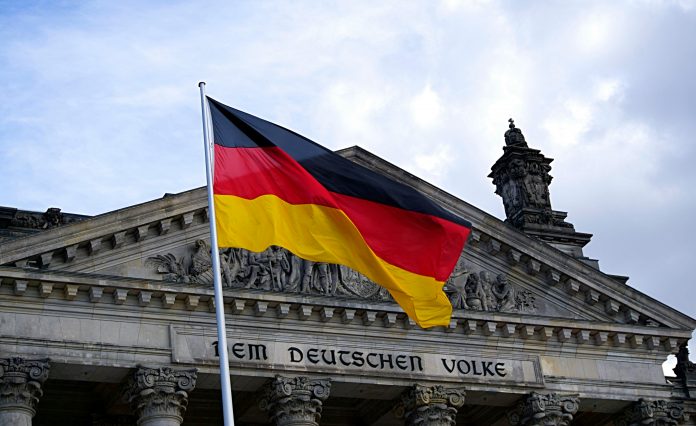
Germany has recently urged the European Union to intensify its efforts to support Syria’s economic recovery and stabilization following the prolonged civil war and the fall of the Assad regime in late 2024.

According to a position paper from Berlin addressed to the European Commission, Germany is pushing for expanded economic relations with Syria. Key proposals include: Initiating discussions with the European Investment Bank (EIB, owned by the EU’s 27 member states) about potentially resuming operations or involvement in Syria.

Placing greater emphasis on policies that promote economic recovery and post-war reconstruction, with the World Bank estimating reconstruction costs at least $216 billion. The rationale is that faster economic progress is essential for the country’s stability after over a decade of conflict.

Germany argues that stronger EU engagement in economic ties would help accelerate recovery and prevent setbacks in the transitional period. This call comes amid ongoing EU efforts since 2025, including: The lifting of all economic sanctions on Syria decided in May 2025, with Germany playing a key role in pushing for phased relief.

Significant aid pledges, such as the EU’s €2.5 billion commitment for 2025–2026 and an additional €620 million package for 2026–2027 focused on humanitarian aid, early recovery, and bilateral support. Broader initiatives like enhanced trade cooperation and involvement in Mediterranean Pact programs to facilitate private investment and socio-economic rebuilding.

Germany has been a leading voice in supporting Syria’s transition, including through bilateral talks on financial reforms, debt restructuring, and investments in sectors like energy and infrastructure. However, challenges persist: Syria’s economy saw only modest 1% growth in 2025, with high poverty rates (over 90% of the population affected), inflation, and limited tangible benefits from sanctions relief on the ground.

The push reflects Berlin’s view that sustained EU action—beyond humanitarian aid—is critical for long-term stability, inclusive governance, and potentially facilitating the voluntary return of refugees. This aligns with earlier German commitments to reconstruction in areas like health, education, water, and economic development.

Syria’s energy sector—encompassing oil, natural gas, electricity generation, and renewables—is undergoing significant revival and attracting substantial foreign investments following the fall of the Assad regime in late 2024, the lifting of most international sanctions in 2025, and the government’s regain of control over key northeastern oil and gas fields in early 2026.

The sector was devastated by over a decade of conflict, with pre-war oil production around 400,000 barrels per day (bpd) dropping to roughly 120,000 bpd by late 2025. Electricity generation has been severely limited, often providing only a few hours of power daily in many areas due to damaged infrastructure, fuel shortages, and neglect.

Oil and Gas Production

Following the January 2026 handover of major fields like Al-Omar (the largest oil field) and Conoco/Tabiyeh gas complexes from Kurdish-led forces to central government control, production is rebounding. Oil output has increased by tens of thousands of bpd through low-cost repairs, workovers, and facility upgrades.

The Syrian Petroleum Company targets further gains, with expectations of reaching 100,000+ bpd soon and potential for doubling gas production to 14-15 million cubic meters per day by end-2026.

Electricity: Generation has improved from ~3 hours/day in some regions in early 2025 to 13+ hours in many areas by early 2026, with ambitions for 24/7 nationwide supply by end-2026. Gas imports from Azerbaijan via Turkey, Jordan/Qatar, and planned from Egypt support power plants in Aleppo, Homs, and Damascus.

Reconstruction needs for the broader energy sector (oil, gas, power, water) exceed $30 billion, with urgent requirements around $10 billion for power infrastructure alone. The World Bank estimates overall post-conflict reconstruction at ~$216 billion.

The transitional government has amended investment laws to allow up to 100% foreign ownership, attracting Gulf states, Turkey, the US, and others. Major deals focus on power plants, upstream redevelopment, and renewables. A $7 billion consortium led by Qatar’s UCC Holding signed in May 2025 for 5,000 MW capacity: four combined-cycle gas turbine (CCGT) plants (4,000 MW total) and 1,000 MW solar.

Locations include Aleppo, Deir ez-Zor, Homs, and others. This is structured as a public-private partnership and is one of the biggest post-war energy investments. Oil and Gas Upstream: US Chevron signed agreements with Qatari partners for offshore exploration and development, with operations starting soon.

UAE’s Dana Gas: MoU for redeveloping key gas fields like Abu Rabah. Other majors (ConocoPhillips, TotalEnergies, Eni) in talks or MoUs. Saudi firms (e.g., TAQA, ADES) providing technical support; Saudi Arabia announced broader investments including energy as part of a $2 billion+ package.

Azerbaijan (SOCAR) supplies 1.2 billion cubic meters annually since August 2025 for 1,200–1,300 MW generation. Regional pipelines (Arab Gas Pipeline via Jordan) and planned Egyptian supplies. World Bank $146 million grant for the “Syria Electricity Emergency Project” to repair transmission lines and substations.

US firms (Baker Hughes, Hunt Energy, Argent LNG) developing roadmaps for oil/gas/power tied to a new Syrian Sovereign Wealth Fund. Saudi ACWA Power: Joint agreement for 2.5 GW renewables (solar/wind). Gulf investments alone reached ~$28 billion across sectors in 2025, with energy as a priority.

European involvement remains limited but growing: Germany’s Siemens discussed opportunities in 2025, and the EU via pledges like €2.5 billion for 2025–2026 and €620 million for 2026–2027 focuses on humanitarian and early recovery aid, with Germany pushing for more economic engagement.

Despite momentum, hurdles include slow MoU implementation, infrastructure damage requiring massive rehab, governance and transparency concerns, political fragility, and the need for sustained stability to unlock full potential. Production gains in 2026 are expected to be incremental at first, focused on repairs rather than major new developments.

The sector’s revival is central to Syria’s economic stabilization, reducing import dependency, generating revenue for reconstruction, and improving living conditions through reliable power. International investment—primarily from Gulf and regional players—drives progress, with 2026 positioned as a pivotal year for tangible recovery in output and capacity.