DD
MM
YYYY

PAGES

DD
MM
YYYY

spot_img

PAGES

Home Blog Page 826

Only 1 Day Left! BlockDAG’s NO VESTING PASS Offer Ending! Kaspa Jumps 10% & Chainlink Soars 22%

0

Not all coins follow the market’s pace; some take the lead. Kaspa (KAS) price analysis confirms that, shows a solid 10% increase along with new smart contract features drawing developer focus. At the same time, Chainlink (LINK) price surge is capturing attention after a 22% weekly gain, fueled by tokenisation discussions with the SEC.

But the standout moment belongs to BlockDAG (BDAG), where the closing window for its NO VESTING PASS has sparked major buying. With just one day remaining, buyers can still get total access to their coins on launch. The price sits at $0.0016 ahead of its GLOBAL LAUNCH release, offering up to 3,025% potential return. With over $350 million raised and growing usage, BlockDAG’s presale is catching fire.

Kaspa (KAS) Price Analysis Indicates Bullish Momentum

Kaspa (KAS) price analysis shows a sharp 10% gain within a single day, reaching $0.1079. While major altcoins like Solana and Ethereum also move upward, Kaspa’s growth stems from more than just market trends. The rollout of the Kasplex zkEVM testnet brings utility by enabling Ethereum-compatible smart contracts with fewer steps on Kaspa.

With MetaMask support and a working explorer, the experience becomes more intuitive for users. From a technical angle, a double bottom pattern near the $0.05 mark is hinting at a reversal. If demand holds strong, Kaspa (KAS) price analysis points toward breaking $0.12, which could clear the path to $0.18–$0.20 soon.

Chainlink (LINK) Price Surge Reflects Real-World Adoption

Chainlink (LINK) price surge has intensified with a 17% jump since last Friday, bringing the total to 22% since July 14. LINK is moving closer to the $20 mark, and many are tracking its momentum closely. The rally follows updates that Chainlink Labs has joined the SEC’s task force to explore rules around tokenisation, now a key theme in digital finance.

This isn’t all based on headlines. Chainlink is actively collaborating with big industry players like DTCC and Swift, who are already testing how LINK’s infrastructure supports cross-platform tokenised asset management. These partnerships back up its use case. With regulators now focused on how tokens will be governed, Chainlink (LINK) price surge may reflect growing confidence in its long-term utility.

BlockDAg’s NO VESTING PASS: 1 Day Left to Secure Full Coin Access

Breaking away from typical presale restrictions, BlockDAG is offering something rarely seen: full access to BDAG coins on launch. The NO VESTING PASS means there are no unlock periods or staged releases. Buyers receive 100% of their BDAG coins right from the beginning. With only one day left before this offer closes, it’s pulling in significant attention.

As part of the GLOBAL LAUNCH release, BDAG is priced at just $0.0016. If it reaches the projected listing value of $0.05, holders could see returns of up to 3,025%. The presale, now in batch 29, has already delivered a 2,660% gain for those who bought during batch 1. That’s a massive increase in value in a short span.

What adds strength to this momentum is more than just hype. BlockDAG has already raised over $350 million in funding. More than 2 million users are currently using the X1 app to mine BDAG. Also, over 18,500 ASIC miners have been sold, indicating real traction among users. Confirmed exchange listings and an already functioning ecosystem make the NO VESTING PASS a direct entry point, without the usual delays tied to presales.

With the limited-time offer ending on August 11, this deal provides both unmatched access and pricing. That’s why BlockDAG is being seen as one of the top crypto picks of this year. Missing out now could mean missing the lowest possible entry point before demand and pricing move up further.

Final Say!

Kaspa (KAS) price analysis points to upward movement, driven by key upgrades like zkEVM and strong technical patterns. Chainlink is pushing higher, supported by institutional ties and regulatory engagement, as tokenisation gains pace in finance. Still, BlockDAG holds the spotlight for now, combining fast user growth, confirmed listings, and a NO VESTING PASS offer that provides instant access at a low entry point.

With more than $350 million already secured in presale and price growth already showing 2,660% gains since batch 1, BlockDAG is clearly generating momentum few can match. While all three coins are worth watching, BlockDAG’s time-sensitive offer makes it the most compelling choice among these top crypto picks right now.

Presale: https://purchase.blockdag.network

Website: https://blockdag.network

Telegram: https://t.me/blockDAGnetworkOfficial

Discord: https://discord.gg/Q7BxghMVyu

BlockDAG’s Buyer Battles Push Presale to $350M! JUP Breaks Out & SHIB Turns Bullish

0

Some market moves don’t tap gently; they barge through. That’s what Jupiter (JUP) has done, leaping more than 40% this July and pushing past key barriers. With four green daily candles in a row and solid technical indicators, the Jupiter (JUP) price forecast now points toward $0.7459.

At the same time, Shiba Inu has snapped out of its long consolidation phase. The recent uptick in the Shiba Inu (SHIB) price action has seen the coin cross above the 200-day EMA. With rising trading volumes and a bullish crossover, the meme coin is now closing in on the $0.00002 mark.

And then there’s BlockDAG (BDAG), reshaping how presales work altogether. Its Buyer Battles system provides a daily path to substantial BDAG rewards, helping push the presale past the $350 million mark. With top altcoins rallying and BDAG’s limited offer ticking down, this could be the moment to reassess which project ranks among the top crypto coins right now.

Jupiter (JUP) Price Forecast: Momentum Pushes Toward $0.7459

Jupiter (JUP) has maintained strong momentum throughout July, gaining over 40% and moving beyond critical technical levels. It recently cleared the 200-day EMA at $0.5836 and broke through a resistance line at $0.6339, a level that capped its gains earlier this week. The chart now shows four consecutive days in the green, which has led to an improved Jupiter (JUP) price forecast.

Should JUP maintain a close above $0.6339 on the daily timeframe, it could move further toward the $0.7459 resistance, a level last touched in late December. Momentum indicators are also in JUP’s favor; the MACD is strengthening with green bars reappearing, and the RSI has reached 85, signaling overbought conditions.

While this suggests strength, there’s also caution in play. If the price falls back below $0.6339, a decline toward $0.5836 or even the 100-day EMA at $0.5031 could occur. Still, the broader outlook for the Jupiter (JUP) price forecast remains largely positive.

Shiba Inu (SHIB) Price Action: Bullish Signals After Long Flat Trend

After spending months drifting sideways, Shiba Inu (SHIB) is showing signs of strength again. The coin has recently moved above its 200-day EMA, reviving hope for a strong uptrend. This technical shift has brought the $0.00002 level back into focus, a target not seen since early 2024.

What adds weight to this bullish shift is SHIB’s recent move above the $0.00001500 barrier, which has repeatedly halted earlier rallies. With the Shiba Inu (SHIB) price action now forming higher lows and pushing upward, the next obstacle appears at $0.00001720. If this resistance is cleared with a solid daily close, the road to $0.00002 opens up. The rally is also supported by higher volume and a favorable EMA alignment.

BlockDAG Buyer Battles: Unlock Daily Wins as $350M Presale Progresses

BlockDAG is rewriting the script on presales with its Buyer Battles feature, which grants the community a chance to earn huge BDAG rewards every 24 hours. Each day, 50 million BDAG coins are allocated for sale, and if any remain unsold, they automatically go to the top buyer of the day. The cycle resets at 00:00 UTC daily, creating repeated chances to win a substantial BDAG bonus. So far, over $350 million has been raised and 24.3 billion BDAG coins have been sold.

The presale is currently in Batch 29, offering BDAG coins at a limited-time price of $0.0016. This special rate remains active until August 11th as part of the GLOBAL LAUNCH release. With a confirmed listing price of $0.05, early buyers are already sitting on a 2,660% growth in their holdings since batch 1, and those purchasing now could still lock in a 3,025% return.

But the potential isn’t just theoretical. BlockDAG has already launched a working testnet, rolled out dev tools, and released the X1 Miner app, which has over 2 million users mining BDAG directly from their smartphones. With strong fundamentals, continuous community engagement, and rising interest, some market watchers project the coin to reach $1 soon after launch and potentially climb as high as $20 by 2027.

The Buyer Battles, coupled with such potential, make BDAG more than just another presale. As Batch 29 nears its limit, the $0.0016 price will soon vanish, meaning access to high-volume BDAG rewards could disappear with it. For those participating now, the payout could be far beyond expectations.

Which Among These Is the Top Crypto Coin Right Now?

The Jupiter (JUP) price forecast looks favorable, especially after crossing resistance at $0.6339 and heading toward $0.7459. On the other hand, Shiba Inu (SHIB) price action has turned bullish as it breaks past the 200-day EMA, aiming to hit $0.00002. Both tokens show strong short-term potential on the charts.

Yet, beyond price action, BlockDAG stands out for its unique approach. It combines Buyer Battles with a real-use mining app, a working testnet, and a growing ecosystem. With the presale in Batch 29 priced at $0.0016 and a launch value confirmed at $0.05, the 3,025% upside makes it one of the top crypto coins right now. When combining real delivery with daily rewards and long-term projections, BlockDAG may be the one with the biggest leap ahead.

Presale: https://purchase.blockdag.network

Website: https://blockdag.network

Telegram: https://t.me/blockDAGnetworkOfficial

Discord: https://discord.gg/Q7BxghMVyu

Tekedia Unveils Tekedia AI Lab for Colleges and Universities

0

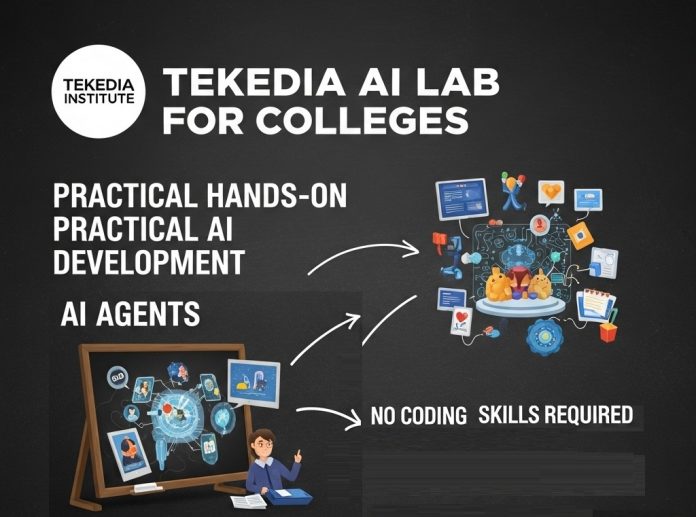
We’re very excited to announce that Tekedia Institute has introduced Tekedia AI Lab for Colleges. This program is designed to enable students in universities and polytechnics to acquire practical hands-on AI development skills. We will help you understand how AI agents are being created at code-based level. Yet, no coding or programming skills are required as we will share codes and help you see how everything is connected.

Think of walking into a kitchen to make egusi soup with everything largely prepared, and your job is to put the egusi, pepper, spice, oil, etc until the soup is ready. We will get all the ingredients from the open models to hosting parameters ready [you will get your own model license and we will explain how], and together, we will create working agents.

Tekedia already has a robust program via Tekedia CollegeBoost, and we understand how to integrate into school programs to ensure students remain focused while deepening their capabilities. Only schools can enroll for this program.

All training will be online at Zoom, and we will award Tekedia Institute’s Certificate in AI Technical Design & Deployment to students, in conjunction with your school where applicable.


In today’s rapidly evolving technological landscape, universities and polytechnics face the critical challenge of equipping their students with truly practical, industry-relevant AI skills. Theoretical knowledge alone is no longer sufficient. Students need hands-on experience in designing, building, and deploying AI solutions that address real-world problems. Tekedia Institute is proud to introduce Tekedia AI Lab for Colleges (drafted from Tekedia AI Lab: from Technical Design to Deployment), a transformative program specifically structured to enable your institution to bring cutting-edge, practical AI development directly into your classrooms.

The Tekedia AI Lab for Colleges program is designed to bridge the gap between academic theory and practical application. Through this immersive and intensive curriculum, your students will gain invaluable experience in the practical development of AI agents. This is not a “no-code” or platform-dependent approach; instead, we emphasize code-based frameworks, empowering students to write, understand, and control every line of their AI creations. This foundational skill set ensures they are not just users of AI, but true developers.

A core tenet of our program is the strategic utilization of open-source models. By focusing on open-source foundation models and Large Language Models (LLMs), your institution and students will benefit from zero model costs. This innovative approach means your only significant expenditure will be on cloud hosting for deployment, eliminating the recurring fees associated with proprietary AI platforms and models. This financial efficiency allows for broader accessibility and sustained learning without prohibitive costs, fostering a culture of innovation and self-reliance.

Ultimately, the Tekedia AI Lab for Colleges is about empowering your students to build AI agents with actual real-life applications. They will learn to connect, piece together, and deploy AI solutions that can perform specific tasks for businesses and organizations, mirroring the demands of modern industry. By partnering with Tekedia Institute, you can ensure your graduates are not only well-versed in AI concepts but are also highly capable practitioners, ready to contribute meaningfully to the AI-driven economy. Equip your students with the skills to design, develop, and deploy the future of AI.

Contact us here for more information on how we can onboard your school. For current CollegeBoost partners, we have a big discount for you.

Tekedia AI Lab: From Technical Design to Deployment (Oct 4 -25, 2025) | $500 or ?350,000

The Imperative for a Unified CAC and Trademark System: A Review of Sanofi and KPMG Case

0
CAC

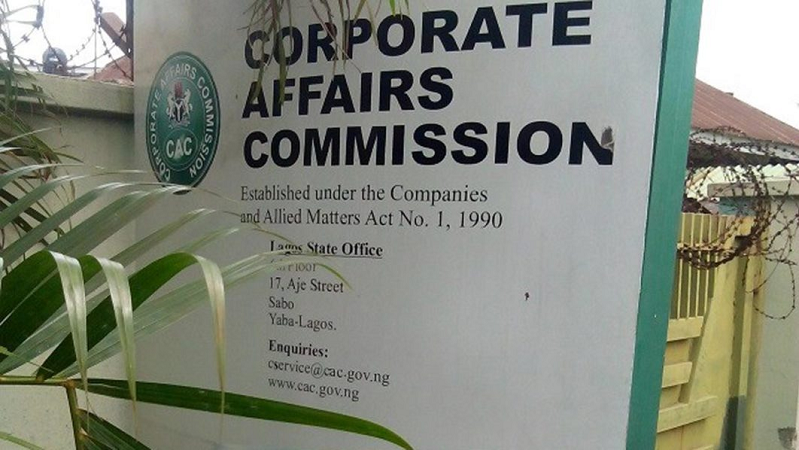
The vibrant entrepreneurial spirit in Nigeria, fueled by a booming youth population and increasing access to technology, has led to a surge in new businesses. However, this growth often comes with a significant challenge: the pervasive issue of brand confusion stemming from a disconnect between the Corporate Affairs Commission (CAC) and the Trademarks Registry. It’s a problem that extends beyond mere inconvenience, often resulting in costly legal battles, tarnished reputations, and stifled innovation.

The Legal Framework

Nigeria’s business landscape is governed by several key pieces of legislation, primarily the Trademarks Act (Cap T13 LFN 2004, as amended) and the Companies and Allied Matters Act (CAMA) 2020. While both aim to foster a fair and orderly business environment, their siloed operations create loopholes that exploit well-meaning businesses.

The Trademarks Act is the primary legislation for protecting unique brand identifiers. Section 11 of the Act, for instance, explicitly disallows the registration of a mark if its use “would, because of its being likely to deceive or cause confusion or otherwise, be disentitled to protection in a court of justice.” This provision underscores the principle that a trademark must be distinctive and not infringe on existing rights.

On the other hand, CAMA 2020, the foundational law for company and business name registration, has made commendable strides in addressing this historical disconnect. Crucially, Section 30(4) of CAMA 2020 empowers the CAC to direct a company to change its name if it discovers that the name is identical to a registered trademark and was registered without the trademark owner’s consent. Furthermore, Section 857 of CAMA 2020 provides a robust mechanism for challenging company/business name registrations before the CAC’s Administrative Procedure Committee (APC) if the name is:

  • Identical to a name associated with an applicant who has goodwill.
  • Sufficiently similar to such a name that its use in Nigeria would be likely to mislead by suggesting a connection between the company and the applicant.
  • In the opinion of the Commission, it would violate or conflict with any existing trademark or business name registered in Nigeria.

This latter provision, particularly, gives teeth to trademark owners, allowing them to proactively prevent or rectify instances of name squatting or unintentional duplication.

Real-World Consequences: The SANOFI Case

The implications of this disconnect are not theoretical; they are real. A particularly illuminating and recent example is the Federal High Court judgment in Sanofi S.A. v. Sanofi Integrated Services Ltd. & 3 Ors., delivered in August 2023. This landmark ruling underscores the very issues at the heart of the CAC-Trademark Registry disconnect.

In this case, Sanofi S.A., a French multinational pharmaceutical company with long-standing registered trademarks for “SANOFI” in Nigeria, discovered that several local entities had registered company names incorporating its trademark (e.g., Sanofi Integrated Services Limited, Sanofi Nigeria Enterprises Limited, and Sanofi Nigerian Enterprise). Despite Sanofi’s trademark pre-dating these company registrations, the lack of an integrated system allowed such registrations to occur.

Sanofi was compelled to pursue legal action, initially lodging a complaint with the CAC, which directed the infringing companies to change their names under the provisions of CAMA 2020. When these companies failed to comply, Sanofi proceeded to the Federal High Court. The Court, in upholding the CAC’s directive, decisively ruled in favour of Sanofi S.A., ordering the cancellation and/or change of the infringing company names and even awarding damages. Justice J. Omotosho’s judgment affirmed that a validly registered trademark takes precedence over a later-registered company name, especially when it causes confusion.

This case serves as a stark reminder of the time, cost, and reputational damage that can arise from such conflicts, even with the improved provisions of CAMA 2020. While it demonstrates the increasing effectiveness of legal recourse, it also highlights the reactive nature of the current system, where trademark owners must actively pursue litigation to enforce their rights, rather than being protected by a preventive digital framework.

Real-World Consequences: The KPMG Case

The implications of this disconnect are not theoretical; they are playing out in real-time within Nigeria’s legal landscape. A particularly illuminating and most recent example is the ongoing legal battle between KPMG Nigeria and KPMG Professional Services.

As reported on July 23, 2025 by Punch, KPMG Professional Services announced its appeal against a July 10, 2025, judgment by the Court of Appeal in Lagos. This judgment directed the Corporate Affairs Commission (CAC) to remove “KPMG Professional Services” from its register due to its similarity with the established audit, tax, and consulting firm, KPMG Nigeria.

The dispute dates back to 2002 when KPMG Nigeria (which includes entities like KPMG Audit registered in 1969 and KPMG Tax Consultants in 1990) filed an originating summons challenging the CAC’s registration of a new entity named “KPMG Professional Services.” KPMG Nigeria argued that the registration was deceptively similar to its long-established identity.

While a Federal High Court initially dismissed KPMG Nigeria’s suit in 2005, citing an alleged merger, the Court of Appeal in its recent ruling on July 10, 2025, overturned that decision. Justice Abdullahi Mahmud Bayero, delivering the unanimous decision, emphasised that KPMG Nigeria was the first to register its business entities. The appellate court rejected the notion of a merger based on insufficient and unsubstantiated evidence, stating that only a formal merger agreement could determine its scope. Crucially, the Appeal Court held that the CAC acted contrary to CAMA by allowing a similar name to be registered without first removing the earlier existing names from the registry. This points directly to the systemic failure of the CAC in cross-referencing and preventing name conflicts.

Despite the Appeal Court’s directive for deregistration and a perpetual injunction against KPMG Professional Services operating under that name, KPMG Professional Services has appealed to the Supreme Court and filed for a stay of execution, assuring its clients it will continue operations. This development, still unfolding, highlights the protracted and costly nature of resolving such name disputes in Nigeria’s current system. It serves as a stark reminder of the time, cost, and reputational damage that can arise from such conflicts.

When a Trademark is Hijacked as a Company Name

A significant procedural issue arises when a company possesses a duly registered trademark, but another entity proceeds to register that identical or confusingly similar mark as its company name with the CAC. In such a scenario, the trademark owner is not necessarily suing for the infringement of their own company name, but rather for the infringement of their trademark rights by the unauthorised use of that trademark as a company name.

The legal action in such a case primarily grounds itself in trademark infringement under the Trademarks Act and leveraging the provisions of CAMA 2020 that address conflicting names. Key procedural considerations include:

  1. Jurisdiction of the Federal High Court: Trademark infringement actions, whether or not they involve a company name, fall exclusively within the jurisdiction of the Federal High Court in Nigeria. This is crucial for the trademark owner to bear in mind when initiating legal proceedings.
  2. Establishing Trademark Ownership and Goodwill: The trademark owner must prove that they possess a validly registered trademark that pre-dates the conflicting company name registration (unless the company name was registered in bad faith). They also need to demonstrate existing goodwill and reputation associated with their trademark. This is vital for both trademark infringement and an action for “passing off,” which is a common law tort designed to protect the goodwill of a business from misrepresentation.
  3. Demonstrating Likelihood of Confusion or Deception: The core of a trademark infringement claim, even when the infringing mark is used as a company name, is proving that the defendant’s use of the name is “likely to deceive or cause confusion” in the minds of the public. This does not require proof of actual deception, only a likelihood.
  4. Targeting the CAC’s Role: While the primary target of the suit is the infringing company, the trademark owner can also join the CAC as a party to the suit. This is particularly relevant when seeking orders for the CAC to deregister or amend the conflicting company name, as seen in the KPMG case where the Appeal Court directed the CAC to act.
  5. Reliefs Sought: Beyond injunctions (to stop the use of the name) and damages for losses incurred (e.g., lost sales, damage to reputation), the trademark owner can seek specific orders for the CAC to:
  • Direct the change of the infringing company’s name under Section 30(4) of CAMA 2020.
  • Deregister the infringing company name if compliance with a name change directive is not met.
  • Rectify the register of companies to reflect the removal or alteration of the conflicting name.
  1. “Passing Off” Action: Even if the trademark is unregistered, or as an alternative claim, a trademark owner can pursue an action for “passing off.” This tort protects the goodwill of a business even without a registered trademark, provided the claimant can demonstrate:
  • Goodwill or reputation in their goods or services.
  • A misrepresentation by the defendant, leading the public to believe the defendant’s goods/services are those of the claimant.
  • Resultant damage or likelihood of damage.

Seeking Redress: The Current Avenues

For a business whose existing trademark or company name has been registered by another, the following avenues for redress are available:

  1. Cease and Desist Letter: A formal notice to the infringing company demanding the cessation of the use of the conflicting name. This often serves as a preliminary step to avoid litigation.
  2. Complaint to the Corporate Affairs Commission (CAC): Leveraging the provisions of CAMA 2020, particularly Section 30(4), a formal complaint can be lodged with the CAC, requesting them to direct the offending company to change its name.
  3. Administrative Procedure Committee (APC): Under Section 857 of CAMA 2020, the trademark proprietor can formally object to the company registration before the CAC’s Administrative Procedure Committee (APC), which functions as an internal tribunal for such disputes.
  4. Federal High Court Action: As a last resort, an action can be instituted at the Federal High Court for trademark infringement. This can result in injunctions preventing further use of the infringing name, and claims for damages incurred due to the confusion or loss of goodwill. The KPMG case underscores the effectiveness of this judicial route, albeit a long and resource-intensive one.

Why must there be synergy between Trademark Registry and CAC

The current state of Nigeria’s trademark registry, largely reliant on physical index cards in file cabinets, is a significant bottleneck. This analogue approach makes comprehensive searches difficult, prone to errors, and utterly inefficient. The solution lies in a robust, interconnected digital infrastructure.

Consider the United States Patent and Trademark Office (USPTO) or the European Union Intellectual Property Office (EUIPO). Both operate highly sophisticated online databases that allow for comprehensive trademark searches. Their systems are designed to minimise overlaps by integrating trademark data with business registration information, where feasible. This proactive approach significantly reduces instances of conflicting registrations from the outset.

For Nigeria, the benefits of digitising the Trademark Registry and linking it directly with the CAC portal are immense:

  • Preventive Mechanism: A unified online platform could automatically cross-reference proposed company names with existing trademarks, preventing conflicting registrations before they occur. As seen with the KPMG case, such a system would have flagged the similarity immediately and prevented the initial registration, saving years of litigation.
  • Enhanced Efficiency: Instantaneous searches and registrations would streamline processes, drastically reducing the time it takes to get a business or trademark registered.
  • Data Integrity and Accuracy: Digital databases are less prone to errors and misfilings inherent in manual, paper-based systems.
  • Ease of Enforcement: With all data readily accessible online, identifying and proving infringement would become significantly simpler, strengthening intellectual property rights enforcement.
  • Investor Confidence: A modern, transparent, and efficient IP registration system signals a mature business environment, attracting both local and foreign investment.

Conclusion

The legislative framework in Nigeria, particularly with the advancements in CAMA 2020, has laid a stronger foundation for protecting intellectual property. However, laws are only as effective as their implementation. The ongoing KPMG dispute serves as a potent, real-time illustration of the administrative hurdles and the reactive nature of intellectual property protection in Nigeria due to the disconnect between the CAC and the Trademark Registry.

It is time for a concerted effort to fully digitise the Trademark Registry and establish a seamless, real-time interface with the CAC portal. This synergy would not only prevent the confusion of existing trademarks being registered as company names and vice versa, but also foster a more transparent, efficient, and investor-friendly business landscape in Nigeria. The future of brand protection and business growth in Nigeria hinges on this crucial digital convergence.

U.S. Lawmakers Introduce New Copyright and Privacy Bill that Will Criminalize Training AI On Copyrighted Content

0

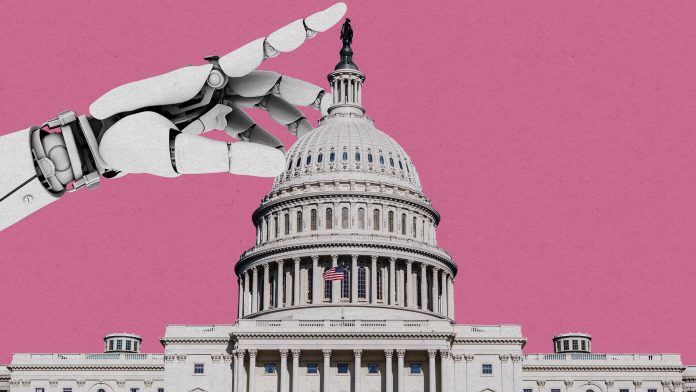
U.S. Senators Josh Hawley (R-Mo.) and Richard Blumenthal (D-Conn.) have introduced a bipartisan bill aimed at confronting what they call a “historic theft” of intellectual property and personal data by artificial intelligence firms.

The AI Accountability and Personal Data Protection Act, introduced this week, would make it illegal for AI companies to train their models on copyrighted content or personal information without explicit consent, and grant individuals the right to sue for unauthorized use.

“AI companies are robbing the American people blind while leaving artists, writers, and other creators with zero recourse,” Hawley said. “It’s time for Congress to give the American worker their day in court.”

The proposed law would significantly alter how generative AI firms such as OpenAI, Meta, Google, Anthropic, and others operate, requiring full disclosure about data usage, strict consent protocols, and legal pathways for creators and individuals to claim damages or block further misuse. The bill also mandates that firms identify which third parties receive data, if any, and allows for financial penalties and injunctive relief.

Blumenthal, co-sponsor of the legislation, said the law is urgently needed to halt the unchecked collection and monetization of people’s private and creative data.

“Tech companies must be held accountable — and liable legally — when they breach consumer privacy, collecting, monetizing or sharing personal information without express consent,” he said.

Courts Siding with AI Companies Intensifies Demand for Legislation

The bipartisan proposal comes amid a growing wave of lawsuits against AI companies — and a growing pattern of court rulings that have largely sided with the tech firms on fair use grounds. Legal experts say the legislation responds to a widening frustration among authors, musicians, publishers, and other content creators who argue that the courts have been too lenient in interpreting copyright law in the age of machine learning.

In June 2024, a federal judge in San Francisco ruled that Anthropic’s use of copyrighted books to train its Claude AI models was “highly transformative,” meaning the firm could claim protection under the fair use doctrine. While the court acknowledged concerns about “direct infringement” in storing full copies of copyrighted books, it stopped short of penalizing Anthropic for the training process itself. The final judgment on damages and potential remedies is still pending.

Similarly, Meta has also found support in court. Authors, including Richard Kadrey and Christopher Golden, sued the company, alleging their books were used without consent to train Meta’s LLaMA models. In that case, the court also deemed the training process as transformative, making it likely to fall under fair use, though the judge left open the possibility that retaining full versions of copyrighted texts in a training dataset might still incur liability, depending on how they are used or stored.

These rulings have raised concerns in creative industries. Many believe that the fair use doctrine, as currently interpreted, was never intended to cover the mass ingestion of copyrighted materials to build commercial AI products — and that the courts are allowing tech companies to circumvent copyright protections that would apply in any other context.

Landmark Legal Precedents Fueling Debate

In one of the few legal victories for rights holders, Thomson Reuters sued Ross Intelligence, alleging that Ross used its proprietary Westlaw legal headnotes to build an AI legal research assistant. The federal court agreed, ruling that Ross had infringed on Thomson Reuters’ copyrighted material, a decision widely viewed as a watershed moment for legal AI accountability. That case is currently in the damages phase.

The New York Times, too, filed a landmark lawsuit in December 2023 against OpenAI and Microsoft, accusing the companies of using its archived journalism — including paywalled content — to train GPT-4 and other models. While the case is ongoing, early filings suggest OpenAI will also argue that its use of content is transformative and protected under fair use, continuing a trend that lawmakers say shows the urgent need for new rules.

Meanwhile, musicians, screenwriters, and visual artists have echoed similar concerns in suits and congressional hearings, pointing to the wholesale scraping of social media posts, lyrics, and images as raw material for AI model training — all without compensation.

Legislation as the Next Battlefield

Given the legal momentum favoring AI developers, some lawmakers from both sides of the aisle argue that legislation is now the only reliable path forward to protect American creators.

“This bipartisan legislation would finally empower working Americans who now find their livelihoods in the crosshairs of Big Tech’s lawlessness,” Hawley said.

The bill is expected to face stiff opposition from the tech industry, which has long maintained that scraping public data for AI training is not only legal but essential for innovation and competitiveness. Companies are also likely to point to existing rulings as validation of their data practices.

Whether the Hawley-Blumenthal bill becomes law or serves as a catalyst for broader AI regulation, it signals a sharp turn in Washington’s posture toward Silicon Valley — one that places authors, journalists, artists, and everyday citizens back at the center of the conversation over ownership and control in the AI era.