DD
MM
YYYY

PAGES

DD
MM
YYYY

spot_img

PAGES

Home Blog Page 83

Global Markets Steady After Japan-Fueled Sell-Off, Bitcoin Slides as Investors Brace for Rate Shifts

0

Stocks made modest gains on Tuesday while global government bonds and cryptocurrencies steadied, offering a pause after the sharp sell-off that swept through markets on Monday as investors braced for a looming interest rate hike in Japan.

S&P 500 futures were flat following overnight declines on Wall Street, and equities in both Europe and Asia edged slightly higher.

Sentiment improved somewhat after a solid auction of Japanese government bonds eased pressure on a market that has been rattled for weeks. Japanese 10-year and 30-year yields slipped by about one basis point each, a small but notable cooling after their dramatic climb. The surge in yields has been driven by concerns about Japan’s worsening fiscal position and rising expectations that the Bank of Japan is preparing to lift rates, pushing 10-year yields to a 17-year high and 30-year yields to their highest level on record.

Monday’s turmoil in Japanese debt markets quickly spilled into global fixed income. The U.S. 10-year Treasury yield jumped nearly 8 basis points, while the German 10-year Bund yield rose almost 6 basis points, helping drag equities lower. The calm in JGBs on Tuesday translated into steadier global bonds. The 10-year Treasury yield hovered at 4.09%, unchanged on the day, while the Bund yield held at 2.75%.

Cryptocurrencies mirrored the relative calm but remained under pressure. Bitcoin inched higher on Tuesday after tumbling 5.2% the day before, trading at about $87,000. It has now fallen roughly 30% from its October peak, deepening a weeks-long slump that has alarmed digital-asset traders. Some market participants see bitcoin as an early barometer for broader risk appetite, though traditional investors appear mostly unfazed.

“Things are pretty stable currently. We’re closing this year with few—touching wood—negative surprises,” said Samy Chaar, chief economist at Lombard Odier. “Yesterday was mainly a non-event except for crypto assets. We’ve had a huge rout in bitcoin in recent weeks, and frankly the impact on global markets has been limited.”

Sentiment within the crypto industry, however, is noticeably darker. Jehan Chu, founder of blockchain venture firm Kenetic Capital, said trading desks are shifting into defensive mode.

“The mood in cryptocurrencies is ranging between fearful and resigned,” he said. “The latest drop caught investors by surprise. The next couple months are crucial, but even the most bullish may be settling in to hibernate for the winter.”

In currency markets, the Japanese yen softened slightly, with the dollar rising 0.35% to around 156 yen and the euro gaining by a similar margin. Monday’s rebound in the yen had eased concerns that the Bank of Japan would intervene to support the currency, which has been battered for much of the year. The dollar was broadly steady after weakness on Monday briefly lifted the euro above $1.165; it last traded around $1.1605.

Expectations of diverging policy paths are quietly reshaping currency bets. Investors increasingly anticipate that Japan will tighten rates while the U.S. Federal Reserve moves toward deeper and faster cuts. Fresh U.S. data on Monday reinforced expectations of a December rate cut after manufacturing contracted for a ninth straight month in November, even as consumers defied forecasts by spending $23.6 billion in online holiday shopping.

Gold slipped 1% to fall back below $4,200 an ounce, though it remains only about 4% shy of its all-time high reached in October. Silver dropped nearly 2%. Oil prices, which climbed earlier after drone strikes hit Russian energy infrastructure, were stable. Brent crude traded at $63.10 a barrel and U.S. crude at $59.21.

Markets now head into the final stretch of the year balancing two competing forces: Japan’s long-awaited rate shift, which could upend global bond dynamics, and the likelihood of U.S. monetary easing, which could weaken the dollar and reshape risk sentiment heading into 2026.


African Start-ups Record $162m in November Funding as 2025 Nears a Strong Finish

0

African start-ups secured $162 million in funding in November 2025 (excluding exits), with 79% of the capital raised through equity investments, according to a report by Africa: The Big Deal.

Analysts note that the month was neither particularly strong nor weak, ranking as the fifth-highest in 2025 in terms of funding. The figure closely mirrors November 2024’s $181 million, though it remains well below the $267 million recorded in November 2023.

Across the continent, 32 ventures raised at least $100,000, including 16 start-ups that secured $1 million or more. Among these, six companies crossed the $10 million mark, demonstrating continued investor appetite for high-growth sectors.

These include;

SolarSaver (South Africa, Energy): $60m

South African solar company SolarSaver raised $60 million in equity funding to expand its affordable solar and battery solutions for small- and medium-sized businesses across Southern Africa.

The funding led by Inspired Evolution with participation from FMO and Swedfund International, will be used to support more than 700 existing installations and help businesses in countries like South Africa, Namibia, Botswana, and Zambia access reliable, low-cost clean energy.

SolarX (West Africa, Energy): €15m

SolarX, a commercial and industrial (C&I) solar energy company active in West Africa,  secured a €15 million senior secured financing facility from the Afrigreen Debt Impact Fund. 

This funding is intended to accelerate the deployment of solar photovoltaic solutions for businesses in the region.

Omnisient (South Africa, Fintech): $12.5m

Fintech Omnisient raised $12.5M to empower lenders with privacy-safe data insights for underserved consumers.

Backed by investors including TransUnion, Omnisient is bringing AI-powered alternative credit data clean rooms to the U.S. to help increase financial inclusion.

Lula (South Africa, Fintech): $10m

Lula secured a $10 million local-currency loan from the IFC to expand lending to underserved SMEs in South Africa. With a digital-first model and a mission to support first-time business borrowers, Lula is poised to close the country’s SME credit gap and drive inclusive growth.

SwiftVEE (South Africa, Agritech): $10m

South African agritech SwiftVEE closed a R173 million Series A round, or about $10.1 million, to deepen its move from a livestock marketplace into embedded financial services.

The raise was led by HAVAÍC and Exeo Capital, and includes a notable addition in Iain Williamson, the former Old Mutual CEO.

nextProtein (Tunisia, Agritech) raised $21m.

However, the most noteworthy events of the month came from Africa’s public markets, where not one but two tech start-ups completed IPOs, a rare occurrence on the continent. These listings mark a significant milestone, as the last major African tech IPOs occurred in 2019 with Jumia and Fawry.

In South Africa, Optasia, a fintech company, debuted on the Johannesburg Stock Exchange (JSE) on November 4, raising $345 million and reaching a market capitalization of $1.4 billion. Meanwhile, in Morocco, fintech firm Cash Plus went public on the Casablanca Stock Exchange on November 25, securing $82.5 million at a valuation of $550 million.

As the year enters its final stretch, 2025 continues to show remarkable progress for Africa’s start-up ecosystem. Total funding has reached $2.8 billion so far (excluding exits), a nearly 50% increasecompared to the same period last year. Both total equity raised and the number of start-ups securing $1 million+ have risen significantly.

Data from January to November 2025 reveal figures that are almost identical to those from the same period in 2023. Start-ups have raised $2.81 billion (including $1.64 billion in equity) across 196 deals exceeding $1 million, compared to $2.84 billion (including $1.62 billion in equity) and 195 such deals in 2023.

To surpass 2023’s total, African start-ups must raise at least $172 million in December 2025. Given that the monthly average for 2025 stands at around $250 million, and that December funding has consistently exceeded $172 million since 2021 with the sole exception of 2023, analysts believe this target remains within reach.

Overall, the continent’s funding momentum, reinforced by surprising IPO activity, positions 2025 as potentially one of Africa’s strongest years for venture capital and tech growth.

UK Officially Recognizes Cryptocurrencies as Personal Property

0

The United Kingdom has passed a landmark law formally classifying cryptocurrencies, stablecoins, and other digital assets as a distinct form of personal property.

This development, announced on December 2, 2025, marks a significant shift in how digital assets are treated under English law, providing enhanced legal protections for holders and paving the way for greater innovation in the sector.

The Property (Digital Assets etc) Act 2025 also referred to as the Property (Digital Assets etc) Bill in earlier stages. Granted by King Charles III on December 2, 2025, as confirmed by Lord Speaker John McFall in the House of Lords.

The Act introduces a third category of personal property specifically for “things that are digital or electronic in nature.” This includes crypto tokens, stablecoins, NFTs, and similar assets. Previously, UK common law treated digital assets as property on a case-by-case basis through court rulings, but they didn’t fit neatly into the traditional categories of “things in possession” (tangible items) or “things in action” (enforceable rights).

The law stems from recommendations by the Law Commission of England and Wales in 2023–2024, which highlighted legal ambiguities in handling digital asset disputes, such as theft, fraud, or bankruptcy.

The bill was introduced to the House of Lords in September 2024 and progressed through Parliament swiftly. This codification into statute offers several advantages. Crypto holders can now more easily prove ownership and seek recovery in legal cases, including theft or platform insolvencies. It aligns digital assets with traditional property rights, reducing reliance on judicial discretion.

Industry groups like CryptoUK and Bitcoin Policy UK have hailed it as a “massive step forward,” arguing it builds trust, deters illicit activities, and supports tokenization and digital finance growth.

CryptoUK noted it provides “greater clarity and protection for consumers and investors.” Experts predict this could position the UK as a global leader in crypto regulation, fostering innovation while maintaining safeguards. It may influence how courts handle related issues like inheritance or taxation of digital assets.

The move comes amid rising crypto adoption in the UK, with Bitcoin trading around $93,000 as of December 3, 2025. On X reactions have been overwhelmingly positive, with users calling it a “nation-state game theory play” for Bitcoin. CryptoUK’s announcement post quickly gained traction, emphasizing the law’s role in securing the future of digital assets.

The recommendations were developed through extensive consultation, including a 2021 call for evidence and a 2022 consultation paper. They advocate a balanced approach: leveraging common law where possible while proposing targeted statutory reforms.

The report concludes that English law is “sufficiently resilient and flexible” for most digital asset issues but requires clarification to enhance legal certainty, protect users, and facilitate market growth.

The report outlines four principal recommendations, focusing on property classification, expert guidance, collateral arrangements, and corporate law adaptations.

Legislate to explicitly recognize a third category of personal property for “things” that are neither “things in possession”. This would include crypto-tokens, NFTs, and potentially other digital/electronic assets like voluntary carbon credits.

Addresses uncertainty from the 1885 Colonial Bank v Whinney case, which limited property to two categories. Courts (e.g., AA v Persons Unknown [2019] and Tulip Trading v Van der Laan [2023]) had already treated some digital assets as property on a case-by-case basis, but statutory confirmation provides clarity for ownership, theft recovery, and inheritance.

This directly inspired the Property which create a multidisciplinary panel of industry experts, legal practitioners, academics, and judges to provide non-binding guidance on technical and legal issues related to digital asset control.

Ensures courts can handle emerging tech nuances without over-relying on judicial expertise. The government accepted this in September 2024, tasking the UK Jurisdiction Taskforce (UKJT) with implementation.

Amend the Financial Collateral Arrangements (No 2) Regulations 2003 (FCARs) to clarify that crypto-tokens can qualify as “financial collateral”. Propose a multidisciplinary project for a statutory framework on crypto collateral enforcement.

Digital assets often fall outside current FCARs, complicating their use in secured lending. This would enable faster, more efficient collateral enforcement, boosting DeFi and tokenization. HM Treasury is reviewing this as of 2024.

Undertake further work to adapt UK companies law for using crypto-token networks in issuing and transferring equity or other registered securities. Supports innovation in tokenized real-world assets while ensuring compatibility with existing securities rules.

These reforms aim to reduce fraud risks, enhance consumer protections, and align with the UK’s fintech ambitions. Industry bodies like CryptoUK praised them for building trust, while experts note they position England and Wales as a “world jurisdiction of choice” for digital assets.

This is a proactive step by the UK government to integrate crypto into its legal framework, contrasting with more fragmented approaches elsewhere. If you’re holding or trading crypto in the UK, this could simplify legal recourse—consult a specialist for personalized advice.

Welcome Pangolin to Tekedia Capital

0

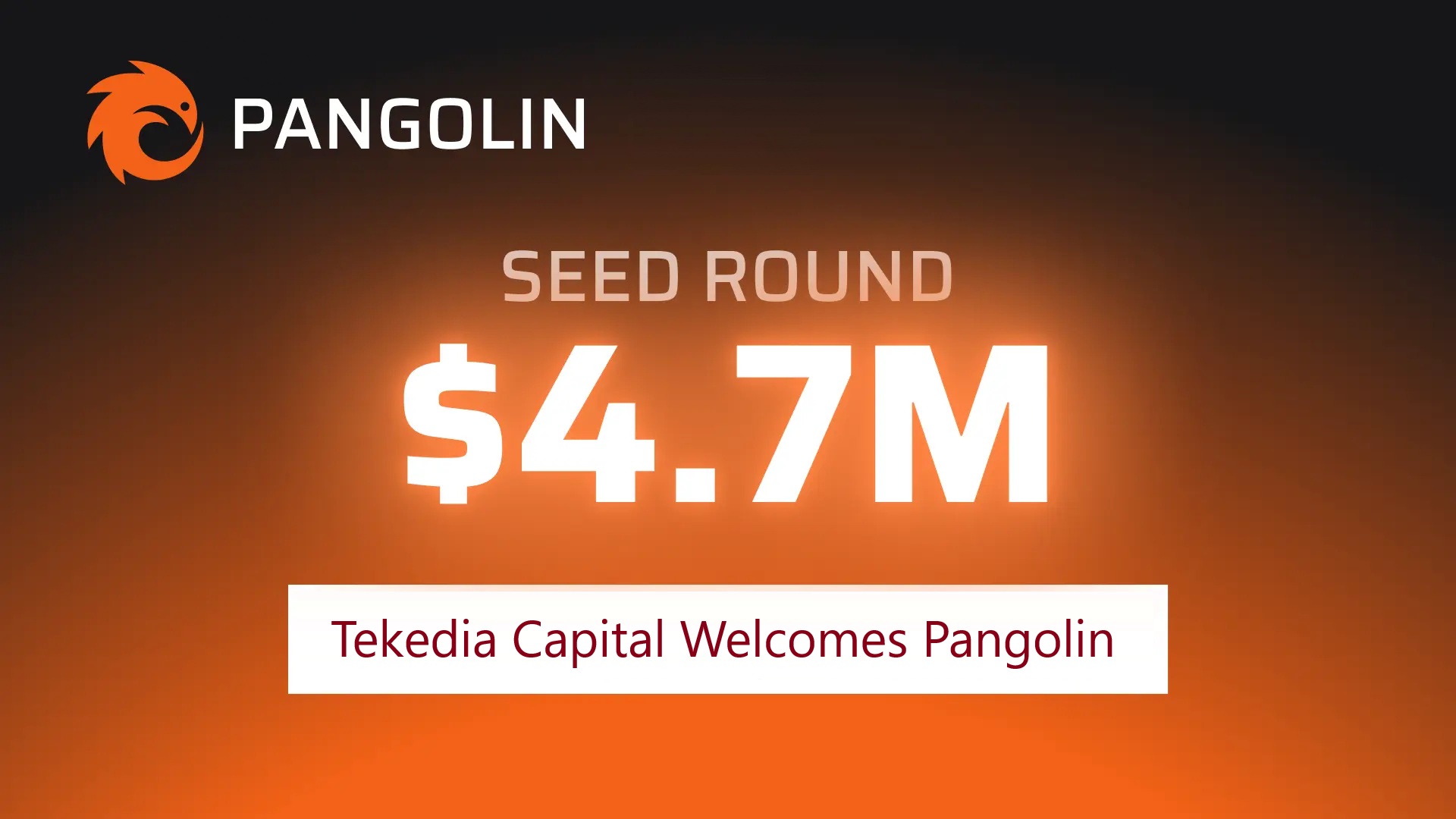
In less than 12 months since launch, the results have been exceptional: 16,000 GitHub stars, 512,100 deployments, and a collection of strong growth metrics. Pangolin is building a new class of open-source proxy: cloud-orchestrated, identity-aware, tunneled, and highly available. It offers the simplest and most secure way to expose applications on any network, ensuring that only authorized users gain access while everyone else is locked out.

We see immense potential in Pangolin, a pioneering, all-in-one application delivery platform that can bring any service online, regardless of where it is hosted. For this reason, Tekedia Capital is delighted to join Chemistry, BLAST Capital, 468 Capital, Transpose Platform, Pioneer Fund, and others in seeding Pangolin with $4.7 million.

Welcome, Pangolin.

Bitcoin is falling! While everyone in the market is watching and waiting, BlackChainMining investors are steadily making profits.

0

Recently, Bitcoin prices have experienced a significant pullback. Faced with this sudden decline, market sentiment quickly turned cautious, with many investors choosing to wait and see, awaiting a clearer direction. While traditional traders are anxious about the uncertainty, another group remains calm amidst the turmoil—the cloud mining investors of BlackChainMining. Even during market downturns, they are still able to obtain relatively stable and predictable returns.

Two Options Amid Price Volatility

In the crypto market, price volatility is the norm. Short-term trading relies on timing and sentiment analysis; once the market reverses, the risk amplifies rapidly. In contrast, cloud mining doesn’t operate on a “buy low, sell high” strategy. Instead, it emphasizes stable cash flow by continuously generating block rewards through computing power. During market downturns, trading opportunities decrease and risks increase, while computing power output continues to be settled daily, providing investors with a way to hedge against volatility.

The Essential Advantages of Cloud Mining

BlackChainMining’s core value lies in standardizing and professionalizing the complex mining process. The platform handles mining machine procurement, deployment, operation and maintenance, and power and network guarantees. Users simply select a contract to participate in computing power rewards. Its advantages are mainly reflected in three aspects:

  1. Registration Bonus: Receive an $18 bonus upon registration.
  2. Daily Check-in: Earn a minimum of $0.72 per day.
  1. Affiliate Program: Earn up to 5% referral rewards (3% + 2%) upon joining.

Transparency and compliance: Contracts that enhance confidence

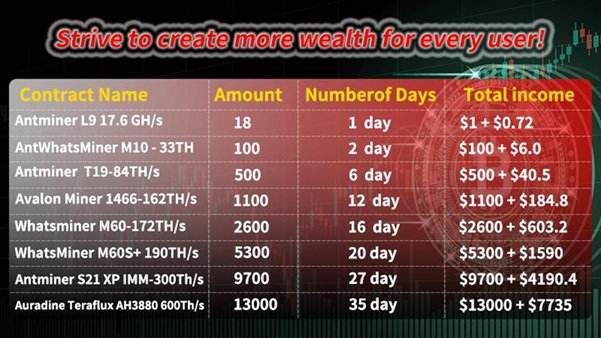
Invest $9,700 to purchase a $9,700 Antminer S21 XP IMM contract with a term of 27 days and a daily yield of 1.6%.

Upon successful purchase, the user’s daily passive income = $9,700 x 1.6% = $155.2.

After 27 days, the user’s principal and income will be: $9,700 + $155.2 x 27 days = $9,700 + $4,190.4 = $13,890.4.

(The platform offers various stable-yield contracts, which can be viewed on the BlackChainMining website.)

Long-Term Perspective: Positioning in Bear Markets, Reaping Rewards in Bull Markets

History has repeatedly proven that true opportunities often arise during times of pessimism. Cloud mining is not about chasing short-term gains, but about accumulating computing power revenue through compound interest over time. For many investors, establishing a stable source of passive income during market downturns actually lays the foundation for future market reversals.

Conclusion

The Bitcoin price drop has temporarily calmed the market, but it doesn’t mean opportunities have disappeared. For investors who have chosen BlackChainMining, volatility is no longer a source of panic, but rather a time to test the stability of their strategies. While most people choose to wait, they have been steadily progressing and consistently profiting through the continuous operation of their computing power.


Official Website: https://blackchainmining.com

APP Download: https://blackchainmining.com/xml/index.html#/app