DD
MM
YYYY

PAGES

DD
MM
YYYY

spot_img

PAGES

Home Blog Page 831

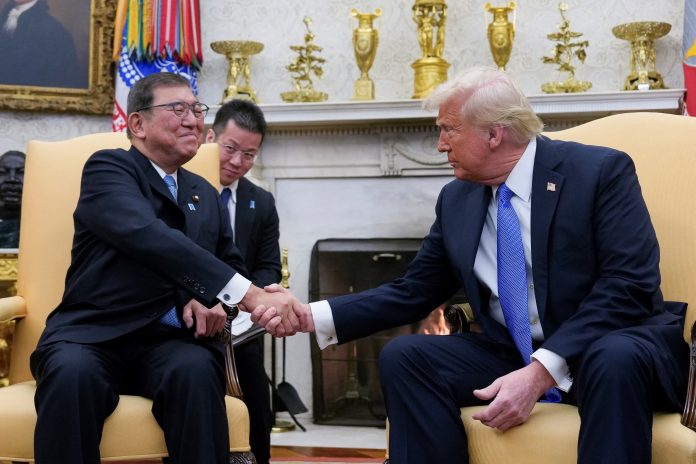
Trump’s Japan Trade Pact Signals Shift Across Asia as Countries Rethink US Alliances

0

President Donald Trump has declared the new trade agreement with Japan the “largest trade deal in history,” touting it as a landmark achievement in his administration’s ongoing bid to reset global commerce on terms favorable to Washington.

Though the scale of the deal may fall short of Trump’s hyperbole, its implications across Asia are already reverberating.

The agreement, finalized after months of tense negotiations, drastically reduces US tariffs on Japanese automobiles—from a steep 27.5% to 15%—and paves the way for Tokyo to pour $550 billion into the US economy. In return, Japan will lift restrictions on US agricultural exports, especially rice and beef, allowing American farmers greater access to the world’s third-largest economy.

But while this deal brings immediate benefits for both nations, it is also triggering broader consequences throughout Asia, where countries are reassessing their trade strategies, bargaining positions, and geopolitical alignments.

A New Benchmark for Asian Trade Negotiations

The 15% US tariff on Japanese cars now serves as a critical benchmark for other major Asian economies currently negotiating trade deals with Washington. Countries like South Korea and Taiwan, both major exporters of vehicles and electronics, are under pressure to extract similar or better terms. South Korea’s industry minister, preparing for crunch talks in Washington, said Seoul will study the Japan deal carefully, noting that “fairness and reciprocity” will guide Korea’s approach.

South Korea and Japan are long-time competitors in global markets—especially in automobiles, steel, and semiconductors. A more favorable deal for Japan may compel South Korea to accelerate negotiations to avoid being outcompeted in the American market.

Likewise, Taiwan, heavily reliant on exports to the US, particularly in semiconductors, is now expected to seek concessions similar to Japan’s—especially around market access and tariffs. Analysts believe the Japan-US agreement gives Taiwan a stronger case to negotiate lower duties on key goods like computer chips and electrical equipment.

Dividing Asia: Winners and Losers

While major Asian economies like Japan, South Korea, and Taiwan prepare to adjust, the Trump-Ishiba pact threatens to leave smaller nations behind.

Countries such as Cambodia, Laos, and Sri Lanka—largely dependent on low-cost textile exports—offer little strategic value to the US in terms of high-tech supply chains or investment opportunities. With Washington now prioritizing deals that support critical industries like semiconductors, pharma, and autos, these smaller economies may find themselves increasingly sidelined in a new trade order.

Indonesia and the Philippines, which had earlier been seen as potential victims of Trump’s tariff regime, have since raced to the negotiating table. Preliminary agreements with Washington have already been announced, with both countries hoping to build deeper industrial links with the US in exchange for greater trade access.

But their window is narrowing. Trump’s administration has set a self-imposed August deadline to lock in as many bilateral deals as possible, prompting fears among Asian policymakers that they could be boxed out unless swift action is taken.

Strategic Supply Chains, Not Just Tariffs

Beyond trade in goods, Japan’s commitment to invest $550 billion in the United States marks a clear shift in the future of Asia-US relations. The bulk of that money is expected to flow into high-tech sectors like pharmaceuticals, semiconductors, and clean energy — areas where the US has sought to reduce dependency on China.

That investment strategy is not lost on other Asian countries. South Korea and Taiwan, already dominant players in semiconductors, are likely to propose similar investment partnerships to ensure their access to the US market is not undermined by Japan’s first-mover advantage.

Singapore, another technology hub, is also watching the developments closely. A senior official from Singapore’s trade ministry said the country is exploring ways to offer joint R&D projects with US firms, in hopes of aligning with Washington’s new supply chain priorities.

Japan’s Strategic Gain, China’s Strategic Loss?

There is also a broader strategic layer to the deal. Japan’s enhanced trade status with the US sends a clear message to China, whose own trade relationship with Washington remains clouded by distrust, sanctions, and security concerns.

As Japan secures lower tariffs, expanded exports, and a stronger position in the US market, China faces increasing isolation — particularly as the U.S. government has doubled down on restricting Chinese access to critical American technologies.

Trump’s Japan deal is not just a trade agreement. It’s a calculated effort to redraw Asia’s economic map in a way that favors US allies and penalizes rivals, particularly Beijing.

EU-Japan Alignment Raises US Stakes

While the US-Japan deal is positioned as a bilateral win, it has also pushed Tokyo closer to the European Union. On the same day the agreement was signed, Japan and the EU pledged to deepen cooperation against “economic coercion and unfair trade practices” — a thinly veiled swipe at China’s tactics and possibly Trump’s own earlier tariffs.

European Commission President Ursula von der Leyen emphasized that global trade must benefit everyone, not just a select few, hinting at growing European concerns over bilateralism and protectionism.

In sum, the US-Japan trade agreement, while lauded by Trump as the “largest in history,” has triggered a far broader realignment across Asia. From South Korea and Taiwan to Indonesia and Singapore, countries are racing to preserve their positions in the global value chain before Trump’s deadline resets the terms once again.

What started as a bilateral deal may end up reshaping trade priorities across Asia, redrawing alliances, and deepening divides — not just economically, but geopolitically.
The Trump Redesign on America-First Capital in Global Markets

0

That was massive: “President Donald Trump on Tuesday night announced what he called “the largest trade deal in history” between the United States and Japan — a sweeping agreement that slashes auto tariffs, boosts U.S. exports, and unlocks a massive $550 billion Japanese investment in the American economy…

“The announcement sent Japanese markets surging to a one-year high. Automaker shares led the rally, with Toyota rising nearly 12%, Honda and Nissan each gaining over 8%, and Mazda soaring 17%. Mitsubishi Motors climbed more than 13%. South Korean carmakers Hyundai and Kia also gained on expectations of similar tariff relief.”

So, Japan has $550 billion to invest in America alone? Nigeria needs to take a trip to Tokyo immediately. We just need $50 billion. That said, the America First playbook is working as America sucks all the best global capital to itself. Hello….I read risks across many economies as they struggle to attract capital.

Besides the disruptions from AI, I am looking at how America-First Capital will distort markets from next year as companies restructure investments. This week, we are reading that a big pharma is pulling funds from other markets and will be putting $50B into the United States.

Business leaders: evaluate the impact of America-First Capital on local market and see how to mitigate the risks ahead. This $550b from Japan possibly would have been distributed in at least 4 countries. Now it is going to one country. How does the imbalance affect global markets? Trump is rewiring global markets and that means business models must adjust. You must have exposure in the American economy because the party is converging therein!

Trump Strikes Landmark Trade Deal with Japan, Slashes Auto Tariffs and Unlocks $550bn Investment

0

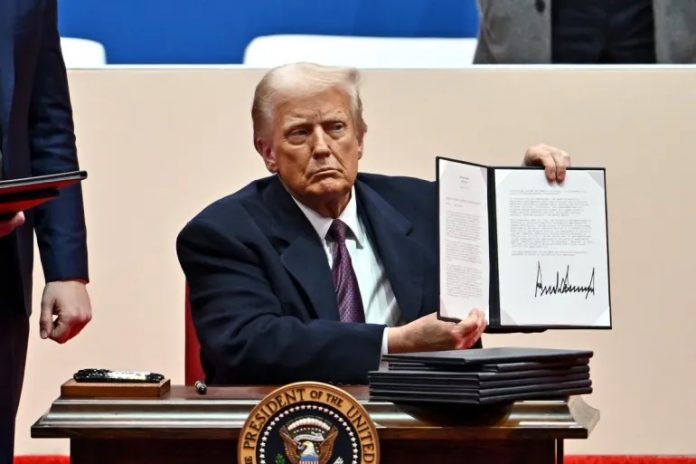
President Donald Trump on Tuesday night announced what he called “the largest trade deal in history” between the United States and Japan — a sweeping agreement that slashes auto tariffs, boosts U.S. exports, and unlocks a massive $550 billion Japanese investment in the American economy.

Speaking at a reception with Republican lawmakers at the White House, Trump declared, “I just signed the largest trade deal in history; I think maybe the largest deal in history with Japan… It’s a great deal for everybody.” He later added on Truth Social that the agreement would “create hundreds of thousands of jobs” and open Japan’s market to American cars, trucks, and agricultural products, including rice.

Under the agreement, the United States will impose a “reciprocal” 15% tariff on Japanese goods — a rate that notably applies to automobiles and auto parts. That marks a significant drop from the 25% levy Japan had faced since April. In return, Japan will inject $550 billion into the U.S. economy through a mix of equity and loans to Japanese businesses expanding into strategic sectors such as pharmaceuticals and semiconductors.

“This is a very exciting time for the United States of America, and especially for the fact that we will continue to always have a great relationship with the Country of Japan,” Trump said.

Key Terms of the Deal

  • Automobiles: Japan becomes the first country to receive reduced tariffs (15%) on auto and parts exports to the U.S. without volume restrictions, giving it a sharp edge over rivals like Germany and South Korea.
  • Agriculture: Japan will open its market further to U.S. rice and other farm products, a sticking point that had long stalled talks.
  • Investment: Japan will channel $550 billion into U.S. industries, including energy and tech. Trump claimed the U.S. would retain 90% of the profits from these investments.
  • Future talks: Both countries will continue negotiations on sectors left out of this agreement, including steel and aluminum, which remain subject to a steep 50% tariff.

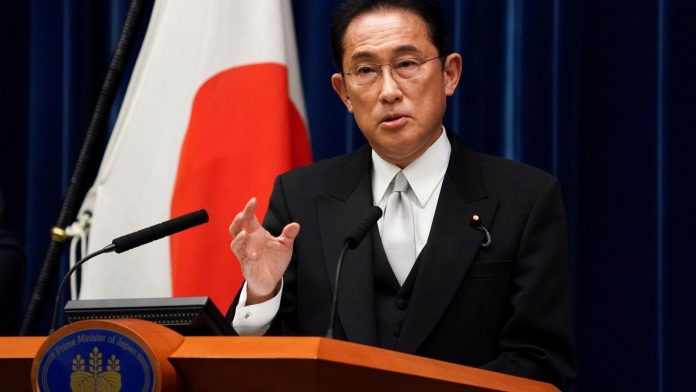
Japanese Prime Minister Shigeru Ishiba called the deal “the lowest figure to date for a country that has a trade surplus with the United States.” In Tokyo, Ishiba said the government would “carefully” study the deal but hailed it as beneficial to Japanese jobs and innovation.

Ryosei Akazawa, Japan’s chief negotiator, posted a photo of himself pointing at an image of Trump and Ishiba in earlier talks, captioned “Mission accomplished.” He emphasized that the deal protects Japanese agriculture while providing new access for U.S. rice. “This agreement does not sacrifice Japanese farmers,” Akazawa told reporters.

Markets React

The announcement sent Japanese markets surging to a one-year high. Automaker shares led the rally, with Toyota rising nearly 12%, Honda and Nissan each gaining over 8%, and Mazda soaring 17%. Mitsubishi Motors climbed more than 13%. South Korean carmakers Hyundai and Kia also gained on expectations of similar tariff relief.

Auto exports make up over 28% of Japan’s shipments to the U.S. But Japanese carmakers had suffered steep declines in recent months: a 26.7% plunge in June and 24.7% in May, according to Japan’s trade ministry. Ed Rogers, CEO of Rogers Investment Advisors, said the new deal delivers “very needed short-term assurance” to Japan’s auto industry, though he warned that competition from China and South Korea remains intense.

The deal comes after months of strained negotiations, with Trump earlier threatening a 25% tariff on Japanese imports if a deal wasn’t reached by August 1. In a July letter to Prime Minister Ishiba, Trump had accused Japan of unfair trade practices, especially in rice and automotive imports.

“They won’t take our rice, and yet they have a massive rice shortage,” Trump posted recently. The U.S. sold $298 million worth of rice to Japan in 2024 and another $114 million between January and April this year, but critics had long pointed to Japan’s opaque rice import system.

Similarly, Trump repeatedly criticized Japan’s reluctance to import American cars. “We didn’t give them one car in 10 years,” he claimed earlier this month — though Japan imported over 16,000 U.S.-made vehicles in 2024, according to the Japan Automobile Importers Association.

Treasury Secretary Scott Bessent helped pave the way for the agreement with a high-level meeting in Tokyo last week.

“A good deal is more important than a rushed deal,” Bessent said, expressing optimism after talks with Ishiba.

Other Deals Unfolding

Beyond trade, Trump hinted that the U.S. and Japan are nearing a joint venture to develop a gas pipeline in Alaska — part of his broader push to shift Asian investment from China to U.S.-friendly projects.

“They’re all set to make that deal now,” Trump told lawmakers Tuesday.

Japan holds over $1.1 trillion in U.S. Treasury bonds — the largest foreign holder — giving it significant leverage in trade talks. The deal also comes at a delicate geopolitical moment, with the Trump administration pressuring allies to curb trade with China in exchange for deeper U.S. economic ties.

While Japan remains China’s largest trading partner, Tuesday’s agreement positions Tokyo more closely with Washington on trade alignment, especially in sectors where Beijing’s dominance has grown — like semiconductors and EVs.

The agreement builds on the 2019 bilateral trade pact between Japan and the U.S., which allowed greater duty-free access to some agricultural and industrial goods. However, the scale of this latest deal — particularly the $550 billion investment commitment and the slashing of auto tariffs — makes it the most consequential agreement between the two countries in recent memory.

With Trump’s August 1 deadline for sweeping tariffs still looming over other trading partners — including the EU, Mexico, and Brazil — Japan’s early compromise may serve as a model or a warning.

Safaricom Integrates PayPal Withdrawals into M-PESA App to Target Kenya’s Freelance Economy

0

Safaricom has taken a major step to strengthen its position in Kenya’s booming digital economy by integrating PayPal withdrawals directly into the M-PESA super app.

This new feature is designed to support the growing number of Kenyan freelancers and remote workers who rely on PayPal to receive payments from international clients.

By eliminating the need for third-party platforms or external web portals, Safaricom is making cross-border transactions faster, more seamless, and accessible marking a strategic move to capture a larger share of the country’s expanding freelance and gig economy.

Previously, users had to rely on a separate web portal to transfer funds from PayPal to M-PESA, a process often criticized for being slow and cumbersome.

The newly added mini app eliminates those steps, offering a seamless, in-app experience without the need for browser redirects or multiple logins. This marks the first time Kenyan users can withdraw directly from PayPal via the M-PESA app.

This update comes amid strong growth in Safaricom’s mobile money segment. M-PESA’s revenue for the year ending March 2025 was KES 161.1 billion (approximately USD 1.25 billion). This represents a 15.2% year-on-year growth for Safaricom’s mobile money service.

The growth was driven by a 20.3% increase in chargeable transactions per user and a 10.5% rise in monthly active customers, now totaling 35.82 million. M-PESA now contributes 43.4% of Safaricom’s total service revenue. 

Average revenue per user rose by 9.4% to KES 395.22 ($3.06), while Safaricom’s agent network grew 14.1% to nearly 299,000, ensuring widespread access to cash services. The M-PESA app itself has seen strong traction, with 13.7 million downloads and 4.7 million active users. In 2024 alone, it processed transactions worth KES 2.3 trillion ($17.83 billion).

Notably, M-PESA wallets now support balances up to KES 500,000 ($3,875), with individual transaction and daily limits also capped at KES 250,000 ($1,938) and KES 500,000, respectively.

Launched in 2007 by Safaricom and Vodafone in Kenya, M-Pesa has transformed financial access across Africa, becoming the continent’s leading mobile money service. The name, derived from “M” for mobile and “Pesa” (Swahili for money), reflects its core mission: enabling fast, secure, and accessible financial transactions via mobile phones, particularly for the unbanked.

By empowering affordable access to useful financial services for more than 60 million customers and 5 million businesses, M-PESA has been credited with largely contributing to an up to 60% growth in formal financial inclusion in different countries, with up to 84% of the population achieving formal financial inclusion.

In March 2024, M-Pesa boasted over 66.2 million customers and processed 33 billion transactions annually across seven African countries: Kenya, Tanzania, Mozambique, Democratic Republic of Congo, Lesotho, Ghana, and Ethiopia.

With the latest integration of PayPal withdrawals directly into the M-PESA app, Safaricom is positioning itself to capture greater transaction volumes, strengthen user retention, and reinforce its dominance in Kenya’s mobile money market.

Also, the PayPal-M-Pesa integration has been poised to be a game-changer for Kenya’s digital economy, with M-Pesa’s 30 million users in Kenya (out of 66.2 million globally) processing $4 billion in transactions annually. The service has empowered freelancers, small businesses, and online shoppers by bridging local mobile money with global payment systems.

This pivotal update aligns with M-Pesa’s evolution into a super app, which has seen it incorporate services like Pochi la Biashara, bill payments, and government services, positioning it as a rival to platforms like Flutterwave’s Send App for cross-border transactions.

Also, the integration supports financial inclusion, particularly for Kenya’s unbanked and underbanked populations, by enabling access to global markets without traditional banking infrastructure.

Lafarge Africa Triples Pre-Tax Profit to N126.6bn in Q2 2025, Driven by Construction Sector Booms

0

Lafarge Africa Plc has posted a pre-tax profit of N126.6 billion in the second quarter of 2025, marking an astonishing 233.9% jump from the N37.9 billion recorded during the same period in 2024.

The result signals a sustained earnings recovery and strong demand in the cement and construction market, as the company continues to benefit from robust sector-wide growth.

The impressive performance lifted Lafarge’s half-year profit to N199.7 billion—more than four times the N46.6 billion reported in the first half of 2024. This came as the company’s Q2 revenue surged 70.2% year-on-year to N268.6 billion, pushing total revenue for the first half of 2025 to N516.9 billion, up 74.9% compared to the same period last year.

Cement sales remained the engine of growth, accounting for N261.6 billion in Q2 revenue. Lafarge also made N6.6 billion from aggregates and concrete, and N296.8 million from other products, highlighting the company’s diverse building solutions portfolio.

The booming results coincide with a broader rebound in Nigeria’s construction sector. According to the National Bureau of Statistics (NBS), the construction industry recorded a 6.21% growth rate in Q1 2025, buoyed by increased infrastructure investments and heightened activity in both private and public building projects. The construction sector was among the top contributors to Nigeria’s GDP growth, which the International Monetary Fund projects will hit 3.3% for 2025.

Despite higher production costs—up 26.4% to N95.8 billion—Lafarge managed to more than double its gross profit, which rose to N172.7 billion from N81.9 billion in Q2 2024. This was achieved even as the company faced significant operational expenses. Selling and distribution costs rose 45.8% to N20.9 billion, while administrative expenses more than doubled, climbing 109.8% to N31.1 billion. Yet, operating profit soared to N120.6 billion, up from N47.7 billion a year ago.

Finance income also saw a notable boost, rising by 212.4% to N7.3 billion. Most of it came from interest earned on short-term deposits and current accounts, totaling N5.3 billion, with foreign exchange gains contributing another N1.9 billion—reflecting prudent treasury management amid currency volatility.

On the balance sheet, Lafarge’s total assets climbed to N1.02 trillion, compared to N990.5 billion in the corresponding period last year. Retained earnings also grew 15.5% to N364.4 billion, underscoring the company’s strong earnings retention and financial stability.

As of market close on July 21, 2025, Lafarge Africa’s shares were trading at N116 per unit, reflecting a year-to-date gain of 66.3%—a strong return driven by investor confidence in its growth trajectory.

The company’s stellar showing comes as Nigeria pushes infrastructure development to counteract macroeconomic shocks. With cement as a central input in roads, bridges, housing, and industrial projects, Lafarge’s performance continues to track closely with the pace of construction spending.

Analysts say the firm is well-positioned to benefit from continued infrastructure outlays, especially as both federal and state governments ramp up capital projects amid efforts to stimulate job creation and economic growth. The federal government’s shift to cement use in road construction is expected to sustain the growth in the long term.