DD
MM
YYYY

PAGES

DD
MM
YYYY

spot_img

PAGES

Home Blog Page 836

Access Bank Expands Global Reach with 76% Acquisition of AfrAsia Bank in Mauritius—Its Second Major International Deal in a Month

0

Access Bank Plc, through its wholly owned subsidiary Access Bank UK Limited, has acquired a 76% majority stake in AfrAsia Bank Limited, a commercial bank based in Mauritius.

The deal marks a significant milestone in Access Bank’s ongoing global expansion drive, which now appears to be unfolding at a rapid pace.

The acquisition received full regulatory clearance from the Bank of Mauritius and the Financial Services Commission, sealing Access Bank’s entrance into one of Africa’s top-rated international financial centers.

AfrAsia Bank, headquartered in Mauritius’ International Financial Centre, is known for its role in bridging African, Asian, and global markets. Its client base includes high-net-worth individuals, family offices, corporations, and international investors operating in fast-growing economies. The bank also maintains a representative office in South Africa, reinforcing its continental relevance.

“The Board of Directors of AfrAsia Bank Limited wishes to inform stakeholders that The Access Bank UK Limited has completed the acquisition of a 76% majority stake in the bank’s share capital,” AfrAsia said in a statement confirming the transaction.

IBL Ltd, AfrAsia’s founding shareholder, will retain a 7.89% minority stake, signaling sustained investor confidence even as majority ownership changes hands.

The deal extends Access Bank UK’s operational reach beyond its current international locations—London, Dubai, Paris, Hong Kong, Malta, and Lagos—and folds AfrAsia into its growing global network.

Access Bank UK is noted for its strong balance sheet, prudent financial governance, and high capital adequacy levels. AfrAsia is expected to benefit from these institutional strengths while preserving its client-focused banking model.

“The Access Bank UK Limited will be supported by the Bank’s strong and dedicated team, whose proven track record and extensive ability in banking and investment have contributed to making it one of the leading banking institutions in the region,” the joint statement added.

Second Deal in One Month: A Pattern of Aggressive Expansion

This acquisition comes just weeks after Access Bank finalized its takeover of Standard Chartered’s Consumer, Private, and Business Banking division in Tanzania, signaling a deliberate expansion into East Africa. The Tanzanian acquisition was part of Standard Chartered’s broader exit strategy from smaller African markets, including Angola, Cameroon, The Gambia, and Sierra Leone, as it pivots toward high-value global wealth clients.

Access Bank’s back-to-back acquisitions suggest a deliberate strategy to strengthen its pan-African footprint while simultaneously extending its global banking capabilities, particularly in offshore banking and wealth management, two areas in which AfrAsia already has operational expertise.

These moves also reflect Access Bank’s bid to capture a growing investment-savvy and mobile client base that demands cross-border financial solutions, modern digital platforms, and access to international markets.

Access Bank is Nigeria’s largest bank by assets. As of Q1 2025, it had total assets of N39.08 trillion, approximately $25.43 billion.

What The Deal Means for Access Bank

Access Bank gains not just a gateway into Mauritius’ sophisticated financial services sector by integrating AfrAsia into its ecosystem, but also a strategic springboard to Asia and offshore investment flows. Mauritius, long seen as a conduit for capital into Africa, offers tax treaties, robust financial regulations, and a stable economic environment, making it a valuable base for banking operations.

Access Bank’s bold international acquisitions reinforce its ambition to become Africa’s gateway to the world—a financial powerhouse that competes not just within Africa but globally. The swift execution of these deals within a month suggests that more regional and international transactions could be on the horizon.

While global financial institutions continue to recalibrate and exit smaller African markets, Access Bank appears poised to fill the vacuum, building a continent-wide and globally connected banking institution with the scale and vision to serve both emerging and mature economies.

Intel Slashes 24,000 Workforce and Retreats From Global Projects Amid $2.9bn Loss

0

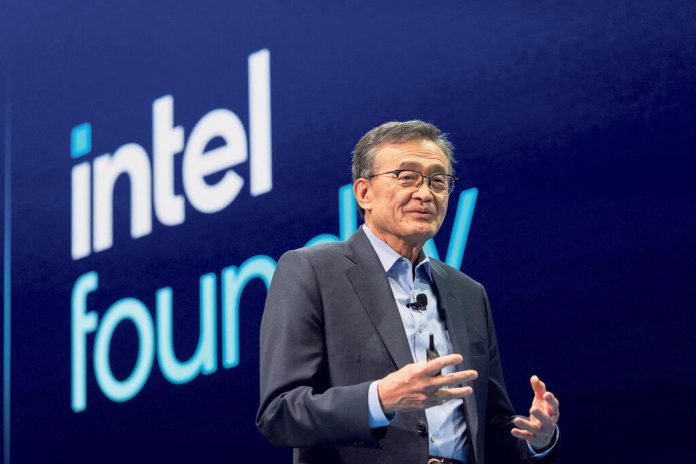
Intel is making the deepest cuts in its history, shedding nearly a quarter of its workforce, retreating from multi-billion-dollar projects in Europe and Latin America, and warning it may abandon its foundry ambitions altogether if it cannot secure anchor clients — all part of an aggressive strategy under new CEO Lip-Bu Tan to reverse the company’s prolonged decline.

The chipmaker on Thursday revealed in its Q2 2025 earnings that it would end the year with approximately 75,000 core employees, down from 99,500 at the end of 2024. That’s a cut of roughly 24,000 workers, or about 15% of the company’s total workforce, when factoring in other organizational trimming. The layoffs are not just numbers on a spreadsheet — they reflect Intel’s decision to shut down or scale back major operations in Costa Rica, Poland, Germany, and even Ohio.

This massive restructuring underscores just how far Intel has fallen from its former glory. Earlier this month, Tan delivered a sobering admission that stunned the tech world: “We are not in the top 10 semiconductor companies anymore.”

Abandoning Global Projects, Consolidating Plants

Intel is abandoning its much-publicized plans to build chip “mega-fabs” in Germany and an assembly and test facility in Poland. Both projects were once seen as symbols of Intel’s global resurgence — €30 billion was earmarked for the German facility alone — but Tan’s new leadership has opted to axe them entirely, saying they no longer fit the company’s demand-aligned model.

In Costa Rica, where Intel employs over 3,400 people, the company will shutter its assembly and test operations, shifting those functions to Vietnam. A spokesperson told The Verge that around 2,000 employees will remain in engineering and corporate roles.

Even domestic expansion is taking a hit. Intel will slow construction at its Ohio plant, citing the need to match spending with real market demand. It’s a direct rebuke of the old strategy of “build it and they will come” — a model Tan flatly rejects.

“We will build what customers need when they need it, and earn their trust,” he said during the earnings call.

The turnaround plan is not just about layoffs. It’s a reckoning with Intel’s strategic missteps in recent years — overbuilding fabs without firm orders, fragmented operations, and chronic underperformance in the fast-growing AI sector, where Nvidia has raced far ahead.

Intel’s problems have lingered for a long time. The company’s stock lost 60% of its value in 2024, its worst year ever. It has hemorrhaged market share in CPUs, fallen behind in AI chip development, and seen key business units underperform. Even as competitors like AMD and Nvidia surged, Intel’s attempt to regain momentum with its foundry business stalled.

This quarter, Intel posted a $2.9 billion net loss on $12.9 billion in revenue, flat from a year earlier. The loss widened from $1.6 billion in the same period last year. The hit included an $800 million impairment charge tied to “excess tools with no identified re-use.”

Despite the loss, Intel slightly beat analyst expectations, delivering adjusted earnings of 10 cents per share, compared to estimates of just a penny. Revenue guidance for Q3 also topped Wall Street estimates.

Still, the small upside was overshadowed by Intel’s warning that it may pause or discontinue its foundry business if it cannot land a major external customer for its next-gen 14A process node. The company disclosed in an SEC filing that it has yet to secure significant external customers for any of its advanced nodes — a devastating blow for its foundry ambitions.

The AI Boom Left Intel Behind

While the broader semiconductor industry is booming, driven by artificial intelligence workloads and hyperscaler demand, Intel’s slice of that pie remains small. In Q2:

  • Data center business rose just 4% to $3.9 billion
  • PC chip sales declined 3% to $7.9 billion.
  • Foundry revenue increased only 3% to $4.4 billion.

Tan acknowledged Intel had missed the AI wave but insisted that course correction is underway. He’s promised to personally oversee every major chip design — a rare move at his level — saying that “every major chip design needs to be personally reviewed and approved by me before tape out.”

Reshaping Intel’s Future

Tan has already taken bold action in his first few months. In addition to the layoffs and project cancellations, Intel:

  • Shut down its automotive chip unit in June
  • Spun off the RealSense computer vision division in July
  • Plans to cut $17 billion in expenses this year alone
  • Will launch the Panther Lake laptop chips later in 2025, with Nova Lake to follow by the end of 2026
  • Is ramping up production of Lunar Lake chips in the next quarter

He also plans to name new leadership for the data center business next quarter and will unveil a “full-stack AI strategy” in the coming months.

“No More Blank Checks”

Tan’s internal memo to employees revealed a tough-love assessment of Intel’s past mistakes. “Over the past several years, the company invested too much, too soon – without adequate demand,” he wrote. “Our factory footprint became needlessly fragmented and underutilized.”

Intel will no longer approve projects without customer demand in hand. The upcoming 14A node — a critical part of Intel’s foundry roadmap — will be developed only if customer commitments are secured. “There will be no more blank checks,” Tan said.

Intel’s stock dropped 9% following the earnings release, erasing much of the modest gains it had posted earlier in the year. Analysts at Barclays warned that the company’s warning about its foundry future creates “more uncertainty to product roadmaps”, which in turn “makes customer adoption more unlikely.”

Still, JPMorgan analysts said the foundry pullback was a “positive step”, acknowledging that Intel’s recent spending spree was unsustainable.

A Path to Recovery?

The transformation underway at Intel may offer the most credible shot at recovery in years. While painful, the layoffs and strategic retreats are designed to stem the bleeding, consolidate the company’s core competencies, and focus on real market demand, not hopes or hype.

There’s no guarantee it will work. But Tan’s leadership marks a sharp break from Intel’s recent past — and for the first time in years, investors and employees alike have a clear, although difficult, roadmap for what comes next.

African Tech Merger And Acquisition Hits Record High in H1 2025 as Fintech Leads Strategic Acquisitions

0
CREATOR: gd-jpeg v1.0 (using IJG JPEG v80), quality = 82

Merger and acquisition (M&A) activity in Africa’s tech ecosystem surged to record levels in the first half (H1) of 2025, underscoring the sector’s growing maturity and appetite for consolidation.

According to “The State of Tech in Africa” report by Tech Cabal Insights, a total of 29 M&A deals were recorded in H1 2025, the highest ever for any first-half period, representing a 45% increase from the 20 deals logged in H1 2024 and a 53% rise compared to H1 2023.

The sharp growth highlights that strategic acquisitions are becoming a key pathway for established companies to expand market share, acquire technology, and access talent. As the funding environment stabilizes, well-capitalized startups and corporations alike are increasingly relying on acquisitions to accelerate growth and solidify market leadership.

Fintech continued to dominate as the most active sector, accounting for 13 of the 29 deals (45%). E-commerce followed with six deals, as larger players moved to acquire innovative startups to quickly onboard new technologies and customers. The deals reflected a mix of acquisitions for market entry and takeovers of struggling companies seeking a lifeline.

Speaking on this, Matthew Davis, CFA co-CEO and Managing Partner Renew Capital said, “Many good, early-stage fintechs will struggle to raise larger rounds and become good
acquisition targets for larger VC-backed companies as they focus on aggressive expansion”.

Since early 2023, M&A activity has been broadly distributed across Africa’s key regions. West Africa and Southern Africa each recorded 24 deals over this period, while North and East Africa followed closely with 20 apiece. Notably, eight of the 29 H1 2025 deals involved acquisitions outside of Africa, underscoring the global ambitions of African startups.

North Africa emerged as the most active region in H1 2025, recording eight deals, followed by East Africa with seven and West Africa with six. Egypt led as the top acquisition target, with eight Egyptian startups acquired during the period. Kenya and Nigeria followed with seven and five deals respectively, reinforcing their positions as dynamic startup markets.

Prominent transactions included Stitch’s acquisition of ExiPay to expand into in-person payments, Moove’s acquisition of Brazil’s Kovi to further global ambitions, and LemFi’s acquisition of Irish currency exchange Bureau Buttercrane to strengthen its European presence. Other notable deals saw Peach Payments acquire West African payments gateway PayDunya, Moniepoint expand into Kenya with the acquisition of Sumac Microfinance Bank, and MaxAB-Wasoko acquire Egypt’s Fatura to enhance its e-commerce footprint.

Industry observers noted that both aggressive expansion and market clean-up are likely to drive future M&A activity. As funding gaps persist from pre-seed to later-stage rounds, many early-stage fintechs may struggle to secure growth capital, making them attractive acquisition targets for larger, VC-backed firms seeking licenses, customer bases, and alternative datasets.

Notably, South Africa and Egypt remain the continent’s top M&A hotspots, and experts expect these markets to retain their dominance. While some African startups are venturing abroad for acquisitions, the primary focus is anticipated to remain within Africa, given the continent’s untapped opportunities and competitive advantages. Nigeria and Kenya bolstered by significant early-stage investment over the past five years, are also projected to experience rising cross-border acquisition activity, particularly between startups in these two ecosystems.

The record-breaking M&A activity in H1 2025 reflects a maturing African tech ecosystem, where strategic acquisitions are increasingly viewed as essential tools for scaling, diversifying revenue streams, and consolidating market power.

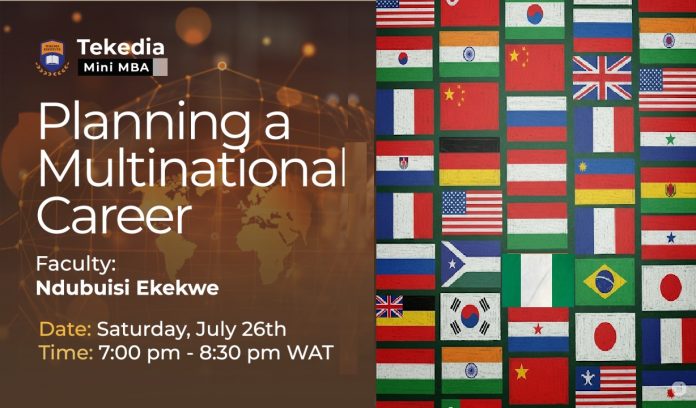
Planning a Multinational Career in our Contemporary Interconnected World

0

Planning a multinational career in our contemporary interconnected world demands a strategic approach focused on deepening our personal economy and global relevance. Tekedia Institute emphasizes that building a “personal economy” is crucial, and increasingly the architecture of that development could transcend national economies. The implication is that we must acquire skills and knowledge that are universally applicable and in demand across diverse markets.

To truly thrive in a multinational career, individuals must embrace continuous learning and adaptability. Tekedia’s insights suggest that success hinges not merely on academic credentials, but on one’s ability to be anticipatory and adaptive in a rapidly evolving global economy. This includes understanding emerging technologies like AI and their impact on business, as well as developing strong leadership and human capital management skills. By focusing on excellence, building a robust personal brand, and actively seeking opportunities for cross-border engagement, professionals can position themselves for impactful and expansive careers on the world stage.

In this Tekedia Mini-MBA’s Personal Economy module, lead faculty, Ndubuisi Ekekwe, will share a case study on how that trajectory could be formulated, using simple elements like requesting for your World Education Services credentialing, and in the process decouple your transcripts from delays, school strikes, etc, so that you can apply for scholarships, schools, jobs, etc on time.

Of course, building a multinational career is not about having multinational jobs because careers and jobs are not the same things. You can be in Lagos and execute a multinational career that is agnostic of geography in this knowledge age. Join me and register for the Sept edition of Tekedia Mini-MBA.


Sat, July 26 | 7pm-8.30pm WAT | Planning a Multinational Career – Ndubuisi Ekekwe | Zoom link in board

DX CTO Says Companies Should Rethink Corporate Documentation, Write Things AI Can Easily Read

0

The era of poorly organized memos, scattered slide decks, and screen-recorded webinars could soon be over. Companies are being urged to overhaul their internal documentation to make it legible for artificial intelligence systems, with developer productivity experts like Laura Tacho, CTO of the platform DX, sounding the warning on what she calls a hidden efficiency crisis.

Speaking with Business Insider and on The Pragmatic Engineer podcast hosted by Gergely Orosz, Tacho said many firms are already shifting toward what she described as “AI-first” documentation practices—writing and structuring company knowledge so that large language models (LLMs) can easily consume and act on it.

“Documentation is a huge point of friction for nearly every organization,” Tacho told BI. “There’s a lot of efficiency gain to be had when documentation is more fit for purpose. This is an area where what’s good for the human is also good for the LLM.”

According to Tacho, engineers lose over 30 minutes a week searching for information buried in cluttered or inaccessible documents—a problem that LLMs could solve if they were simply given structured text to read. But video trainings, screenshots, and visually reliant content block AI tools from accessing essential knowledge.

From Human-First to AI-Literate

Human-friendly documentation often leans heavily on visual design, relying on screenshots, diagrams, and interfaces to convey information. But these visuals, Tacho warns, are mostly illegible to AI. She recommends that every image be paired with textual descriptions, borrowing a principle from web accessibility standards, such as alternative text and captioning used by social platforms for the visually impaired.

“It is so important for people who are not using their eyes to access the screen,” she said, emphasizing that practices that improve accessibility also unlock AI comprehension.

The concept, she says, is not just about helping LLMs. “The venn diagram is a circle,” Tacho noted, highlighting that clear, structured documentation improves productivity for both humans and machines.

Beyond that, companies are being advised to centralize their documentation, avoiding the fragmented sprawl that forces users to navigate multiple internal portals to complete a single task.

“Documentation is made piecemeal, a little here, a little there,” she said. “You have to hop between different pages in order to put together the complete instruction of what you’re supposed to do.”

The solution? Tacho calls it a “defrag” of internal policies—borrowing the term from computing to suggest restructuring for efficiency.

Code-Ready Language and Real-World Examples

For software companies in particular, making documentation LLM-compatible could soon be non-negotiable. Developers are already plugging documentation directly into AI code editors like Cursor, which allow them to generate code snippets and explanations instantly. The catch: the documentation has to be in readable, structured text.

Some companies are already adapting. In May, Lee Robinson, former VP of Developer Experience at Vercel, revealed changes to the company’s documentation strategy on X (formerly Twitter).

“We’re starting to add cURL commands to Vercel’s documentation wherever we previously said ‘click,’” he wrote.

Robinson suggested that in the near future, AI agents might not just read documentation, but act on it—performing tasks, logging in, and executing commands on behalf of users.

That’s a future Tacho also envisions—but it won’t happen unless businesses start writing for both people and machines. She cited technical standards like using semantic HTML markup to help LLMs better parse and understand online documentation.

A New Corporate Priority

What might sound like a marginal improvement in productivity could have significant implications for company performance. With LLM tools like OpenAI’s ChatGPT or Anthropic’s Claude becoming common in enterprise workflows, the quality and accessibility of internal documentation could directly impact how much return companies see from their AI investments.

“When you think about how much time is being wasted due to poor documentation, it becomes actually a very critical business problem,” Tacho said.

As AI systems continue to evolve, companies still stuck with scattered training videos and PDF slide decks may find themselves not just inefficient, but incompatible with the next wave of workplace automation. The age of screen-recorded onboarding is waning, and text, it seems, is the new code.