DD
MM
YYYY

PAGES

DD
MM
YYYY

spot_img

PAGES

Home Blog Page 84

Why Crypto Is Down Today: Is Crypto a Good Investment? Why Presales Are the Only Right Move in Unpredictable Times

0

Anyone checking the charts today is asking the same thing: why crypto is down again?

Sentiment is shaky, liquidity is scattered, and major assets are whipsawing without clear direction. The broader crypto market today reflects fear, uncertainty, and traders waiting for a stronger narrative before re-entering.

Even though long-term conviction is still intact for many investors, the reality is simple. In unpredictable conditions, high volatility turns every entry into a gamble.

That is why more investors are now asking a deeper question: is crypto a good investment right now, or is there a smarter way to position before the next cycle?

Why the Crypto Market Is Down Today

Several factors are contributing to the latest dip:

  • Low liquidity across major exchanges.
  • Macro uncertainty is pushing risk assets down.
  • Traders are rotating out of high-risk tokens into stable assets.
  • Fewer catalysts and slower inflow into large caps.

When volatility rises and direction disappears, traditional strategies stop working. Buying dips becomes dangerous if the asset keeps dropping. Momentum trading becomes unpredictable when volume is thin. Long-term holds lose short-term value while waiting for recovery.

These conditions do not mean crypto is dead. They simply mean the old approach of buying established assets during uncertainty is not optimal.

Why Presales Are Outperforming the Market

Presales avoid the major issue affecting the market today: volatility. Instead of fluctuating every hour, they offer fixed pricing, predictable growth stages, and a clear roadmap for future value.

The best example right now is Noomez ($NNZ), one of the few presales gaining momentum while the rest of the market is dropping.

Why Noomez Is Pulling in Smart Money

Noomez entered Stage 6 at $0.0000283, with over $50,700 raised and 227 holders locked in. The reason its momentum is climbing while most tokens fall is that the value is built into the structure.

Noomez operates on three core systems:

  • Price increases at every stage
  • Burns all unsold tokens, which reduces supply
  • 66% APY staking for early holders

When the rest of the market is red, these mechanics create something traders crave: predictable upside.

Capital flow is already shifting. Gold Trade Signals, a platform that tracks early-stage crypto trends, recently highlighted rising wallet activity in the Noomez ecosystem and noted that presales like Noomez $NNZ absorb market uncertainty rather than react to it.

Investors looking for stability during dips are attracted to the fixed-pricing and scarcity model, especially since each new stage automatically raises the valuation floor.

5M NNZ Airdrop Approaches | Stage 6 Holds $0.0000284

Should You Avoid Established Cryptos in a Down Market?

Not necessarily, but the risk is higher. Established assets like BTC, ETH, and significant altcoins experience heavy volatility when sentiment drops. They require strong liquidity and bullish momentum to resume their upward move.

In contrast, presales:

  • Do not depend on market conditions
  • Do not fluctuate with the broader downturn
  • Increase in price regardless of macro shifts
  • Build holder confidence organically through structure

This is why smart investors rotate into presales during turbulence. They hedge market uncertainty and position themselves for the next wave without risking short-term losses.

So, Is Crypto a Good Investment Right Now?

Yes, but only if you choose the right entry. Buying volatile assets during a downturn is risky. Buying structured, fixed-price presales during a downturn is strategic.

Noomez stands out because:

  • Stage 6 price is rising steadily
  • Burns tighten supply at every stage
  • Staking rewards of up to 66% creates long-term value
  • Transparency eliminates guesswork

Increasing coverage from tools like GoldTradeSignals.net confirms real interest across the market

Final Takeaway

Crypto is down today, but the opportunity has not disappeared. It has simply moved. When volatility is high, presales like Noomez are the safest and most innovative way to capture upside without fighting the market trend.

For More Information:

Website: Visit the Official Noomez Website

Telegram: Join the Noomez Telegram Channel

Twitter: Follow Noomez ON X (Formerly Twitter)

AI-Powered Physical Security Leader Verkada Reaches $5.8bn Valuation on Alphabet-Led $100m Funding

0

Verkada, the fast-rising security technology startup, has secured a $100 million funding round led by CapitalG, the independent growth fund of Alphabet (Google), cementing its position at a lofty $5.8 billion valuation.

This latest investment marks a $1.3 billion jump from its Series E funding in February. It underscores Silicon Valley’s intense focus on applying advanced Artificial Intelligence to the traditionally sluggish physical security sector, a market estimated to be worth $60 billion.

Verkada CEO Filip Kaliszan told CNBC that the primary appeal for the Google venture arm was the company’s vision: “I think Google saw the opportunity with us in the application of AI and everything we’re driving to apply AI to the physical security industry.”

The new capital will be used to bolster Verkada’s AI capabilities and provide liquidity to employees and early investors.

Disruption in a “Sleeping Market”

Verkada has rapidly become a leader in what CapitalG general partner Derek Zanutto calls a “sleeping $60 billion market” dominated by legacy hardware—“cameras that just record, not cameras that think.” Verkada’s platform disrupts this by connecting physical security products—including cameras, alarms, and sensors—under a single, cloud-based software platform, moving security from a reactive to a proactive intelligence system.

The company has successfully scaled its operations, surpassing $1 billion in annualized bookings across a global customer base of 30,000 businesses, including retailers, government properties, schools, transportation companies, and infrastructure providers like TeraWatt Infrastructure (which supplies charging sites to electric vehicles like Google’s Waymo).

The AI Advantage

Verkada’s valuation surge is directly tied to the power of its AI-driven analytics. Zanutto noted, “The genius of Filip and the team of Verkada is that they’re leveraging AI as a Rosetta Stone to really help unlock insights from cameras to help companies become safer and more efficient.”

The company’s system captures over 20 million images per hour, processing that data to provide meaningful insights beyond simple security alerts, such as foot traffic, occupancy rates, security violations, and other critical business trends.

A key recent innovation is the AI-Powered Unified Timeline, which was one of over 60 new AI features and platform updates rolled out in September. The tool uses sophisticated face detection and attribute-based re-identification to automatically synthesize video events from all cameras across a property.

Rather than requiring security teams to manually dig through hours or even days of footage, the Unified Timeline visually reconstructs the entire journey of people and vehicles onto a single, map-based timeline in seconds. This allows security teams to efficiently track suspects, identify getaway vehicles, or search for missing individuals, thereby dramatically accelerating investigation and response times.

Empowering, Not Replacing, Human Security

Kaliszan pushed back against the notion that AI-powered technology will replace human security personnel, stating, “I think humans will be providing security to other humans for as long as I can think.”

Instead, he framed AI as an essential tool for augmenting human capabilities: “But AI can empower these first responders to be more aware, to have situational knowledge, to know what to do, and in some cases, actually prevent the problems from happening,” he said.

He cited real-world examples, such as the Louvre museum heist in October, as an opportunity where actively monitoring, AI-assisted devices that could immediately alert security forces would be far more effective than relying on static cameras and physical personnel alone.

“If you could intervene right then, if you could know in real time that that’s happening, the potential for savings and preventing damage is tremendous,” Kaliszan concluded.

Verkada’s successful funding round further validates CapitalG’s heavy investment thesis in the security and AI convergence space, following its recent contribution to a $435 million fundraise for cybersecurity startup Armis in November.

Poland’s Presidential Veto on Crypto Regulations: A Clash Between Freedom and Oversight

0

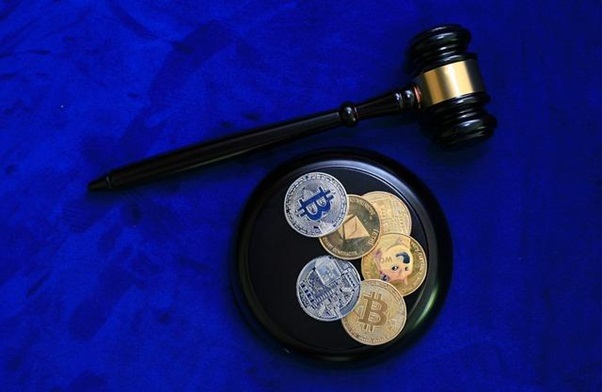
Polish President Karol Nawrocki vetoed the Crypto-Asset Market Act, a bill aimed at implementing the European Union’s Markets in Crypto-Assets (MiCA) framework within Poland.

This move has ignited a heated political debate, pitting the president’s emphasis on individual freedoms and innovation against government concerns over consumer protection and regulatory alignment.

Nawrocki argued that the bill’s provisions “genuinely threaten the freedoms of Poles, their property, and the stability of the state.”

Key criticisms included: The legislation was seen as excessively burdensome, with high licensing fees up to 4-8 million PLN, or roughly $1-2 million and a 0.5% annual turnover tax—costs 10-20 times higher than in neighboring countries like Germany, the Czech Republic, or Estonia.

This could drive businesses away and stifle innovation. Authorities would gain broad authority to block crypto-related websites without sufficient oversight, raising fears of censorship and arbitrary enforcement.

The president highlighted that simpler regulations in other EU states make them more attractive for crypto firms, potentially eroding Poland’s economic edge. The veto returns the bill to the Sejm— Poland’s lower house of parliament, where overriding it would require a three-fifths majority—a tall order given the current political divide.

Government Backlash

Top officials from Prime Minister Donald Tusk’s coalition swiftly condemned the decision, framing it as reckless and pro-Russian finance minister Andrzej Doma?ski accused Nawrocki of “choosing chaos over accountability,” warning that it leaves over 1 million Polish crypto investors about 20% of whom have reportedly lost money to scams vulnerable in a “regulatory vacuum.”

He emphasized risks of fraud and money laundering, including potential sanctions evasion tied to Russian entities. Foreign minister Rados?aw Sikorski highlighted exposure to market volatility and hybrid threats, noting Russia’s use of crypto for funding sabotage across the EU.

He tweeted that the veto creates “uncertainty and hampers investor protection and sector development.” Some lawmakers, like MP El?bieta Anna Polak, escalated the rhetoric, labeling the veto a “gift to Russia” and a blow to Polish firms by undermining anti-money laundering (AML) compliance.

The decision has been hailed by crypto advocates as a victory for innovation:Industry voices, such as economist Krzysztof Piech, argue Poland isn’t in a true vacuum—EU-wide MiCA protections kick in fully by July 2026, providing baseline safeguards without national overreach.

On X, users like Phoenix8Nexus praised the veto for targeting a “bad bill, not regulation,” while PrincessNemezis called it a stand against “incompetent government” propaganda. Broader sentiment echoes concerns from groups like FinTech Poland, which previously noted the bill’s flaws despite supporting some clarity.

Critics of the backlash, including opposition figures, see it as an overreaction, pointing out that firms can still operate under existing AML rules until MiCA’s rollout. This veto positions Poland as the only EU state lagging on MiCA implementation, risking an exodus of crypto businesses to more lenient neighbors and potential loss of tax revenue.

Deputy Finance Minister Jurand Drop warned of firms relocating by July 2026. With the coalition’s slim majority, a veto override seems unlikely, paving the way for revised legislation—potentially lighter on fees and blocks.

The episode underscores a global tension in crypto policy: balancing anti-fraud measures with fostering growth. In Poland, it amplifies rifts between the presidency and Tusk’s pro-EU government, with X flooded by partisan takes from both sides.

Sify Infinit Spaces Warns of AI-Fueled Overbuild Risk as It Prepares for India’s First Data Center IPO

0

Sify Infinit Spaces, set to become India’s first publicly listed data center operator, says the artificial intelligence boom is accelerating demand for computing power at a pace the country has never witnessed.

But even as the sector surges, the company is taking a deliberately cautious approach to expansion, tempering future investments to avoid being caught in a potential capacity glut.

In an interview with Reuters in late November, CEO Sharad Agarwal said the company aims to pursue growth that is “responsible and calculated,” even as AI workloads drive unprecedented demand for digital infrastructure around the world. He emphasized that AI itself is not a bubble, but cautioned that herd mentality among developers and operators could lead to aggressive overbuilding.

Agarwal said Sify’s perspective is shaped by its three decades in India’s technology cycles. The parent company, Sify Technologies, was one of the country’s first private internet service providers and a major player during the first internet boom.

“We’ve seen the dot-com bubble, we’ve seen the subprime crisis, and we have seen quite a few cycles in the past. We are able to cut through the reality and ‘bubble-ness’ of a technological development,” he said.

India’s data center market is undergoing rapid expansion driven by cloud adoption, e-commerce, banking digitization, and — increasingly — AI. According to market research firm Mordor Intelligence, national data center capacity is projected to more than triple to 4.7 gigawatts by 2030, up from 1.3 GW in April 2025. Much of this growth is fueled by hyperscalers — Alphabet, Amazon, and Microsoft — which still dominate demand for compute capacity.

Sify Infinit currently operates 14 data centers across India and has 11 more in development. Agarwal said the company’s two- to three-year project lead times give it the flexibility to speed up or slow down depending on how demand evolves. That flexibility has become central to its strategy amid concerns that rapid expansion across the industry could outpace actual usage.

While hyperscalers remain its largest clients, Sify is diversifying aggressively into banks, financial services, media companies, and e-commerce platforms. Agarwal said this shift is meant to reduce exposure to a few major cloud providers and capture rising demand from domestic sectors that are increasingly adopting AI.

The company is preparing for a 37-billion-rupee ($410.87 million) initial public offering, for which it filed draft papers in October. If successful, it will become India’s first listed data center operator, a milestone that could set a benchmark for future digital infrastructure listings in the country.

Sify is also investing heavily in edge data centers — smaller, local facilities that reduce latency for users. Agarwal said these will play a larger role as streaming, online gaming, and digital entertainment gain momentum in non-metro Indian cities. The company has already begun constructing an edge data center in the eastern port city of Visakhapatnam, a region now attracting major technology and industrial investments from Reliance, Adani, and Google.

He said the combination of AI-driven demand, rapidly digitizing industries, and the expansion of content consumption outside major metros has created one of India’s most promising infrastructure opportunities in years. At the same time, he warned that companies must avoid repeating past mistakes by overestimating capacity needs.

India’s data center sector, he suggested, is entering a rare moment where opportunity and risk are rising at the same time — and only operators with discipline will be positioned to withstand the next correction.

SEC Freezes Plans for Ultra-Leveraged ETFs, Signaling a Shift That Could Reshape Retail Risk-Taking and Issuer Strategy

0

The U.S. Securities and Exchange Commission has effectively thrown the brakes on a new wave of ultra-leveraged exchange-traded funds, issuing a set of warning letters that halt plans by some of the industry’s most aggressive product issuers to launch ETFs designed to deliver three and even five times the daily returns of volatile assets.

The nine letters, almost identical in structure and language, were posted on Tuesday and sent to firms including Direxion, ProShares, Tidal, and Volatility Shares. Each one made it clear that the regulator sees unresolved questions about how these funds measure and manage risk relative to their assets.

In its communication with the issuers, the SEC said it would not move forward with reviewing the proposed launches until key concerns are addressed. A central issue is that several of the proposed ETFs appear to exceed the permitted limit on how much risk a fund can assume compared with its asset base.

The agency gave the managers a choice: revise the strategies or withdraw the filings. The warning was blunt and the same across all nine letters.

“We write to express concern regarding the registration of exchange-traded funds that seek to provide more than 200% (2x) leveraged exposure to underlying indices or securities,” the SEC wrote.

The decision stands out because it interrupts a long stretch of approvals that has included crypto-linked ETFs in multiple categories, funds tied to private-market assets, and vehicles built around increasingly complex derivative-driven strategies. The products now being scrutinized sit on the farthest edges of that expansion. They combine extreme leverage, daily resetting mechanisms, and exposure to some of the most volatile areas of the market, from individual high-velocity tech stocks to major cryptocurrencies.

Todd Sohn, a senior ETF strategist at Strategas, said issuers appeared to be pushing right up against the walls of what the SEC has historically tolerated. According to him, “The issuers were aiming to go beyond the 2x limit allowed and the SEC is clearly not comfortable with that. Issuers were trying to get a workaround in some of the language, loopholes in a sense on what the ‘reference asset’ was on the funds.” That comment touches on another central theme in the letters: fears that some applicants were benchmarking risk against measures that may not match the true volatility of the underlying assets.

Among the most ambitious plans were those from Volatility Shares, which filed to introduce ETFs offering five times leverage on daily moves in Tesla Inc., Nvidia Corp., Bitcoin, and Ether. No such funds exist in the U.S. today. Single-stock products have long been capped at 2x leverage under SEC rules, and even 3x products have never been approved, making the 5x filings some of the boldest proposals to date.

Investor appetite for these vehicles is unmistakable. Leveraged ETFs use derivatives like swaps and options to amplify daily moves, and their popularity has soared in recent years as traders chase bigger, faster payoffs across whipsawing markets. Assets in leveraged ETFs have climbed to roughly $162 billion.

The expansion, though, has not come without warnings. These products can behave in unpredictable ways because of their daily resetting structure, and they can leave inexperienced traders nursing losses even when the longer-term trend of the underlying asset moves in their favor. Europe’s GraniteShares provided a stark example last October when its 3x Short AMD product lost all its value in a single session after a sudden surge in shares of Advanced Micro Devices Inc.

The speed at which the SEC published its letters adds another layer of significance. Staff in the Division of Investment Management made the documents public on the same day they were written, a rare step that shows the regulator wanted its stance known immediately. Usually, such correspondence is posted only after a review has wrapped up, often after a lag of about 20 business days.

The Implications

The pause carries major implications for retail traders. For several years, highly leveraged ETFs have fed a segment of trading culture that thrives on outsized moves. Retail platforms helped fuel that momentum during the pandemic, when easy access to derivatives and ETFs drew waves of new traders into complex products.

The SEC is drawing a line that limits how far the most aggressive products can evolve by signaling that the ceiling on single-stock leverage will stay at 2x. That keeps traders from stepping into vehicles where small intraday moves in volatile assets like Tesla, Nvidia, or Bitcoin could snowball into explosive swings magnified fivefold.

For issuers, the letters function as both a warning and a map of where the boundaries lie. The rush to file 3x and 5x products was driven by competition among fund managers who want to capture retail flows in an increasingly crowded ETF landscape.

The SEC’s move forces a recalibration. Firms that hoped to carve out niches in the highest-volatility corner of the market will now have to rethink their approach, re-engineer strategies, or shift toward other categories where growth is still possible, such as options-based income funds or thematic ETFs tied to regulated crypto exposures.

For the broader regulatory climate, this moment signals that the period of wide-open approvals may be entering a more cautious phase. The SEC has been under pressure as trading behavior in the U.S. continues to evolve at high speed. Retail volumes surged through the pandemic, options activity has exploded, and new asset classes like digital tokens have become deeply embedded in mainstream trading patterns. The ultra-leveraged ETF proposals tested how far regulators were willing to stretch long-standing boundaries.

The SEC telegraphed that some limits remain non-negotiable by publishing the letters immediately and pausing all related registrations, particularly when it comes to leverage, daily resetting, and products that could magnify volatility in ways ordinary traders may not fully understand.

An SEC spokesperson said the agency does not comment on active registration matters, leaving its letters as the clearest available guide. But the message has been delivered: The ceiling stays at 2x, the proposals must be reworked, and ultra-leveraged single-stock and crypto-linked ETFs will not be entering the U.S. market anytime soon.