DD
MM
YYYY

PAGES

DD
MM
YYYY

spot_img

PAGES

Home Blog Page 85

Coinbase’s New Bank Partnerships is A Major Step for Crypto Tradfi Integration

0

Coinbase CEO Brian Armstrong confirmed during a panel at the New York Times DealBook Summit that the exchange is actively collaborating with several of the largest U.S. banks on pilot programs.

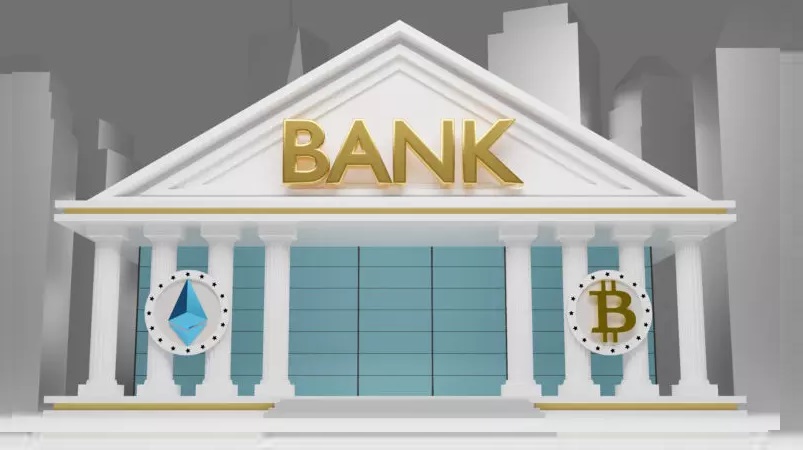
These initiatives focus on integrating cryptocurrency infrastructure into traditional banking systems, marking a significant acceleration in Wall Street’s adoption of digital assets. Armstrong emphasized that “the best banks are leaning into this as an opportunity,” while those resisting risk being “left behind.”

The pilots are exploratory and low-risk for banks, allowing them to test crypto elements without full-scale commitments. Banks are experimenting with stablecoins like USDC, issued by Coinbase for faster settlements, cross-border payments, and tokenized finance.

These digital dollars could handle trillions in daily transactions with lower costs and near-instant execution. Armstrong projects the stablecoin market could reach $1.2 trillion by 2028, driven by thousands of use cases in payments and treasury management.

This involves secure storage of digital assets for institutional clients, addressing regulatory and security concerns. Banks can leverage Coinbase’s existing infrastructure to offer custody without building it in-house, reducing risks like hacks or compliance issues.

Pilots test direct crypto trading integrations, enabling banks to offer clients seamless access to buy, sell, and trade assets like Bitcoin or Ethereum through familiar platforms.

Specific bank names weren’t disclosed in Armstrong’s remarks, but recent partnerships provide context: JPMorgan Chase: Announced in July 2025, integrating USDC rewards, Chase card funding for crypto buys, and direct bank-to-Coinbase transfers for over 80 million users starting in 2026.

PNC Bank partnered in July 2025 to let 9 million customers buy, hold, and sell crypto directly in accounts, with PNC providing banking services to Coinbase in return. Citibank joined in October 2025 for cross-border payments using Coinbase’s tech, managing over $35 trillion in assets combined with JPMorgan.

These build on Coinbase’s role as a “bridge” between traditional finance (TradFi) and crypto, with pilots going live as early as this summer. The announcement came alongside BlackRock CEO Larry Fink, who reiterated Bitcoin’s role as a hedge against financial and geopolitical risks—echoing $23 billion in spot Bitcoin ETF inflows this year.

This convergence highlights a shift: Banks aren’t just dipping toes; they’re wiring crypto into core operations for efficiency gains, like 24/7 settlements and reduced reconciliation costs.

On X, the news sparked buzz about institutional adoption, with users noting it’s “not hype—it’s infrastructure” and predicting a “wealth shift” as banks merge with crypto rails.

Banks are no longer treating crypto as a speculative side bet — they’re integrating it into payments, custody, and treasury stacks. Crypto rails especially stablecoins will settle trillions annually by 2028, competing directly with SWIFT, FedWire, and correspondent banking.

Coinbase becomes the “AWS of money movement”, Circle (USDC), and any bank that moves fast. Banks that stay on the sidelines higher costs, slower settlement, client loss. Cross-border payments cost 6–7% and take 1–5 days.

With USDC/USDP on Coinbase + bank integrations: ~0.1% cost, seconds to settle, 24/7/365. JPMorgan, Citi, and PNC pilots prove banks now see stablecoins as upgrades, not threats. $2–3 trillion in annual stablecoin settlement volume by 2027.

Institutions that custody/trade crypto in-house via Coinbase Prime or direct integrations keep 50–80 bps of spread that currently goes to third-party brokers. Retail customers at partnered banks— JPM, PNC, Citi = 150+ million users get seamless crypto access ? explosive on-ramp volume.

Coinbase’s revenue mix shifts from volatile trading fees ? high-margin, recurring enterprise revenue. Stablecoin volumes are up 20% year-over-year, and with clearer rules like the pending CLARITY Act, more pilots could scale to production in 2026.

Coinbase’s stock (COIN) rose about 5% to around $277 on the news, buoyed by broader crypto rebounds Bitcoin above $92,000. This isn’t isolated—it’s part of a trend where exchanges like Coinbase evolve into financial “pipes,” blending banking and blockchain.

In short, these pilots signal crypto’s maturation: From fringe experiment to essential infrastructure. If you’re in finance or investing, this is the quiet revolution to watch.


Tekedia Capital Welcomes Pharmie AI Which Is Transforming Independent Pharmacies

0

We invested in the world’s first AI-insurance company, and the outcomes have been exceptional. We also invested in the world’s first AI-lending company, and its immediate follow-on fundraise has validated our thesis. These companies are not merely technology firms; they possess full insurance, reinsurance, and lending licenses, enabling them to operate like traditional players, yet powered by AI. They do not simply supply technologies to incumbents; they operate as the insurers, as the lenders, using AI to transform their industries from within.

In that same construct, I am thrilled to announce that Tekedia Capital has invested in Pharmie AI, which is on course to become a category-king AI-powered pharmacy, not just a vendor of pharmacy tools or digital workflows.

Why does this matter? Independent pharmacies across communities are drowning in repetitive administrative tasks. Calls about refills, insurance checks, transfers, and appointments come nonstop. Pharmacists and technicians spend their day context switching, far from the essence of their profession: patient care. Turnover is high, training is expensive, and margins are evaporating. Pharmie changes that.

Pharmie runs 24/7, autonomously handling these administrative burdens. It answers calls, processes refills, verifies insurance, schedules appointments, manages transfers, and even upsells delivery and vaccination services while integrating seamlessly with existing pharmacy management systems. Already, Pharmie is reducing phone volume by 70% across multiple independent pharmacies.

And the roadmap is clear: Pharmie with its partners could become a licensed pharmacy, especially in underserved and remote areas where pharmacies are scarce. It is integration of the full chain to unlock value for all stakeholders. That is why we are happy to support Pharmie AI.

Fresh Platform Puts Safety First While Maximizing Sweepstakes Casino Fun

0

A new entrant in the sweepstakes casino world is making its debut with a simple, player-friendly mission: deliver a safer, more informed, and more enjoyable sweepstakes gaming experience. This new platform – built at the intersection of transparency, responsible play, and entertainment – seeks to give players everything they need to enjoy sweepstakes casinos with confidence while avoiding the confusion and uncertainty that often accompany the industry’s rapid growth.

With sweepstakes online casinos expanding across North America and drawing millions of users, the sector has become both more exciting and more complex. Operators now offer multi-coin reward systems, evolving bonus calendars, daily streak structures, and a wide range of prize-eligible pathways. But as the ecosystem becomes richer, safety concerns, ambiguous terms, and inconsistent communication across platforms have turned into pain points for many players.

The new platform aims to solve these issues by placing safety at the center of its mission – without sacrificing the fun and excitement that define sweepstakes gaming.

A Player-First Approach Grounded in Safety and Clarity

Safety remains one of the most important topics across the sweepstakes landscape. Although sweepstakes casinos operate legally through promotional prize models, players regularly encounter unclear identity verification rules, vague redemption timelines, or poorly communicated promotional conditions. These uncertainties can lead to confusion during gameplay or frustration when attempting to redeem prizes.

The newly launched platform takes a proactive stance by evaluating every operator through a safety-first lens. Before any sweepstakes casino is featured, it must pass assessments across multiple criteria:

  • Clarity of terms and redemption conditions
  • Transparent identity verification practices
  • Consistent prize-fulfillment standards
  • Appropriate data privacy and account protection measures
  • Clear communication across all player touchpoints

Rather than focusing only on entertainment value, the platform combines enjoyment with a responsible framework designed to protect players from unexpected surprises.

Making Sweepstakes Gaming Fun – Without the Guesswork

What players look for in sweepstakes gaming isn’t complicated: a safe experience, clear expectations, and the ability to enjoy games without constant uncertainty. The newly developed platform approaches this goal by pairing transparent evaluations with practical tools that reduce confusion and make gameplay more enjoyable.

While safety and compliance guide its review framework, the platform’s real focus is the entertainment value of sweepstakes gaming. As one reviewer noted:

“Players want predictable, frustration-free sessions – our role is to help make that possible.”

Instead of overwhelming users with long promotional lists, the platform offers structured sweepstakes casino insights that simplify decision-making and highlight opportunities for smoother play.

Tools Designed to Enhance the Fun Factor

Rather than relying on bullet lists, the platform presents its feature set in structured reference formats. Below is an example of how players commonly use the platform’s tools:

Feature Overview

Feature Category What It Provides Benefit to Players
Bonus Breakdown Guides Daily and weekly promotion analyses Identifies high-value rewards without trial-and-error
Game Performance Reporting Stability and loading impressions from real test sessions Helps players choose smoother, more reliable games
Mobile Optimization Notes Device-specific performance observations Supports players who rely primarily on smartphones
Promo Timing Highlights Indicators showing when valuable cycles often occur Allows players to plan sessions around more rewarding periods
Gameplay Tips Based on Testing Practical observations from full user journeys Reduces confusion and avoids common early-stage mistakes

This format gives readers a quick understanding of what the platform offers while keeping the experience data-driven.

Real Testing That Mirrors Player Behavior

The platform does not base its insights solely on operator descriptions. Each evaluation is built around a complete hands-on walkthrough of the player journey.

Testing Components Examined

To show this more clearly, here is a compact testing-process overview presented in a table rather than a long list:

Testing Stage What Is Observed
Onboarding & Verification Account setup clarity, document requests, and time required for identity checks
Bonus Claim Usability Ease of accessing, understanding, and activating promotional rewards
Gameplay Performance Loading speed, session stability, and responsiveness across different game types
Mobile vs. Desktop Behavior Variations in performance between devices and operating systems
Customer Support Response Accuracy and speed of help-center interactions
Redemption Walkthrough Documentation requirements and actual prize-processing timelines

This structured approach reduces guesswork, giving players a clear picture of what to expect from start to finish.

“The goal isn’t to find flaws – it’s to show the real experience as it happens.”

By relying on practical testing rather than assumptions, the platform helps users navigate sweepstakes casinos with more confidence.

Clarifying Multi-Coin and Bonus Systems

Many players cite the complexity of coin-based systems as one of the biggest challenges in sweepstakes gaming. Bonus coins, streak rewards, event-based multipliers, and prize-eligible currencies all behave differently – and operators vary widely in how clearly these systems are described.

To simplify that landscape, the platform breaks down each system into understandable parts.
Here’s an example of how the platform explains conversion logic:

Coin & Bonus System Breakdown

System Element Simplified Explanation Player Impact
Bonus Coin Conversion Shows whether and how bonus coins contribute to prize progress Avoids misinterpreting non-eligible rewards
Daily Reward Value Identifies which recurring bonuses support steady advancement Helps plan consistent play sessions
Streak Mechanics Explains how maintaining streaks affects long-term returns Encourages informed login timing
Promotion Type Classification Distinguishes prize-eligible promotions from engagement-only incentives Reduces confusion during event cycles
Redemption-Related Terms Highlights conditions that may slow or limit approval Helps players avoid unexpected delays

By presenting information this way, the platform allows players at all skill levels to quickly determine which systems offer meaningful value.

Balanced Reviews That Address Benefits and Risks

Sweepstakes players benefit most when they understand both the advantages and the potential friction points of each platform. Rather than relying on long bullet lists of pros and cons, the platform uses a risk-and-benefit comparison chart to keep evaluations objective.

Risk & Benefit Snapshot

Benefits Identified Issues Observed
Efficient redemption processes in some operators Some terms include unclear language
Strong gameplay performance across several providers Navigation can be confusing for first-time users
Well-structured promotions with predictable cycles Certain streak bonuses have strict reset requirements
Mobile apps optimized for newer devices Performance inconsistencies during peak periods

This structure helps players make informed choices based on their own priorities.

Tracking Industry Trends for Updated Guidance

Sweepstakes gaming evolves quickly. To prevent content from becoming outdated, the platform continually monitors relevant shifts, such as onboarding standards, new game providers, or updated promotion structures.

Below is an example of how trend tracking is summarized:

Industry Trends Under Ongoing Review

Trend Category Observed Focus Areas
Seasonal Bonus Cycles Event-based promotions, multiplier periods, new-game tie-ins
Prize-Processing Patterns Shifts in approval timelines, communication methods
Game Provider Updates Performance of new titles, stability metrics
Data Security Practices Updates to verification, consent requirements
Reward Model Evolution Multi-coin structures, long-term reward pacing
Mobile-First Features Optimization trends for modern devices

This ensures players have access to current, relevant information rather than outdated assumptions.

A Safer, More Enjoyable Sweepstake Experience from Day One

With its launch, the platform brings a refreshing approach to sweepstakes gaming: one built on safety, clarity, and pure entertainment value. By evaluating every operator through real testing, simplifying complex mechanics, and highlighting verified safety markers, the hub empowers players to enjoy the sweepstakes landscape without uncertainty.

Eutelsat Hit by Sharp Selloff as SoftBank Dumps Rights, Reviving Questions Over Europe’s Satellite Ambitions

0

French satellite operator Eutelsat endured another bruising day on the markets on Wednesday after a Reuters report revealed that Japanese investor SoftBank had offloaded a large block of subscription rights tied to the company.

The sale triggered a steep drop in the share price, reinforcing the uncertainty surrounding Europe’s efforts to build a credible challenge to Elon Musk’s Starlink.

Eutelsat’s stock fell by more than 7 percent earlier in the session before closing 5.7 percent lower. According to the Reuters account, SoftBank sold 36 million subscription rights—equivalent to about 26 million shares and roughly half of its stake in the French operator. The move marks the latest in a series of strategic disposals by the Japanese group, which has been under pressure to free up capital for its next wave of artificial intelligence investments.

SoftBank founder Masayoshi Son told an audience on Monday that the company would not be selling assets unless it needed to bankroll its AI ambitions, making the disposal particularly telling.

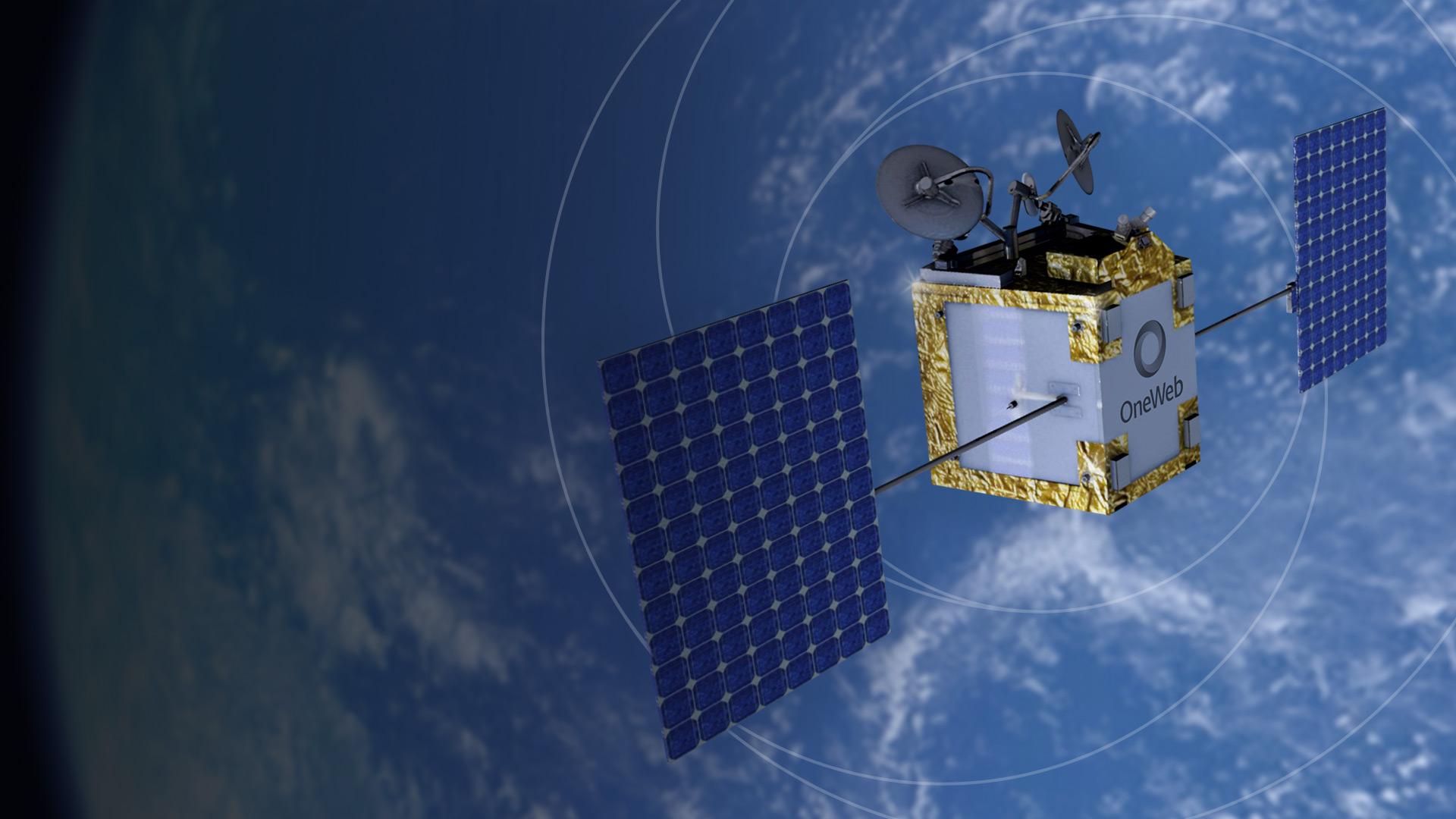
Eutelsat sits at the center of Europe’s push for technological autonomy. The company completed a merger with satellite internet provider OneWeb in 2023, positioning the newly combined group as Europe’s sharpest answer to Starlink. But the competitive gulf remains vast. Eutelsat and OneWeb collectively field more than 600 satellites in orbit; Starlink has deployed over 6,750, according to the companies’ websites. That sheer numerical difference underscores the scale advantage that SpaceX continues to enjoy in low-Earth orbit broadband.

The French operator has had a turbulent year in the markets. Shares had surged more than 600 percent in early March as European governments scrambled to shore up their technology independence following the United States’ decision to scale back military support for Ukraine. But the momentum evaporated quickly, and Eutelsat’s stock has since collapsed by more than 70 percent. The volatility highlights the fragile confidence surrounding Europe’s satellite internet strategy, even as governments continue to treat the company as a central pillar of continental tech infrastructure.

In June, the French state led a €1.35 billion investment in Eutelsat, emerging as its largest shareholder with roughly 30 percent. That recapitalization underscored the strategic weight now placed on Eutelsat’s constellation and ground network as Europe attempts to steer its own course in space-based communications. The state-backed support also signaled a shift in the company’s trajectory.

Luke Kehoe, an analyst at Ookla, told CNBC that Eutelsat is no longer being positioned as a pure growth story but rather as a foundational component of Europe’s digital sovereignty architecture. Kehoe described SoftBank’s withdrawal as consistent with the group’s “aggressive monetization” strategy across other holdings, including its earlier exit from Nvidia as it redirected funds toward OpenAI and related ventures.

Even so, Eutelsat’s strategic plan hinges on carving out markets where Starlink’s dominance is less entrenched. While Starlink continues to hold overwhelming scale and remains the most visible player in retail satellite broadband, Eutelsat has emphasized government contracts, aviation connectivity, mobile backhaul, and emergency-response links as its core growth lanes.

Kehoe noted that these B2B segments carry higher value relative to consumer broadband, potentially giving the French group a defensible position even without matching Starlink on satellite numbers.

The challenge now is whether that strategy can produce sustainable returns. The merged Eutelsat-OneWeb business remains deep in a cycle of heavy capital expenditure, and governments have repeatedly stepped in to keep operators like Eutelsat funded at levels necessary to participate in the global race for satellite dominance.

Kehoe framed the unresolved issue with a blunt question: Will Europe continue to write cheques at the scale needed to close—even partially—the capability gap with Starlink, and will Eutelsat’s more focused, enterprise-driven model be enough to justify the investment once the current recapitalization wave recedes?

Currently, the market reaction to SoftBank’s move suggests investors are not convinced. The heavy rights sale, paired with the broader backdrop of near-limitless capital flowing into AI, reinforces a hierarchy where space infrastructure competes directly with artificial intelligence for investor attention. SoftBank’s recent comments about prioritizing AI underscore that reality even more sharply.

Eutelsat’s role in Europe’s long-term technology sovereignty remains unquestioned in political circles. But in the financial markets, pressure continues to build. The selloff shows how quickly confidence can erode when major shareholders reposition their portfolios. And with Starlink’s lead showing no sign of narrowing, Eutelsat faces an uphill battle to convince investors that its strategic reorientation and government-backed support can eventually translate into commercial resilience.

Europe Cuts the Cord: As the EU Moves To Phase Out Russian Gas, Moscow Warns It Is “Ready” for War — and Peace Talks Stall

0

The European Union made a decision on Wednesday to phase out all Russian gas imports by late 2027, marking one of the bloc’s most decisive breaks from Moscow since the start of the Ukraine war.

But the move, celebrated in Brussels as a historic end to decades of energy dependency, landed on the same day that high-stakes peace talks between the United States and Russia failed to deliver a breakthrough — and just hours after Vladimir Putin warned Europe that Russia was “ready” for war if pushed.

Both developments are now intertwining in Europe’s strategic calculations, exposing an uncomfortable reality: even as the EU tries to shut off Russian gas, Moscow is signaling that it is prepared for a prolonged confrontation — both militarily and diplomatically.

The energy agreement, reached in the early hours of Wednesday between representatives of EU governments and the European Parliament, locks in a phased halt to Russian liquefied natural gas imports by the end of 2026 and pipeline gas by the end of September 2027.

The bloc will also move toward a full phase-out of Russian oil. European Commission President Ursula von der Leyen hailed the deal as a definitive break.

“Today, we are stopping these imports permanently. By depleting Putin’s war chest, we stand in solidarity with Ukraine and set our sights on new energy partnerships and opportunities for the sector,” she said in a statement.

Yet even before the ink had dried, two EU members were already preparing to challenge the new legislation. Hungary, which remains heavily reliant on Moscow for energy, vowed to take the case to the EU’s Court of Justice. Its foreign minister, Peter Szijjarto, denounced the measure as a “Brussels order” disguised as a trade policy to dodge unanimity rules on sanctions.

“Accepting and implementing this Brussels order is impossible for Hungary,” he said. Slovakia is also weighing its legal options, warning that the phase-out risks damaging its economy.

From Moscow, the Kremlin dismissed the EU decision as self-destructive. Officials said the move would leave Europe less competitive and ultimately burden consumers with higher prices. As of October, Russia still accounted for 12% of EU gas imports, down from 45% before the 2022 invasion, with Hungary, France, and Belgium among the states still receiving supplies.

The phase-out mechanics are complex and staggered. For short-term contracts concluded before June 17 this year, the ban kicks in on April 25, 2026 for LNG and June 17, 2026, for pipeline gas. Longer-term contracts face cut-off dates at the start of 2027 and the start of October 2026, with a possible one-month cushion for countries struggling to meet storage requirements.

From now on, most Russian gas imports will require prior authorization, except in cases where the exporting country is a major gas producer that restricts Russian imports. Brussels will also move to phase out remaining Russian oil supplies by the end of 2027, with legislation expected early next year.

Member states must submit “national diversification” plans by March 1, outlining how they intend to replace Russian supplies. They will also be required to disclose any existing Russian contracts or national bans. The Commission will then issue recommendations.

While Europe was drawing red lines on energy, Washington was trying to draw its own on the geopolitical front — and so far without success. U.S. President Donald Trump’s special envoy, Steve Witkoff, and Trump’s son-in-law, Jared Kushner, spent five hours in Moscow on Tuesday trying to sell a draft peace plan to Putin.

According to Russian presidential aide Yuri Ushakov, the discussion was “useful, constructive, and highly informative,” but nowhere near complete.

“We agreed on some things … while others caused criticism,” he said, adding that Putin held a “critical, even negative” attitude toward a number of the proposals.

The document under discussion is shifting rapidly. A secret 28-point plan drafted by the U.S. and Russia was presented to Ukraine weeks ago, prompting Kyiv and European allies to scramble and revise it down to 19 points. Ukrainian officials arrived in Florida last weekend for another round of negotiations. Ushakov said Russia and the U.S. discussed a 27-point plan on Tuesday, and that additional documents were exchanged, though he did not reveal specifics. Both sides agreed not to disclose the details.

On Wednesday, Kremlin spokesperson Dmitry Peskov tried to tamp down speculation, saying it was wrong to claim Putin had rejected the U.S. proposals.

“A direct exchange of views took place yesterday for the first time,” he said. “Some things were accepted, some things were marked as unacceptable — this is a normal working process of finding a compromise.”

But Putin’s public comments earlier in the day struck a much harder tone. He lashed European leaders for presenting counter-proposals he described as “absolutely unacceptable” and accused the region of having “no peace agenda.” Then came the warning. “We’re not going to war with Europe; I’ve said that a hundred times. But if Europe suddenly wants to fight us and starts, we’re ready right now,” he said.

European officials were already uneasy that they and Kyiv were excluded from the earliest U.S.–Russia talks, which many feared tilted toward Moscow’s interests. EU foreign policy chief Kaja Kallas said this week could be “pivotal for diplomacy” but argued that “Russia does not want peace,” urging stronger support for Ukraine.

Trump’s diplomatic approach is being closely watched across Europe. His relationship with Putin has often appeared warmer than his ties with President Volodymyr Zelenskyy, and analysts worry he may eventually back a deal that demands major concessions from Kyiv.

Zelenskyy, for his part, tried to sound hopeful. Addressing Irish lawmakers on Tuesday, he said Ukraine was “closer to peace than ever before” and insisted there was a “real, real chance” of an agreement after recent talks with Washington.

But geopolitical analysts are blunt about the prospects. Russia believes it holds the advantage on the battlefield and has little incentive to rush toward compromise. Wellington Management investment director Paul Skinner told CNBC that the conflict is likely to “grind on, and on, and on,” adding: “While Putin is still making ground, he’s unlikely to sue for peace.”

Michael Froman, president of the Council on Foreign Relations, echoed the view, arguing it is in Putin’s interest “to keep the process going” and prolong diplomatic engagement.

Europe now finds itself facing an unusual convergence of risks. It is attempting to unwind its energy dependence on Russia at the exact moment when Moscow is signaling a willingness to stretch the war, stall peace talks, and ramp up pressure on the West.

The EU’s 2027 phase-out timeline sends a clear political message — but it also accelerates a race against time to secure new supplies, defend its economies from price spikes, and keep Ukraine at the negotiating table on terms it can accept.