
DD
MM
YYYY

PAGES

DD
MM
YYYY

spot_img

PAGES

Home Blog Page 881

UBA Targets Additional N157bn in Rights Issue, Extends Recapitalization Push Amid Strong Q1 Earnings

4

United Bank for Africa (UBA) Plc is intensifying efforts to shore up its capital base, announcing a fresh plan to raise over N157 billion through a rights issue as part of a broader strategy to meet the Central Bank of Nigeria’s (CBN) recapitalization mandate.

The move underscores the urgency among Nigerian banks to comply with the apex bank’s directive, which aims to fortify the country’s financial sector against economic shocks and currency volatility.

In a notice to trading license holders, the Nigerian Exchange Limited (NGX) disclosed that UBA, through its stockbroker United Capital Securities Limited, has filed an application for the approval and listing of 3,156,869,665 ordinary shares of 50 kobo each. The rights issue, priced at N50.00 per share, will be offered on the basis of one new share for every thirteen ordinary shares held by shareholders as of July 16, 2025.

This latest offering is the second capital raise by UBA within a year. In November 2024, the lender had initiated a rights issue to raise N239.4 billion through the sale of over 6.8 billion shares at N35.00 each. That offering was oversubscribed, with bids exceeding N251 billion. However, in line with its cap, UBA accepted N240 billion, bringing its capital base to N355.2 billion — well on its way to meeting the new regulatory minimum.

The latest effort will further bridge the capital gap as UBA aims to fully comply with the CBN’s recapitalization deadline of March 31, 2026. Under the policy introduced by the CBN in March 2024, commercial banks with international licenses are required to raise their minimum capital to N500 billion, while national banks must raise N200 billion and regional banks N50 billion. The capital computation excludes retained earnings, share premium, and revaluation reserves, meaning banks must raise fresh equity to meet the threshold.

The policy, described by the CBN as a move to “strengthen the resilience of Nigeria’s banking system,” was driven by concerns over the depreciation of the naira, high inflation, and increased macroeconomic risks. Many banks, including UBA, have since adopted phased recapitalization strategies combining rights issues, public offers, and in some cases, mergers or acquisitions to meet the target.

UBA’s recapitalization journey has been reinforced by its strong financial performance. For the first quarter of 2025, the bank posted a pre-tax profit of N204.27 billion — a 30.65% rise from N156.3 billion in the same period last year. Net profit hit N189.84 billion, reflecting a 33.15% growth year-on-year. These earnings were fueled by robust interest income, which climbed to N599.83 billion, up 36% from Q1 2024. The bulk of this came from loans and advances (N260.56 billion) and investment securities (N291.86 billion).

Non-interest income also surged, with electronic banking generating N47.84 billion and account maintenance fees contributing N10.39 billion. The bank’s balance sheet continues to reflect operational strength, with strategic investments in technology and expansion into key African markets paying off.

UBA’s continued capital raise reaffirms its commitment to maintaining its international banking license and supporting its pan-African footprint. For shareholders, the latest rights issue offers another opportunity to deepen their equity in one of Nigeria’s leading financial institutions, even as the industry braces for a new era of capital adequacy and competition.

As the recapitalization deadline inches closer, UBA — like many of its peers — appears to be racing against time. Already, several banks, including Zenith, GTCO, Access Holdings, and FBN Holdings, have unveiled similar plans, issuing public and rights offers, pointing to a sector-wide scramble to meet the CBN’s demands.

Why LinkedIn Became Valuable

0

“In Q1 2025, AWS reported $29.3 billion in revenue—a 17% increase from the previous year—and operating income surged 23% to $11.5 billion. Its operating margin expanded to 32%, up from 29% the prior year, reflecting strong cost discipline and demand for cloud services, particularly AI-driven workloads.” Yet, the AWS unit of Amazon fired many workers!

In the past, resumes were confidential documents. Nobody made his or her resume public. That was the time when companies used to offer lifetime employment. But over time, irrespective of efforts, companies would always find ways to fire workers. As that was happening, the working people of world noticed that company loyalty is a hopeless strategy. Magically, LinkedIn was born, giving people the opportunity to make their resumes PUBLIC.

You know what just happened? The resume/CV is now public in LinkedIn, telling the world “I am here…but available if something better comes”. That has become the relationship as in this age of the market system, your success could destroy your job. You build the technology and that tech makes you irrelevant, and you are asked to go!

Did you get the point? Thriving in career these days goes beyond doing your job well because a job well done could be a reason to be fired because you have removed any need to keep you in that company. Most of these Amazon AWS workers are possibly people who created one AI system which ended up disintermediating them. Sure – they will be fine as there are jobs out there for the best!

This matter is so important that in our Multinational Career module in Tekedia Mini-MBA, I explain why professionals must develop a Personal Career Resilience Framework that goes beyond winning trophies and excellent rating at work because while those still matter, “success” can punt careers in the AI age.

Yes, you need backups in whatever you do because in a record quarter of revenue and profit, it could be that you have fulfilled your mission in that firm. Look at new exit models in AI startups, they hire the CEOs, leave zombie companies and the process makes it impossible for workers to get any benefit unlike the old model of “buying” the company which triggers change of hand, and rewards in the bank accounts.

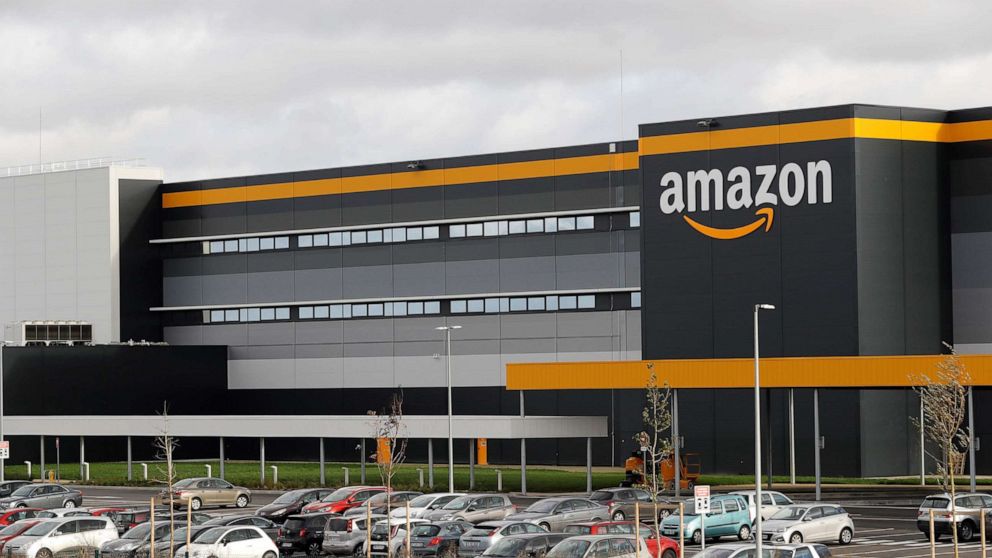
Amazon Lays Off Hundreds of Workers in AWS as Part of Strategic Restructuring Amid AI Shift

Amazon Lays Off Hundreds of Workers in AWS as Part of Strategic Restructuring Amid AI Shift

0

Amazon has reportedly laid off hundreds of employees in its cloud-computing unit, as confirmed by Reuters on Thursday.

A spokesperson at the company, Brad Glasser, confirmed that Amazon is laying off employees in AWS, but did not specify which teams were affected.

Internal messages suggest that affected teams include frontline support, training and certification, and the AWS Worldwide Specialist Organization, which works with customers and product teams.

Amazon said the cuts weren’t primarily due to investments in AI but are a result of efforts to streamline the workforce and refocus on certain priorities. The move is part of a larger restructuring effort to improve efficiency across the company. CEO Andy Jassy has emphasized the importance of making Amazon “leaner,” with recent comments highlighting the growing role of generative AI in reducing corporate overhead.

Recall that last month, Jassy stated that the company’s corporate workforce will shrink further in the coming years as a result of AI. He said Amazon would “need fewer people doing some of the jobs that are being done today, and more people doing other types of jobs.”

Jassy’s remarks sparked concern among employees about job security, especially as automation becomes more prominent within Amazon’s operations. The company has continued to lay off workers this year, after cutting more than 27,000 jobs since 2022.

Despite the recent layoffs, Amazon says it is offering support to affected staff. U.S.-based employees will receive approximately 60 days of continued pay and benefits, in addition to severance packages, extended healthcare coverage, and access to internal job placement services. The company is also encouraging laid-off workers to apply for open roles in high-priority departments where hiring is ongoing.

Importantly, the job cuts are not seen as a result of declining performance within AWS. On the contrary, AWS remains a core profit engine for Amazon.  In Q1 2025, AWS reported $29.3 billion in revenue—a 17% increase from the previous year—and operating income surged 23% to $11.5 billion. Its operating margin expanded to 32%, up from 29% the prior year, reflecting strong cost discipline and demand for cloud services, particularly AI-driven workloads.

AWS’s growth is fueled by enterprise adoption of its AI and machine learning tools, such as Bedrock and SageMaker, alongside infrastructure upgrades like the Graviton4 chip and Trainum accelerators. Strategic partnerships, like the $4 billion investment in Anthropic, bolster AWS’s position in generative AI, competing with Microsoft Azure and Google Cloud.

AWS’s annualized revenue run rate is now over $110 billion, with analysts projecting sustained double-digit growth through 2026 due to AI and digital transformation trends. However, AWS faces intensifying competition from Azure, Google Cloud, and Oracle Cloud Infrastructure, particularly in AI infrastructure, where Oracle’s partnerships with OpenAI and xAI are gaining traction.

Notably, amidst the recent job cuts, Business Insider reports that several Amazon units now require employees to detail how they use AI at work in their promotion applications. The policy, spearheaded by Ring inventor Jamie Siminoff, aims to promote innovative thinking in the talent-evaluation process.

The move mirrors similar AI-first directives from Shopify and Duolingo, though the policies are not yet companywide. This is part of a growing trend among tech CEOs to incorporate AI use into their talent-evaluation process.

Amidst the significant layoffs at the company, it is not alone in this trend. In February 2025, Google also trimmed its cloud division workforce, citing the need to align with evolving customer needs and future growth opportunities. As Amazon doubles down on AI and cloud services, the recent layoffs suggest a company in transition focused on efficiency, innovation, and realignment for long-term competitiveness.

Fort Worth’s Bitcoin Mining Program Positions The City As A Forward-Thinking Hub For Blockchain Technology

0

Fort Worth, Texas, became the first U.S. city to mine Bitcoin, launching a pilot program in April 2022. The city council unanimously approved the initiative, which involved operating three Bitmain Antminer S9 mining rigs, donated by the Texas Blockchain Council, 24/7 in the climate-controlled IT wing of City Hall. Each rig, valued at about $600-$2,100, consumes energy comparable to a household vacuum cleaner, with costs expected to be offset by mined Bitcoin.

The six-month trial aimed to position Fort Worth as a tech-friendly hub, not primarily for profit but to gain experience in blockchain technology and attract crypto-related businesses. Mayor Mattie Parker emphasized innovation, stating, “Fort Worth is where the future begins.” By August 2023, the city continued running a single, more energy-efficient machine, generating significant media attention—over 752 million web impressions—but minimal financial returns due to the small scale and a cooling crypto market.

The initiative faced criticism for energy use in Texas’s fragile grid, though the city maintained its low environmental impact. After the trial, Fort Worth assessed expanding the program, aiming to establish itself as a crypto mining leader in Texas, a state already dominant in global Bitcoin mining post-China’s 2021 crypto ban.

Fort Worth’s program positions the city as a forward-thinking hub for blockchain technology, potentially attracting crypto-related businesses, startups, and investment. By embracing Bitcoin mining, the city signals openness to emerging technologies, which could spur economic growth and job creation in tech sectors. The Texas Blockchain Council’s involvement underscores Texas’s broader ambition to dominate the U.S. crypto mining landscape, leveraging its cheap energy and business-friendly policies.

Bitcoin mining is energy-intensive, and even though Fort Worth’s pilot uses minimal power (three rigs equivalent to household appliances), scaling up could strain Texas’s already fragile electrical grid, as seen during 2021’s winter storm outages. Critics argue that public resources should prioritize energy stability over speculative tech ventures, especially in a state prone to power shortages.

As the first U.S. city to mine Bitcoin, Fort Worth sets a precedent for municipal involvement in cryptocurrency. Success could inspire other cities to follow, integrating blockchain into public finance or operations. However, failure—due to market volatility or high costs—could deter others, framing municipal crypto ventures as risky or impractical.

The pilot’s modest financial returns (due to small scale and a bearish crypto market in 2022-2023) suggest that profitability isn’t the primary goal. Instead, it’s a learning opportunity for cities to explore digital assets as alternative revenue streams or hedges against inflation, especially as Bitcoin’s value fluctuates (e.g., ~$20,000 in 2022 vs. ~$60,000 in early 2025).

The program’s high media attention (752 million web impressions by August 2023) boosts public awareness of cryptocurrency but also risks skepticism if tangible benefits (e.g., revenue or jobs) don’t materialize. It could normalize crypto in civic contexts or deepen distrust among those wary of its volatility and environmental impact.

Proponents (e.g., Texas Blockchain Council, Mayor Parker) see Bitcoin mining as an economic opportunity, leveraging Texas’s energy abundance (notably renewables like wind) and deregulated markets. They view it as a hedge against fiat currency devaluation and a driver of tech innovation.

Skeptics highlight environmental risks, citing Bitcoin’s global energy consumption (estimated at 150 TWh annually, comparable to Argentina’s total usage). They argue public funds shouldn’t support speculative ventures, especially with Texas’s grid issues and crypto’s association with scams or instability.

Fort Worth’s urban experiment contrasts with rural Texas areas hosting large-scale commercial mining operations (e.g., Rockdale’s Riot Blockchain facility). Urban adoption may focus on innovation and branding, while rural areas prioritize economic boosts from mining farms, creating different stakes in crypto’s growth.

Texas’s Republican-led policies (e.g., Governor Abbott’s pro-crypto stance) contrast with more cautious or anti-crypto sentiments in Democrat-leaning states like New York, which banned certain mining practices in 2022 over environmental concerns. Fort Worth’s move aligns with Texas’s deregulatory ethos, deepening the red-blue state divide on crypto policy.

Crypto mining could exacerbate inequality if only well-resourced cities or regions (with access to cheap energy and tech infrastructure) can participate. Smaller municipalities or those in energy-constrained states may be left behind, widening the digital and economic gap.

Fort Worth’s public-sector mining contrasts with private companies dominating the space. This raises questions about whether taxpayer-funded initiatives should compete with private firms or focus on regulation and oversight instead.

Fort Worth’s Bitcoin mining experiment is a bold step toward integrating cryptocurrency into municipal governance, with potential to drive innovation and economic growth. However, it amplifies divides over energy use, economic priorities, and crypto’s role in public policy. Its success or failure could shape whether other cities follow suit or retreat from such ventures, influencing the broader trajectory of municipal crypto adoption in the U.S.

Implications of DOJ and CFTC Closing of Polymarket Investigation with No Charges

0

The U.S. Department of Justice (DOJ) and the Commodity Futures Trading Commission (CFTC) have concluded their investigations into Polymarket, a blockchain-based prediction market platform, with no charges filed. The probes, initiated during the final months of the Biden administration, examined whether Polymarket violated a 2022 CFTC settlement that required the platform to block U.S.-based users from placing bets, particularly through workarounds like VPNs.

The investigations gained attention after Polymarket’s surge in popularity during the 2024 U.S. presidential election, where it accurately predicted outcomes, drawing scrutiny for allegedly allowing U.S. users to participate despite the ban. Polymarket received formal notices earlier this month confirming the closure of both the civil and criminal probes, signaling a regulatory shift under the Trump administration’s more crypto-friendly stance. This resolution may pave the way for Polymarket to explore reentering the U.S. market, potentially through CFTC registration or partnerships.

The resolution without charges allows Polymarket to operate without the immediate threat of U.S. regulatory penalties. This is a significant win, as the investigations focused on potential violations of a 2022 CFTC settlement that barred Polymarket from offering services to U.S. users. The closure signals a possible path for Polymarket to explore reentering the U.S. market legally, potentially by registering as a designated contract market (DCM) with the CFTC or partnering with compliant entities like Kalshi, a CFTC-regulated prediction market.

This could expand Polymarket’s user base and trading volume, which reached $2.3 billion in October 2024 alone. The lack of charges enhances Polymarket’s credibility, reinforcing its position as a leading prediction market platform, especially after its accurate forecasting during the 2024 U.S. presidential election. The DOJ and CFTC’s decision not to pursue charges may indicate a softening regulatory stance under the Trump administration, which has expressed pro-crypto policies.

This could encourage other prediction markets to push boundaries, testing U.S. regulations while leveraging offshore structures. With Polymarket potentially eyeing U.S. reentry, competitors like Kalshi, which operates legally in the U.S., may face heightened competition. This could drive innovation but also regulatory scrutiny to ensure a level playing field.

The resolution may attract more institutional and retail interest in prediction markets, as regulatory clarity reduces perceived risks. Prediction markets could gain traction for forecasting not just elections but economic indicators, sports, and other events. The closure aligns with a broader shift toward crypto-friendly policies in the U.S., potentially encouraging blockchain-based platforms to innovate without fear of aggressive enforcement.

Polymarket’s offshore operations (based in Panama) highlight the tension between global blockchain platforms and U.S. regulations. The resolution may prompt discussions on harmonizing international and U.S. regulatory frameworks. Polymarket operates legally outside the U.S. but faced scrutiny for allegedly allowing U.S. users to access its platform via VPNs, violating the 2022 CFTC settlement.

The closure of the investigation reflects a potential shift from the Biden administration’s stricter enforcement to a more lenient approach under Trump, creating a divide between past and present U.S. regulatory priorities. Prediction markets sit in a gray area between the CFTC (which regulates derivatives and futures) and the SEC (which oversees securities). The CFTC’s jurisdiction over Polymarket’s activities contrasts with potential SEC interest if prediction contracts are deemed securities, creating regulatory uncertainty.

Polymarket has advocated for prediction markets as tools for public good, providing real-time, market-driven insights (e.g., election forecasts). Regulators, however, prioritize consumer protection and compliance, viewing unrestricted access as a risk for fraud or manipulation. The 2022 CFTC settlement barred U.S. users, creating a divide between American bettors, who resorted to VPNs, and international users, who face fewer restrictions. This has fueled debates about fairness and access to decentralized platforms.

Platforms like Kalshi, which comply with U.S. regulations, argue that offshore platforms like Polymarket gain an unfair advantage by sidestepping rules. The investigation’s closure may pressure competitors to innovate or lobby for stricter enforcement. Supporters, including crypto enthusiasts and data analysts, view Polymarket as a valuable tool for aggregating collective wisdom, outperforming traditional polls (e.g., its accurate 2024 election predictions). They argue for lighter regulations to foster innovation.

Critics, including some regulators and traditional financial institutions, see prediction markets as akin to gambling or speculative trading, raising concerns about market manipulation, addiction, or unregulated financial flows.

Polymarket’s use of blockchain (Polygon, a layer-2 Ethereum solution) enables transparency and decentralization but complicates regulatory oversight due to its borderless nature. Traditional platforms like Kalshi operate within regulated frameworks, creating a divide between Web3 and legacy systems.

The DOJ and CFTC’s decision to close their investigations into Polymarket is a pivotal moment for the platform and the prediction market industry. It alleviates immediate regulatory pressure, potentially enabling Polymarket to pursue U.S. market reentry and boosting its legitimacy. However, it also underscores ongoing divides: between U.S. and global regulations, compliant and offshore platforms, and blockchain-based versus traditional systems.

These divides will likely shape future regulatory debates, especially as prediction markets gain prominence and the U.S. navigates its crypto policy under a new administration. If Polymarket leverages this opportunity to align with U.S. regulations, it could bridge some of these divides, fostering a more integrated and innovative prediction market ecosystem.