


DD
MM
YYYY

PAGES

DD
MM
YYYY

spot_img

PAGES

Home Blog Page 9

Sam Spratt’s Skulls of LUCI Sold for 166 ETH ~$388,000

0

Skulls of Luci #2 Foreshadow by artist Sam Spratt sold for 166 ETH roughly $387,000–$388,000 USD at the time of the sale. This is the highest ETH-denominated sale in the Skulls of Luci collection to date; a small, ultra-rare set of 49–50 pieces originally gifted to supporters of Sam Spratt’s LUCI Chapter 1 genesis series

Foreshadow (Skulls of Luci #2) Sold via GONDI NFT liquidity marketplace. The sale happened around April 20–21, 2026, and immediately became the top NFT sale of the day in some trackers ahead of a CryptoPunk at 40 ETH. The Skulls of Luci are highly regarded in the digital art/NFT space for their dark, surreal aesthetic—often described as haunting skull interpretations tied to Spratt’s broader LUCI narrative.

Community reaction has been a mix of NFTs are dead sarcasm and genuine excitement that high-end 1/1-style pieces like this are still moving at strong ETH prices. LUCI is an ongoing, episodic series of digital paintings paired with original written psalms by NYC-based artist Sam Spratt.

Launched in October 2021, it unfolds as a syncretic, mythological narrative about rediscovery and preservation of ancient human values amid modern dissociation, networked isolation, and accelerating change. It sprang directly from Spratt’s personal breaking point—a period of violence, rupture, and profound disconnection after years of client work.

He felt he had missed even the most basic directives of the human experience left behind by our entire collective species. LUCI charts an isolated figure slipping through time, gathering trail markers from others to reconnect with humanity. The name Luci nods to Australopithecus afarensis (“Lucy,” the ancient hominid fossil from Ethiopia), framing the story as both primordial origin and refracted self-portrait—a joke on the artist and a mirror for anyone who senses they’ve overlooked shared human steps.

The arc follows a life cycle of birth, evolution, rupture, rebirth, and communal pilgrimage—from individual awakening to collective monument-building. Ten core paintings (so far) weave personal confession, ancient symbology, psychedelia/trip journaling, and modern digital lore.

Each chapter adds layers of mythology while inviting real-world participation. Spratt releases these episodically. A massive, interactive 1/1 painting sold for 420.69 ETH where 256 Players literally inscribe personal observations—confessions, fears, jokes, analyses—directly onto the artwork. These become metadata-linked forever.

The Council votes on the three most resonant; winners trade their edition for a Skull of Luci and Council seat. Skulls/Council are the inner circle, Players feed the fire with stories. It continues the theme of revelation through collision and performance. These 50 unique 1/1 paintings plus the origin Blueprint Skull are the narrative’s former husks—vessels of ancestry, porous bone ready for new flesh after little deaths.

Originally gifted as claimable NFTs to every unique bidder on Chapter 1’s three genesis paintings—a thank-you that turned early supporters into the Council of Luci. The Council became Spratt’s inner circle: advisors, friends, co-creators who nominate champions, deliberate votes, and help shape future chapters including Monument Game and Masquerade.

They embody the project’s philosophy: art isn’t just transactional; it forges real bonds, shared growth, and communal world-building. The Blueprint Skull is the literal source from which all others derive—sold publicly to seed the system. Every skull, mask, and chapter marks cycles of rupture and renewal. From solo wanderer to networked Monument built by many.

What we hide, reveal, or perform in the digital and human hive. Participation as art: On-chain history, observations, gifts, and real-life gatherings like home dinners, exhibitions are woven into the lore. Ancient + futuristic: Solomonic wisdom, hominid fossils, trip journals, and blockchain metadata all coexist.

Spratt describes it as a search for a feeling that is as ancient as it is futuristic—something true in us regardless of time. The NFT mechanics; bids ? gifts ? council ? game ? masks aren’t utilities—they’re deliberate extensions of the mythology, turning collectors into active co-authors.

The living archive lives at samspratt.com, where the ten paintings, 613 masks, psalms, and full mythology continue to expand. Recent high-profile sales like the 166 ETH Skull show the market still rewards the depth, but the real win is the expanding circle of people inside the story.

Coinbase Launches App Store for the Agentic Economy

0

Coinbase via its incubated x402 Foundation launched Agentic.Market, often described as the App Store or discovery layer for the agentic economy. Agentic.Market is a public marketplace and directory for x402-enabled services. x402 is Coinbase’s payment protocol built with partners like Cloudflare that lets AI agents make autonomous, machine-to-machine micropayments—typically in USDC—without API keys, accounts, logins, or traditional subscriptions.

For humans and agents: It offers live pricing, volume data, top lists, integration guides, semantic search, and one-command integrations. Services covered include; inference, data, media, search, social, infrastructure, trading, and more—thousands of services across categories. Over 165–167 million x402 transactions settled ~85% on Base, with significant volume and hundreds of thousands of agents already participating.

It’s designed as the homepage for the agentic economy, where autonomous AI agents can discover, compare, pay for, and chain together services in real time. Traditional apps and payments are built for humans like logins, subscriptions, credit cards. The agentic economy envisions AI agents as first-class economic participants that act independently—researching, booking, trading, generating content, or coordinating with other agents.

Agents need discovery (find services), payment rails pay instantly and cheaply and autonomy; no human in the loop for every step. x402 + Agentic.Market solves this with pay-per-use micropayments, usage-based pricing, and no-friction integration. This could reshape SaaS and enable new machine-native commerce.

Coinbase has been building supporting pieces. Finding tools for AI agents means digging through chat logs and out-of-date wikis and often spending weeks rebuilding something that already exists. To solve this, today, Coinbase launched Agentic.Market, the first public marketplace for x402-enabled services. This will provide a searchable, open directory where developers and AI agents can discover, compare, and integrate 365+ tools powering autonomous commerce.

AgentKit for embedding wallet capabilities in agents, Agentic Wallets is purpose-built for agents to hold, spend and earn autonomously with guardrails, and emphasis on Base as the settlement layer. Coinbase CEO Brian Armstrong has highlighted that the agentic economy could be larger than the human economy, and they’re positioning crypto especially stablecoins like USDC on Base as essential infrastructure for it.

This fits Coinbase’s broader push into AI-crypto integration. Earlier efforts included Agentic Wallets and collaborations like Google’s Agentic Payments Protocol with x402. The launch has been positively received in crypto/AI circles, with builders noting it accelerates agent capabilities and on-chain activity.

It’s not a traditional app store for downloading consumer apps—it’s more like a programmable service catalog for agents and developers. Service providers can list offerings and earn from agent usage immediately. It’s another signal that on-chain infrastructure is gearing up for AI-driven economic activity at scale.

AI agents can now independently discover, compare, and pay for thousands of services using USDC micropayments on Base — no API keys, logins, or human approval needed. This shifts agents from tools to economic actors. Moves from subscriptions and upfront contracts to granular, pay-per-use pricing. Services compete on real-time price, performance, and reliability for machine demand, potentially lowering costs and increasing flexibility for compute, data, and infrastructure.

Builds on 165M+ prior x402 transactions mostly on Base. Expected rise in machine-to-machine micropayments, driving volume, USDC usage, and Base ecosystem growth. Coinbase positions crypto especially stablecoins as essential infrastructure since agents can’t easily open bank accounts.

Developers and enterprises can build more capable agents faster by outsourcing tasks dynamically. Long-term projections tie into massive growth; agentic commerce potentially reaching trillions in mediated value by 2030. It provides a trusted discovery layer + programmable integration for humans and agents alike

This is still early—adoption will depend on how smoothly agents can chain services, latency and throughput on Base, and whether usage-based models take off—but it’s a concrete step toward making agents paying agents routine.

Equity Market Hits Highest Level of Greed Since Last July

1

CNN’s Fear & Greed Index—a composite gauge of seven market indicators including stock price momentum, volatility (VIX), put/call options, safe-haven demand, junk bond demand, market breadth, and stock price strength—currently sits at 72. This places it firmly in the Greed zone, generally 51–74 and marks its highest reading since July 2025.

The index is often used as a contrarian sentiment tool, inspired by Warren Buffett’s advice: Be fearful when others are greedy, and greedy when others are fearful. High greed readings can signal over-optimism and potential pullbacks, while extreme fear has historically preceded rebounds.

Markets have staged a sharp recovery in recent weeks: The S&P 500 and Nasdaq have hit fresh record highs, erasing losses tied to earlier geopolitical tensions like the US-Israeli conflict with Iran. Sentiment swung dramatically: just a month ago, the index was in Extreme Fear territory, readings in the teens/low 20s around early April.

Now it’s climbed over 50+ points amid cooling volatility, strong earnings in spots, and renewed risk appetite. This rebound reflects reduced safe-haven demand and improving momentum and breadth. Greed at these levels isn’t unprecedented in bull markets, but it often coincides with frothy conditions. The index has a mixed track record as a precise timing signal—it can stay elevated or greedy for extended periods during strong uptrends. However, extreme readings have sometimes preceded corrections when combined with other factors like high valuations or external shocks.

For comparison, recent data shows: 1 week ago: ~69. 1 month ago: ~49 (Neutral/Fear boundary). 1 year ago: ~15 (Extreme Fear). The equity market’s optimism is palpable right now, fueled by the rally to all-time highs. While this greed reading celebrates the bullish momentum, contrarian investors may view it as a yellow flag for heightened caution—potential for volatility if sentiment reverses.

Always pair it with fundamentals, your risk tolerance, and broader economic signals rather than treating it as a standalone buy and sell trigger. A Greed reading of 72 on CNN’s Fear & Greed Index signals strong optimism and risk appetite in the equity market, following a rapid rebound from Extreme Fear levels (~13–15) seen just weeks earlier amid geopolitical tensions.

This sharp swing—up over 50+ points in roughly a month—reflects improved momentum, lower volatility, reduced safe-haven demand, and stronger market breadth as the S&P 500 has pushed to fresh record highs above 7,100 (up ~13% from late-March lows). Greed readings often coincide with continued upward pressure in the short term, as FOMO (fear of missing out) drives buying and risk-on behavior.

History shows markets can keep rising even as sentiment turns greedy, especially in recovering bull phases. The index itself can remain elevated for weeks or months during strong trends without an immediate reversal. At 72, we’re in upper Greed but not yet Extreme Greed (75–100), so it’s a yellow flag rather than a full red one.

Extreme readings have historically marked local tops more reliably. With the S&P 500 at all-time highs, valuations are stretched in some segments, often fueled by concentrated leadership (tech/AI themes) and psychological factors rather than purely fundamentals. Strong earnings and easing tensions have supported the rally, but if breadth narrows or momentum slows, the Greed reading could amplify downside moves.

Extreme Fear has often preceded strong rebounds. Greed has sometimes signaled the end of buying cycles or tougher periods ahead, but not always—bull markets can climb a wall of worry or greed for extended periods. Studies show the index has had some predictive value for equity returns in certain era but its edge has varied and weakened in recent years; it’s better as a sentiment gauge than a precise timing tool.

The rapid shift from fear to greed in 2026 mirrors classic sentiment cycles: panic selling creates oversold conditions, followed by relief rallies that can overshoot. This isn’t a reason to panic-sell. Stay diversified, focus on quality fundamentals, and use any dips (if they come) as potential buying opportunities—consistent with the index’s contrarian roots. The market has rewarded patience through many greedy periods.

Heightened caution on new longs; consider risk management. Watch for divergences—if the index keeps rising while breadth or momentum indicators weaken. Geopolitical residuals; Fed policy expectations, inflation trajectory, and corporate earnings will matter more than the index alone. A move toward Extreme Greed could intensify the contrarian signal.

The implications are mixed but leaning cautious in a bull context: celebrate the recovery and momentum, but recognize that excessive optimism often plants seeds for mean reversion. The index is one data point—pair it with valuations, economic indicators, and your personal risk tolerance. No single tool perfectly times the market.

German Industry Body Scraps Growth Forecast as Geopolitics Weigh

0

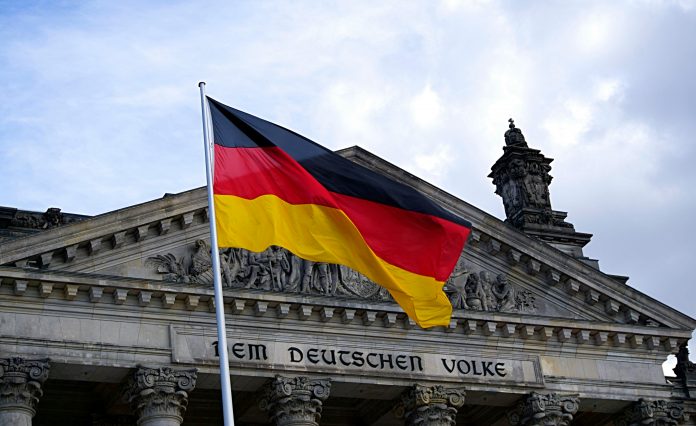
At the opening of the Hannover Messe trade fair on April 20, 2026, BDI President Peter Leibinger stated that the organization no longer expects any growth in industrial production for 2026. Instead, it anticipates stagnation at best or possibly a further contraction.

Earlier in the year, the BDI had forecast a slight improvement or modest growth of around 1% in industrial output. That has now been scrapped due to a weak start to 2026 and escalating external pressures. Leibinger noted: Industrial production in Germany has declined every year since 2022. For 2026, we no longer expect a recovery, but stagnation.

Capacity utilization in manufacturing remains low, at just over 78%. The downgrade highlights a combination of factors: Geopolitical tensions, particularly the ongoing conflict involving Iran, which is driving up energy costs, adding inflationary pressures, and risking disruptions to shipping and global supply chains through routes like the Strait of Hormuz.

A sluggish domestic start to the year, with industrial production already disappointing in early 2026. Broader structural challenges include; high energy prices, supply chain vulnerabilities, weak demand in key export markets, and long-standing domestic issues like bureaucracy, investment climate, and competitiveness. If shipping disruptions worsen, the manufacturing sector could see a fifth consecutive year of contraction.

This BDI revision aligns with other recent downward adjustments:Leading economic institutes slashed their joint GDP growth forecast for 2026 to just 0.6% from 1.3% previously, largely due to the energy shock from the Middle East conflict. The German government has also cut its official forecasts, expecting around 0.5% GDP growth for 2026 amid higher inflation risks.

Germany’s industrial sector; a cornerstone of its export-driven economy has been struggling since the energy crisis triggered by the 2022 Russia-Ukraine war, compounded by global slowdowns, competition from China and the US, and domestic factors like high labor costs and the shift to green energy.

The announcement at Hannover Messe — one of the world’s largest industrial trade fairs — underscores the pessimism among German manufacturers, who are key to Europe’s largest economy. It reflects ongoing concerns about deindustrialization risks if energy security, competitiveness, and geopolitical stability do not improve.

The BDI’s announcement of industrial stagnation in Germany for 2026 instead of the previously expected modest ~1% growth has notable ripple effects across the European economy, as Germany accounts for roughly 25-30% of eurozone GDP and serves as a central hub for manufacturing, supply chains, and intra-EU trade. Germany’s persistent weakness — now entering a potential fifth year of industrial contraction or flatlining — acts as a brake on the broader eurozone.

Recent forecasts reflect this: The IMF lowered its 2026 eurozone GDP growth projection to 1.1% from 1.4%, citing the Iran conflict’s energy shock and Germany’s outsized downgrade as the largest among major eurozone economies. S&P Global and other analysts now see eurozone growth at around 1.0-1.1% for 2026, down from prior expectations, with higher inflation around 2.4% due to elevated energy costs.

Germany’s own official and institute forecasts have been slashed pulling down the regional average. France, Italy, and others face secondary effects, though Spain and some eastern EU states may fare somewhat better due to domestic resilience or fiscal spillovers. Without a German recovery, eurozone momentum remains fragile, with services and consumption providing some offset but manufacturing especially autos, machinery, and chemicals staying subdued.

Germany is deeply integrated into European value chains: Many Central and Eastern European countries like Czechia, Slovakia, Hungary, Poland supply components for German cars, machinery, and industrial equipment. Stagnant German demand reduces orders, hurting their export-driven growth.

Intra-EU exports from Germany; a major market for neighbors are already softening, with recent data showing declines in shipments to other EU countries. Weaker German exports; hit by global slowdowns, competition from China, and past U.S. tariffs reduce overall EU external demand, while higher energy prices from Middle East disruptions raise costs bloc-wide.

Higher costs squeeze margins for energy-intensive industries across Europe not just Germany, potentially leading to further production cuts or delayed investments. The ECB faces a tougher balancing act: supporting growth while containing imported inflation, which could delay rate cuts or keep borrowing costs elevated for longer.

On the positive side, Germany’s ramp-up in public spending like infrastructure, defense, and subsidies is expected to add ~0.5 percentage points to its own GDP in 2026, with moderate positive effects spilling over to other EU countries — especially eastern member states via cross-border procurement and supply chains. However, this fiscal boost is partly offset by:Structural issues in Germany (high energy costs post-Russia-Ukraine war, bureaucracy, skills shortages, green transition challenges).

Weak external demand and competition from China in autos and machinery. Analysts describe Germany’s situation as sending ripples across the eurozone, dimming collective prospects and contributing to cautious financial markets. Prolonged German stagnation raises concerns about deindustrialization in Europe, with companies potentially relocating production outside the EU due to high costs and uncertainty.

This could erode the bloc’s industrial base, competitiveness, and ability to fund green and digital transitions. The BDI’s revised outlook reinforces a subdued 2026 for Europe: modest growth at best (~1%), higher inflation risks, and reliance on domestic consumption/fiscal measures rather than a strong export or industrial engine. Further escalation in the Middle East could worsen outcomes, while successful implementation of German public investments offers limited upside.

Policymakers in Brussels and national capitals are closely monitoring these developments, with focus on energy security, supply chain resilience, and competitiveness reforms. In short, this is another signal of the persistent headwinds facing German industry: a mix of external shocks like geopolitics and energy and internal weaknesses, making a quick recovery unlikely in 2026. Policymakers and businesses are watching global developments — especially in the Middle East — closely, as further escalation could worsen the outlook.

JPMorgan Extends $1.5tn Security Push to Europe as West Rethinks Supply Chains and Defense Capacity

0

JPMorgan Chase is expanding its $1.5 trillion Security and Resiliency Initiative (SRI) into Europe, signaling a deeper alignment between private capital and Western efforts to rebuild industrial capacity, secure supply chains, and respond to a more fragmented geopolitical environment.

Originally launched in the United States last October, the 10-year programme is designed to mobilize financing across sectors deemed critical to economic security. Its extension into Europe underlines a recognition that vulnerabilities in supply chains, energy systems, and advanced manufacturing are transatlantic rather than national in scope.

Chief executive Jamie Dimon framed the expansion as a strategic correction to years of underinvestment in domestic capability. The U.S. and Europe, he said, have relied excessively on “unpredictable sources for things like critical minerals that are essential to collective security and prosperity.”

“Now, it is in our best interest to address these challenges together — because our security, freedom and economic growth depend on it,” Dimon added.

The European rollout will focus initially on the U.K., France, Germany, Poland, and Italy, according to Chuka Umunna, who will lead the initiative in the U.K., but the strategy is intended to encompass all EU and NATO member states. That breadth points to a coordinated attempt to channel capital into areas where governments are simultaneously increasing spending, particularly defense, energy, and strategic technologies.

The SRI spans roughly 30 subsectors, from shipbuilding and aerospace to nuclear energy, semiconductors, cybersecurity, and artificial intelligence. The scope reflects a shift in how economic resilience is defined. It is no longer limited to traditional infrastructure but now includes digital systems, data security, and advanced manufacturing ecosystems.

The timing aligns with a structural change in Europe’s industrial policy. Defense spending has accelerated sharply, with governments responding to heightened security concerns and commitments within NATO. The Stoxx Europe Aerospace and Defense index surged 56.5% in 2025 and has continued to rise in 2026, driven by record order backlogs at companies such as Airbus, Rolls-Royce, and Rheinmetall.

JPMorgan’s initiative effectively positions the bank to intermediate a significant portion of the capital required to sustain that expansion.

However, the programme extends beyond defense into areas where the West faces structural dependencies. Energy is a central concern. Europe’s reliance on imported energy, highlighted by Umunna’s reference to the U.K. sourcing more than 40% of its needs externally, has exposed vulnerabilities to price shocks and geopolitical leverage. Similarly, semiconductor supply chains remain concentrated in East Asia, leaving Western economies exposed to disruption.

“These are all things we are going to need to scale up and build capacity in,” Umunna said. “We’re delivering this through the usual global banking products that we would use, but where you’ve got an SRI-aligned company, we will seek to lean in more.”

That approach signals a shift in risk tolerance. JPMorgan indicated it may extend credit to smaller or earlier-stage companies operating in strategic sectors, even where such lending would traditionally be constrained. This suggests the bank is willing to prioritize long-term strategic value alongside near-term financial returns, effectively internalizing some of the logic typically associated with state-led industrial policy.

“This is us putting our money where our mouth is, so to speak,” Umunna said. “Unless you start to invest and seek to develop our capabilities here in the West in these particular markets, we’re going to continue to have the exposure we have.”

The initiative also underpins a broader reordering of global capital flows. For decades, efficiency and cost optimization drove investment decisions, often favoring globalized supply chains anchored in lower-cost regions. The SRI indicates a pivot toward resilience, redundancy, and regionalization, even where these come at a higher cost.

Analysts believe the strategic rationale is, however, twofold for JPMorgan. First, the scale of the programme creates opportunities for lending, underwriting, and advisory services across a wide range of industries. Second, it embeds the bank within the policy frameworks shaping the next phase of industrial development, strengthening its role as a partner to governments and corporates navigating geopolitical risk.

But the initiative is believed to have the capability to accelerate the build-out of domestic capacity in Europe, particularly in sectors where public funding alone may be insufficient. The combination of government spending and private capital could compress timelines for projects in energy infrastructure, advanced manufacturing, and defense production.

There are, however, execution challenges. Scaling industrial capacity requires not just capital but regulatory alignment, skilled labor, and technological capability. The fragmentation of European markets and differing national policies could complicate deployment. There is also the risk that increased spending leads to inefficiencies or overcapacity if demand projections shift.

Even so, the direction of travel is clear. The expansion of the SRI into Europe is believed to be a reflection of a convergence of finance, policy, and geopolitics, where capital allocation is increasingly shaped by strategic considerations. In this environment, banks are no longer just intermediaries but active participants in redefining how economic resilience is built.

The initiative positions JPMorgan at the centre of that transition, with the scale to influence how and where capital is deployed, particularly as Western economies attempt to recalibrate their industrial base for a more uncertain global order.