DD
MM
YYYY

PAGES

DD
MM
YYYY

spot_img

PAGES

Home Blog Page 910

Investors Looking for 2025’s Best Crypto Meme Coin Eye Neo Pepe ($NEOP) After Presale Reaches $2M Milestone

0

Market Shock Waves Ripple through Crypto Elite

In recent weeks, crypto maximalists and blockchain veterans have shifted their focus toward a fresh yet formidable contender—Neo Pepe Coin ($NEOP). This sudden interest stems partly from its structured presale model and partly from its robust on-chain infrastructure. Recently surpassing $2 million raised, Neo Pepe is approaching Stage 4 of its 16-stage presale, a critical moment set to push token prices from approximately $0.07 to $0.08.

Whale wallets, traditionally bullish on long-term utility plays, are now stacking $NEOP tokens in anticipation. A major draw is its innovative auto-liquidity mechanic, converting 2.5% of every transaction into permanently burned liquidity on Uniswap—appealing strongly to DeFi purists.

Governance & Transparency

True to the ethos of serious crypto projects, Neo Pepe employs a decentralized autonomous organization (DAO) powered by immutable smart contracts. Governance—including token burns and treasury oversight—is transparent and community-driven, with time-locked voting mechanisms requiring a 5% quorum, 1-day action delay, and 7-day vote window. A recent CertiK audit awarded Neo Pepe a score of 71.96, highlighting its smart contract integrity.

Shifting Gears with Meme Innovation & DeFi Discipline

Structured Presale Phenomenon

Neo Pepe’s meticulously planned presale offers gradual price escalation, incentivizing early adopters with the lowest prices. Currently approaching Stage 4, the token price is nearly at $0.08, creating urgency among potential investors. This intelligent distribution model cultivates scarcity and predictable value appreciation, positioning Neo Pepe as a top contender for the best crypto presale of 2025.

Community & Influencer Buzz

Prominent crypto influencer Crypto Selin recently spotlighted Neo Pepe’s presale structure and DAO governance, fueling investor interest and amplifying the project’s reputation among potential buyers. Centralized exchanges like Binance and decentralized exchanges like Uniswap are closely monitoring developments, anticipating future listings.

In addition Crypto influencer BITGIRL CRYPTO notably recognized $NEOP this week, highlighting its DAO-led decision-making and multi-chain wallet support. She commented, “You might want to get a little Neo Pepe” while previewing Stage 4, where token prices are expected to rise from roughly $0.07 to $0.08.

Top 5 Crypto Presales of 2025

  1. Neo Pepe Coin ($NEOP) – Positioned as the leading presale, Neo Pepe combines meme culture with DeFi discipline, community governance, and auto-liquidity mechanics, drawing significant investor and influencer interest.
  2. Bitcoin Bull ($BTCBULL) – Aimed at Bitcoin maximalists, Bitcoin Bull offers tokenized leverage on Bitcoin’s price movements, providing high-risk, high-reward potential with structured risk management protocols.
  3. BlockDAG – Focusing on scalable blockchain infrastructure, BlockDAG aims to solve network congestion issues through innovative Directed Acyclic Graph (DAG) technology, making it appealing for tech-savvy investors.
  4. Kaanch ($KNCH) – Dedicated to enhancing NFT marketplaces with AI-driven authentication and fraud detection mechanisms, Kaanch stands out due to its sophisticated tech stack and market niche.
  5. Solaxy ($SOLX) – Designed as a next-gen DeFi ecosystem for the Solana blockchain, Solaxy attracts users with its high-speed transaction processing and comprehensive DeFi services, creating significant ecosystem utility.

Digging Deeper into Neo Pepe Coin’s Launchpad

Tokenomics Built for Longevity

Neo Pepe’s capped supply of 1 billion $NEOP tokens rewards presale participants with a significant 45% allocation, emphasizing early backer incentives. Further token distributions support development, marketing, liquidity, ecosystem incentives, and community giveaways. The built-in auto-liquidity mechanism guarantees continuous price stability through the permanent burning of Uniswap LP tokens.

Launch Prep & Exchange Strategy

Neo Pepe’s roadmap includes phased token unlocks, strategic liquidity baselines, and governance voting interfaces. Upcoming exchange listings, driven by community votes, highlight the project’s commitment to user-first philosophies, paving the way for robust market entry.

Cross-border accessibility is another asset: users can participate in the presale with ETH, USDT, USDC, or BNB across Ethereum, Binance Smart Chain, and Base—broadening its appeal across wallets and demographics. With centralized platforms like Binance and decentralized exchanges like Uniswap reportedly on watch, Neo Pepe is laying foundations for a diverse listing strategy.

Farming Hype with Memetic Culture

Neo Pepe uniquely blends playful meme culture with disciplined DeFi governance, captivating both entertainment-focused investors and serious crypto enthusiasts. As whispers circulate among crypto communities, it might be time to consider getting a little Neo Pepe.

While the broader crypto community celebrates deep development on chains like Solana, Neo Pepe carves a unique niche by merging meme culture with rigorous tokenomics. A clear memecoin storyline (“Memetrix”) wrapped around rock-solid infrastructure is gaining momentum among both meme traders and DeFi traditionalists—another reason pundits are dubbing it among the best pepe coins of the year.

Neo Pepe Coin Presale Hits Critical Inflection

Structured Stages Driving Scarcity & Momentum

Participants have already propelled the presale past $2 million, pushing toward Stage 4, which remains just out of reach. At current pricing (~$0.07), switching to Stage 4 will increment to about $0.08—prompting a ticking clock for early movers.

BITGIRL CRYPTO Examines Neo Pepe’s Unique Presale Strategy Closely

Crypto commentator BITGIRL CRYPTO recently delivered an articulate assessment of Neo Pepe Coin’s presale, thoroughly exploring its distinctive token distribution model, forward-looking liquidity structure, and participatory governance approach. With clear, detailed insights, their coverage explains precisely why Neo Pepe is swiftly capturing investor interest and setting itself apart as a noteworthy presence in today’s crypto ecosystem.

Bottom Line: Memetic Culture with DeFi Discipline

Neo Pepe Coin represents a distinctive combination: meme-fueled narrative, certified code security, scalable governance, and methodical liquidity engineering. With its presale nearing Stage 4, the token at ~$0.07 awaits the price bump to ~$0.08. For investors tracking best pepe coin contenders or searching for the best crypto presale, now is a pivotal window.

Get Started with $NEOP
  • Website: Neo Pepe Coin Official
  • Whitepaper: Neo Pepe Coin Whitepaper
  • Telegram: Neo Pepe Coin Telegram
  • Twitter/X: Neo Pepe Coin Twitter

DeepSeek AI, Grok 3 and ChatGPT All Believe Remittix Is The Next XRP and Will Flip Cardano In 2025

0

DeepSeek AI, Grok 3 and even ChatGPT’s own forecasting engine were asked a simple question: Which token has the best chance of eclipsing Cardano’s market cap in the next bull run? All three pointed to Remittix (RTX) a payments-focused newcomer currently priced at $0.0811.

Their verdict is bold: by 2025, RTX could carve out a niche so large it “flips” Cardano and challenges XRP’s dominance in cross-border settlements. With more than $16 million already committed in its ongoing Sprint to $18 M funding push, the stage is set for a true clash of old leadership versus fresh design.

Cardano’s Steady Climb

Source: tradingview.

There’s no denying Cardano’s progress. The upcoming Leios upgrade aims for 1,500 transactions per second, backed by 259 weekly GitHub commits and a record 138,996 Plutus scripts. Meanwhile, the chain just logged its 111 millionth transaction and now boasts 1.33 million delegated wallets.

Recent partnerships with Brave Browser broaden ADA’s reach beyond die-hard community members. If Cardano maintains its pace of feature rollouts and continues to attract developers, a move toward $5 is still very much alive.

Why AI Favors Remittix

The language models didn’t base their prediction on hype or influencer chatter; they cited three measurable edges:

  1. Each PayFi transaction permanently burns a fraction of RTX. Simulations show that if daily volume reaches just 0.1 percent of global remittances, circulating supply could shrink by roughly 12 percent in a single year, something no large-cap competitor can match.
  2. Where Cardano’s planned throughput is impressive, Remittix uses adaptive “firehose” channels that sidestep on-chain congestion altogether, achieving near-instant cash delivery. AI evaluators considered this advantage critical in an age where users want real-time banking experiences.
  3. aThe project ships with pre-built merchant modules. A Shopify store owner can add PayFi checkout in under ten minutes, immediately accepting multiple coins and receiving local currency without ever touching an exchange interface.

Fresh Capital, Fresh Reach

RTX tokens are moving fast: 549 million have been sold, leaving a narrow window before the soft-cap closes. Early supporters still collect a small bonus allocation and management has earmarked much of the new capital for expanding settlement corridors into Africa and the Gulf region, both hotspots for remittance outflows. These corridors will join Southeast Asia and Latin America, which are already in late-stage testing.

2025 Showdown in Payments

Cardano’s Leios upgrade will likely push ADA into a higher league of throughput, securing its relevance in DeFi and enterprise deployments. Yet Remittix addresses something humbler and broader: everyday money movement. If PayFi’s roll-out matches internal benchmarks and corridor expansion keeps pace, RTX could offer both deflationary supply and real-world utility that even high-TPS smart-contract chains struggle to rival.

AI models rarely converge on the same dark-horse pick, but all three named Remittix as the token most likely to leapfrog established giants in the next cycle. Whether Cardano can keep its lead or RTX will, in fact, steal XRP’s thunder remains to be seen but one thing is clear: 2025 is shaping up to be a showdown between proven platforms and nimble newcomers built for speed.

Discover the future of PayFi with Remittix by checking out their presale here:

Website: https://remittix.io/

Socials: https://linktr.ee/remittix

US Court Strikes Down FTC’s ‘Click-to-Cancel’ Rule, Slamming Biden-Era Process as Flawed

0

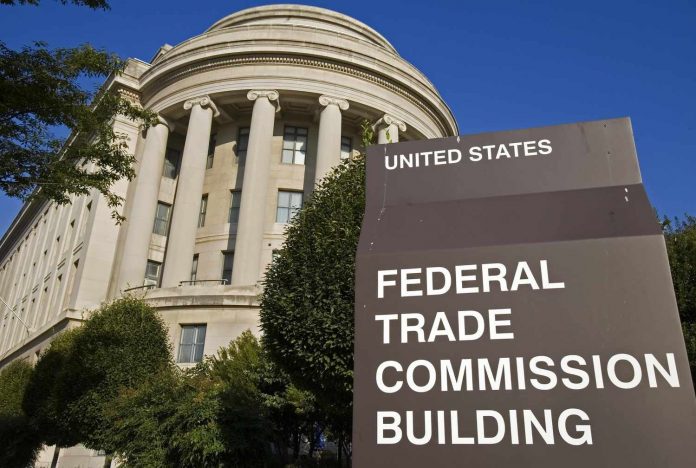
A federal appeals court on Tuesday invalidated the Federal Trade Commission’s (FTC) much-anticipated “click-to-cancel” rule, which aimed to make it easier for Americans to cancel subscriptions.

The rule, which was scheduled to take effect on July 14, was struck down unanimously by a three-judge panel of the US Court of Appeals for the 8th Circuit.

The ruling marks a major setback for the Biden-era FTC under former Chair Lina Khan, who championed the regulation to curb deceptive subscription practices. The judges said the FTC failed to follow critical rulemaking procedures required under US law — specifically, its omission of a preliminary regulatory analysis despite clear indications the rule would have a significant economic impact.

“While we certainly do not endorse the use of unfair and deceptive practices in negative option marketing, the procedural deficiencies of the Commission’s rulemaking process are fatal here,” the judges wrote.

The Rule and Its Intent

The rule was intended to strengthen the FTC’s 1973 Negative Option Rule by requiring that companies make cancelling subscriptions as simple as signing up. It also barred companies from misleading consumers and demanded clearer disclosure of recurring charges and terms. The FTC cited the widespread problem of consumers unknowingly enrolled in auto-renewing subscriptions — from gym memberships to cable TV to streaming services — which they later found difficult to cancel.

Former FTC Chair Lina Khan argued the rule would have eliminated “tricks and traps” used by companies to keep consumers paying for services they no longer wanted.

“Nobody should be stuck paying for a service they no longer want,” Khan said at the time.

Judges Say FTC Skipped Key Step

However, the court found that the FTC sidestepped a crucial procedural requirement by failing to conduct a preliminary regulatory analysis — a step required when a rule is projected to cost more than $100 million annually.

Initially, the FTC had claimed in its Notice of Proposed Rulemaking (NPRM) that the rule wouldn’t meet that threshold. But an administrative law judge later determined that compliance costs would indeed exceed $100 million — unless every business involved spent less than 23 hours on professional services to meet the rule’s requirements.

Despite this, the FTC went ahead without revising its estimate or conducting the required preliminary analysis. Instead, it only issued a final regulatory analysis — too late, the judges said, for businesses and industry groups to challenge or comment meaningfully on the rule’s economic implications.

“By the time the final regulatory analysis was issued, Petitioners still did not have the opportunity to assess the Commission’s cost-benefit analysis of alternatives,” the court said, noting that the FTC’s discussion of alternatives was “perfunctory.”

The now-vacated rule faced pushback from industry groups — including cable and streaming companies — which filed lawsuits across four federal circuit courts. The cases were consolidated at the 8th Circuit, where the panel comprised Judges James Loken (appointed by George H.W. Bush), Ralph Erickson, and Jonathan Kobes (both Trump appointees).

The court warned that the FTC’s actions — if left unchallenged — could set a dangerous precedent for future rulemakings.

“Furnishing an initially unrealistically low estimate of the economic impacts of a proposed rule would avail the Commission of a procedural shortcut that limits the need for additional public engagement,” the judges said.

The 2024 rule passed narrowly in a 3-2 vote, with Republican Commissioners Melissa Holyoak and Andrew Ferguson (now the FTC chairman) opposing it. Holyoak had predicted legal trouble ahead, accusing Khan’s FTC of rushing the rule through ahead of the 2024 election.

“[It] is nothing more than a back-door effort at obtaining civil penalties in any industry where negative option is a method to secure payment,” Holyoak argued.

Consumer Impact

Though the court acknowledged the real harm to consumers from hard-to-cancel services, the decision is believed to have left consumers at the mercy of service providers.

The FTC may choose to revise and reintroduce the rule under the current Republican-led leadership, though it is unclear whether any such effort will reflect the consumer-first orientation of Khan’s tenure.

For now, businesses employing negative option marketing — where subscriptions automatically renew unless cancelled — won’t be federally required to implement one-click cancellation mechanisms. That leaves consumers facing the same cancellation hurdles the FTC had sought to remove, at least until new rulemaking or legislative efforts take shape.

Nigerian Influencers: On the Cosmopolitan Aspirations

0

While much of the country’s political conversation remains focused on ethnic allegiance and regional power dynamics, a rising number of influential voices are championing what can be described as cosmopolitan aspirations. This orientation emphasizes global citizenship, universal values, and engagement with international standards of leadership, culture, and development.

Cosmopolitanism in this context is not about abandoning cultural heritage or favoring foreign models over local realities. Instead, it is a conscious effort to imagine Nigeria as part of a wider human community. These influencers are not rejecting their roots; they are projecting their values and experiences onto a global stage, seeking to elevate conversations about governance, inclusion, and justice.

One of the most prominent examples of this worldview is former presidential candidate Peter Obi. His tributes to the late Pope Francis were not simply religious expressions. Rather, they reflected a broader philosophy rooted in humility, service to the vulnerable, and moral accountability in public life. Obi praised Pope Francis as a figure who lived for others, defended the dignity of the poor, and led with grace. In doing so, Obi connected Nigeria’s leadership crisis with the global need for ethical governance.

Governor Babajide Sanwo-Olu offers another version of cosmopolitanism, framed through urban development. During his presentation at Harvard Business School, he spoke about Lagos as a city poised to become a global economic and innovation hub. He emphasized infrastructure, climate action, and public-private partnerships as key drivers of growth. His message was not merely about Lagos; it was about how African cities can rise to meet global expectations through planning, resilience, and vision.

These examples show that Nigerian influencers are not waiting for the world to notice them. They are actively inserting themselves into global dialogues and shaping narratives around leadership, justice, and progress. Their aspiration is not just to be part of the global system, but to redefine it from within.

At the same time, this cosmopolitan posture often draws criticism. Skeptics accuse cosmopolitan thinkers of being disconnected from local realities or of aligning too closely with Western interests. There is fear that such global-mindedness erodes traditional values or invites foreign control. In a society where national pride and cultural loyalty are strong, cosmopolitanism is sometimes seen as elitist or unpatriotic.

However, these criticisms ignore an essential point. Cosmopolitanism is not a rejection of the local. It is a commitment to seeing the local through a broader lens. When Peter Obi donates to a Catholic orphanage in Anambra or supports a rural hospital in Ogbaru, he is not turning away from his roots. He is investing in his community with the same values that guide his global vision. When Sanwo-Olu presents Lagos as a model for African development, he is placing local ambition in a global context. When Ayo Sogunro defends human dignity, he is speaking on behalf of Nigerians who are too often excluded from national conversations.

Cosmopolitan aspiration, in this sense, is about creating a bridge between Nigeria and the world. It invites Nigerians to take pride in their identity while embracing ideas that can improve governance, protect rights, and expand opportunities. It also insists that Nigerian experiences and voices belong in international forums and debates.

To make this vision more inclusive, there is a need to expand access to civic education, digital tools, and leadership training. Cosmopolitan values should not remain the preserve of the elite. They must be translated into policies and programs that empower young people, strengthen institutions, and build trust in public life.

Ultimately, what Nigerian influencers are offering through their cosmopolitan vision is a reimagined future. They believe that a new Nigeria is not only possible, but achievable by aligning national development with global responsibility. Their messages challenge the country to look beyond the limits of its politics and to engage with the world as equal participants in shaping its future.

Editor’s Note: This article is a product of Infoprations’ Communicative Strategies of Nigerian Influencers Project, 2025. The team includes Abdulazeez Sikiru Zikirullah, Moshood Sodiq Opeyemi, Bello Opeyemi Zakariyha, and Oni Oluwaseun.

France’s Mistral Eyes $1bn Raise in Bold Push to Cement European AI Leadership

0

French artificial intelligence startup Mistral is in advanced talks to raise up to $1 billion in equity, led by Abu Dhabi’s MGX fund, Bloomberg reports, citing sources familiar with the matter.

The ambitious fundraising is part of a broader capital push that includes discussions with Bpifrance SACA and other French lenders to secure several hundred million euros in debt.

The move signals a strategic acceleration for Mistral, one of Europe’s most promising AI companies, as it seeks to establish itself as a global force capable of challenging the dominance of American players like OpenAI, Anthropic, and Google DeepMind. Founded in 2023 by former Meta and DeepMind researchers, the Paris-based firm has quickly grown into a cornerstone of France’s sovereign AI strategy.

Mistral has already raised over $1.19 billion, achieving a $6.5 billion valuation following its Series B in June 2024. The company focuses on open-weight large language models (LLMs) — AI models that are accessible and modifiable by developers, offering transparency and adaptability. Its flagship product, the Le Chat chatbot, is widely seen as Europe’s response to ChatGPT.

Unlike its U.S. counterparts that mostly operate as closed platforms, Mistral’s approach to openness has drawn support from European enterprises and governments seeking alternatives to U.S.-controlled AI. Clients include BNP Paribas, AXA, Stellantis, and Veolia, with some reportedly signing contracts worth more than $100 million.

Infrastructure Expansion: Europe’s Largest AI Campus

Beyond software, Mistral is part of a landmark venture with MGX, Bpifrance, and Nvidia to build Europe’s largest AI data center campus near Paris. The massive facility will house thousands of Nvidia’s Blackwell chips—considered the gold standard for AI training—and is expected to scale up to 1.4 gigawatts of power capacity by 2028.

The facility is designed to function as Europe’s core AI compute hub, a critical asset as the region races to build independent capacity in response to fears of over-reliance on U.S.-based infrastructure like Microsoft Azure or Google Cloud. The French government, led by President Emmanuel Macron, has thrown its full weight behind the initiative as part of the France 2030 plan, which earmarks over €100 billion for AI and digital sovereignty.

France’s close alignment with the UAE on AI development has also deepened. The Emirati government has committed to investing €50 billion in AI infrastructure and ventures across France, including direct support for Mistral. The investment reflects growing geopolitical cooperation in AI between Europe and the Gulf — a move meant to counterbalance China and the U.S. in the emerging tech race.

This collaboration has also helped Mistral emerge as a key beneficiary of the UAE’s $100 billion MGX fund, created to make the Emirates a global AI leader. The fund has made Europe a focus, particularly France, thanks to its pro-innovation regulation and deep scientific talent pool.

Mistral’s rise is not just a success story for European tech; it’s a pivotal moment in the global AI power struggle. The EU has repeatedly raised concerns about being left behind as U.S. firms dominate the AI race. Nvidia CEO Jensen Huang, speaking at Paris’ VivaTech conference, strongly endorsed the need for “sovereign AI” — AI infrastructure controlled and owned locally — calling it essential for cultural autonomy and industrial competitiveness.

Mistral embodies that vision. With robust public and private backing, technical credibility, and a clear strategic mission, the company is one of the few European firms with a real chance of shaping the global AI narrative.

If successful, the fresh capital injection will fuel:

  • Expansion of R&D to improve its open-weight models.
  • Hiring and infrastructure scale-up.
  • Acceleration of its European AI campus project.
  • Commercial rollout across new verticals, including government, healthcare, and automotive.

The company’s growth also sends a message to other AI hopefuls in Europe that sovereign innovation is not only possible but fundable — provided there’s scale, clarity of vision, and alignment with national strategic priorities.

For Mistral, this is more than a funding round. It’s a shot at building Europe’s first truly global AI company, and potentially the strongest non-U.S. counterweight in the generative AI space to date.