DD
MM
YYYY

PAGES

DD
MM
YYYY

spot_img

PAGES

Home Blog Page 911

New Meme Coin TOKEN6900 (T6900) Raises $250k In Viral ICO

0

A new trend is going viral in the meme coin space.

Unapologetically utility-less meme tokens are in high demand, as indicated by the recent success of Fartcoin, SPX6900 and particularly, the Useless Coin.

Now, a new meme coin, TOKEN6900 (T6900), is picking up the torch and showing strong early momentum in its presale. The next step in the evolution of SPX6900, T6900 has raised $250k in just a few days of its viral ICO.

Prominent analysts and whales are already beginning to take note, with many calling it the next 100x crypto. Turns out, being the most brain-rot crypto is actually the winning formula.

TOKEN6900 – A New Meme Coin With The Most Brain Rot

TOKEN6900 is a new-gen meme coin, one that isn’t interested in hiding behind the veneer of utility. No AI, no paying attention to the macroeconomic conditions. The project revolves around one thing alone: unwavering devotion to the number 6900.

The project’s whitepaper unapologetically admits, “It’s Above Everything. It Doesn’t Track GDP, Oil Reserves, Or Corporate Earnings. It Tracks Vibe Liquidity.”

Much like SPX6900, TOKEN6900 is fueled by the same anti-Wall Street spirit, meme-fueled delusion and the collective hallucination of terminally online traders.

Just like SPX is delusionally aiming to flip the overall market capitalization of the S&P 500, T6900 is vying to become the new global benchmark for brain rot finance.

Despite the obvious delusion, this ploy of being unapologetically utility-less has been extremely successful as of late.

Fartcoin’s success confirms what Dogecoin and Pepe proponents already knew – utility, AI, and fundamentals play little role when it comes to making it big in the meme coin sector.

Fartcoin hit a $2.7 billion all-time high, largely because it was funny and because its success irritated serious-minded Wall Street purists.

Similarly, take the recent viral Useless Coin. Its core principle is in its name – it is another meme coin that doesn’t try to sell investors on utility and admits to being useless. Unsurprisingly, it has seen remarkable success, rallying by nearly 6000% since its June lows and reaching a peak valuation of $300 million.

It is, therefore, no surprise that TOKEN6900 is creating a strong buzz among meme coin investors, especially among those who missed out on USELESS. Even those who got in early and secured attractive returns from it are likely to jump on another new meme coin with similar, yet unique, selling points.

Could T6900 Be The Next 10x Crypto?

The TOKEN6900 presale launch has received an enthusiastic response. The viral ICO has already raised $250k in just a few days, signalling strong community support and high upside potential.

Crucially, the T6900 developer team isn’t interested in a long, drawn-out ICO. It believes that a new meme coin should hit the open market at a low market capitalization. As a result, the TOKEN6900 presale has a $5 million hard cap.

This suggests that presale buyers could be in for substantial gains. If T6900 manages to replicate even half of Useless Coin’s performance, late-stage participants could still see up to 30x returns. Early buyers, naturally, stand to gain much more if the momentum holds.

Notably, USELESS itself could hit a billion-dollar valuation in the coming weeks.

Meanwhile, early T6900 buyers can also benefit from the project’s staking system, which is designed to reward first movers. Although staking will remain active for a full year after the token generation event (TGE), the highest APY is reserved for those who stake early. Currently, the annual yield stands at 189%.

Unsurprisingly, many smart money investors are among the early T6900 buyers, with many among them eyeing up to 100x returns from it.

Interested buyers can use the OTC widget on the presale website or through the Best Wallet app. They can check out the project’s X and Instagram accounts as well.

Visit TOKEN6900 Presale

Bessent Says U.S. Tariff Revenue Could Hit $300bn by End of 2025, But Economists Warn of Rising Costs and Inflation

0

The United States has collected nearly $100 billion in tariff revenue so far in 2025, and that figure could triple to $300 billion by the end of the year, according to Treasury Secretary Scott Bessent.

Speaking during a White House cabinet meeting on Tuesday, Bessent said the steep uptick in revenue began in the second quarter following President Donald Trump’s implementation of a near-universal 10% duty on all U.S. imports, alongside increased tariffs on steel, aluminum, autos, and other key goods.

“So we could expect that that could be well over $300 billion by the end of the year,” Bessent said, referring to the calendar year ending December 31, 2025. He added that the Congressional Budget Office’s long-term forecast of $2.8 trillion in tariff income over the next decade was likely an underestimation, as collections continue to accelerate.

The Treasury’s internal figures show that the administration collected a record $22.8 billion in gross customs duties in May alone — nearly four times the $6.2 billion collected in the same month last year. This brought total collections to $86.1 billion for the first eight months of fiscal 2025 and $63.4 billion for the first five months of the calendar year. By June 30, combined customs and excise tax collections had already topped $122 billion, with more increases expected in the Treasury’s next budget report due Friday.

Trump’s sweeping tariff plan — which includes a 50% tariff on copper imports and expected duties on semiconductors and pharmaceuticals — is the most aggressive trade policy seen in recent U.S. history. He said the “big money” will begin flowing from August 1, when higher reciprocal tariffs will take effect across nearly all trading partners. Trump hinted that countries could still negotiate for lower tariffs, but said letters had already gone out to key nations, signaling the start of a new phase in his protectionist trade campaign.

But while the Trump administration hails the ballooning tariff revenues as a success, economists and business leaders remain skeptical of its long-term benefits. Many argue the tariffs are already beginning to backfire — stoking inflation, disrupting supply chains, and burdening American businesses and consumers with higher prices.

“Copper prices soared by 10% today, hitting an all-time record high, following Trump’s statement that he will impose a 50% tariff on imports,” said Peter Schiff, Chief Economist and Global Strategist at Euro Pacific. “If this is the case, American businesses will pay a lot more than 10% extra to buy copper, raising prices for all products that use copper.”

Copper is a critical industrial metal, used in housing, electronics, electric vehicles, renewable energy grids, and defense equipment. Analysts warn that the cost increase will ripple through the economy, pushing up prices on consumer goods, industrial inputs, and key infrastructure projects.

Schiff, a long-time critic of protectionist policies, also warned that the latest round of tariffs — including the additional 25% duties on imports from South Korea and Japan — will significantly raise the cost of living for ordinary Americans.

“As I warned, Trump just imposed an additional 25% tariff on imports from South Korea and Japan,” Schiff said. “As I also guessed early on, all the talk of nations begging Trump for trade deals was BS. Consumers need to brace for much higher prices and get used to higher interest rates.”

The criticism highlights a growing divide between the White House’s portrayal of tariff policy as a fiscal win and the concerns of market economists who say the short-term revenue boost masks deeper structural problems. Several industries, particularly in manufacturing and construction, have voiced concern over rising input costs, delayed imports, and unstable pricing.

Business lobby groups are also beginning to push back, warning that the August 1 tariff escalation could trigger retaliatory measures from trading partners, harm export prospects, and chill investor confidence.

Still, the Trump administration remains defiant, reiterating that the U.S. will no longer let other countries take advantage of American workers and producers. This reinforces Trump’s belief that the tariffs will ultimately restore balance to U.S. trade and fuel domestic production.

However, with U.S. inflation still uncomfortably high and interest rates lingering at elevated levels, analysts worry that the added costs from the tariff wave could complicate monetary policy and deepen voter unease heading into an election year.


Beyond Airlines Like Enugu Air, Southeast Needs Rail Tracks To Advance

0

Nigeria enters the era of state-backed airlines: “Enugu State has joined the exclusive club of Nigerian states running their own commercial airlines, following the official launch of Enugu Air on Monday. The new carrier becomes another state-backed aviation venture in the country, after similar initiatives in Imo, Akwa Ibom, and Cross River states.”

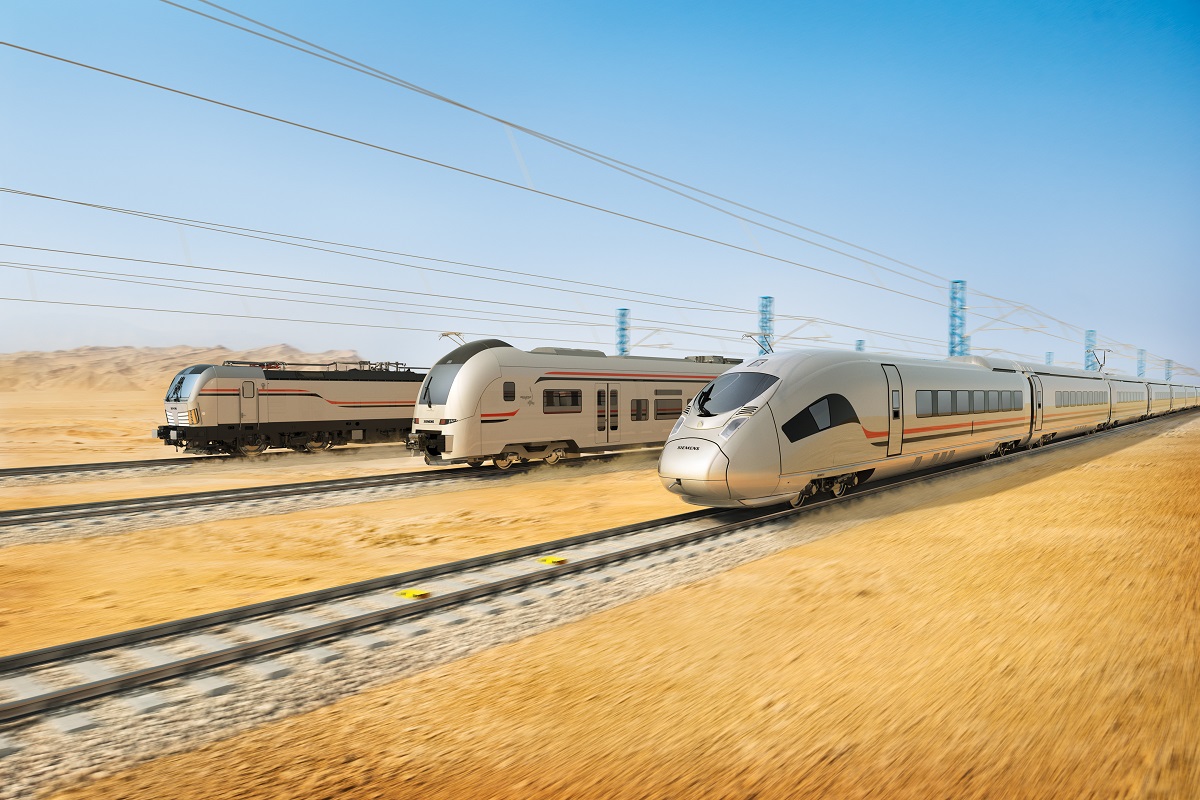
I want to wish Enugu the best of luck with this. Yet, my preference remains rail tracks to connect communities. The “main street” Nigerians do not fly; they move, and until we give them rail tracks, nothing much will happen. We can have airlines and airports, but we need train stations and tracks.

I call regional governors to come together and pull resources to have railway systems understanding that railways must not be designed to be profitable. Indeed, if we have a functional market system, we can tax the economic activities and cover losses from rail tracks. In other words, if Southeast Railways loses N0.5 billion but expands the economy by N200b, and when you tax that expansion, you can recover N2b which does imply, you are doing great. (Check Amtrak USA, which is yet to make any profit since 1971).

Enugu, Abia, Anambra, Ebonyi, and Imo: we need a regional railway system. But since no one has the capital to do this alone, we need all to come together.  We want the trains even as we celebrate Enugu Air.

Enugu Air Takes Off: State Joins Aviation Industry Amid Questions Over Strategy and Ownership

Enugu Air Takes Off: State Joins Aviation Industry Amid Questions Over Strategy and Ownership

0

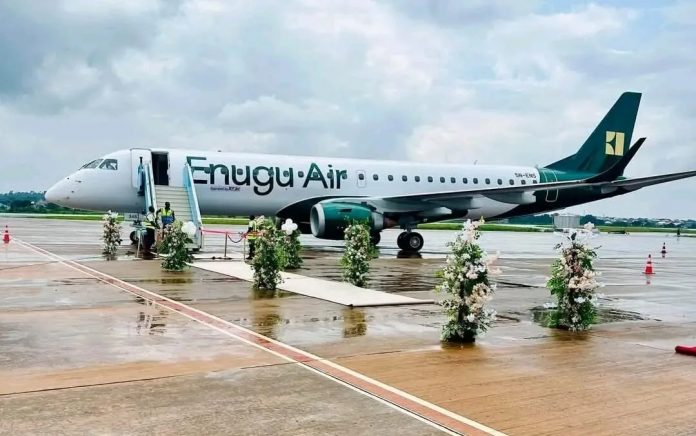
Enugu State has joined the exclusive club of Nigerian states running their own commercial airlines, following the official launch of Enugu Air on Monday. The new carrier becomes another state-backed aviation venture in the country, after similar initiatives in Imo, Akwa Ibom, and Cross River states.

The airline’s inaugural flight — a symbolic journey from Lagos — landed at the newly upgraded international wing of Akanu Ibiam International Airport, Enugu, marking what Governor Peter Mbah described as a historic moment.

Piloted by Enugu-born Captain Kelechi Ossai, the aircraft is one of three Embraer jets that make up the airline’s initial fleet.

Governor Mbah emphasized that the project is fully owned by the Enugu State government and is meant to serve students, traders, investors, and everyday travelers. He described it as a key part of his administration’s broader economic transformation agenda, aimed at turning Enugu into a premier destination for investment, tourism, and quality living.

“Enugu Air is a triumph of vision, a testament to Nigeria’s immense aviation potential and economic renaissance. It was established to create jobs and career paths for our young people; faster and more reliable access to markets, clients, and capital for businesspeople; simpler and more dignified access to home for the diaspora; and a ready gateway to collaboration and opportunity for investors interested in Enugu,” the governor said.

The launch ceremony drew top dignitaries, including Nigeria’s Aviation Minister Festus Keyamo, who pledged federal support for the initiative. He revealed that approvals for regional routes were underway and defended the federal government’s controversial decision to concession the Akanu Ibiam Airport, calling it a necessary reform.

Governor Mbah said Enugu Air would initially operate a triangular route linking Enugu, Abuja, and Lagos, with plans to extend to other major cities including Port Harcourt, Owerri, Benin, and Kano, before eventually branching into international destinations.

“This airline is a gift to the people of Enugu,” Mbah declared. “It is built to drive commerce, mobility, and investment. It reflects our administration’s vision of a thriving, connected, and globally competitive state.”

The airline is launching at a time when Nigeria’s aviation industry is seeing increased demand but also faces recurring challenges around safety, regulation, and operational sustainability.

FIJ Investigation Reveals Operational Gap

Despite the high-profile unveiling, a report by the Foundation for Investigative Journalism (FIJ) uncovered that Enugu Air currently lacks independent infrastructure for bookings or operational autonomy. When potential customers attempt to book a flight, they are redirected to the website of XEJet, a Lagos-based premium-class airline. A prompt on the site reads: “This flight is operated by XEJet and you would be redirected to the XEJet website to complete your booking.”

This has raised concerns that Enugu Air may, for now, be a rebranded partnership, rather than an operational airline with its own Air Operator Certificate (AOC) — a regulatory requirement for full-fledged flight operations.

Echoes of Nigeria Air

The situation has drawn unfavorable comparisons to the now-infamous Nigeria Air, a national carrier that was dramatically unveiled by the federal government in 2023. Then Aviation Minister Hadi Sirika paraded an aircraft in national colours and held a lavish unveiling ceremony—only for it to be revealed later that the plane was borrowed from Ethiopian Airlines for the event.

The airline lacked an operational license and had no real structure to begin flights. After public outrage and a barrage of legal and regulatory issues, Nigeria Air never took off, becoming one of the most ridiculed aviation projects in the country’s history.

A Familiar Playbook: Imo and Cross River’s Precedents

Enugu Air’s current arrangement draws parallels to previous state-run airline experiments that failed to take off sustainably.

In 2017, Imo State’s former governor Rochas Okorocha launched Imo Air, claiming the state had acquired five aircraft and was partnering with Dana Air to run them for 10 years, since the state lacked a license. The airline’s operations quietly faded within a year, with no significant follow-up from the government.

Similarly, in July 2021, former Cross River governor Ben Ayade launched Cally Air, operating through Aero Contractors. While Ayade said the airline was fully owned by the state with no loans taken, there were never clear operational guidelines or financial disclosures. Cally Air quickly faded from the aviation radar, its planes reportedly absorbed into Aero’s broader operations.

Enthusiasm Meets Skepticism

Although Governor Mbah insists Enugu Air is built for long-term value, Nigerians are skeptical. Some note that reliance on existing operators, and a lack of independent booking systems are red flags that have plagued similar ventures in the past.

“In 2025, a state govt. in Nigeria launches a 3rd party airline where the state acts as an affiliate marketer, then goes around to throw a ceremony and party at the airport for the same affiliate marketing project …  indeed “Europe Underdeveloped Africa,” Chris Ani, a social media user, posted.

Others also question whether the state has provided enough transparency around the financial and legal arrangements with XEJet — including how much public funds have been committed, whether the aircraft are leased or state-owned, and the duration and terms of the partnership.

Nevertheless, Enugu’s move underscores a growing interest by subnational governments in air transportation as a tool for economic development — particularly in regions underserved by Nigeria’s limited airline options. This is as experts call on the federal and state governments to focus on rail transport, providing an affordable alternative to road transportation.

2025’s Top New Slot Hits for Aussie Casinos

0

Australian casinos are undergoing a high-stakes upgrade as 2025 brings a wave of next-generation slot titles. As detailed in the latest analysis from online-pokies-real-money-australia.com, online pokies are rapidly evolving into sophisticated digital experiences with cinematic visuals, complex mechanics, and multi-level bonus engines.

These changes aren’t isolated — major venues such as PlayAmo Casino, WooCasino, and Ricky Casino are expanding their slot line-ups, reflecting a national trend toward gamified gambling entertainment.

Slot Mechanics — Complexity Drives Engagement

What kicked off as a simple pull of a lever has now turned into something closer to an interactive puzzle. The latest slots dropping in 2025 aren’t just about spinning reels — they’re packed with cascading wins, fat progressive jackpots, cluster-style payouts, and full-blown storylines that shift as you play. It’s less one-arm bandit, more full-on digital adventure.

Developers are catering to a generation raised on mobile and console gaming, integrating:

  • progression systems
  • character arcs
  • unlockable content

This shift in Aussie online pokies lines up with the growing appetite for more immersive play and a bit of skill in the mix — all while sticking to the rulebook. We’re seeing bonus rounds that jump between screens and even in-game buys using virtual credits popping up in demo mode. And this isn’t just talk — the newest slots hitting in 2025 are already running with these features, blending layered gameplay and sharp pacing. What follows are prime examples of how far online pokies Australia have stepped things up.

The Big Lap: Rapid Link (NetGame)

This slot plays on the Australian love for long road trips and big rewards. “The Big Lap: Rapid Link” from NetGame showcases a 5×4 reel grid with a built-in “rapid jackpot” system. Featuring outback visuals, this game introduces a fast-paced link feature, where landing six or more fuel symbols can instantly trigger one of fixed jackpots.

The standout is its Route Bonus, where each landmark hit during free spins increases multiplier values. Simulated tests show a 96.1% RTP and medium volatility — ideal for players who enjoy build-up mechanics. The title is already live at multiple pokies online operators, including those servicing mobile casinos exclusively.

Le King (Hacksaw Gaming)

“Le King” by Hacksaw Gaming is a slick-looking slot that throws you straight into a neon-soaked version of retro Paris — think old-school charm with a bit of glitz. It spins on a 6×5 grid and dishes out cascading wins, so every cluster you hit clears the deck and lines up another crack at a payout without coughing up more coins.

The real kicker? Golden Squares. These beauties can pop out instant cash, juicy multipliers, or even tee you up for one of the fixed jackpots — with the top prize punching out a whopping 20,000x your bet. Throw in random extras like the cheeky Clover symbol and the Treasure Pot, and you’ve got a game that keeps you guessing every spin.

With an RTP of 96.14%, “Le King” offers a balanced risk-reward profile. Hacksaw has also made it available in free demo mode both on their official website and through selected Australia online pokies platforms, allowing users to explore the slot’s full functionality before committing real funds.

Dragon Queen Megaways (BGAMING)

Riding the wave of fantasy fanfare, BGAMING’s “Dragon Queen Megaways” whips out six reels packed with up to 20,000 ways to win. It’s running on the Megaways engine, which means every spin shakes things up — the number of symbols per reel changes on the fly, so your odds are always on the move and no two spins feel the same.

Key features include Wild Multipliers, Refilling and Buy Bonus, where players can win max x6000. The average RTP sits at 96.75%, slightly lower than peers but balanced by frequent mid-range wins. Australian online pokies operators report that it’s among their most replayed titles in Q2 2025. Free versions are available both in casino lobbies and through the BGAMING site.

Heist Guys (ELK Studios)

ELK Studios brings humour and action to the reels with “Heist Guys”, a 5×5 cascading slot that tells a full comic-book-style story of two bumbling crooks. It features Walking Wilds that progress toward safes, triggering cash multipliers.

“Boost Mode” allows players to buy direct access to special rounds — a controversial yet effective feature that’s now regulated on AU online pokies casinos. RTP is 94%, with a max win potential of 10,000x.

Play Modes: Real Cash and Free Versions

Most of the featured titles are available in dual modes. Free versions — identical in gameplay, minus withdrawal potential — are increasingly common across online pokies sites. This trend serves two roles: providing entertainment without risk and functioning as soft onboarding for new users. Developers like NetGame and BGAMING also embed playable demos on their official websites, contributing to a 22% increase in organic traffic over the past 12 months.

Why these Slots Matter in 2025

Slots are no longer one-dimensional experiences. The newest games double as interactive entertainment products, sometimes resembling mini-games more than traditional pokies. The latest generation emphasises visual fidelity, interactive choices, and gamified progression. Titles like “The Big Lap” and “Heist Guys” showcase how the industry is shifting — with top Aussie online pokies venues quickly adopting these updates to stay competitive in both land-based and digital formats.

Gamblers are spending longer on individual sessions, partly due to the layered bonus structures and partly because the content itself is engaging. And as these trends continue, pokies online developers are set to push even further into territory once reserved for video game studios.