DD
MM
YYYY

PAGES

DD
MM
YYYY

spot_img

PAGES

Home Blog Page 918

Implications of Elon Musk’s America Party and Bitcoin Embrace

0

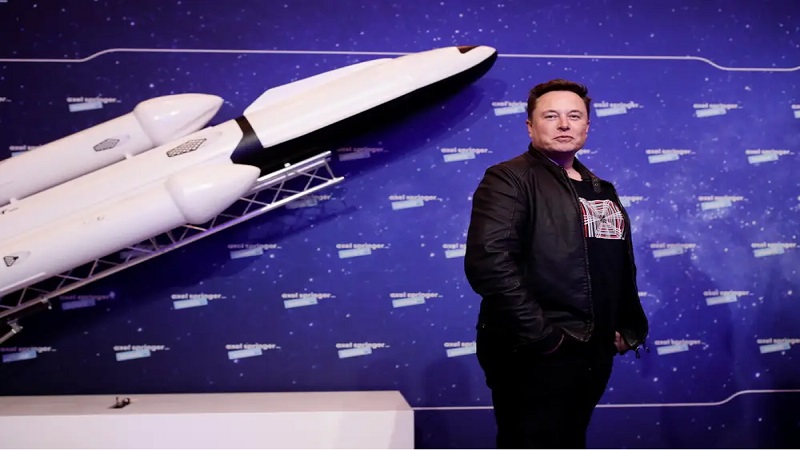
Elon Musk announced the formation of the America Party, a new political movement aimed at challenging the U.S. two-party system. In a response to an X user, Musk confirmed the party would embrace Bitcoin, stating, “Fiat is hopeless, so yes.” This stance aligns with his long-standing criticism of traditional fiat currency and support for cryptocurrencies, evidenced by Tesla’s $1.5 billion Bitcoin purchase in 2021 and its current holding of 11,509 BTC, alongside SpaceX’s 8,285 BTC.

The America Party’s launch follows Musk’s public feud with President Donald Trump over a $3.3–$3.4 trillion spending bill, which Musk called a “disgusting abomination” for inflating the U.S. deficit. He aims to target key House and Senate races to influence legislation, leveraging his 221.8 million X followers and wealth, though the party lacks formal structure or FEC registration as of now.

Some, like Trump, argue third parties historically disrupt without succeeding in the U.S. system, while crypto advocates like Max Keiser see Musk’s move as a bullish signal for Bitcoin, which spiked to around $109,000 after his announcement. The America Party’s formation could fragment the U.S. political landscape, particularly impacting the Republican Party, given Musk’s recent alignment with conservative voters.

His criticism of the $3.3–$3.4 trillion spending bill and feud with Trump may siphon votes from GOP candidates, potentially weakening their 2026 midterm performance. Historically, third parties like Ross Perot’s Reform Party in 1992 (19% of the vote) disrupted elections but failed to win major races due to the U.S.’s winner-takes-all system. Musk’s wealth and X platform (221.8M followers) give him unprecedented influence to amplify his message, but building a viable party infrastructure remains a challenge without FEC registration or grassroots momentum.

Musk’s endorsement of Bitcoin and dismissal of fiat currency (“Fiat is hopeless”) could accelerate crypto adoption. Bitcoin’s price surged to ~$109,000 post-announcement, reflecting market sensitivity to his influence. Tesla (11,509 BTC) and SpaceX (8,285 BTC) holdings could see valuation boosts, potentially encouraging other corporations to invest in crypto. However, his stance may pressure regulators, already wary of crypto’s volatility and tax evasion risks, to tighten policies, especially if the America Party gains traction.

A pro-Bitcoin platform could also clash with Federal Reserve interests, complicating monetary policy debates. Musk’s move deepens the U.S. cultural divide. His X posts resonate with anti-establishment sentiments, appealing to younger, tech-savvy, and libertarian-leaning voters frustrated with government spending and bureaucracy. Conversely, traditionalists and Trump loyalists, like those labeling Musk’s party a “grift,” view it as a betrayal of conservative unity, potentially alienating GOP bases.

The Bitcoin focus further polarizes, attracting crypto enthusiasts while repelling skeptics who see it as speculative or risky. Supporters, including crypto advocates like Max Keiser, see Musk as a visionary challenging a bloated system. They view Bitcoin as a hedge against fiat-driven inflation (U.S. debt ~$33 trillion) and trust Musk’s influence to drive innovation. His X platform amplifies this group’s voice, creating a digital echo chamber.

Critics, including Trump and GOP loyalists, argue Musk’s party is a vanity project that risks splitting the conservative vote, benefiting Democrats. They see his Bitcoin push as reckless, citing its volatility (e.g., 2022 crash) and regulatory hurdles. Traditional finance advocates and older voters may view his rejection of fiat as destabilizing. Some analysts suggest the America Party’s impact depends on execution.

Without a clear policy platform beyond Bitcoin and fiscal critique, it risks fading like past third-party efforts. The crypto focus may alienate moderates, while regulatory pushback could limit its economic influence. Musk’s wealth and platform give him leverage, but the U.S.’s structural barriers to third parties and polarized voter bases may limit the America Party’s success unless it rapidly builds a coherent agenda and coalition.
Tesla Loses $68bn in Value as Musk’s Political Ambitions Rattle Wall Street: “Investors Are Tired of the Chaos”

0

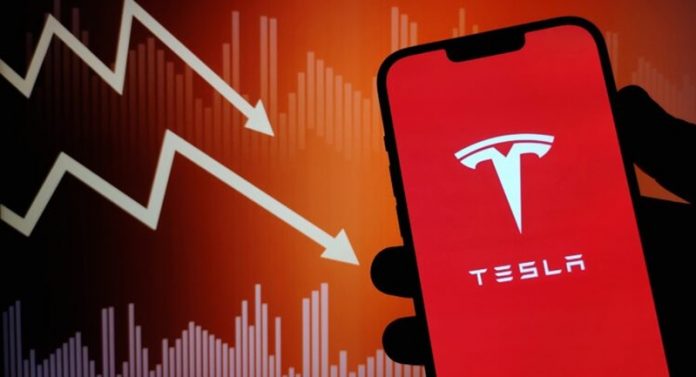
Tesla stock sank nearly 7% on Monday, erasing more than $68 billion in market capitalization, after CEO Elon Musk announced plans to launch a new political party in the United States.

The sudden drop reflects mounting investor anxiety over Musk’s increasingly political profile — a development analysts say is once again pulling his attention away from Tesla’s core business amid a period of declining sales and rising competition.

The billionaire entrepreneur revealed on Saturday that the new formation, dubbed the “America Party,” will aim to influence a limited number of Congressional races in 2026 — just “2 or 3 Senate seats and 8 to 10 House districts,” Musk posted on X. The goal, he said, is to hold enough sway to become a decisive voting bloc on controversial bills, claiming it would help “ensure that [laws] serve the true will of the people.”

But for investors, the move was anything but strategic.

Political Chaos Reignites Investor Frustration

Musk’s announcement set off a wave of concern among Tesla shareholders, many of whom have spent the last year urging the CEO to pull back from overt political engagement. The reaction was swift and harsh on financial markets.

“Very simply, Musk diving deeper into politics and now trying to take on the Beltway establishment is exactly the opposite direction that Tesla investors/shareholders want him to take during this crucial period for the Tesla story,” said Dan Ives, global head of tech research at Wedbush Securities.

Tesla has already endured several rough quarters. The company recently reported a 14% year-over-year decline in vehicle deliveries for the second quarter — a glaring miss that reflects softening demand in the U.S., growing competition in China, and lingering macroeconomic pressures. With Musk now pivoting back into the political arena, many investors fear Tesla could again become collateral damage in the public discourse.

Some analysts say the current storm is reminiscent of the turbulence surrounding Musk’s tenure at the Department of Government Efficiency (DOGE) — a federal initiative he joined earlier this year to streamline government spending. While his involvement was lauded by some for its reformist tone, it brought with it intense political scrutiny, partisan backlash, and headline-grabbing controversies that many blamed for Tesla’s stock struggles at the time.

“I think Elon’s biggest challenge for the next 16 months is ensuring Tesla investors that this third-party involvement will not result in the same outcome that DOGE introduced,” an analyst wrote on X.

“Violence against Tesla, polarizing takes, constant negative headlines against the CEO, brand-damage concerns, etc. It is quite obvious that a significant percentage of the retail base is tired of the constant political chaos.”

The analyst named Farzad added that there had been a “collective sigh of relief” when Musk left DOGE in May. His re-entry into political activism, therefore, is being seen as a step backward — and possibly a catalyst for more instability around Tesla.

A Divided Investor Base

Tesla’s investor community is increasingly split. On one side are long-time believers in the company’s bold vision — including Robotaxi development, Optimus humanoid bots, and next-gen batteries — who see current stock dips as buying opportunities. On the other are retail and institutional investors who’ve grown weary of the non-stop drama surrounding Musk’s media presence and political provocations.

“Tesla investors are definitely entering a volatile time — if they haven’t already,” Farzad continued. “Many who believe in Tesla’s Robotaxi & Bot ventures will view this as a buying opportunity. They will likely be buying the shares of people who have simply hit a limit to how much they can bear Elon being in the public light with politics.”

Trump Slams Musk’s Party

Musk’s announcement also revived tensions with President Donald Trump, whom Musk once advised on several issues. The two have since diverged, particularly over Trump’s controversial spending bills and cuts to electric vehicle tax credits and green energy subsidies — policy shifts Musk has openly criticized.

Trump dismissed Musk’s third-party plans as “ridiculous” over the weekend, saying the Tesla CEO had gone “completely off the rails.”

This latest public spat only reinforces the perception that Musk is no longer able to separate his political stances from his business interests — a dynamic that many investors fear could continue to damage Tesla’s brand, especially in an increasingly polarized consumer environment.

Tesla Shares Dive Again

The market reaction saw Tesla shares fall nearly 7%, and the broader tech-heavy Nasdaq also dipped, with Tesla among the top laggards. This comes just days after the S&P 500 and Nasdaq closed at all-time highs, buoyed by optimism over inflation easing and a strong earnings season ahead.

But Tesla’s political entanglements are introducing risks that many of its peers are not facing.

“This is the most hated V-shaped rally,” said Tom Lee, head of research at Fundstrat, referring to how Tesla’s stock has previously rebounded from sharp drops — but always with asterisks tied to Musk’s personal moves.

As Tesla heads into its second-half earnings season, shareholders will be looking for clarity on key programs like Full Self-Driving, the next-gen Model 2, the much-delayed Cybertruck ramp-up, and Optimus. But those ambitions could be overshadowed by political crossfire if Musk’s “America Party” becomes a persistent headline.

Trump Threatens 10% Tariff on BRICS Members and Allies, Drawing Sharp Rebuke from Brazil’s Lula and Unease Across Global South

0

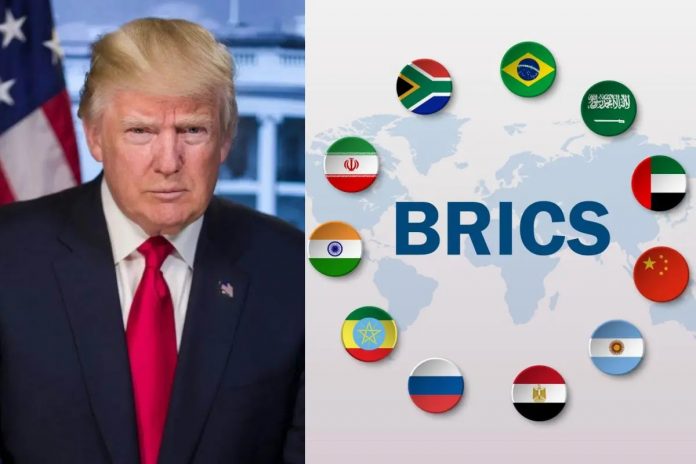
U.S. President Donald Trump ignited international uproar on Sunday after vowing to slap punitive tariffs on countries aligned with the BRICS bloc, a group of emerging economies that has increasingly positioned itself as a counterweight to U.S.-led global economic structures.

The warning, issued in a post on Trump’s Truth Social account, stated: “Any country aligning itself with the anti-American policies of BRICS will be charged an ADDITIONAL 10% tariff. There will be no exceptions to this policy.”

The threat came just hours before the conclusion of the BRICS leaders’ summit in Rio de Janeiro and sent immediate shockwaves across the diplomatic landscape, especially among members and aspiring members of the bloc.

At a post-summit press conference, Brazilian President Luiz Inácio Lula da Silva, host of this year’s BRICS gathering, issued a blistering response, accusing Trump of behaving like a global emperor and warning that such economic intimidation was out of step with the current world order.

“I don’t think it’s very responsible and serious for a president … of a country the size of the U.S. to threaten the world over the internet – it’s not right,” Lula said. “The world has changed. We don’t want an emperor.”

Lula stressed that BRICS countries are sovereign and have the same right as the United States to determine their own trade policies and partnerships. “People need to understand that respect is good – we like to give it, and we like to get it in return,” he added.

BRICS as a Symbol of the Global South’s Rise

Trump’s tariff warning comes amid the bloc’s rapid expansion and growing influence. BRICS—originally comprised of Brazil, Russia, India, China, and South Africa—has in 2025 expanded to include Egypt, Ethiopia, Indonesia, Iran, and the United Arab Emirates, making the group a more potent coalition of economies outside the Western orbit.

Despite internal differences, the bloc used this year’s summit to present a united front, releasing a joint declaration denouncing “unilateralism, protectionism, and illegal military interventions.” While the statement did not explicitly name the United States, Trump interpreted it as a veiled attack on American interests.

In recent months, BRICS has gained momentum around efforts to reduce dependence on the U.S. dollar. The bloc has been encouraging trade in local currencies—a process widely viewed as the first step toward “de-dollarization.” This initiative, which Trump previously dismissed as futile, has now drawn his ire.

Earlier this year, he declared BRICS “dead” and warned of 100% tariffs against member countries should they persist in pursuing dollar alternatives.

While BRICS, as an organization, did not issue an official response to Trump’s statement, individual members responded cautiously but firmly.

China’s Foreign Ministry reiterated that BRICS “is not a bloc for confrontation, nor does it target any country.” Spokeswoman Mao Ning added, “Trade war and tariff war have no winners, and protectionism leads nowhere.”

Russia’s presidential spokesman Dmitry Peskov acknowledged Trump’s remarks had been “noticed,” according to Russian state media, but stopped short of offering detailed commentary.

The relative silence from the broader bloc reflects what analysts describe as a strategic effort not to escalate tensions unnecessarily — particularly as many BRICS members, including India, China, and Indonesia, are still engaged in active bilateral trade negotiations with the U.S.

Despite the muted institutional response, Lula suggested Trump’s rhetoric reflected anxiety over BRICS’ rising global profile.

“Some people are getting nervous because BRICS is growing stronger and giving a voice to the Global South,” Lula said.

In a symbolic show of unity, Lula hosted a group photo on Monday that featured not only the 10 full BRICS members but also UN Secretary-General António Guterres, WHO Director-General Tedros Adhanom, and the presidents of Chile, Uruguay, Uganda, and Bolivia, all seen as sympathetic to BRICS or considering closer engagement.

Trump’s Words Stir Global South Calculations

According to Farwa Aamer of the Asia Society, Trump’s posture could complicate decisions for Global South countries weighing whether to align more closely with BRICS.

“Trump’s posture could deter some countries from joining any time soon, especially those looking to maintain stable ties with the U.S.,” Aamer said, adding that most would likely adopt a “wait-and-see approach” rather than engage in open confrontation.

Gustavo de Carvalho of the South African Institute of International Affairs agreed, noting that Trump’s threat “only becomes a real deterrent if the U.S. actually implements aggressive penalties.”

“BRICS members don’t want to be seen as anti-Western. They want to be seen as leading a non-Western alternative,” he said. “It’s about leverage. Trump’s threats give the U.S. room to negotiate better deals with countries that also engage with BRICS.”

Trump’s warning marks the latest flashpoint in the broader geopolitical contest between Washington and an emerging multipolar world. BRICS is increasingly seen not just as an economic bloc, but as a symbol of resistance to Western dominance, a role it continues to embrace — cautiously but deliberately.

Kuda Processes N14.3 Trillion in Q1 2025, Signals Robust Growth

0

Kuda, a Nigerian digital bank that offers free transfers, cashless payment options, savings, and loans, has revealed that it processed over 300 million transactions worth N14.3 trillion in the first quarter (Q1) of 2025, spanning both its retail and business banking operations.

This disclosure was made by CEO Babs Ogundeyi during a media briefing held in Lagos on Monday, July 7, 2025. Breaking down the numbers, Babs noted that N8.5 trillion came from retail banking, while N5.8 trillion was generated from business users.

This marks Kuda’s most comprehensive operational disclosure, going beyond its usual customer growth reports. While the neobank previously announced a user base exceeding 7 million as of January 2024, this is the first time it has shared detailed financial metrics. As of January 2024, the company had notched up an impressive N55.8 trillion ($61.4 billion) in total transactions since its 2019 launch.

In addition to transaction volumes, Kuda also issued N16.4 billion in overdrafts in Q1, putting it on pace to surpass its entire 2023 overdraft issuance of $12.6 million (N19 billion) once Q2 results are available. The company further disclosed that it paid out N130 million in interest to users during the quarter.

Transfers remained the core of user activity, with business clients alone accounting for N1.5 trillion in transfers. Despite Kuda offering mostly free transfers, the platform saw a higher volume of paid transfers, suggesting that Nigerian users continue to favor transfers as their primary payment method even when fees apply.

Notably, in Q1, the Kuda relaunched its multicurrency wallet, targeting the competitive remittance market. The wallet currently supports pounds and euros for users outside Nigeria, with plans to add US and Canadian dollars within six months.

With over 300 million transactions already recorded in Q1, Kuda appears on course to exceed 1.2 billion transactions by year-end. Founded in 2019 by Babs Ogundeyi and Musty Mustapha, Kuda offers a range of services, allowing users to open accounts, deposit funds, conduct transactions, and access credit.

The company which operates under a microfinance banking licence from the Central Bank of Nigeria, has witnessed significant growth since the beginning of the COVID-19 pandemic having firmly positioned itself as a safe alternative to brick-and-mortar banks at a time when social distancing rules have made visiting banking halls a challenging experience.

In 2021, the digital-led challenger bank for Africa revealed that its Android app was downloaded over 1 million times. Kuda’s total deposits more than doubled from $41 million in 2021 to $100 million in 2022. The report also highlighted Kuda’s growing business banking services as deposits from business customers jumped 154x from less than $102,000 to nearly $15 million at the end of the year.

Expanding its reach, the neobank has ventured into cross-border payments across Africa and Europe. Last year, the Nigerian-based parent company received payment licences in Tanzania and Canada to further its plans to expand across the African and global markets.

It has also extended its footprint to the UK and Pakistan, acquiring a digital banking license from the State Bank of Pakistan. As a pioneer of Nigeria’s neobanking sector, Kuda competes with OPay, PalmPay, and Moniepoint. Unlike its rivals, which rely heavily on mobile money and agent networks, Kuda maintains an app-first approach, offering digital retail banking and credit.

Step Aside Ripple (XRP) and Solana (SOL), These 4 Tokens Under $2 Are the Top Cryptos to Accumulate This July

0

As the crypto market gears up for a bullish second half of 2025, the spotlight is gradually shifting from legacy large-caps like Ripple (XRP) and Solana (SOL) to a new wave of undervalued, high-upside altcoins priced under $2. While XRP continues to battle legal uncertainties and SOL consolidates after a turbulent start to the year, a handful of rising stars are attracting both retail and whale attention — and they’re all trading at bargain prices.

For those eyeing exponential returns before the next leg of the bull market, Little Pepe (LILPEPE), BONK, SEI, and Cronos (CRO) have emerged as the top four cryptos to accumulate this July.

Little Pepe (LILPEPE) — The Meme Coin That Refuses to Be Ignored

At the front of the under-$2 surge is Little Pepe (LILPEPE), a rapidly rising ERC-20 meme coin that’s already blown past expectations. Priced at $0.0013 in its current fourth presale stage, LILPEPE has raised over $3.6 million, with over 3 billion tokens sold across all stages, and momentum is only getting stronger. What sets LILPEPE apart from other meme tokens is its visionary plan to launch a Layer 2 blockchain exclusively for meme coins. This chain will offer lightning-fast transactions, ultra-low fees, resistance to sniper bots, and a meme-specific Launchpad for new token deployments. No meme project has gone this far in building a dedicated, scalable infrastructure.

The project is backed by anonymous experts who have helped guide some of the biggest meme coins in the crypto space, and LILPEPE already has plans in motion to list on two major centralized exchanges at launch. The team has also signaled that a listing on the world’s largest exchange is on the roadmap — a potential game-changer.

To amplify buzz, LILPEPE recently launched a $777,000 giveaway, offering 10 lucky winners $77,000 worth of LILPEPE tokens each, solidifying its status as the most viral meme coin of 2025. With predictions already pointing to a 10,000%–25,000% rally, many believe LILPEPE is on track to outshine BTC’s returns in the coming cycle.

BONK — Solana’s Favorite Meme Revival

BONK has stayed relevant thanks to ongoing community support and integrations within the Solana ecosystem. Currently priced well under $0.01, BONK is widely seen as a high-upside play for meme coin speculators. BONK’s connection to Solana — which is itself preparing for a bullish rebound — gives the token major tailwinds. If SOL runs, BONK will likely follow. With upcoming NFT and DeFi collaborations, BONK could see a surge in demand that surpasses Bitcoin’s percentage returns. As traders search for meme coins with credibility and utility, BONK’s unique positioning makes it a contender worth watching.

Cronos (CRO) — A Sleeper Giant in Crypto Infrastructure

Cronos (CRO), at $0.0807 with a $2.15 billion market cap, powers Crypto.com’s ecosystem, integrating with its exchange and DeFi platforms. Analysts project $0.50 by Q4, representing a 520% gain, driven by Crypto.com’s 80 million users and partnerships with companies like Visa. CRO’s EVM-compatible chain supports NFTs and DeFi, boasting a $500 million TVL. A bullish engulfing pattern and low RSI suggest a rebound. While less volatile than LILPEPE, CRO’s real-world adoption and regulatory compliance make it a stable 2025 bet, rivalling XRP’s institutional appeal.

Historically, exchange tokens like BNB and OKB have delivered massive returns. CRO could be next — and at its current price, it offers plenty of room to outperform the relatively mature Bitcoin.

SEI — Smart Contracts at Speed and Scale

The SEI Network is a high-performance Layer 1 blockchain optimized for trading. Its native token, SEI, is trading well under $2 and has quietly become a favorite among developers seeking fast, efficient dApps with robust backend infrastructure.

SEI is making waves by offering front-running resistance, low-latency execution, and institutional-grade throughput — features that make it ideal for building DeFi platforms, DEXs, and even gaming projects. With more than 70 active projects in its ecosystem and counting, SEI is emerging as a significant player in the industry. As crypto trading platforms seek to escape the high fees and slow confirmations of older chains, SEI could experience explosive adoption, and its token may surge far beyond expectations.

Final Thoughts: The Real Opportunity Lies Below $2

As attention fades from big names like XRP and SOL — which may offer more stability but less explosive upside — savvy investors are positioning themselves in undervalued, narrative-driven tokens with unique value propositions.

LILPEPE brings meme coin virality with real-world infrastructure, BONK enjoys deep ties to the Solana ecosystem, SEI caters to the fastest-growing sector of crypto trading, and CRO is tied to one of the most aggressive CEX expansion strategies in the industry. For those looking to turn modest investments into outsized gains in the coming months, July 2025 is the perfect time to accumulate these gems under $2 before the rest of the market wakes up to their potential.


For more information about Little Pepe (LILPEPE) visit the links below:

Website: https://littlepepe.com

Whitepaper: https://littlepepe.com/whitepaper.pdf

Telegram: https://t.me/littlepepetoken

Twitter/X: https://x.com/littlepepetoken