DD
MM
YYYY

PAGES

DD
MM
YYYY

spot_img

PAGES

Home Blog Page 92

Thailand secures $2 billion PCB investment as it courts foreign capital to revive growth

0

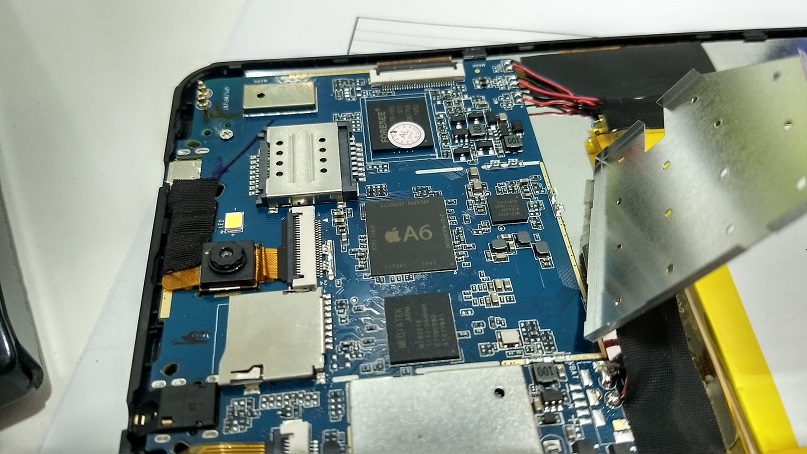
Thailand’s Board of Investment (BOI) on Monday approved a landmark 65 billion baht ($2.08 billion) investment by a joint venture led by Taiwan’s Zhen Ding Technology (ZDT), the world’s largest printed circuit board (PCB) manufacturer, in partnership with Thailand’s Saha Pattana Interholding.

The approval highlights Thailand’s strategic push to attract large-scale foreign direct investment (FDI) to jumpstart its economy and strengthen its position in the global electronics supply chain.

The project is expected to create approximately 5,600 jobs locally, offering a significant boost to employment and skills development in Thailand’s industrial sector.

Thailand, Southeast Asia’s second-largest economy, has faced sluggish growth in recent years. The Bank of Thailand projects GDP growth of 2.2% in 2025, below the country’s long-term potential and below regional peers. This investment is part of Bangkok’s broader strategy to stimulate economic momentum through high-value manufacturing and technology-driven sectors rather than relying solely on traditional industries.

Zhen Ding Technology operates major production facilities in Taiwan and mainland China, and this marks its second Thai investment after the company began production of an initial project in September last year. With the new expansion, ZDT plans to produce advanced PCBs for a wide range of applications, including consumer electronics, telecommunications equipment, medical devices, and energy infrastructure.

Given the rapid growth of sectors such as 5G, artificial intelligence, and electric vehicles, demand for high-quality PCBs remains strong, positioning Thailand as an attractive alternative manufacturing hub.

“This investment will further enhance Thailand’s advanced electronics supply chain,” said BOI investment chief Narit Therdsteerasukdi.

He emphasized the government’s goal of fostering a competitive high-tech manufacturing ecosystem that can integrate Thai firms into global value chains and promote technology transfer.

Analysts note that Thailand’s appeal is reinforced by its skilled workforce, strategic location in Southeast Asia, and favorable investment incentives. The country’s industrial estates and special economic zones offer tax breaks, streamlined permitting, and access to regional markets, attracting electronics companies looking to diversify production away from China amid rising costs and geopolitical uncertainties.

The investment also signals the government’s broader ambition under its Thailand 4.0 strategy, which focuses on upgrading the economy through innovation, high-tech industries, and digital infrastructure. By luring top-tier international players like ZDT, Thailand aims to accelerate industrial modernization while building domestic capacity in cutting-edge sectors.

Regional analysts say the move could have spillover effects for Thailand’s local supply chain, encouraging growth of domestic component suppliers, logistics services, and related technology providers. It also strengthens Thailand’s position in the global electronics race, competing with Vietnam, Malaysia, and Indonesia as Southeast Asia seeks to capture a larger share of the high-value manufacturing market.

Beyond economic growth, the project underscores the broader geopolitical trends reshaping supply chains. Taiwanese electronics firms are increasingly diversifying production outside China due to trade tensions, rising labor costs, and supply chain risks. Thailand, with its regulatory stability, strategic port access, and relatively lower costs, stands to gain as companies seek to mitigate risk while maintaining proximity to key markets in Asia and beyond.

The BOI’s approval comes as Thailand works to restore investor confidence after years of uneven FDI flows. Large, high-tech projects like ZDT’s PCB venture are seen as critical anchors that can attract follow-on investments, deepen local expertise, and boost exports. For policymakers, the deal is not only about immediate economic impact—through job creation and construction—but also about long-term positioning of Thailand as a hub for advanced electronics, contributing to sustainable economic growth and higher-value employment opportunities.

With global electronics demand projected to remain robust, and supply chains continuing to diversify away from China, analysts note that Thailand’s ability to attract marquee international investments like Zhen Ding’s PCB expansion may become a key factor in determining its regional competitiveness in the coming decade.

Paystack Launches Holding Company The Stack Group (TSG), to Power African Ambition

0

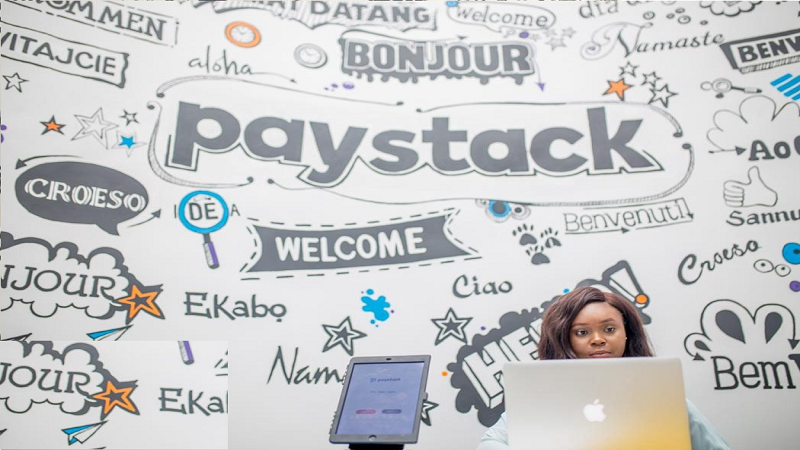
African fintech giant Paystack has announced the launch of The Stack Group (TSG), a new parent holding company that oversees Paystack and a family of ventures focused on building the technology to drive African ambition.

These ventures include Paystack, Zap, Paystack Microfinance Bank (MFB), and TSG Labs, a venture studio focused on emerging technologies such as artificial intelligence.

Under the new structure:

  • Paystack will continue to focus on merchant payments.

  • Zap will innovate in consumer payments.

  • Paystack Microfinance Bank will operate within the banking and credit infrastructure space.

  • TSG Labs will explore emerging technologies and develop new products, both within and beyond the financial services sector.

Paystack CEO Shola Akinlade stated that the creation of TSG reflects a broader vision for the future, noting that years of working with thousands of African businesses have revealed deep structural gaps that go beyond payments.

In his words,

“The launch of TSG signals a larger scope of ambition for us and sets the tone for the next decade of our company. Having worked with thousands of companies across the continent since 2016, it is clear that there are significant opportunities to support businesses beyond payments, and TSG enables us to address the challenges African companies face. Thank you to the Stripe team for their continued belief in Africa’s potential and our ability to create transformative technology companies for the continent, and beyond.”

This larger scope of ambitions comes with a new ownership structure, pending regulatory approvals. TSG will have 3 founding shareholders which include; Stripe, Shola Akinlade, and Paystack employees, highlighting a long-term commitment to internal ownership and innovation.

Notably, the launch of TSG follows the recent rollout of Paystack MFB in Nigeria, following its acquisition of Ladder Microfinance Bank. The microfinance bank will allow the group to internalize core financial rails and offer compliant banking and credit infrastructure to over 300,000 Nigerian merchants. This vertical integration enables Paystack to build end-to-end money movement solutions, strengthening its ability to serve African businesses more holistically.

Founded in 2015, Paystack began with a simple mission: to help African businesses get paid. The company was accepted into Y Combinator in 2016, received early-stage funding in Silicon Valley, and publicly launched later that year. By 2020, it was serving over 60,000 businesses and was acquired by Stripe for over $200 million, the largest startup acquisition from Nigeria at the time and Stripe’s biggest ever.

Since its acquisition by Stripe, Paystack has recorded 12x growth in payment volume. Today, the fintech giant is licensed and operational in Nigeria, Ghana, Kenya, Côte d’Ivoire, and South Africa, with regulatory approvals in Egypt and Rwanda, covering nearly 46% of Africa’s GDP.

Outlook

The launch of The Stack Group marks a strategic shift that could redefine Paystack’s role in Africa’s digital economy. Rather than remaining solely a payments company, TSG positions itself as a platform for building and scaling multiple technology businesses across sectors.

By internalising financial infrastructure through Paystack MFB, experimenting with emerging technologies via TSG Labs, and expanding into consumer and merchant solutions, the group is building a tightly integrated ecosystem. This could give it a strong competitive advantage in a continent were fragmented systems often slow innovation.

From Boom to Pause: How Africa’s Unicorn Momentum Stalled in 2025

0

The end of 2024 felt like a turning point for Africa’s startup ecosystem.

With two unicorns Moniepoint and Tyme minted in the final quarter, optimism surged with predictions that the continent had entered a new era of rapid scale and significant investors funding.

It was the first time since early 2023 that more than one unicorn had been minted in a single quarter, raising hopes that the momentum would continue into the new year. Analysts viewed them as symbols of resilience and renewed confidence in the African tech ecosystem, amid a challenging funding winter.

This saw many set high expectations for 2025. But as the year progressed, that optimism met a sobering reality. The unicorn pipeline stalled, deals slowed, and the much-anticipated breakout stories never materialized.

Instead of acceleration, the year delivered a pause marked by cautious investors, delayed scale-ups, and startups struggling to reach the valuations once thought inevitable. Throughout 2025, no new unicorns emerged.

Nigeria mobility fintech Moove, generated considerable anticipation, with persistent rumors of a potential $300 million equity round that could push it into unicorn territory, alongside speculation about a massive $1.2 billion debt raise. Yet, neither of these materialized during the year.

According to a recent report by Africa: The Big Deal, in terms of funding, Africa’s unicorns raised approximately $100 million in equity in 2025, primarily from the completion of Moniepoint’s Series C round. This marked the lowest annual equity total for unicorns since 2020, a year when there was only one unicorn on the continent.

When debt financing from Wave ($137 million) and MNT-Halan (about $120 million) is included, the total capital raised reaches roughly $358 million, still the lowest figure since 2020.

The absence of major equity rounds also meant that there were no updates to unicorn valuations in 2025, as such adjustments typically accompany new funding announcements. While analysts have speculated that some unicorns may now be worth more or less than their last reported valuations, these remain unconfirmed.

Of the six unicorns minted between 2019 and 2020, only Interswitch and Flutterwave have raised equity since then, both in 2022. Wave has secured significant debt, but OPay, Andela, and Chipper have not announced new funding in over three years.

IPO activity was similarly muted. It is understood that many African unicorns have not publicly committed to IPO timelines, often focusing on growth and sustainability rather than immediate listings. Flutterwave was widely perceived as one of the few African Unicorns likely to pursue an IPO last year, but it has repeatedly emphasised that listing is contingent on profitability and market conditions rather than imminent plans.

However, following Flutterwave’s acquisition of open-banking startup Mono Technologies in January 2026, the company says it will boost its profitability drive and strengthen its position for a potential initial public offering (IPO).

Speaking in an interview with Bloomberg, Agboola said Flutterwave’s current focus is firmly on profitability and infrastructure rather than rapid expansion.

Right now, our focus is profitability, resilience and better infrastructure, and that is why we acquired Mono,” he said, adding that the acquisition makes Flutterwave “a better candidate for everything,” including a possible IPO.

Meanwhile, two non-unicorn African ventures, Optasia in South Africa and Cash Plus in Morocco went public in 2025, marking the continent’s first IPOs in over six years.

In the fintech sector, M-Kopa stood out after raising approximately $166 million in a Series F round and reporting its first-ever profit in 2025, signaling potential progress toward a $1 billion valuation. Other major players such as Onafriq, Jumo, PalmPay, Yoco, and Kuda remained relatively quiet. However, emerging fintechs like Stitch ($55 million), LemFi ($53 million), Naked ($38 million), and valU ($27 million) attracted notable equity investments.

In the energy sector, Sun King and d.light demonstrated strong engagement with capital markets through securitization and structured financing. Sun King also raised $40 million in equity toward the end of the year. Still, high valuations remain challenging in this asset-heavy industry.

Bboxx recorded no major funding activity, while SolarSaver ($60 million), PowerGen ($55 million), and Wetility ($28 million) secured significant equity. Burn raised $90 million in debt.

Mobility startup Spiro recorded the largest equity transaction in its category with a $100 million raise. Planet 42 remained inactive, while Moove and Yassir were surrounded by speculation about future funding rounds or a possible IPO in 2026. Gozem raised $30 million, split evenly between equity and debt.

Among retail-focused startups, MaxAB-Wasoko made headlines through its acquisition of Fatura, rather than through a funding round. TradeDepot and Twiga Foods remained silent on new capital raises. Beyond these sectors, attention remains on Nawy, which raised $52 million in equity and $23 million in debt, and healthtech firm LXE Hearing, which secured $100 million through a merger.

Overall, 2025 was a year marked more by caution than celebration in Africa’s unicorn ecosystem. While capital continued to flow into select startups, the absence of new unicorns, limited valuation updates, and subdued IPO activity underscored a more restrained and uncertain phase for the continent’s high-growth ventures.

Outlook

While momentum in 2025 may appear to have dwindled, it could ultimately prove to be a necessary reset rather than a permanent slowdown. Investors are reportedly becoming more selective, prioritizing sustainable business models, clear paths to profitability, and stronger unit economics over rapid, valuation-driven growth.

Notably, companies like Moove, M-Kopa, PalmPay, and Kuda still possess the scale, market presence, and narratives needed to cross the unicorn threshold, provided they can demonstrate consistent profitability and possibly attract significant investor funds.

From $0.014 to a Potential $20 by 2029: Why Ozak AI’s Post-Listing Outlook Has Analysts Excited

0

Ozak AI ($OZ) is rapidly emerging as one of the most closely watched AI-powered crypto projects as investors search for real utility-driven growth in this market cycle. Built as a fusion of artificial intelligence and decentralized physical infrastructure (DePIN), Ozak AI blends predictive intelligence, decentralized compute networks, and tokenized economic incentives into a single scalable ecosystem placing it firmly within the next generation of AI blockchain platforms.

Phase-7 Presale Performance Signals Accelerating Investor Demand

Ozak AI is currently progressing through Phase-7 of its presale, with the $OZ token priced at $0.014. As of the latest verified update, 1.099 billion $OZ tokens have been sold, generating a total of $5.78 million funds. This level of funding reflects consistent capital inflows even as broader crypto markets remain cautious.

With a target listing price of $1.00, the gap between presale valuation and public market expectations remains wide. Analysts frequently reference this price difference when discussing forecasts that extend into long-term valuation scenarios reaching double-digit levels by 2029. While such projections are forward-looking, the presale trajectory itself demonstrates sustained confidence from early backers entering during the project’s foundational build phase.

Core Technology: AI Infrastructure, DePIN Scalability, and Cross-Chain Utility

Ozak AI’s foundation is built upon a predictive AI-powered infrastructure designed for real-time automation, advanced analytics, and intelligent optimization across blockchain environments. This system enables developers, traders, and decentralized applications to consume high-speed intelligence without relying on centralized processing providers.

Its DePIN architecture distributes compute workloads across a decentralized physical infrastructure layer, improving throughput while reducing data bottlenecks and single points of failure. Complementing this structure, Ozak AI supports cross-chain functionality, allowing its tools and data to operate seamlessly across multiple blockchain ecosystems.

The $OZ token utility extends into staking for network security, governance participation for protocol upgrades, and ecosystem expansion rewards tied to platform adoption. At the same time, the project emphasizes security and transparency, backed by completed smart contract audits that confirmed zero unresolved risks across the presale infrastructure.

Strategic Partnerships Strengthen Real-World AI Execution

Ozak AI’s growth narrative is increasingly supported by a network of high-impact collaborations that directly enhance system performance and developer accessibility. Its partnership with Hive Intel (HIVE) expands access to multi-chain blockchain data APIs, giving Ozak AI’s predictive models deeper insight into wallet behavior, NFT flows, DeFi activity, and token metrics in real time. The collaboration with Weblume enables creators to deploy AI-powered market signals through no-code Web3 interfaces, lowering the technical barrier to intelligent application development. Further strengthening its decentralized compute layer, Ozak AI’s integration with Meganet brings scalable bandwidth-sharing capability into the ecosystem, unlocking faster analytics at reduced infrastructure cost. These partnerships collectively reinforce Ozak AI’s positioning as an active AI execution layer rather than a passive data project.

Why Analysts Are Watching the $20 Long-Term Outlook

As the broader blockchain sector continues integrating artificial intelligence into core infrastructure, projects that control data, computation, and execution layers are increasingly viewed as long-term value centers. Ozak AI’s positioning across predictive analytics, decentralized compute, and multi-chain interoperability places it within this high-growth category. Analysts tracking long-term valuation scenarios frequently emphasize that most of Ozak AI’s ecosystem rollout remains ahead of public exchange exposure, which historically is when price discovery intensifies.

With its expanding partnerships, large and growing token distribution, rising presale capital base, and upcoming exchange listing phase, Ozak AI now represents a layered growth model rather than a single-use token narrative.

Conclusion: Early-Stage Pricing Still Defines Ozak AI’s Risk–Reward Window

With $OZ still priced at $0.014 in Phase-7, Ozak AI remains firmly within its early pricing zone despite nearing $6 million in presale funding. Its combination of AI-powered infrastructure, DePIN scalability, cross-chain interoperability, and token-based governance and rewards continues to attract long-term analytical interest. While future price projections extend well beyond current market structures, the fundamentals driving Ozak AI’s roadmap explain why analysts remain focused on its post-listing lifecycle and longer-term potential. As development, partnerships, and ecosystem adoption align, Ozak AI’s early pricing phase may ultimately define its most asymmetrical valuation window.


For more information about Ozak AI, visit the links below:

Website: https://ozak.ai/

Twitter/X: https://x.com/OzakAGI

Telegram: https://t.me/OzakAGI

Japan’s PM, Takaichi, Calls Snap Election to Secure Mandate for Tax Cuts and Defense Expansion

0

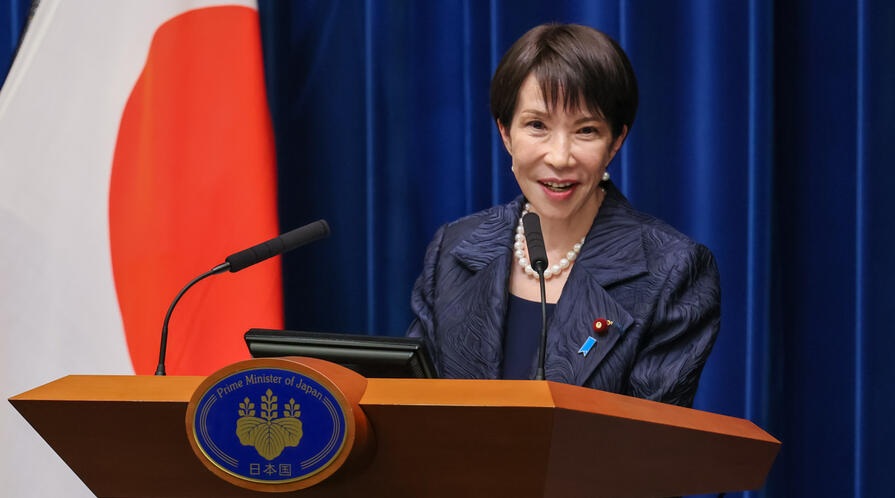
Japan’s Prime Minister Sanae Takaichi on Monday called a snap general election for February 8, seeking a fresh mandate for a sweeping agenda that combines higher public spending, targeted tax cuts, and a faster military build-up amid rising regional security tensions.

Takaichi said she would dissolve parliament on Friday, triggering a nationwide vote for all 465 seats in the powerful lower house. The election will be her first major political test since becoming Japan’s first female prime minister in October and is widely seen as an attempt to capitalize on strong early approval ratings before economic and fiscal risks deepen.

“I am staking my own political future as prime minister on this election,” Takaichi told reporters. “I want the public to judge directly whether they will entrust me with the management of the nation.”

At the heart of her campaign is a pledge to suspend the 8% consumption tax on food for two years, a move aimed at easing pressure on households battered by rising prices. The government estimates the tax freeze would cut annual revenue by about 5 trillion yen ($32 billion), a fiscal cost that immediately rattled markets. Yields on Japan’s 10-year government bonds rose to a 27-year high earlier on Monday, underscoring investor concern about looser fiscal policy at a time when Japan already carries the highest public debt burden among advanced economies.

Takaichi argues the revenue loss would be offset over time by stronger economic activity. Her administration says the combination of tax relief and increased spending would stimulate consumption, create jobs, and ultimately broaden the tax base. Critics, however, warn that the policy risks adding to Japan’s already stretched public finances just as interest rates begin to normalize after decades of ultra-loose monetary policy.

The election comes against the backdrop of a cost-of-living squeeze that has emerged as the dominant voter concern. In a poll released last week by public broadcaster NHK, 45% of respondents cited rising prices as their top worry, well ahead of diplomacy and national security at 16%. That dynamic gives urgency to Takaichi’s tax pledge but also raises the political stakes if voters doubt the government’s ability to manage inflation and debt simultaneously.

Beyond domestic economics, the vote will also serve as a referendum on a profound shift in Japan’s security posture. Takaichi’s government plans to unveil a new national security strategy this year, following its decision to accelerate a military build-up that will raise defense spending to 2% of GDP. That level, which aligns Japan with NATO benchmarks, marks a historic departure from decades in which defense outlays were informally capped at around 1% of GDP.

While Takaichi has not committed to spending beyond the 2% threshold, pressures are mounting. Tensions with China over Taiwan and disputed islands in the East China Sea have intensified, and Washington has been urging allies to shoulder more of the regional security burden. Takaichi cited both military and economic coercion by Beijing as justification for her tougher stance.

“China has conducted military exercises around Taiwan, and economic coercion is increasingly being used through control of key supply-chain materials,” she said. “The international security environment is becoming more severe.”

Those concerns were reinforced last week when China banned exports to Japan’s military of items with both civilian and defense applications, including some critical minerals. The move has heightened fears in Tokyo about supply-chain vulnerability and has strengthened the political case for greater defense self-reliance.

Politically, calling an early election allows Takaichi to try to consolidate her authority within the ruling Liberal Democratic Party and stabilize a coalition that holds only a slim majority. The LDP and its ally Ishin currently control a combined 233 seats in the lower house, just above the threshold needed to govern. Takaichi said her immediate goal was to retain that majority.

Her main challenge will come from the newly formed Centrist Reform Alliance, which brings together the Constitutional Democratic Party of Japan and Komeito. Komeito’s decision to end its 26-year alliance with the LDP following Takaichi’s rise has reshaped the opposition landscape. Together, the parties in the new bloc hold 172 seats and are expected to campaign aggressively on cost-of-living issues.

The alliance has already floated an alternative proposal to permanently abolish the 8% sales tax on food, a policy that could resonate with voters but would carry even greater fiscal implications. The contest is therefore likely to hinge not just on whether voters want tax relief, but on which party they trust to manage the long-term consequences.

Analysts say the timing reflects Takaichi’s calculation that her political capital may be at its peak.

“Now may be the best chance she has at taking advantage of this extraordinary popularity,” said Jeffrey Hall, a lecturer in Japanese studies at Kanda University of International Studies.

However, he cautioned that a unified opposition and growing concern about public debt could make the outcome less predictable than headline polling suggests.

With markets already reacting nervously and voters focused on living costs, the February 8 election is shaping up as a pivotal moment. A strong result would give Takaichi a clear mandate to push through fiscal stimulus and a more assertive security strategy. A weaker showing, by contrast, could constrain her agenda and expose the limits of public support for Japan’s most significant policy shifts in decades.