
DD
MM
YYYY

PAGES

DD
MM
YYYY

spot_img

PAGES

Home Blog Page 923

Google Hit with $314.6m Verdict Over Unauthorized Data Use in California Android Case, Adding to Its Global Legal Troubles

0

Google is facing another legal blow in the United States after a jury in San Jose, California, found that the tech giant misused Android smartphone users’ data without permission and must pay over $314.6 million in damages.

The class-action verdict marks a significant moment in the broader fight over consumer data rights, transparency in technology services, and the unchecked power of Big Tech.

The jury ruled in favor of approximately 14 million California Android users, agreeing that Google secretly sent and received data from idle Android devices without user consent. The plaintiffs argued that Google profited from these unauthorized data transfers—largely to fuel its advertising business—while consumers were left to bear the cost, particularly through their mobile data plans.

The lawsuit, which dates back to 2019, accused Google of placing a “mandatory and unavoidable burden” on users for its own benefit, with data being collected even when users were not actively using their phones. That behavior, the suit contended, constituted a violation of California’s privacy and consumer protection laws.

The decision represents one of the largest consumer privacy verdicts ever handed down against Google and underlines the growing legal challenges the company faces around data privacy and consumer rights.

Google to Appeal

In a statement, Google spokesperson Jose Castaneda said the company plans to appeal the verdict, arguing that the decision “misunderstands services that are critical to the security, performance, and reliability of Android devices.” Google further argued that Android users had consented to data collection in the company’s terms of service and privacy policy and that there was no actual harm done to users.

However, the jury disagreed, finding that the data collection—without clear and explicit user authorization—constituted a form of digital overreach. The damages were calculated based on the mobile data costs incurred by users, even if individually small, that collectively formed a significant financial impact.

National and Global Implications

While this class-action case is limited to California residents, it may pave the way for larger legal consequences. A separate class-action lawsuit has been filed in federal court in San Jose on behalf of Android users in the other 49 U.S. states. That case is scheduled to go to trial in April 2026 and could expose Google to billions of dollars in additional liabilities if the federal court finds similarly.

The California ruling comes as Google continues to battle a wave of antitrust lawsuits both in the United States and across Europe.

Part of a Pattern of Google’s Mounting Legal Pressure

This latest judgment adds to a growing list of antitrust and privacy lawsuits targeting Google’s core businesses. In the U.S., Google is already defending:

  • A landmark antitrust case from the U.S. Department of Justice (DOJ), which accuses the company of using illegal tactics to maintain its search engine monopoly.
  • A separate DOJ lawsuit, filed in 2023, targeting Google’s digital advertising business, alleging that the company engaged in anti-competitive conduct by controlling multiple sides of the ad-tech stack.
  • Multiple state-led lawsuits, including from attorneys general in Texas and other states, alleging Google inflated ad prices and suppressed competition through its dominance in online advertising.

In Europe, the company is also under intense scrutiny:

  • In 2022, Google was fined €4.125 billion by the European Commission for abusing its market dominance in Android, forcing manufacturers to pre-install Google services.
  • The European Commission is currently probing Google’s ad tech business, part of the broader enforcement of the Digital Markets Act (DMA), which aims to curtail the power of dominant digital platforms.

The California jury’s verdict reflects a larger shift in how courts, regulators, and the public are starting to view Big Tech’s data practices. Even if users click “agree” on long privacy policies, the legal system is showing signs that blanket consent may no longer shield companies from accountability—especially when background data collection occurs without meaningful transparency or user control.

As the digital economy becomes increasingly embedded in daily life, the ruling is expected to set a precedent for how consumer data costs are measured and what constitutes informed consent in the mobile age.

Google is expected to appeal the decision, and the company’s legal team is likely to argue that its practices are industry standard and necessary for ensuring reliable service performance. But the broader issue is that Google’s core business models, particularly those reliant on targeted advertising and user data, are coming under renewed legal threat.

With federal litigation looming, and similar regulatory scrutiny mounting overseas, this case could become a key inflection point in the broader effort to redefine the digital contract between technology companies and their users.
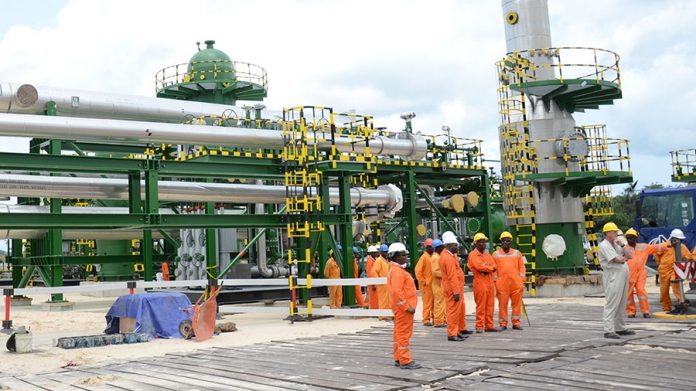

Beyond Privatization of National Corporations in Nigeria; We Must Fix Root Issues In the Nation

0

The broad sentiment: “The Director General of the Manufacturers Association of Nigeria (MAN), Segun Ajayi-Kadiri, has intensified calls for the Federal Government to fully privatize Nigeria’s state-owned refineries, describing them as symbols of waste, inefficiency, and entrenched mismanagement: ‘Those four refineries are a pure drain on the Nigerian economy, and it is not fair to the Nigerian people…The government should just sell these refineries. Give them to private sector people who will run them efficiently and be able to deliver. When something belongs to everybody, it belongs to nobody.’”

That said, after the outcome we have seen on the privatization of NEPA, the electricity agency, I want the government to be nuanced on the whole construct of privatization in Nigeria.  Russia was a fading country under Boris Yeltsin who was privatizing everything, but when Putin came, and recovered some of those assets, from the private mafia, Russia is a better country today economically. Look at China, governments run things, and they deliver. Some of the largest construction companies in the world are owned by Chinese governments.  Simply, even the public sector can deliver!

What do these countries do differently for their public sectors to be working? Three things: merit, honesty and pragmatism in the leadership system. Those three things work in most systems – democracy, military-cracy or whatever. Because Nigeria does not want to institutionalize those in the system, people can push to be selling everything.  Unfortunately, if you do privatization outside those three tenets, even the privatization regime will fail. In other words, if the privatization process is not based on merit, honesty and pragmatism, the whole process will fail.

The good news for Nigeria is that we’re liberating our economics making it possible for MTN, Airtel and Glo to eat Nitel without having to acquire Nitel. And possibly Dangote Refinery will make the national refineries irrelevant by 2027! But if we want to get into the game as a nation, especially on other areas, we must investigate the root causes of why Nigeria is not getting many things done. If you do not fix the issues, even privatized companies out of them will fade as we have seen with NEPA! In this piece, I share the core anchors of great nations.

Ndubuisi Ekekwe’s “A Greater Nation” Presidential Campaign

CasinoLuck Is Back – And It’s Better Than Ever! Here’s What You Need to Know

0

For anyone interested in and who wants to play at CasinoLuck, this guide covers everything you need to know about the platform’s recent rebranding and all the updates you can expect.

What Is CasinoLuck and Why Is It Back in the Spotlight?

CasinoLuck is a trusted gaming platform that’s well known by many seasoned players in the UK. For the last couple of months, the site has been hinting at an exciting rebranding, and this has finally come into fruition. Now, players can look forward to an enhanced selection of games, improved mobile accessibility, and a wider range of responsible gaming tools, among other benefits.

A Trusted Name in the UK Casino Online Scene

Launched back in 1999, CasinoLuck is one of the oldest online casinos in the UK. Even in its early days, the site was among the top platforms for players seeking to enjoy online casino games in a safe and secure environment. One of the main reasons why CasinoLuck has maintained such a positive reputation among UK players is that it has always been fully licensed by the UK Gambling Commission, the leading gambling regulatory authority in the country. This guarantees that all the games are fair and that your personal data is encrypted, among other protections.

From Legacy Brand to Modern Platform

CasinoLuck’s journey spans more than two decades. However, despite being around for so long, it has never stopped keeping itself up to date with the latest casino gaming trends. In 2011, the site was relaunched under new management, bringing in a swarm of new players.

Now, it’s undergone another massive revamp, with a variety of new features that have made it one of the top online casinos of our time.

Not Just a Rebrand – A Full Rework

CasinoLuck’s update doesn’t just consist of a new colour scheme and interface. The online casino has also partnered with a variety of software developers to offer a new selection of games. This means you can expect to find even more choice when it comes to slots, table games, and live titles. Of course, since CasinoLuck operates under the UKGC, you can expect all the games to operate with Random Number Generators (RNGs), ensuring every result you get is based on luck.

Additionally, keeping in mind all the new payment solutions popping up, this online casino UK is now also supporting a wider selection of banking methods. This includes e-wallets, prepaid cards, and mobile payments.

Exploring the Casino Online Experience with CasinoLuck

Let’s continue looking at some of the features that make CasinoLuck one of the best online casinos in the country.

Game Variety – From Online Slots to Live Dealers

This UK casino online partners with award-winning names in the gaming industry to provide a varied selection of games. Their slots and table games are made up of crisp graphics and immersive soundscapes, launching you into another world with the click of a button. When it comes to their live casino online games, you can expect them to be streamed from luxury gaming studios, offering an authentic casino experience where you can even communicate with other players at the same table.

Here are some of the developers behind the selection of games:

  • Betsoft
  • Elk Studios
  • Microgaming
  • NetEnt
  • Play’n GO

Playing on Mobile – Seamless On-the-Go Access

CasinoLuck has an excellent mobile casino platform that allows you to access its range of games wherever you are. Thanks to HTML5 technology, the casino is optimized to fit any of your preferred devices, and you never have to worry about a drop in quality. Apart from games, you can access all the following features when playing on mobile:

  • Bonuses
  • Account settings
  • Customer support team
  • Responsible gaming tools

Security and Responsible Gambling Measures

Security is a top priority for this online casino. All payment solutions offered are regulated and safe, with transactions processed securely using sophisticated SSL encryption technologies.

Adding to this, as one of the best casino online, CasinoLuck offers a set of responsible gaming tools to help you play within limits. This includes the following:

  • Deposit limits
  • Cool-off periods
  • Reality-checks
  • Self-exclusion

Comparing CasinoLuck to the UK Online Casino Market

Now, let’s have a closer look at what makes this platform stand out compared to other UK casinos online.

What It Does Differently

Here are some features that shine through at this online casino:

  • The site is intuitive and very easy to move around
  • The registration process only takes a couple of minutes to complete
  • The minimum withdrawal amount here is lower than on other platforms

Where It Aligns with Competitors


Feature CasinoLuck Other UK casinos
License UK Gambling Commission UK Gambling Commission
Live Games Over 100 titles Selection may be limited
Payment Options Debit cards, e-wallets, bank transfers, and mobile payments Debit cards, e-wallets, bank transfers
Number of Games Over 2000 titles Usually around 1000 games
Responsible Gaming Features Deposit limits, cool-off periods, self-exclusion, reality checks Self-exclusion

What New Players Should Know Before Joining

Before you sign up with CasinoLuck, there are a couple of things to keep in mind to ensure a smooth gaming experience.

Account Setup & Verification

To confirm that you’re over 18 years old and living in the UK, CasinoLuck requires its players to verify their identity. This is a very simple process and will only take a couple of minutes of your time.

Essentially, all you must do is create an account by clicking on the platform’s ‘Sign Up’ button. Then, once you’ve verified your email, you’ll have to head over to the verification page and upload your ID card and a utility or phone bill. The casino will then review your documents and get back to you with the status of your verification.

Casino Welcome Offer – Terms You Need to Understand

Like most casinos online, CasinoLuck offers a Welcome Bonus for first-time users. This can be triggered upon making a qualifying deposit after signing up. Welcome offers are a great way to potentially boost your balance, but keep in mind that they come with wagering requirements, which can limit how much you cash out from the bonus.

Payment Methods and Withdrawal Process

You can make transactions at this online casino using a varied selection of payment solutions. This includes debit cards and bank transfers, together with more modern solutions like e-wallets and mobile payments. CasinoLuck aims to process deposits instantly, while withdrawals can take between 1 and 5 business days to reach your account. The speed of your withdrawal depends on which payment solution you’ve used.

Responsible Play: Things to Know Before You Start

It’s important to play casino games responsibly; here are some things to keep in mind.

Know the Risks – No Guarantees, Just Possibilities

No matter which licensed online gaming platform you’re playing with, the results you get when playing casino games will always be based on luck. There is no way to guarantee a win, and this is precisely what makes these games so enjoyable.


To play within limits, I highly recommend using the platform’s responsible gaming tools. This will help you to only play with money that you can afford to lose.

What to Review Before Signing Up

Before you sign up with a platform and trigger any bonuses, it’s essential to read through the terms and conditions. This way, you won’t come across any unnecessary surprises when playing.

Also, make sure to read through CasinoLuck’s verification policies. This will snure smooth withdrawals later.

Final Verdict: A Platform Built for Today’s Cautious Player

With the rise of online gaming, many new platforms are appearing; however, not all of them provide the high-quality gaming experience you’d expect. That’s why CasinoLuck remains a top choice among UK players. Its recent rebranding shows the platform’s strong commitment to being the best, making it an ideal option for knowledgeable and responsible players.

MAN Nigeria DG Urges Full Privatization of Refineries, Says Public Ownership a “Drain on Nigerian Economy”

0

The Director General of the Manufacturers Association of Nigeria (MAN), Segun Ajayi-Kadiri, has intensified calls for the Federal Government to fully privatise Nigeria’s state-owned refineries, describing them as symbols of waste, inefficiency, and entrenched mismanagement.

His comments, made during an interview on Channels Television’s Politics Today, echo a growing national frustration over the repeated cycle of government spending on unproductive refinery rehabilitation efforts.

Ajayi-Kadiri noted that the continued state ownership of the refineries—located in Port Harcourt, Warri, and Kaduna—has not only drained public resources but failed to provide any meaningful return to the Nigerian people.

“Those four refineries are a pure drain on the Nigerian economy, and it is not fair to the Nigerian people,” he said. “The government should just sell these refineries. Give them to private sector people who will run them efficiently and be able to deliver. When something belongs to everybody, it belongs to nobody.”

His call for full privatization comes amid long-standing criticism of the government’s spending habits, particularly on the moribund refineries that have continued to gulp public funds without producing refined petroleum products.

Ajayi-Kadiri echoes the deep-seated anger and disillusionment shared by a vast majority of Nigerians who view the repeated promises of refinery revitalization as costly illusions. Over the years, the government has poured nearly $3 billion into refurbishing these refineries, with no tangible output to show for it.

The Port Harcourt refinery alone received a $1.5 billion rehabilitation investment, awarded in 2021. That same year, the Nigerian National Petroleum Company (NNPC) announced that it had spent over N100 billion on refinery repairs—yet none of the facilities refined a single barrel of crude. The Warri and Kaduna refineries were jointly allocated another $1.48 billion for their own rehabilitation programmes. These huge capital injections have delivered negligible outcomes, leading many Nigerians to question the rationale for continuing public ownership.

The combined output of Nigeria’s state-owned refineries has remained at or near zero for years, forcing the country to depend almost entirely on imported petroleum products—a costly contradiction for one of the world’s top oil producers.

“We are the sixth-largest producer of crude oil in the world, yet we suffer,” Ajayi-Kadiri said. “If you completely go private, it will be difficult for anyone to steal. It will be difficult to be unaccountable.”

Dangote Refinery: Promise or Monopoly?

The call for privatization comes at a time when the privately owned Dangote Refinery in Lagos is beginning to dominate discourse around Nigeria’s refining capacity. The $19 billion facility has been hailed as a potential game-changer in reducing Nigeria’s dependence on imports, but its emergence has also stirred fears of a market monopoly.

Ajayi-Kadiri dismissed those concerns, arguing that if the other four government-owned refineries were handed over to the private sector and brought into operation, they would naturally serve as competitors to Dangote.

“I do not subscribe to the view that we are creating a monopoly. Those four other refineries are potential competitors. We’ve been told that one is working, then again told that it’s not. Give them to people who will ensure they actually work,” he said.

The MAN boss also outlined other urgent reforms needed to restore industrial growth, beginning with the full implementation and funding of the naira-for-crude oil policy. He also called for major investments in the power sector to resolve the inefficiencies of Nigeria’s distribution companies (DisCos), which continue to leave manufacturers with little choice but to rely on costly alternative energy.

“They should ensure that the ‘naira for crude’ policy is sustainable, adequately funded, and supported. Also, we need to address the incompetent distribution companies and drive investment into the power sector to guarantee supply,” he said.

Ajayi-Kadiri revealed that manufacturers spent over N2 trillion on alternative energy sources in 2023 alone due to the unreliable electricity supply, which significantly drives up the cost of production and final prices of goods in the market.

Insecurity, he added, remains another key disincentive to investment and must be addressed urgently.

“Insecurity is a growing disincentive to investment. Businesses cannot thrive where safety is not guaranteed,” he said.

Fuel Subsidy Removal, Painful But Necessary

While acknowledging the harsh consequences of subsidy removal under President Tinubu’s administration, Ajayi-Kadiri stood by the policy, saying it was necessary to prevent economic collapse. Fuel prices have since surged beyond N600 per liter, triggering widespread inflation and hardship, but he remains optimistic that the prices will eventually fall.

“If Nigeria didn’t stop the subsidy, the subsidy would have stopped or killed us,” he said. “It is going to be better. I see the price coming down to N800, and that is what manufacturers want.”

Growing Clamor for Accountability

Ajayi-Kadiri’s call underscores an intensifying demand among Nigerian stakeholders for accountability in the management of public assets. With $3 billion already spent and little to show for it, many see the continued government control of the refineries as unsustainable and unjustifiable.

The message from MAN’s DG is that Nigerians are tired of watching taxpayer money poured into bottomless pits while poverty deepens and basic infrastructure remains broken. It’s time, he says, to hand over the keys to those who can actually make the engine run.

Arbitrum Powers L2 Throughput While Lightchain AI Powers Use Case Demand Through Native AI Deployment

0

Arbitrum continues to power Layer 2 throughput, enhancing Ethereum’s scalability and transaction efficiency for decentralized applications. Meanwhile, Lightchain AI is powering a different kind of demand—use case adoption driven by native AI deployment. Having completed all 15 presale stages and now entering its Bonus Round at a fixed price of $0.007, Lightchain AI has raised $21.2 million from engaged and strategic buyers.

This momentum is fueled by a fully functional AI-native Virtual Machine, transparent governance, and developer incentives that drive real-world application development. While Arbitrum focuses on scaling transactions, Lightchain AI is unlocking new possibilities by integrating AI at the protocol level, attracting builders and investors ready to innovate.

Arbitrum Enhances Layer 2 Throughput for Scalability

Arbitrum, a leading Layer 2 scaling solution for Ethereum, significantly enhances network throughput and scalability. By employing Optimistic Rollups, Arbitrum processes transactions off-chain and batches them before submitting to Ethereum’s mainnet, reducing congestion and gas fees. This architecture allows Arbitrum to achieve up to 40,000 transactions per second, a substantial increase from Ethereum’s 20–40 TPS.

The platform maintains full compatibility with Ethereum’s Virtual Machine (EVM), enabling seamless deployment of existing smart contracts. Arbitrum’s Nitro upgrade further improved performance by integrating WebAssembly (WASM) for faster execution and enhanced developer experience.

With its robust infrastructure, Arbitrum supports a wide range of decentralized applications, offering users faster and more cost-effective transactions while leveraging Ethereum’s security.

Lightchain AI Drives Use Case Demand with Native AI Integration

Lightchain AI is redefining blockchain by embedding artificial intelligence directly into its core infrastructure. Through its innovative Proof of Intelligence (PoI) consensus mechanism, network nodes are rewarded for executing meaningful AI tasks like model training and inference, replacing traditional mining with productive computation .

The platform’s Artificial Intelligence Virtual Machine (AIVM) enables seamless deployment of AI-driven decentralized applications (dApps), supporting frameworks such as TensorFlow and PyTorch. Lightchain AI’s architecture emphasizes scalability and privacy, utilizing federated learning and zero-knowledge proofs to ensure data security.

With its mainnet launch scheduled for July 2025, the project aims to drive adoption across industries like healthcare, finance, and logistics . Having raised over $21.2 million during its presale, Lightchain AI is poised to become a leading platform for decentralized, AI-powered solutions.

How Lightchain AI is Driving Real-World Adoption with Smarter Blockchain Solutions

Lightchain AI is revolutionizing blockchain adoption by harnessing the power of AI to create efficient, scalable solutions. With gas optimization that adjusts fees based on complexity, transactions become more affordable, while sharding technology splits the network for parallel processing—boosting speed and cutting down on delays.

This smart design enables real-time AI tasks to run seamlessly, offering developers and businesses a high-performance, low-cost platform. Whether you’re building the next big decentralized app or looking for sustainable AI-driven infrastructure, Lightchain AI is here to power your vision.

https://lightchain.ai

https://lightchain.ai/lightchain-whitepaper.pdf

https://x.com/LightchainAI

https://t.me/LightchainProtocol