DD
MM
YYYY

PAGES

DD
MM
YYYY

spot_img

PAGES

Home Blog Page 924

TikTok Is Developing U.S.-Only App As Sale Deadline Nears, To Launch Sept. 5

0

TikTok is reportedly working on a separate version of its app tailored for U.S. users, as pressure mounts ahead of a September 17 deadline for its China-based parent company, ByteDance, to divest its American operations.

The move, first reported by The Information, suggests that the social media platform is laying technical groundwork for a potential change in ownership — one that could drastically reshape its presence in the U.S. market.

According to sources cited in the report, the revamped U.S.-specific TikTok app is scheduled to launch in American app stores on September 5. Users currently on the existing global version will eventually need to download the new app to continue accessing the service, though the current app will remain functional until March 2026. The timeline, however, remains fluid and may shift based on political and regulatory developments.

A Response to Washington’s Pressure

The development comes just days after President Donald Trump told reporters he would open talks with China on Monday or Tuesday to finalize what he called a “pretty much” completed deal over TikTok’s future in the United States.

Trump has for years accused TikTok of posing a national security threat due to its ties to China, where its parent company ByteDance is headquartered. The administration’s stance hardened after Trump announced new rounds of steep tariffs on Chinese imports, prompting Beijing to stall approval of an earlier deal that would have spun off TikTok’s U.S. operations into a company majority-owned and managed by American investors.

Trump’s latest remarks suggest negotiations may resume with an eye on securing Chinese regulatory approval for the long-delayed restructuring plan.

New App, New Ownership

The updated U.S. version of the app is part of TikTok’s broader strategy to comply with American regulatory demands, especially regarding data security, algorithm control, and ownership transparency. The sale of TikTok’s U.S. business to a group of American investors — possibly including firms like Oracle or Walmart, who had been involved in earlier negotiations — remains under active consideration.

TikTok has not commented on the report, and the timeline or app development details have not been independently verified.

Nonetheless, if confirmed, the decision to require U.S. users to migrate to a new app would mark a significant technical and symbolic shift — effectively carving out the U.S. market from the global TikTok ecosystem. It would also give the yet-to-be-named American-owned entity control over the U.S. user base, local content moderation, and possibly even a separate recommendation algorithm tailored for American regulations and values.

China’s Role Still Key

Despite President Trump’s insistence that the U.S. has a deal “pretty much” ready, any final arrangement will likely require Beijing’s blessing. China had previously tightened export rules around algorithms — the core of TikTok’s viral success — complicating any plans to transfer or duplicate the app’s recommendation engine abroad.

It remains unclear what concessions, if any, would be made by either side to unlock regulatory gridlock.

What This Means for Users

For the more than 170 million Americans who use TikTok, the upcoming split could mean re-downloading a new app, accepting new terms of service, and possibly adjusting to changes in features or content curation. TikTok has not confirmed whether the U.S. version would look or feel any different from the current app, but many expect more pronounced separation in data handling and moderation policies.

The existing app is expected to continue to function, though it may become increasingly isolated from global content trends as infrastructure and back-end systems diverge, until the March 2026 cutoff.
Nigeria Partners Amazon Web Services to Launch Free Cloud and AI Training Across Tertiary Institutions

0

The Federal Ministry of Education has partnered with Amazon Web Services (AWS) to provide free digital skills training and certifications for students and educators across Nigeria’s tertiary institutions, marking a significant step in the federal government’s push to embed 21st-century competencies in the country’s education system.

The initiative, which is said to be part of the Renewed Hope Agenda of the President Bola Tinubu administration, will see participants trained in cloud computing, artificial intelligence (AI), machine learning, and other modern digital technologies. The Ministry confirmed that the certification costs will be fully covered through a joint arrangement between the Ministry and AWS.

“The Federal Ministry of Education has teamed up with Amazon Web Services to launch a free digital skills programme for students and educators… Certification is 100% free,” the Ministry stated via its official X (formerly Twitter) handle.

Over 40 Institutions Already Onboard

The digital skills programme has already gone live in 43 federal universities and polytechnics, and authorities say implementation is expanding quickly.

To bring private and state institutions into the fold, the Ministry has issued a directive to Vice Chancellors, Rectors, and Provosts of all tertiary institutions to nominate programme coordinators by Friday, 19th July 2025, using a dedicated Google Form link.

The nomination form requires basic administrative details, including the name and designation of the institution’s head, the appointed coordinator’s contact information, and the institution’s address.

“Schools can now register coordinators to kickstart training. Don’t miss out,” the Ministry urged in its announcement.

This move aligns with Nigeria’s broader digital transformation strategy, especially in addressing youth unemployment and preparing the next generation for a fast-changing global tech economy.

With AWS being a global leader in cloud infrastructure, the partnership provides access not only to digital knowledge but also to globally recognized certifications, giving students and staff a competitive edge in the job market.

The programme also aims to build local capacity in the academic sector to deploy, teach, and utilize cloud-based technologies for learning, research, and administrative efficiency. For educators, this represents an opportunity to integrate practical, industry-relevant digital content into their curricula.

What AWS Brings to the Table

Amazon Web Services is the world’s largest provider of cloud computing services, offering tools for everything from computing power and storage to advanced AI and data analytics. The AWS educational initiatives are part of its global commitment to train 29 million people in cloud skills by 2025.

In Nigeria, this is not the first time AWS has engaged in digital capacity-building. The company has collaborated with several government and private entities in the past to facilitate digital innovation hubs, workshops, and startup acceleration programmes.

What This Means for Nigeria’s Students

This partnership is a win for both students and educators. At a time when many Nigerian universities struggle to align with global educational standards, particularly in digital technology, this project could mark a turning point.

It also comes amid escalating concerns over graduate employability, with several industry reports indicating a mismatch between academic training and industry demand. This programme addresses one of the most critical gaps in the education-to-workforce pipeline by offering free access to internationally recognized cloud and AI certifications.

The success of this initiative, however, will depend on institutional coordination, consistent internet access, and the Ministry’s ability to scale the programme equitably across regions.

If implemented effectively, it could position Nigeria as a regional hub for digital talent and open up opportunities in global tech, outsourcing, and startup ecosystems.

Bessent Throws Cold Water on Musk’s “America Party,” Urges Focus on Tesla as Investor Anxiety Grows

0

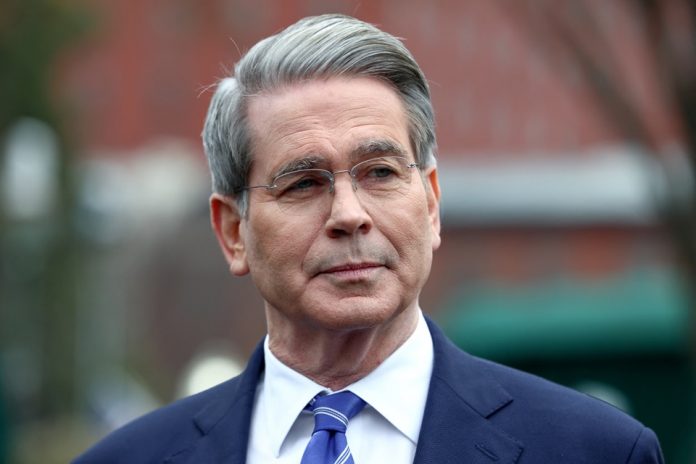
U.S. Treasury Secretary Scott Bessent has responded coolly to Elon Musk’s announcement of his new “America Party,” urging the billionaire to prioritize his business responsibilities over political ambitions.

His comments came Sunday during a CNN interview, one day after Musk unveiled plans for a third-party movement to disrupt what he called the U.S.’s “one-party system.”

When asked if the Trump administration was rattled by Musk’s move, Bessent offered a diplomatic but pointed response: “I believe that the boards of directors at his various companies wanted him to come back and run those companies, which he is better at than anyone,” he said.

“So I imagine that those boards did not like this announcement yesterday and will be encouraging him to focus on his business activities, not his political activities.”

The rebuke underscores growing unease within both the White House and financial markets over Musk’s increasing foray into politics — a move that some investors believe is coming at a steep cost to his companies, particularly Tesla.

The CEO had earlier this year vowed to return to the office – a development that saw Tesla’s share jump.

“Back to spending 24/7 at work and sleeping in factory/server rooms. I must be super focused on X, xAI and Tesla (plus Starship launch next week) as we have critical technologies rolling out,” Musk said

A Bitter Split

Musk and Trump were once politically aligned, with the Tesla and SpaceX chief donating over $280 million to Trump’s 2024 presidential campaign — the most of any individual donor that cycle. He even joined the Trump administration’s budget-cutting drive, heading up the so-called Department of Government Efficiency (DOGE) before stepping down in May.

But relations between the two frayed after Trump passed a sweeping domestic policy bill featuring multitrillion-dollar tax breaks and massive cuts to social services. Musk blasted the bill as fiscally reckless, calling it a “Porky Pig” package that would explode the national debt.

Since then, Musk has publicly vowed to fight against any lawmakers who supported the legislation. His creation of the “America Party” is widely seen as a political counterpunch against both parties — and especially against Trump’s tight grip on the GOP.

Investors Wary of Musk’s Political Drift

While Musk’s political supporters welcomed his move as a bold stand against the establishment, investors in Tesla and his other ventures were far less enthusiastic.

Wedbush Securities analyst Dan Ives, a long-time Tesla bull, said Musk’s political foray is exactly what shareholders didn’t want to see right now.

“Musk diving deeper into politics and now trying to take on the Beltway establishment is exactly the opposite direction that Tesla investors/shareholders want him to take during this crucial period for the Tesla story,” Ives said.

“While the core Musk supporters will back Musk at every turn no matter what, there is a broader sense of exhaustion from many Tesla investors that Musk keeps heading down the political track.”

Ives said the “initial relief” felt by shareholders after Musk left DOGE has now “taken a turn for the worse,” especially with Musk now shifting attention toward founding a new political force.

“I didn’t invest in a third party or a politician. I invested heavily in Tesla because of Elon’s brilliant technical mind. I’m disappointed, to say the least.

In after-hours trading on Sunday, Tesla shares dipped 0.85%, reflecting market jitters about Musk’s dual roles and mounting distractions,” Stock Mom, a Tesla investor, wrote.

Polling Trouble

Bessent acknowledged that some of the principles Musk championed at DOGE — namely efficiency, leaner government, and accountability — were “very popular.” But he didn’t extend the same praise to Musk’s political profile.

“I think, if you looked at the polling, Elon was not,” he said.

That line reflects a broader challenge for Musk: while his tech persona commands admiration, his political brand remains polarizing. A recent Quinnipiac University poll found that while a majority of Americans admire Musk’s entrepreneurial accomplishments, just 29% said they would consider supporting a political party led by him.

What’s Next for Musk and “America Party”?

As of now, Musk has not registered the “America Party” with the Federal Election Commission. He has hinted that the group could focus its resources on a narrow set of Senate and House races to wield influence in a sharply divided Congress.

He said Saturday that targeting “just 2 or 3 Senate seats and 8 to 10 House districts” would be enough to swing key votes on contentious legislation — a clear signal that Musk wants to leverage his money and platform as a power broker rather than a traditional party leader.

Still, political analysts are skeptical that Musk can pull off the kind of electoral insurgency he envisions. Building a viable third party in the U.S. has proven virtually impossible in modern history, especially without grassroots infrastructure or bipartisan support.

A Costly Diversion?

At a time when Tesla is grappling with declining deliveries, heightened competition from Chinese EV makers like BYD, and a sluggish EV market globally, Musk’s growing political involvement is seen by many as an unwanted distraction.

With Tesla’s stock under pressure and AI ventures like xAI still in early stages, even some of Musk’s loyal shareholders are questioning whether his focus on politics risks undermining the very companies that earned him his platform.

Eva McMillan, a Tesla shareholder asked Musk on Sunday: “Elon, what happened to your promises to spend 24/7 at work? How are you going to fit in full time politics?”

While there seems to be a growing support for the America Party, including from billionaire investor Mark Cuban, the market and the administration are sending Musk a message: run your companies, not a party.

Building With and Managing AI Agents – New Tekedia Institute Course

1

In today’s digital economy, building with AI agents is no longer a futuristic concept but a present-day necessity. AI agents are transforming sectors by executing tasks autonomously, enhancing productivity, and driving business innovation. Whether in customer service, finance, or healthcare, these intelligent systems streamline operations and deliver better outcomes. Entrepreneurs and enterprises must now learn to build layered ecosystems of AI agents that interact, collaborate, and self-optimize in real-time.

However, as the power of AI grows, so does the responsibility of managing it. Tekedia emphasizes that managing AI agents requires clear governance frameworks, ethical oversight, and human-in-the-loop systems to ensure alignment with business goals and societal values. Trust, transparency, and continuous training are essential to mitigate risks and maintain control. By combining technical execution with strategic oversight, organizations can harness AI agents to unlock exponential value across industries.

In this lecture, available in Tekedia Mini-MBA and Tekedia AI in Business Masterclass programs, Tekedia Institute Faculty Orakwe John, MBA educates on how to build with and manage AI agents. Pick your seat here for the 18th edition of Tekedia Mini-MBA which begins in Sept 2025!

Trump Tariffs to Take Effect August 1 for Nations Without Trade Deals — Treasury Secretary Bessent Confirms

0

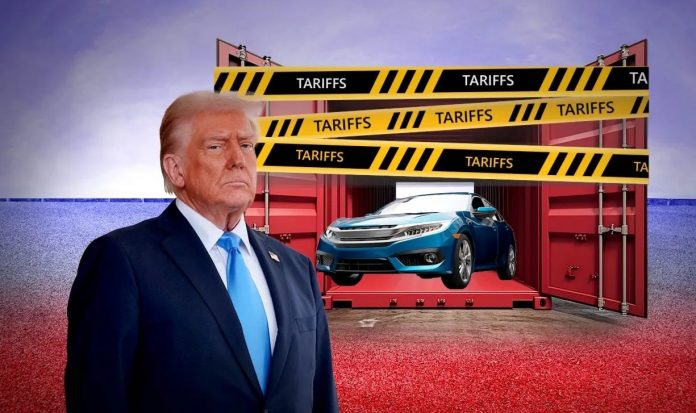
Treasury Secretary Scott Bessent said on Sunday that the steep tariffs President Donald Trump announced in April will go into effect on August 1 for U.S. trading partners that fail to reach new trade agreements with Washington before then.

The move ends a 90-day tariff reprieve that had calmed global markets but now reintroduces uncertainty, especially for countries still locked in trade talks with the administration.

Speaking on CNN’s State of the Union, Bessent made clear that letters will be sent this week to several countries notifying them of the looming reversion to the “April 2 tariff level” unless deals are struck in the coming days.

“President Trump’s going to be sending letters to some of our trading partners saying that if you don’t move things along, then on August 1, you will boomerang back to your April 2 tariff level,” Bessent said.

Bessent rejected the idea that August 1 constitutes a new deadline, insisting instead that it is a final date for implementation.

“We are saying this is when it’s happening. If you want to speed things up, have at it,” he said, emphasizing that countries are free to renegotiate terms before the new rate takes effect.

Background: The April Tariff Shock and 90-Day Reprieve

In April, Trump stunned markets and allies by announcing sweeping “reciprocal tariffs” on nearly all major U.S. trading partners, citing decades of unfair treatment. But after widespread backlash and retaliatory threats from countries including Canada, Germany, South Korea, and Japan, the president issued a 90-day pause on implementation — a move that bought time for negotiations but also introduced confusion about the actual tariff timeline.

The initial deadline had been expected to hit July 9, based on Trump’s April 9 executive order. However, Bessent’s comments — along with remarks from Commerce Secretary Howard Lutnick and Trump himself — confirm that August 1 is now the effective date. Despite this shift, as of Sunday, the White House had not issued a revised executive order officially changing the date from July 9 to August 1.

“They’ll start to pay on August 1,” Trump told reporters Friday. “The money will start to come into the United States on August 1, in pretty much all cases.”

Implications on Market, Bilateral Ties

The decision puts intense pressure on U.S. allies to finalize new trade terms in the coming three weeks. Trump and Bessent suggested that “big announcements” of new agreements could arrive in the next few days. However, many economists warn that trade deals — even narrower tariff negotiations — often take years to conclude.

“Free trade arrangements the U.S. negotiated have taken an average of three years,” noted Rajeev Sibal, a senior global economist at Morgan Stanley. “Even though these talks are more targeted, the historical precedent remains informative.”

The administration’s aggressive tariff posture is raising red flags across financial markets. U.S. stock futures fell Sunday night following confirmation of the August 1 implementation date:

  • Dow futures dropped 146 points, or 0.32%
  • S&P 500 futures fell 0.39%
  • Nasdaq 100 futures slipped 0.42%

This pullback comes despite a strong market rally last week, during which the S&P 500 and Nasdaq closed at record highs. Investors had largely believed that Trump’s “reciprocal” tariffs would not take full effect, especially after the White House downplayed the July 9 deadline, calling it “not critical.”

Wall Street’s Divided View

Markets are now navigating a precarious mix of optimism over corporate earnings and anxiety over sudden trade escalations. Some, like Tom Lee, head of research at Fundstrat Global Advisors, view the volatility as a potential upside story.

“I agree with anybody who says that, ‘Look, we’ve reshaped some of the economic flows around tariffs,’ but that’s an upside story because if it plays out better, that’s an earnings surprise,” Lee said Thursday on CNBC. “This is the most hated V-shaped rally.”

But others fear that the combination of record-high equity valuations and new trade barriers could inject fresh volatility. Companies with global supply chains are particularly exposed, especially if tariff rates increase beyond investor expectations or retaliatory measures resurface.

With time running out, all eyes will be on whether Trump’s team can lock in any trade concessions or partial agreements in the days ahead. While Bessent and Trump both suggested that letters to trading partners will go out Monday, the administration has so far avoided detailing which nations are closest to striking deals — and which ones are set to be hit by the full tariff regime.

Either way, unless the White House issues a formal reversal of the April executive order, August 1 is now set as the pivotal date — one that could define the trajectory of both U.S. trade policy and market sentiment for the rest of the year.