DD
MM
YYYY

PAGES

DD
MM
YYYY

spot_img

PAGES

Home Blog Page 933

What If Elon Musk Built a Casino? Tesla Stock Fans Would Line Up to Play

0

It’s not as crazy as it sounds. Elon Musk has already changed the way cars are made, how people fly to space, how solar energy works, and even how people use social media. The man who built Tesla and SpaceX might open a casino. What would happen? There’s no doubt that this casino would attract both players and traders. Tesla stock price changes are like religion to some fans, and they invest based on Musk’s tweets alone. The world of online betting has accepted Bitcoin and NFTs, and Musk’s business is likely to appeal to people who are tech-savvy and like to try new things. Indeed, crypto betting sites are already leading the way for this mixed experience. For a taste of the future, visit talk sport bet.

Let’s take a look at what a “Musk Casino” might look like, from the games and the style to how it uses technology and how it appeals to customers.

A Futuristic Space-Age Casino Design

The way a Musk-built casino looks and feels would be very different from the norm. There are no velvet rugs or neon signs that flash. It’s like a mix between Mars and the Las Vegas Strip. The design would look more like a Space Station Lounge than a Bellagio betting floor, since Tesla likes simple things and SpaceX likes industrial ones.

Possible Design Features:

Element Musk-Inspired Interpretation
Architecture Dome-like, self-sustaining structure (like Mars bases)
Energy Source 100% solar-powered with Tesla Powerwalls
Slot Machines Touchscreen, voice-activated, AI-enhanced
Table Games Fully digital with holographic dealers
VR Zones SpaceX launch simulators + casino hybrids
Transport Access Hyperloop terminals or underground Tesla tunnels

This would appeal not only to gamblers but to engineers, investors, and tech fanatics who follow Musk as a cultural icon. They’re not just placing bets — they’re participating in a live science-fiction experience.

Crypto-First, Fiat-Second Payment System

It’s likely that a casino owned by Musk would stay away from fiat cash whenever possible. Players could expect a blockchain-first payment model since Musk has backed Dogecoin, Bitcoin, and the crypto movement as a whole in the past. In fact, his Tesla company used to let people pay for cars with Bitcoin, and his tweets have caused big changes in the market.

Predicted Accepted Currencies:

Currency Likely Reason for Inclusion
Dogecoin Musk’s favorite “people’s crypto”
Bitcoin Popular among tech enthusiasts
Ethereum Smart contract functionality
SpaceX Token* Branded coin for casino rewards (speculative)

(*hypothetical, but highly probable if Musk builds an ecosystem.)

For fans already familiar with trading Tesla stock on Robinhood or eToro, managing crypto wallets for betting wouldn’t be a leap — it would feel native.

AI-Powered Personalized Gaming Experience

Musk has talked for a long time about the power of AI, including both its uses and its risks. Machine learning is at the heart of Tesla’s self-driving software, so it makes sense to use the same ideas in a casino. Every time someone played blackjack or a slot machine, the hand could be changed based on their risk tolerance, mood, or even stock holdings.

AI Features That Could Redefine Gambling:

  • Real-time adaptation to player behavior

  • Tesla Stock-Based Betting Modes: Win more when Tesla stock surges

  • Neuralink Compatibility: Brain-controlled games (conceptual, but on-brand)

  • Automated responsible gaming tools built on machine learning.

The result? A deeply personalized, highly engaging experience that makes other online casinos feel primitive.

A Cult Brand Effect: From Stockholders to Gamblers

Tesla owners aren’t like other shareholders; they’re loyal to the brand. A lot of them buy Tesla stuff, read every tweet Elon makes, and even name their pets after Tesla cars. People like these would wait in queue to get into a casino that Musk built, especially if it had a shareholder loyalty program or other perks for people who own $TSLA.

Potential Loyalty Perks for Tesla Fans:

Tesla Ownership Status Casino Benefit
Tesla Car Owner Free credits or bonus spins
Tesla Stockholder VIP entry or higher payout rates
Starlink Subscriber Access to exclusive live games
SpaceX Donor/Backer Private game rooms or NFT collectibles

Musk’s audience treats his companies like a lifestyle. A casino would just be the next logical step in the fandom — one where risk and reward meet in both the market and the gaming floor.

Could a Musk Casino Really Happen?

Elon Musk already has a lot of power over the stock market, social media (through X), and even payment systems (through PayPal roots). It’s not impossible for him to move into entertainment or online gaming, especially since he keeps testing the limits of digital communication, decentralised economies, and immersive technology.

The world’s online gambling market was worth more than $95 billion in 2024. With the rise of crypto casinos and NFT-based gaming economies, it makes strategic sense for casinos to focus on technology. Musk could build a cross-platform casino empire using Tesla’s “software-first” method, Starlink’s ability to work anywhere in the world, and X’s user data.

If you’re interested in how crypto, gaming, and new technology can work together, sites like https://first.com/casino are just the beginning of what’s possible.

It wouldn’t just be a place to win at Elon Musk’s casino; it would be a sign of the future. Crypto can power high-stakes games. Smart systems are keeping track of every move you make. Jackpots with a Tesla theme that are linked to stock market booms. It wouldn’t feel like gambling to fans or investors; it would feel like getting in on the next big thing.
Robinhood Invents A New Layer of Finance by Tokenizing SpaceX, OpenAI Shares

0

The next layer of finance at scale: “Robinhood stock surged 10% on Monday to reach an all-time high after the trading platform announced its entry into tokenized private equity, offering users in the European Union access to shares of OpenAI and SpaceX.”

Yes, Robinhood is offering tokenized shares of OpenAI and SpaceX to European users through its crypto platform, making these private company equities accessible through blockchain technology. This allows users to own fractional shares of these companies, which are not publicly traded, through tokens on Robinhood’s EU crypto app. The tokens are distributed via Robinhood’s custody wallet and are part of a broader expansion of their crypto offerings into Europe.

Robinhood is acquiring shares of private companies, such as OpenAI and SpaceX, directly from existing shareholders or through special purpose vehicles (SPVs) created for this purpose, according to AInvest.

Here’s a breakdown of how Robinhood is likely sourcing these shares:

Existing Shareholders: Robinhood may purchase shares from employees, early investors, or other individuals holding equity in OpenAI and SpaceX, according to CNBC.

Special Purpose Vehicles (SPVs): Robinhood could establish SPVs specifically to acquire and hold shares of these private companies. SPVs pool capital from investors and acquire shares, streamlining the process for Robinhood, AInvest reports.

Direct Purchase from the Company: In some cases, Robinhood may purchase shares directly from the companies themselves, though this is less common for private companies.

Tokenization Process:

Share Acquisition: Robinhood or its SPV acquires a quantity of shares in OpenAI and SpaceX.

Token Creation: The acquired shares are then tokenized, creating digital tokens representing fractions of the shares.

Token Distribution: These tokens are distributed to Robinhood’s EU customers, allowing them to invest in these previously inaccessible private companies, says CNBC.

Robinhood Stock Hits Record High as It Launches Tokenized OpenAI and SpaceX Shares in Europe

Robinhood Stock Hits Record High as It Launches Tokenized OpenAI and SpaceX Shares in Europe

0

Robinhood stock surged 10% on Monday to reach an all-time high after the trading platform announced its entry into tokenized private equity, offering users in the European Union access to shares of OpenAI and SpaceX.

The move marks the company’s most aggressive push yet into the crypto space and could signal a broader challenge to how access to private markets is structured globally.

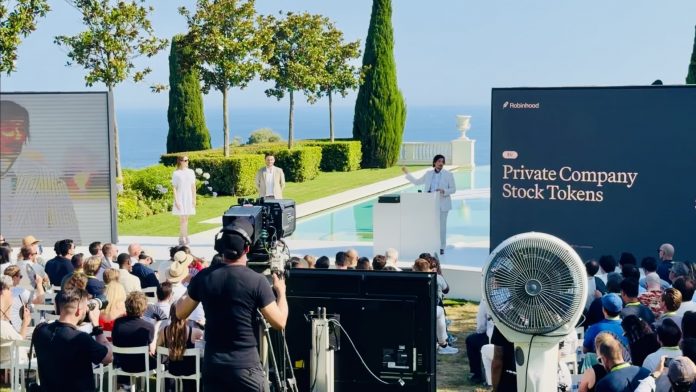
During its product showcase in Cannes, Robinhood unveiled a suite of blockchain-enabled products, including over 200 tokenized stocks and ETFs now tradable on its EU crypto app — all commission- and spread-free, available 24/5. But the spotlight fell squarely on its decision to tokenize equity in OpenAI and SpaceX, two of the most tightly held private companies in the world.

While neither OpenAI nor SpaceX is publicly listed, Robinhood’s crypto division is leveraging blockchain to democratize access to equity markets that have traditionally been the domain of venture capitalists and high-net-worth individuals.

“We wanted to make sure we were giving access,” said Johann Kerbrat, Robinhood’s general manager of crypto. “What we discussed on stage was how to address the inequality between people who’ve historically had access to these kinds of companies — and everyone else. That’s the really exciting part: now everyone will be able to get it.”

The company is marking the launch with a marketing campaign offering €5 worth of OpenAI and SpaceX tokenized shares to every eligible EU user who registers to trade stock tokens before July 7. To back this campaign, Robinhood has set aside $1 million worth of OpenAI tokens and $500,000 worth of SpaceX tokens.

This rollout is Robinhood’s first step into tokenizing private companies, a feat made possible largely due to the EU’s relatively liberal regulatory environment. Unlike in the United States, there are no accredited investor rules in the European Union restricting who can invest in private equity — meaning anyone qualified to trade tokenized stocks in the EU can now own a slice of some of the world’s most coveted tech companies.

“The goal with tokenization is to let anyone participate in this economy,” Kerbrat said.

Why Not in the U.S.?

For now, this opportunity is exclusive to European users, with Robinhood signaling that U.S. investors shouldn’t expect similar access in the near future. Strict U.S. regulations — particularly those around who qualifies as an accredited investor — remain a barrier to broader participation in private equity markets.

Robinhood CEO Vlad Tenev has previously called for regulatory reform, urging U.S. authorities to adopt a more modern approach that recognizes the role of blockchain in expanding economic access. But the U.S. Securities and Exchange Commission (SEC) has remained wary of crypto-related equity innovations.

Nevertheless, Robinhood’s U.S. user base isn’t being left behind entirely. The company announced that American users will now have access to staking for Ethereum and Solana, a major milestone after months of regulatory uncertainty that had kept such offerings off the table.

Building the Infrastructure

The tokenized stock launch is supported by Robinhood’s newly unveiled Layer 2 blockchain built on Arbitrum, a scaling solution that enables faster and cheaper crypto transactions. The blockchain is integrated with the company’s custody wallet, where the tokenized shares are delivered to users.

This infrastructure is intended to form the backbone of Robinhood’s decentralized financial offerings and could eventually support everything from synthetic assets to smart contract-based investing strategies.

Robinhood’s pivot to tokenized private equity is more than a product launch — it’s a strategic bet on financial inclusion through crypto. Tokenized assets have long been hyped as a way to open up access to previously restricted investment classes, from real estate to venture capital.

Robinhood is pushing the boundaries of how people think about ownership and access in modern finance by making private equity tradable around the clock without commission. In doing so, it’s not just expanding its product line — it’s trying to rewire the rules of the game.

The challenge, however, is ensuring these moves gain traction amid regulatory scrutiny and technical complexity. As of now, no indication has been given on whether the tokenized shares represent real equity or derivative exposure, nor whether OpenAI or SpaceX have approved or endorsed the offering.

However, Monday’s announcement electrified investor sentiment, sending Robinhood shares climbing to their highest point yet and reinforcing the company’s pivot from meme stock facilitator to global fintech disruptor.

The move, for now, plants Robinhood firmly in the middle of a growing global experiment: can tokenized finance deliver on its promise to broaden economic opportunity — or will it remain a niche tool for crypto-native investors?

Dangote Refinery’s N720bn Distribution Scheme to Save Nigerians Over N1.7tn Annually, Drive Down Fuel Prices

0

The Dangote Petroleum Refinery says its ambitious nationwide fuel distribution initiative — valued at N720 billion — is set to save Nigerians over N1.7 trillion each year, mainly by cutting logistics costs, lowering pump prices, and easing inflationary pressure.

In a statement issued Sunday, June 30, the company revealed it has begun deploying 4,000 Compressed Natural Gas (CNG)-powered trucks to deliver petroleum products across Nigeria, absorbing more than N1.07 trillion annually in distribution expenses that would typically be passed on to consumers.

The company said the trucks will begin direct delivery of petrol and diesel from August 15, targeting filling stations, industrial facilities, telecom towers, aviation operators, and other high-volume users across the country. The trucks are part of a broader logistics overhaul that includes new CNG filling stations and credit support for marketers.

“This bold step will see the privately-owned refinery absorb over N1.07 trillion annually in fuel distribution costs,” the statement reads. “The initiative is also poised to significantly benefit over 42 million Micro, Small and Medium Enterprises (MSMEs) by reducing energy costs and enhancing profitability.”

Pump Prices Expected to Drop

The refinery estimates that distribution costs alone average N45 per liter, which has long been a burden on marketers and end users, especially amid the non-functionality of Nigeria’s state-owned pipelines.

By removing this cost through direct CNG-fueled deliveries, Dangote’s initiative is expected to help lower pump prices, bring price uniformity across states, and reduce inflation in fuel-dependent sectors such as manufacturing, agriculture, and transportation.

The company reiterated its goal of meeting Nigeria’s daily fuel demand of 65 million liters, made up of 45 million liters of petrol (PMS), 15 million liters of diesel, and 5 million liters of aviation fuel.

Experts, Presidency, and Marketers Applaud the Move

The Presidency and industry stakeholders hailed the announcement as transformative. Tosin Coker, Commercial Coordinator of the Presidential Compressed Natural Gas Initiative (PCNGI), described it as a pivotal endorsement of Nigeria’s gas-powered transport vision.

“Dangote Group’s acquisition of 4,000 CNG trucks is not only impressive in scale but also highly strategic,” Coker said. “It signals to the market that CNG is no longer a distant prospect but a current, practical solution to high energy costs, emissions, and supply chain challenges.”

The Independent Petroleum Marketers Association of Nigeria (IPMAN) welcomed the move as a long-awaited solution to decades-old infrastructure gaps.

“Our pipelines have been non-functional for years. We’ve had to rely on expensive transport from coastal depots. Dangote’s intervention lifts a huge burden off the shoulders of independent marketers,” said IPMAN spokesperson Chinedu Ukadike.

Prominent economist Professor Ken Ife called the initiative a “relief mechanism” for households and businesses already weighed down by post-subsidy inflation. Bismarck Rewane, CEO of Financial Derivatives Company, said the scheme would curb inefficiencies and “remove the parasitic layer of middlemen,” who extract value without investment.

“What Dangote is doing achieves two key objectives: delivering products across the country at a uniform price by eliminating bridging costs, and reducing logistics expenses through CNG-powered distribution,” Rewane said.

He added that the direct-to-station model and extension of credit facilities to marketers would boost liquidity and resuscitate many struggling outlets.

Economic, Environmental, and Job Impacts

Beyond fuel savings, the Dangote Group says its initiative is aligned with Nigeria’s economic diversification and sustainability goals. The use of CNG trucks is expected to cut carbon emissions and promote cleaner transport alternatives, in line with Nigeria’s energy transition targets.

Over 15,000 direct jobs are expected to be created across the logistics chain, including roles for truck drivers, CNG station operators, mechanics, and support personnel. It will also revive dormant filling stations, enhance last-mile delivery, and reduce fuel scarcity in hard-to-reach areas.

Moreover, the scheme aims to curb smuggling, which has surged since the fuel subsidy removal. With fuel being sold at unified, fairer prices nationwide and transported through tracked company channels, the risk of cross-border diversion is expected to reduce drastically.

The Dangote Group’s investment in logistics infrastructure marks a significant pivot from the era of costly third-party distribution, inadequate depots, and pipeline failures that have long plagued Nigeria’s downstream petroleum sector.

The company is not only reshaping fuel pricing but also triggering what some experts see as the first comprehensive market-driven reform in the post-subsidy era, by bearing the fuel transport costs and bringing direct delivery services.

Wave Secures $137M Debt Funding to Expand Mobile Money Services Across Africa

0

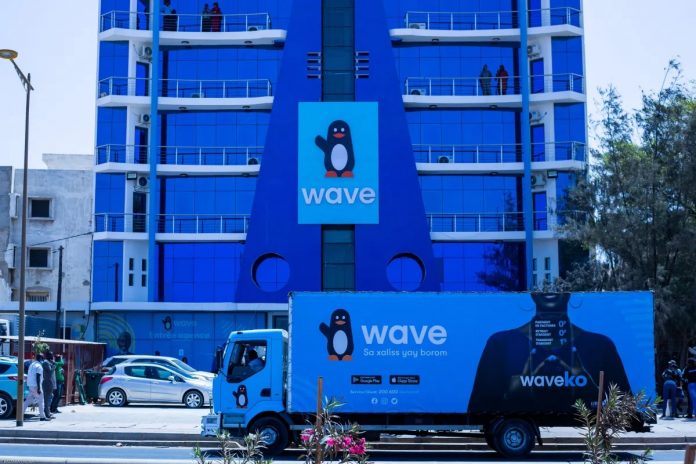
Wave Mobile Money, a mobile financial service that offers affordable solutions for saving, transferring, and borrowing money across Africa, has secured $137 million in debt financing to expand operations across existing and new markets.

The funding led by Rand Merchant Bank (RMB) and backed by global development finance institutions, including British International Investment (BII), Finnfund, and Norfund, underscores investor confidence in Wave’s low-cost financial services model.

“I’m thrilled about this funding, it means we can help even more people by delivering the best possible product at the lowest possible price”, said Drew Durbin, CEO of Wave.

Also commenting, the regional Director and Head of Public Affairs at Wave Coura Sene said, “This financing is a major milestone for Wave and mobile money in Africa. It reflects growing confidence in our model and our mission: to build radically inclusive financial infrastructure that serves everyone, especially those traditionally left out by the formal banking system.”

Founded in 2018 by Drew Durbin and Lincoln Quirk, Wave has grown into one of Africa’s most valuable startups, revolutionizing digital payments in Africa with its low-cost, mobile-first model, driving financial inclusion for millions of unbanked and underserved individuals.

Since its inception, the mobile money has experienced remarkable growth across West Africa, now operating in eight countries and serving over 20 million monthly active users. The company boasts a network of more than 150,000 agents and employs 3,000 people across the continent.

Wave achieved unicorn status in September 2021 after raising $200 million in a Series A funding round, valuing the company at $1.7 billion. This made it Francophone Africa’s first unicorn and the largest Series A round for an African fintech startup at the time. It focuses on mobile money services, offering low-cost transactions with a 1% transfer fee, free deposits, and withdrawals via a mobile app or QR code cards for non-smartphone users.

In Senegal, Wave captured nearly 70% of the mobile money market within three years, demonstrating its disruptive potential. Its remittance arm, Sendwave, enables diaspora communities to send money directly to local wallets, enhancing economic connectivity.

Wave’s standout feature is its affordable pricing, free deposits and withdrawals via its mobile app and a flat 1% fee for peer-to-peer transfers, significantly lower than competitors like MTN and Airtel. This model, coupled with a network of over 150,000 agents and 3,000 employees, serves more than 29 million monthly active users across eight West African markets, including Senegal, Côte d’Ivoire, and Cameroon.

By passing additional fees for bill payments to businesses, Wave ensures cost transparency, making it a preferred choice for underserved communities. The company’s mobile-first approach has brought millions into the formal financial system, supporting small businesses, farmers, and households.

For two consecutive years, 2023 and 2024, Wave has been the only African startup listed in Y Combinator’s top 50 highest-earning companies, highlighting the strength and scalability of its business model. A May 2025 partnership with TerraPay has further enhanced Wave’s remittance capabilities, particularly in Mali, where users can receive funds from global markets directly into their Wave wallets. This collaboration capitalizes on Mali’s 80%+ mobile penetration to reduce reliance on informal remittance channels, promoting secure and affordable cross-border transactions.

Wave also made strides in The Gambia through a June 2025 partnership with the Gambia Transport Service Company (GTSC). This initiative introduced digital fare payments for public transport, allowing unbanked citizens to pay via Wave’s platform, reducing cash dependency and improving efficiency in the transport sector.

Wave Mobile Money is a cornerstone of Africa’s fintech revolution, bridging the gap between the unbanked and the digital economy. With its affordable, scalable model, strategic partnerships, and recent funding, the company is poised for further growth.