DD
MM
YYYY

PAGES

DD
MM
YYYY

spot_img

PAGES

Home Blog Page 935

OKX’s DEX Records ATH of 534,000 Single Day Transactions On Solana Network

0

OKX’s decentralized exchange (DEX) recorded an all-time high of 534,000 single-day transactions on the Solana network, driven significantly by the LetsBONK memecoin market. This surge also saw 112,000 daily trading users, marking the second-highest user activity level in OKX DEX’s history on Solana. However, transaction volume growth was relatively modest at 8,712, suggesting the spike was more about transaction count than overall volume.

The activity aligns with increased interest in Solana-based memecoins and OKX’s robust integration with Solana’s high-throughput blockchain. Recent reports show OKX’s 24-hour trading volume ranging from $755 billion to $3.33 trillion, with some sources citing $20.56 billion or $23.68 billion. However, the most reliable sources indicate the volume is around $755,131,725.71 or $1,644,750,858.50. OKX has $20,852,083,575.24 in total assets. The total market capitalization of assets traded on OKX is around $3.33 trillion to $3.56 trillion.

ETH/USDT is one of the most active trading pairs, with a 24-hour volume of $328,169,675.66. OKX offers over 1,650 trading pairs, including various cryptocurrency pairs. OKX is a leading global cryptocurrency exchange with a strong presence in the market, offering diverse trading options and advanced security features.

Solana’s ability to handle over half a million transactions in a day reinforces its reputation for high throughput and low-cost transactions, making it a preferred blockchain for retail-driven memecoin trading. This could attract more projects and users to Solana, boosting its ecosystem growth. The surge, fueled by LetsBONK, reflects the speculative frenzy around memecoins, which often drive retail participation. This can increase trading volumes and liquidity on platforms like OKX but also risks volatility and potential market corrections if hype fades.

OKX’s DEX hitting an all-time high transaction count signals its increasing competitiveness in the decentralized exchange space. This could challenge rivals like Uniswap or PancakeSwap, especially if OKX continues leveraging Solana’s infrastructure for fast, cheap trades. The 112,000 daily trading users indicate strong retail engagement, but the modest 8,712 transaction volume suggests smaller per-transaction values, typical of retail-driven memecoin trading. Institutional players may remain cautious due to the speculative nature of these assets.

While Solana managed the surge, such spikes test network stability. Any congestion or outages could erode user confidence, especially as Solana competes with Ethereum and newer layer-1 chains. The memecoin-driven surge highlights a divide between retail traders chasing short-term gains and institutional investors prioritizing fundamentals. Retail dominance in this event (evidenced by high transaction counts but low volume) underscores a speculative market segment that institutions often avoid.

Memecoins like LetsBONK thrive on hype, not utility, creating a divide between speculative assets and projects with tangible use cases (e.g., DeFi or NFTs). This could skew Solana’s ecosystem perception toward volatility rather than long-term value. OKX, while offering a DEX, operates as a centralized entity with significant influence. The divide between fully decentralized platforms and hybrid models like OKX’s DEX raises questions about control, transparency, and user trust in DeFi.

Solana’s performance cements its edge in scalability, but the divide with Ethereum (higher security, broader adoption) and emerging chains like Aptos or Sui persists. Solana’s memecoin-driven growth may not appeal to developers focused on enterprise-grade solutions. This ATH transaction volume on OKX’s Solana DEX underscores Solana’s technical prowess and OKX’s growing DeFi footprint but also highlights risks tied to speculative memecoin trading. The divide between retail speculation and institutional caution, as well as between hype-driven assets and utility-focused projects, will shape how platforms like OKX and networks like Solana evolve.


OpenAI Quietly Tests ‘Study Together’ Mode in ChatGPT Amid Push to Redefine Educational Use of AI

0

OpenAI is quietly piloting a new feature in ChatGPT called “Study Together,” signaling a major shift in how the AI tool is being positioned for educational use.

Though not yet officially announced, several ChatGPT users have begun seeing the tool listed among their available features, raising intrigue and questions about its role in learning — and its potential to curb cheating while enhancing student engagement.

The new mode appears to offer a radical departure from the chatbot’s usual behavior. Instead of providing instant answers to user prompts, Study Together prompts users with questions and asks them to work through problems on their own — emulating the role of a tutor rather than a search engine.

OpenAI has not issued a formal statement about the feature. When asked, ChatGPT itself replied, “OpenAI hasn’t officially announced when or if Study Together will be available to all users — or if it will require ChatGPT Plus.”

According to early user reports, Study Together feels less like a typical chatbot session and more like being quizzed by a patient study partner. The AI refrains from offering direct solutions too quickly and instead nudges the learner toward deeper understanding, possibly drawing inspiration from Google’s LearnLM and Anthropic’s education-focused version of Claude, which also use similar Socratic approaches.

The strategy here is deliberate: encourage learning and discourage shortcuts. With generative AI already being criticized for enabling academic dishonesty — helping students write essays, generate math solutions, or circumvent assignments — OpenAI appears to be experimenting with ways to channel the tool toward ethical and constructive learning behavior.

For example, ChatGPT may ask users to work through a math problem, explain their thinking on a historical topic, or write short summaries in their own words before giving any feedback or suggestions. This interactive approach could prove effective in developing critical thinking skills and reducing dependence on AI as a crutch.

Early Signs of Broader Educational Intent

Some users speculate that the tool could eventually evolve to include group study capabilities, allowing multiple users to participate in a single session — turning ChatGPT into a kind of AI-hosted virtual study room. While OpenAI has yet to confirm such features, the idea aligns with a growing trend in AI-powered education: making learning collaborative, responsive, and adaptive.

Topics currently dominating ChatGPT’s educational use include finance, stocks, sports, politics, and science, according to Similarweb data. However, interest in deeper subject engagement across areas like literature, history, economics, and philosophy is reportedly growing.

The release of Study Together comes at a time when ChatGPT has already become a fixture in academic settings. Teachers are using it for lesson planning, students treat it like a study companion — and in some cases, an AI ghostwriter. The blurred lines have sparked concern across universities and school boards, prompting calls for tools that promote responsible use.

As ChatGPT has been accused of making it too easy for students to cheat and creating a technology that is “killing higher education,” Study Together may be OpenAI’s way of taking that critique seriously — by embedding pedagogical principles into the product itself.

Still in Testing — But Momentum Is Building

As of now, the Study Together feature is limited to a subset of users, likely those on the ChatGPT Plus plan. Its interface and capabilities may evolve in the coming months, especially as OpenAI gears up for more platform integrations and potentially the rollout of GPT-5.

Observers note that OpenAI has recently been testing a series of experimental features tied to Gmail, Slack, and calendar integration — and that Study Together may be part of a broader shift toward task-specific, modular AI tools that fit distinct user needs.

By subtly shifting ChatGPT from an answer bot into an educational mentor, OpenAI is testing not only a new feature — but a new ethos. If Study Together proves successful, it could serve as a model for how generative AI can support rather than undermine the learning process.

The key challenge, however, will be making the mode available at scale while maintaining quality, and convincing users — particularly students — that they’ll get more out of grappling with knowledge than simply outsourcing it.

So far, OpenAI has kept mum on the future of Study Together. But based on what’s emerging, it could become a defining feature in how ChatGPT is used in classrooms and dorm rooms around the world.

ByteDance to Launch US-Only Version of CapCut as Trump Announces Buyers for TikTok

0

ByteDance is moving to launch a separate US-specific version of its popular video-editing app, CapCut, as pressure mounts under the 2024 divestment law requiring the Chinese company to split from its American operations or face an outright ban.

The upcoming version, named “CapCut US,” will separate American users from ByteDance’s global platform, marking another major development in the company’s broader restructuring to comply with US demands.

According to documentation reviewed by Business Insider, the company is preparing to reconfigure CapCut for American users, essentially rebuilding the app as a stand-alone product. The move is reportedly part of a broader strategy that includes a similar plan to spin off a US-only version of TikTok. ByteDance has not publicly commented on the restructuring efforts, but the shift indicates that the company is trying to preempt enforcement actions while continuing to operate its apps in the lucrative US market.

The development comes just days after President Donald Trump confirmed he had identified a group of wealthy American investors interested in acquiring TikTok. Speaking to Fox News in late June, Trump said he was backing the bid and noted that discussions with China about the proposed sale could begin as soon as this week. A deal would require approval from both US and Chinese regulators, a hurdle that has previously derailed similar transactions under the former administration.

Trump’s announcement and ByteDance’s push to separate its US-facing apps also follow the Supreme Court’s January decision that upheld the divestment law. After the ruling, Trump temporarily halted enforcement, allowing ByteDance more time to restructure or find acceptable buyers for its American assets.

CapCut’s Critical Role in ByteDance’s US Strategy

CapCut, which has been downloaded over 1 billion times globally via Google Play and holds the number one spot in Apple’s US App Store in the photo and video category, is far more than a TikTok companion app. It has become a vital tool for content creators, influencers, and digital marketers, offering viral video templates and seamless integration with TikTok and other platforms.

The decision to develop “CapCut US” suggests ByteDance sees the app as strategically valuable and is eager to ensure its continued presence in the American market. However, the logistics of splitting the platform remain complex. It’s unclear if the US-only version will continue to offer the same global content library, algorithmic editing features, and syncing capabilities that have driven its popularity — or if it will be a scaled-back experience due to national security constraints.

TikTok’s US Clone Also in the Works

ByteDance’s parallel efforts to launch a US-only TikTok app — reported by The Information — reflect the same urgency. Creating standalone US versions of its flagship apps could potentially allow ByteDance to sidestep the full divestiture of assets and remain active in the market, depending on how regulators interpret compliance.

Still, many legal and regulatory questions linger. For example, would the US versions of TikTok and CapCut still share data or algorithms with ByteDance’s core operations in China? Would the new apps be governed independently, with different ownership structures, or would they simply serve as rebranded shells?

ByteDance has yet to reveal whether it will similarly spin off other apps like Lemon8 — its Instagram-style platform — or Gauth, its educational tool, both of which are also covered under the divestment mandate.

ByteDance’s challenge now extends beyond regulatory compliance — it must also convince users to make the switch. That may be difficult as rivals like YouTube and Meta move aggressively to capitalize on uncertainty. YouTube has expanded its Shorts platform with enhanced editing tools, while Meta’s CapCut-like app, Edits, is climbing in the App Store rankings.

In an ecosystem where creators are constantly seeking speed, innovation, and reach, convincing them to migrate to “CapCut US” could be a tough sell — especially if functionality or content access is limited compared to the global version.

A Test Case for Broader Decoupling

The launch of CapCut US and TikTok’s American counterpart may serve as test cases for whether the US government — and consumers — will accept tech decoupling as a viable solution to national security concerns. At the same time, the moves signal ByteDance’s willingness to compromise if it means preserving access to the massive and influential US market.

Whether this strategy satisfies lawmakers or leads to further scrutiny, will depend on the terms of any eventual sale and the transparency of ByteDance’s restructuring.

However, the rollout of CapCut US and its reception by American users — could offer an early glimpse into what a fragmented global tech landscape looks like under intensifying geopolitical pressure.

How Nigerian Influencers Use Sentiments on FALIT Platforms

0

In Nigeria’s fast-evolving digital ecosystem, influencers have become central figures in shaping conversations, public sentiment, and even policy narratives. Their voices travel through social media platforms, stirring reactions that range from enthusiastic support to intense backlash. This situation led a team of analysts at Infoprations to conduct an analysis of over 600 sentiment-labeled interactions curated from the social media handles of prominent business, social, and political influencers in Nigeria. In this piece, strategic insights into how these influencers engage with their followers across Facebook, LinkedIn, and Twitter—collectively referred to as the FALIT platforms are presented.

Who’s Speaking

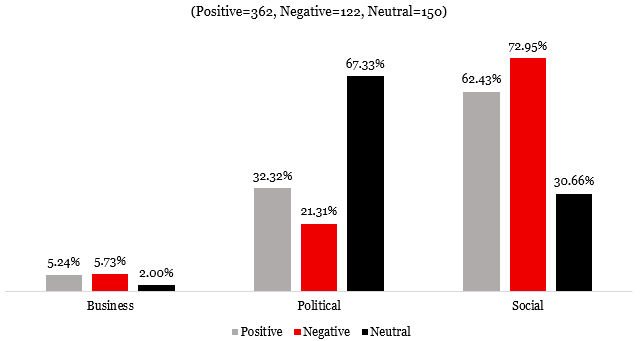
Among the influencers, business influencers seem to have the quietest footprint in the sentiment space. Their content accounts for just over 5 percent of both positive and negative sentiments, and an even lower percentage of neutral sentiment. This relatively low level of engagement suggests that business influencers are yet to fully harness the emotive power of digital platforms. Our analyst also notes that it may reflect the general public’s limited emotional investment in business-related content, or a tendency for business discourse to remain technical and reserved.

Exhibit 1: Influencer category by sentiment types

Source: Social media handles, 2025; Infoprations Analysis, 2025

The largest share, over 67 percent, of interactions involving political content is neutral. While this suggests that political commentary in Nigeria is often presented in a factual or observational manner, it contrasts with the tense political atmosphere in physical settings across the country. However, positive and negative sentiments are still notable, with 32 percent being positive and over 21 percent negative. This blend reflects the complexity of political discourse in Nigeria, where influencers engage actively with governance issues but often with measured expression rather than emotional extremes.

It is social influencers, however, who mostly employ positive sentiment. Our data shows that more than 60 percent of the sentiment is positive, while an even higher 72 percent is negative. This striking polarity reveals the high stakes and the personal relevance of social issues for many Nigerians, as prioritized by these influencers. Topics such as gender, activism, religion, pop culture, and societal values dominate this space. Our analyst notes that the influencers align themselves with these subjects with the intention of provoking strong reactions and fostering communities of both passionate supporters and equally vocal critics.

Exhibit 2: Sentiment type by platform type

Source: Social media handles, 2025; Infoprations Analysis, 2025

Platform Dynamics: Twitter Reigns, LinkedIn Lags

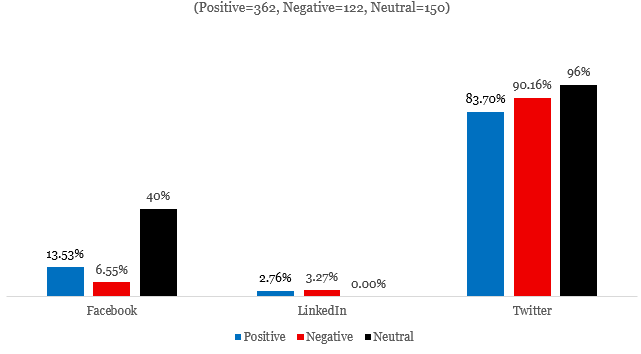
Understanding where these conversations happen is equally important. Twitter emerges as the dominant platform for emotionally driven engagement. Over 83 percent of positive sentiment, 90 percent of negative sentiment, and an overwhelming 96 percent of neutral sentiment are generated on Twitter. This makes it the primary arena for public discourse in Nigeria. Twitter’s immediacy, openness, and viral potential make it ideal for rapid-fire commentary, trending debates, and social movements. Whether the topic is a political scandal, celebrity controversy, or human rights issue, Twitter is where Nigerian voices gather and clash.

Facebook, by contrast, appears more balanced and subdued. It accounts for about 13 percent of positive sentiment, 6 percent of negative sentiment, and 40 percent of neutral sentiment. This suggests Facebook serves as a platform for longer discussions, community-oriented interaction, and moderate debate. It remains important, particularly for reaching diverse demographics, but does not match the emotional velocity of Twitter.

LinkedIn is largely absent in this sentiment landscape. With under 3 percent for both positive and negative sentiment and virtually no neutral presence, LinkedIn has yet to establish itself as a significant space for emotional or value-driven discourse in Nigeria. The platform’s professional tone and content norms may explain this detachment. However, this also presents an opportunity for business and leadership influencers to carve a unique niche, offering thought leadership that blends expertise with personal insight.

What This Means for Influence and Strategy

For those involved in shaping public conversations, be it marketers, civil society organizations, political strategists, or entrepreneurs, these insights carry important implications. Emotional content is the engine of engagement, but its success depends on both the platform and the type of influencer delivering the message. Social influencers, especially on Twitter, are effective at creating viral conversations. Political influencers may find greater value in Facebook’s more deliberative environment. Business voices, while quiet now, have room to grow, especially on LinkedIn where credibility and professionalism are valued.


Editor’s Note: This article is a product of Infoprations’ Communicative Strategies of Nigerian Influencers Project, 2025. The team includes Abdulazeez Sikiru Zikirullah, Moshood Sodiq Opeyemi, Bello Opeyemi Zakariyha, and Oni Oluwaseun.

Last Week, U.S. Spot Bitcoin and Ethereum Collectively Recorded Over $1B Net Inflows

0

Last week, U.S. spot Bitcoin and Ethereum ETFs collectively recorded over $1 billion in net inflows, reflecting strong institutional and retail investor interest. Bitcoin ETFs saw a net inflow of $769 million over three days, with total assets under management reaching $137.6 billion, led by BlackRock’s iShares Bitcoin Trust (IBIT) with $336 million, Fidelity’s Wise Origin Bitcoin Fund (FBTC) at $248 million, and ARK 21Shares Bitcoin ETF (ARKB) at $160 million.

Ethereum ETFs recorded $219 million in net inflows over four days, with assets under management at $10.83 billion, primarily driven by BlackRock’s iShares Ethereum Trust (ETHA) with $99.4 million. This surge aligns with a bullish market sentiment, though short-term volatility remains a factor. The $1 billion+ in weekly net inflows into U.S. spot Bitcoin and Ethereum ETFs signals robust investor confidence, driven by institutional adoption and retail enthusiasm, but it also highlights a growing divide in the crypto market with broader iimplications.

Heavy inflows into ETFs like BlackRock’s iShares Bitcoin Trust ($336M) and Ethereum Trust ($99.4M) indicate institutions are increasingly comfortable with crypto as an asset class, treating it like traditional equities or bonds. This mainstreaming could stabilize prices long-term but risks centralizing influence in traditional finance.

ETF inflows suggest a shift from direct crypto ownership to regulated investment vehicles, potentially reducing self-custody and decentralization ethos. The inflows align with bullish market momentum, with Bitcoin trading around $108,000 and Ethereum at $2,500. Sustained ETF demand could push prices higher, but volatility persists due to speculative trading and macro factors like interest rates or regulatory shifts.

Smaller altcoins may lag, as ETFs focus capital on Bitcoin and Ethereum, widening the performance gap. The success of these ETFs reflects growing regulatory acceptance in the U.S., particularly post-2024 election optimism for crypto-friendly policies. However, stricter regulations could still emerge, impacting ETF accessibility or crypto market dynamics.

U.S. ETFs dominate global crypto investment products, with $137.6B in Bitcoin ETF assets and $10.83B in Ethereum ETF assets. This could attract foreign capital but also exposes the market to U.S.-specific risks like policy changes or economic downturns. Bitcoin ETFs ($769M inflows) outpace Ethereum ETFs ($219M), reinforcing Bitcoin’s dominance as a store-of-value narrative over Ethereum’s utility-driven ecosystem. This could marginalize Ethereum’s growth if investors prioritize Bitcoin’s “digital gold” appeal.

Ethereum’s ETF inflows, while significant, are concentrated in fewer funds (e.g., BlackRock’s ETHA), suggesting less diversified institutional interest compared to Bitcoin. The focus on Bitcoin and Ethereum ETFs funnels capital away from smaller altcoins, creating a “rich get richer” dynamic. Altcoins without ETF exposure struggle to compete for investor attention, potentially stifling innovation in layer-2s, DeFi, or other ecosystems.

Institutional investors dominate ETF inflows, while retail investors may be priced out or prefer direct crypto purchases on exchanges. This creates a divide where institutions benefit from regulated, liquid products, while retail faces higher risks in unregulated markets. ETFs, managed by traditional finance giants like BlackRock and Fidelity, contrast with crypto’s decentralized roots. This shift could alienate purists who value self-custody and peer-to-peer transactions, creating ideological and practical tensions.

The ETF inflow surge underscores crypto’s growing legitimacy but widens gaps between Bitcoin/Ethereum and altcoins, institutional and retail investors, and centralized and decentralized visions. While this strengthens market stability and adoption, it risks concentrating wealth and influence, potentially undermining crypto’s original promise of financial inclusivity. Monitoring regulatory developments and altcoin performance will be key to understanding if this divide narrows or grows.