
DD
MM
YYYY

PAGES

DD
MM
YYYY

spot_img

PAGES

Home Blog Page 940

African Startups: H1 2025 Breaks Records For $10M+ Deals And Exit Since 2022

1

In a resounding display of resilience and growth, African startups have made a powerful statement in the first half (H1) of 2025.

Defying global economic headwinds and a cautious funding environment, the continent’s innovation ecosystem recorded its strongest performance in high-value deals and exits since 2022.

Recall that startups across the continent recorded a remarkable resurgence in fundraising in H1 of 2025, with total funding reaching $1.35 billion, a 78% increase compared to $800 million raised during the same period in 2024.

A report by Africa: The Big Deal, revealed that H1 2025 saw the largest number of $10m deals and exits since 2022, signaling renewed investor confidence and a maturing startup landscape driven by bold ideas and scalable solutions tailored for Africa and beyond.

A deeper look into the funding landscape reveals more nuanced trends around deal sizes, investor activity, and exit momentum. Between January and June 2025, 238 startups across the continent secured funding of at least $100,000. This figure is consistent with trends observed since mid-2023, although it falls slightly short of the numbers recorded in H1 and H2 2024. Of these, 108 startups raised over $1 million again, in line with recent patterns but marginally above average.

Notably, there has been a significant uptick in larger funding rounds. A remarkable 39 startups raised $10 million or more during the period, marking a return to levels not seen since the peak of investor enthusiasm in mid-2022. This is well above the average of 26 large deals per half-year recorded over the past five periods.

While most of these sizeable deals occurred in Africa’s traditional “Big Four” startup ecosystems—Nigeria, South Africa, Kenya, and Egypt, there was also notable activity in emerging markets. These include Côte d’Ivoire (Djamo), Ghana (Zeepay), Senegal (Wave, Kera Health), Togo (Gozem), and Uganda (Furaha), signaling a broader geographic spread of investor interest.

Exit activity also saw a surprising surge. There were 21 reported exits in H1 2025—almost matching the total number of exits recorded across all of 2023 (20) and 2024 (22). June alone saw six exit announcements, a level of activity not witnessed since 2022. However, detailed data on these exits remains limited, making it difficult to assess deal volumes or valuations.

On the investor front, over 330 unique investors participated in at least one $100k+ deal in Africa during H1 2025. This figure marks a slight increase from H1 2024 but remains below H1 2023 levels (400+) and far behind the 675+ recorded in H1 2022. The most active investors so far include DEG (the German Development Finance Institution, part of the KfW group), largely through BMZ’s develoPPP grant programme, and Digital Africa, a subsidiary of French DFI Proparco.

Other consistently active investors in the top ten include Launch Africa, Renew Capital, an Africa-focused venture capital firm that invests in early-stage tech-enabled startups, British International Investment (BII), and Partech Africa. A new entrant to the list is Investing in Innovation (i3), a pan-African initiative that support the commercialization and impact of leading startups with grants, introductions to major healthcare organizations and support to close partnerships.

Overall, the first half of 2025 has seen a healthy mix of stability and momentum in Africa’s startup funding scene, with renewed interest in larger deals and exits pointing to a maturing investment landscape.
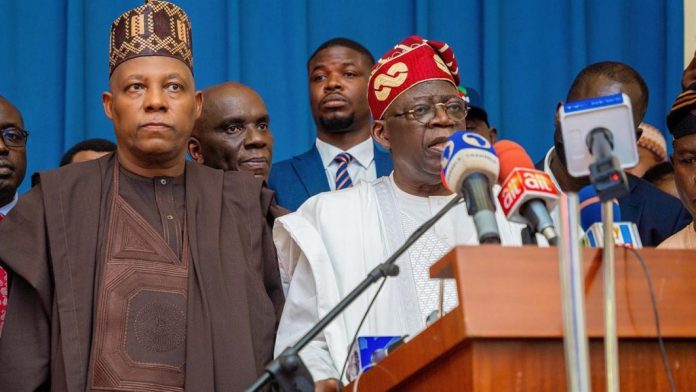

83% of Nigerians Have Lost Trust in Tinubu’s Government, 53% Want to Leave Country – API Survey

0

A staggering 83% of Nigerians say they have little or no trust in the administration of President Bola Ahmed Tinubu, according to the 2025 edition of the Social Cohesion Survey published by the Africa Polling Institute (API).

The extensive national poll paints a bleak picture of public confidence in key institutions and leadership across the executive, legislature, and judiciary, revealing what API describes as “trust at its lowest ebb” in Nigeria’s democratic history.

The survey, conducted through 5,465 face-to-face household interviews using stratified random sampling, targeted citizens aged 15 and above and ensured proportional representation across all geopolitical zones and senatorial districts. Interviews were conducted in English, Pidgin, Hausa, Igbo, and Yoruba.

Of those surveyed, 53% said they have “no trust at all” in President Tinubu’s government, while 30% admitted to having “little trust.” That cumulative figure of 83% distrust in the administration reflects growing national disillusionment less than two years into the president’s term.

Public sentiment was similarly grim towards the National Assembly, where 82% of respondents said they had little or no confidence in the leadership of Senate President Godswill Akpabio and House Speaker Tajudeen Abbas. Trust in the judiciary also continues to deteriorate, with 79% saying they had little or no faith in the institution under both former Chief Justice Kayode Ariwoola and the current CJN, Justice Kudirat Kekere-Ekun.

API attributes this widespread distrust to deepening economic hardship, perceived high-level corruption, and the government’s failure to deliver on campaign promises.

“In comparison with previous editions (2019, 2021, and 2022), the data reveals that citizens’ trust and public confidence are currently at their lowest ebb,” the report noted.

Emigration Dreams and National Disillusionment

The loss of institutional trust is also being mirrored in Nigerians’ growing desire to emigrate. According to the same survey, 53% of citizens said they would relocate abroad with their families if given the opportunity. Many cited the worsening economy, rampant insecurity, and shrinking opportunities as their primary reasons.

Meanwhile, 59% of respondents said they feel “extremely or somewhat dissatisfied” with their lives as Nigerians, while 61% believe that corruption has significantly increased over the past year. A further 64% rated the government’s anti-corruption performance as “poor.”

API described this sharp decline in optimism and public morale as a troubling signal of national fatigue.

“This is a concerning indicator of low national morale and a need for urgent socioeconomic reforms to give Nigerians renewed hope and confidence in their homeland,” the institute said.

Gender Equity and Emerging Progressive Sentiments

In contrast to the declining trust in political leadership, the survey found strong support for gender equity among Nigerians. A remarkable 71% agreed that women should be allowed to lead in politics, corporate spaces, and religious organisations.

Furthermore, 73% said women should be entitled to equal inheritance, and another 73% believe women married into another state should enjoy equal rights in their husband’s state of origin — an issue that has frequently sparked legal and cultural debates in Nigeria.

When asked about electability, 63% said they would vote for a female president, 69% for a female state governor, and 76% for a female local government chairperson — all suggesting a growing acceptance of women in leadership roles.

However, opinions on the government’s gender equity efforts were mixed: 39% rated it as poor, while 33% said “fair” and 28% gave a positive rating.

Faint Hopes for the Future

Despite the overwhelming dissatisfaction with current conditions, there remains a glimmer of hope among some Nigerians. 56% of respondents said they believe the future of the country will be better, while 26% believe it will worsen. The rest remained uncertain.

That cautious optimism, API suggests, could still be nurtured if the government demonstrates the political will to address systemic challenges and implement tangible reforms that touch the everyday lives of citizens.

However, the message from the public indicates that trust in government and institutions is alarmingly low, and without swift intervention, Nigeria risks sliding deeper into social fragmentation and civic disengagement.

Court Upholds NIBSS’s Legal Authority to Manage BVN Database, Rules Privacy Not Violated

0

The Federal High Court in Abuja has affirmed that the Nigeria Inter-Bank Settlement System Plc (NIBSS) is legally empowered to manage and maintain the Bank Verification Number (BVN) database across Nigeria, in line with the Central Bank of Nigeria (CBN) Act and other relevant financial laws.

Justice James Omotosho delivered the ruling on Friday in a case brought before the court by Senior Advocate of Nigeria Wolemi Esan, lead counsel to NIBSS. The suit sought judicial protection for the agency’s mandate after years of legal challenges, particularly from the Incorporated Trustees of Digital Rights Lawyers Initiative, which had argued that BVN data management breached citizens’ constitutional right to privacy.

The court rejected those claims.

“NIBSS has the power to manage the BVN,” Justice Omotosho said, citing the CBN Act of 2007 and the Banks and Other Financial Institutions Act (BOFIA) 2020.
“The court grants the reliefs of NIBSS as prayed.”

Legal Background: A Pushback Against Repeated Lawsuits

The case was initiated by NIBSS in response to what it described as multiple suits filed by the Digital Rights Lawyers Initiative — either directly or through proxies — challenging the legal basis of its data handling role.

In its filings, NIBSS sought the court’s declaration that it had not violated any constitutional privacy rights and requested a perpetual injunction barring future legal actions that contest its role. Specifically, it asked the court to restrain any person or group “from contesting the plaintiff’s statutory authority to maintain and manage the BVN database.”

The CBN and the Attorney General of the Federation were also joined as defendants. The CBN, represented by Kofo Abdulsalam-Alada, backed NIBSS, submitting that its role in developing payment infrastructure, including the BVN framework, is fully rooted in statutory provisions. He pointed to Section 47(2) of the CBN Act, which empowers the central bank to develop secure payment and settlement systems across Nigeria’s financial sector.

Abdulsalam-Alada said the BVN initiative was essential for public interest and security, describing it as a necessary safeguard against fraud, identity theft, and financial crimes in the banking ecosystem.

“The initiative does not infringe on the constitutional right to privacy but rather serves as a necessary tool for safeguarding public interest and enhancing financial security,” he told the court.

Court Verdict: A Judgment “In Rem”

In a decisive ruling, Justice Omotosho not only upheld the BVN framework as lawful but issued an injunction barring future legal challenges to NIBSS’s role, unless overturned on appeal.

“This judgment is a judgment in rem, binding on all parties and non-parties alike,” the judge said, making clear that his ruling has universal applicability in Nigerian jurisprudence unless set aside by a higher court.

He further held that the BVN, being a security-linked, verification-based system, does not constitute a breach of privacy. The judge emphasized that citizens voluntarily provide their biometrics as part of a nationwide effort to secure banking transactions and curb illicit financial flows.

Why This Matters

The ruling is significant not only for NIBSS and CBN but for Nigeria’s entire financial ecosystem. The BVN — a unique identifier issued to all bank customers — is now central to account verification, fraud prevention, and financial intelligence in Nigeria. Each BVN is linked to all of an individual’s accounts across banks and has become a cornerstone of KYC (Know Your Customer) compliance.

With this judgment, the court has essentially shielded NIBSS and the CBN from legal bottlenecks that could threaten the continuity or legality of one of Nigeria’s most expansive digital identification systems.

The case also underscores growing tensions between digital rights advocates and government-backed institutions, as concerns about privacy, surveillance, and data protection continue to surface in Nigeria’s evolving digital economy.

For NIBSS, the ruling eliminates uncertainty, granting it the judicial clarity it sought to operate freely without interference — an outcome that is likely to strengthen CBN-led regulatory oversight as the banking industry continues to digitize.

However, digital rights groups are expected to challenge the ruling at the Court of Appeal, setting the stage for what may be the next chapter in Nigeria’s ongoing battle over data governance and privacy in the digital age.

Samsung’s $44bn U.S. Chip Bet Hits Roadblocks Amid Demand Woes Buoyed by Export Restrictions

0

Samsung’s much-anticipated semiconductor fabrication plant in Taylor, Texas, is facing fresh delays, with sources attributing the setback to a combination of low customer demand and rapidly shifting chip technology standards.

The $44 billion facility, envisioned as a centerpiece of America’s push to reclaim chip-making supremacy, is now highlighting a critical flaw in Washington’s semiconductor strategy: an overemphasis on supply without addressing weakening demand, worsened by restrictive U.S. export policies.

The South Korean tech giant began constructing the Taylor site in 2022 with a $17 billion investment, later expanding its ambition to a multi-fab campus supported by a $6.6 billion CHIPS Act subsidy. Although the factory is now reportedly 92% complete, sources told Nikkei Asia that Samsung cannot move forward with chip production because it has no guaranteed buyers.

“Local demand for chips isn’t particularly strong, and the process nodes Samsung planned several years ago no longer meet with current customer needs,” the executive told Nikkei Asia. “However, overhauling the plant would be a major and costly undertaking, so the company is adopting a wait-and-see approach for now.”

Originally intended to produce 4nm chips, Samsung is now aiming for 2nm production to stay competitive. However, upgrading fabrication capabilities at this stage requires billions more in equipment, labor, and calibration costs — at a time when order books are thin.

Trump’s Chip Push Meets Market Reality

The delay is awkwardly timed. President Donald Trump has made domestic semiconductor production a cornerstone of his second-term industrial policy, repeatedly emphasizing the need to reduce U.S. dependence on Asian suppliers. The CHIPS Act, passed with bipartisan support, aimed to reinvigorate local manufacturing by providing over $52 billion in funding and tax breaks to companies building in America.

But Samsung’s stalled progress underscores a fundamental miscalculation: Washington bet heavily on boosting production capacity but did not adequately anticipate that demand could cool amid global economic uncertainty, overcapacity, and restrictive U.S. policies on chip exports.

“Although yields have since improved, U.S. restrictions on high-end chip production for China have further weighed on the company, keeping its capacity utilization below the industry average,” Trendforce analyst Joanne Chiao said to Nikkei Asia.

While demand for chips in artificial intelligence and cloud computing remains strong, consumer electronics and automotive sectors — which account for a bulk of chip consumption — have pulled back. High interest rates, inflation, and trade friction have further constrained purchases, leaving fabs like Samsung’s Taylor plant in a holding pattern.

A growing number of industry leaders are now urging the U.S. government to reconsider its sweeping export controls, especially those targeting China. While intended to protect national security and limit China’s access to advanced semiconductors, the measures have also constrained revenue streams for U.S. chipmakers and their partners.

Nvidia CEO Jensen Huang has been one of the most vocal critics. Speaking at multiple forums, Huang warned that the U.S. restrictions — particularly the ban on selling high-performance AI chips to China — are creating unintended ripple effects.

Huang said Nvidia expected to lose up to $8 billion in sales in the second quarter alone due to its inability to supply chips to China—the world’s largest market for AI infrastructure.

“You cannot underestimate the importance of the China market,” he stressed. “This is the home of the world’s largest population of AI researchers.”

Huang emphasized that while safeguarding national security is important, a more nuanced, surgical approach to export controls is essential. Blanket bans, he argued, risk weakening U.S. firms while allowing Chinese competitors, who have enjoyed state backing to boost domestic production, to fill the void.

Samsung’s Taylor ordeal is a cautionary tale for U.S. industrial planners. While America has spent billions to lure chipmakers, it has not ensured that economic conditions and policy environments are stable enough to sustain those investments.

Unlike TSMC’s Arizona plant — which is fully booked through 2027 with orders from Apple, AMD, Broadcom, and Nvidia — Samsung has no major U.S. customers lined up. Its lower market share and struggles with advanced-node yields have further limited its appeal. TrendForce estimates that Samsung holds only 7.7% of the global foundry market, compared to TSMC’s dominant 68%.

In addition, building new fabs is only part of the equation. Companies must also construct robust local supply chains, hire thousands of skilled workers, and secure long-term clients — all while dealing with regulatory uncertainty and geopolitical friction.

While Samsung still says it plans to open the Taylor fab by 2026, no firm production date has been set. With billions already sunk into the facility and CHIPS Act funds contingent on actual operations, the company is under pressure to get the plant up and running — or risk being left behind.

Some analysts believe that unless U.S. policymakers adjust their strategy to better align production incentives with global demand and review export controls, more fabs could soon join Taylor in limbo.

Ethiopia Secures $1bn World Bank Support to Boost Economic Reforms and Stabilize Financial Sector

0

Ethiopia has secured a fresh $1 billion funding package from the World Bank to bolster its wide-ranging economic reform agenda and address mounting financial sector vulnerabilities, the country’s Ministry of Finance disclosed over the weekend.

The agreement, made under the Second Sustainable and Inclusive Growth Development Policy Operation, was signed by Ethiopia’s Finance Minister Ahmed Shide, and Maryam Salim, the World Bank Country Director for Ethiopia, Eritrea, Sudan, and South Sudan. The financing comes in the form of both a grant and a concessional loan, marking a significant injection of international support as the government struggles to navigate post-conflict reconstruction, inflation, and foreign exchange shortages.

According to the ministry, the World Bank’s support will be channeled toward key areas of economic governance and development: stabilizing the financial sector, enhancing trade competitiveness, improving domestic revenue mobilization, and promoting transparency and effective governance. The funding will also help sustain social services delivery as the government works to maintain its fragile recovery.

“These are integral pillars of Ethiopia’s macroeconomic and structural transformation,” the ministry said in a statement. “The financing reflects the Bank’s continued commitment to supporting Ethiopia’s bold and far-reaching reform agenda.”

A Vote of Confidence — But with High Expectations

The fresh support from the World Bank is being interpreted by some observers as a vote of confidence in Prime Minister Abiy Ahmed’s economic team, despite a challenging fiscal environment. Ethiopia, still recovering from a brutal civil conflict in Tigray and facing high inflation, has been working to liberalize parts of its economy, modernize the financial sector, and attract foreign direct investment.

The World Bank’s support is expected to reinforce the government’s push to open up the banking and telecom sectors, overhaul tax administration, and introduce broader fiscal and monetary discipline — reforms that have drawn both praise and concern from citizens and development economists.

Ethiopia is facing significant external financing gaps. The local currency, the birr, has come under pressure from growing import demand and limited export earnings, while the country’s foreign reserves remain critically low. The public debt burden also remains a major concern, especially after the country missed a Eurobond repayment earlier this year, leading to a downgrade in its credit ratings.

The World Bank aims to help Ethiopia expand its tax base and reduce reliance on external borrowing by supporting domestic resource mobilization, a key concern raised by international lenders and credit agencies. The program also targets better oversight of public finances and efforts to restore fiscal credibility through transparency and efficiency.

The Ethiopian Ministry of Finance described the deal as a reaffirmation of the “strong and enduring collaboration” between Ethiopia and the World Bank — one that will be critical in helping the country navigate its macroeconomic pressures, rebuild trust in financial institutions, and lay the groundwork for inclusive growth.

This support comes at a time when the international development community is cautiously optimistic about Ethiopia’s reform efforts but remains watchful of risks. The World Bank itself has stressed the importance of continued implementation and political stability to ensure the reforms lead to measurable improvements in the lives of ordinary Ethiopians.

With this new injection of funds, the government will be expected to show tangible progress in cleaning up the financial sector, reining in fiscal deficits, and improving the effectiveness of public service delivery. But with inflation still hovering in double digits and millions of people facing food insecurity, the road remains fraught with challenges — even with international backing.