DD
MM
YYYY

PAGES

DD
MM
YYYY

spot_img

PAGES

Home Blog Page 942

5 Promising Best Crypto Competitors to Monero (XMR) Offering Huge Gains, Feat. Neo Pepe Coin ($NEOP)

0

Privacy-focused cryptocurrencies have long appealed to investors seeking secure, anonymous transactions. Monero (XMR) has dominated this niche, but several exciting newcomers and alternatives are now emerging, offering not just privacy but also innovative technology and massive potential upside. Among these, Neo Pepe Coin ($NEOP) stands out as the most intriguing player.

1. Neo Pepe Coin ($NEOP)

Neo Pepe Coin is swiftly becoming a standout alternative to Monero by blending robust privacy features with compelling community-driven governance. Unlike traditional privacy coins, Neo Pepe incorporates an auto-liquidity mechanism that permanently boosts liquidity by adding 2.5% from each transaction directly into its liquidity pools. These liquidity provider tokens are then immediately burned, ensuring price stability and long-term token appreciation.

With a 16-stage presale currently ongoing, Neo Pepe Coin aims for a substantial $50 million funding target, offering investors tiered entry points that escalate excitement and urgency. Widely regarded as the best crypto presale, the pricing ranges strategically from $0.05 to $0.16 per token, gradually unlocking token supply post-launch. Neo Pepe recently surpassed $2 million in presale funding and has entered Stage 4 at approximately $0.08315 per token.

Further bolstering investor confidence, Neo Pepe boasts a commendable Certik Audit score of 71.96, demonstrating its commitment to security and transparency. The community-driven governance model ensures decentralization, empowering token holders to participate directly in strategic decisions like exchange listings. Cross-chain presale access is available via Ethereum, Binance Smart Chain, and Base Chain, broadening its investor base and enhancing accessibility. Growing whale interest and institutional attention further underline the coin’s potential and appeal.

Key Highlights of Neo Pepe Coin:

  • Auto-liquidity mechanism (2.5% of transactions burned)
  • 16-stage presale targeting $50 million
  • Cross-chain access via Ethereum, Binance Smart Chain, Base Chain
  • Certik Audit score of 71.96
  • Community-driven governance with direct decision-making
  • Strong institutional and whale interest

As the top pepe coin, Neo Pepe symbolizes a movement against financial centralization, oppressive regulations, and market manipulation. Investors see Neo Pepe as more than a cryptocurrency—it is a battle cry for financial freedom and decentralized autonomy, making it especially appealing compared to more traditional privacy tokens.

Crypto Legend Examines Neo Pepe Supremacy in Meme Market

Crypto Legend breaks down exactly why Neo Pepe stands apart from rival meme assets. He emphasizes Neo Pepe’s compelling community participation, unique token distribution strategy, and progressive governance model, framing it as a top-tier choice for discerning crypto enthusiasts.

2. Zcash (ZEC)

Zcash is another prominent player in the privacy coin sector, utilizing zero-knowledge proofs (zk-SNARKs) to offer users selective disclosure capabilities. Its advanced cryptographic techniques allow transactions to be verified without revealing sensitive details, making it highly secure. Zcash maintains a strong presence due to its balanced approach to privacy and compliance.

3. Dash (DASH)

Dash combines anonymity features with speedy transactions. Its unique PrivateSend technology obscures transaction history, appealing to privacy-conscious users and businesses alike. Dash has remained a consistent competitor in the privacy and payment-focused crypto market, offering rapid and private transaction options.

4. Pirate Chain (ARRR)

Pirate Chain leverages zk-SNARK technology to enforce private transactions by default. It emphasizes uncompromising privacy with a dedicated community supporting its growth. Pirate Chain has grown notably, gaining traction among hardcore privacy enthusiasts who prefer privacy-first cryptocurrencies.

5. Verge (XVG)

Verge provides privacy options through integrations such as Tor and I2P networks. These allow transactions to occur anonymously by masking user IP addresses, providing a simpler alternative to complex cryptographic privacy methods used by other tokens. Verge’s straightforward implementation appeals particularly to newer users interested in privacy without steep learning curves.

Stepping Beyond Privacy into the Memetrix

Privacy-focused investors looking beyond Monero should carefully consider Neo Pepe Coin, also referred to as the best pepe coin. Its innovative approach not only safeguards anonymity but also transforms investors into active participants in a larger ideological struggle for financial decentralization.

Join the ranks of the Memetrix, escape the grasp of traditional financial institutions, and secure your financial autonomy with Neo Pepe Coin. Explore the presale and secure your position by visiting Neo Pepe’s official site today—perhaps even grabbing some “little Neo Pepe” along the way. Embrace financial liberation, and make your stand in the Memetrix.

Get Started with $NEOP
  • Website: Neo Pepe Coin Official
  • Whitepaper: Neo Pepe Coin Whitepaper
  • Telegram: Neo Pepe Coin Telegram
  • Twitter/X: Neo Pepe Coin Twitter

IIdar IIham, WhiteRock’s Founder Arrested In UAE Concerning ZKasino RugPull Scam

0

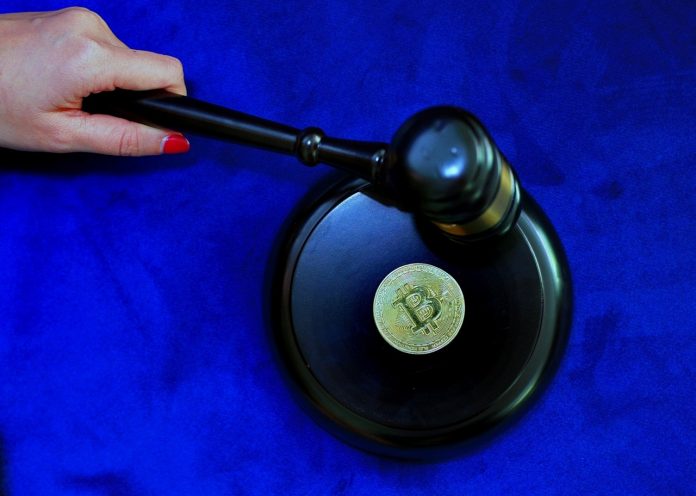
UAE authorities arrested Ildar Ilham, the 21-year-old Norwegian founder of WhiteRock Finance, for his alleged role in a $30 million ZKasino rug pull scam. The arrest follows an investigation sparked by crypto sleuth ZachXBT, who linked WhiteRock to ZKasino through on-chain transactions and a shared personal email address. ZKasino, marketed as a decentralized gambling platform, raised over $30 million in a 2024 presale but failed to deliver, with funds allegedly diverted by the team.

Ilham, known as @XBT_Prometheus on X, faces extradition to the Netherlands, where other ZKasino suspects are on trial for fraud, embezzlement, and money laundering. The WHITE token, associated with WhiteRock, plummeted 25-30% after the arrest, prompting calls to delist it from exchanges like MEXC and Gate.io due to concerns over the project’s legitimacy, including an anonymous team, fake partnerships, and commingled funds. The case highlights growing international efforts to combat crypto fraud.

The arrest, facilitated by an Interpol Red Notice and UAE-Netherlands coordination, signals a growing global effort to combat cryptocurrency fraud. The extradition of Ilham to the Netherlands, where other ZKasino suspects face trial, underscores the increasing ability of law enforcement to track and apprehend individuals involved in cross-jurisdictional crypto scams. This case highlights the role of blockchain transparency in aiding investigations, with on-chain evidence (e.g., shared wallet addresses and commingled funds) playing a pivotal role in linking WhiteRock to ZKasino.

It may prompt regulators to push for stricter oversight of decentralized finance (DeFi) projects, including mandatory know-your-customer (KYC) protocols or enhanced due diligence for token listings on exchanges. The arrest sets a precedent for holding founders accountable, potentially deterring future rug pulls but also raising concerns about overregulation stifling legitimate DeFi innovation.

The WHITE token, associated with WhiteRock, plummeted 25-30% (with some reports citing up to 38% losses) following Ilham’s arrest, reflecting a sharp loss of investor confidence. The token’s market cap dropped from a peak of $2 billion in June 2025 to $287-490 million, signaling significant financial damage for WHITE holders.

The broader crypto market may face increased volatility as investors reassess risks in DeFi projects, particularly those with anonymous teams or unverified claims. The call to delist WHITE from exchanges like MEXC and Gate.io reflects community distrust in centralized platforms that fail to vet projects adequately. Victims of the ZKasino scam, who lost over $30 million (10,500 ETH), are unlikely to recover funds soon, as rug pull recoveries are complex and often yield partial restitution. This fuels skepticism about DeFi’s safety.

The ZKasino-WhiteRock saga, marked by red flags like an anonymous team, fake partnerships, and commingled funds, reinforces the perception of DeFi as a high-risk space prone to scams. ZachXBT’s investigation, which exposed links between the projects via on-chain transactions and a shared email address, underscores the critical role of community-driven sleuthing in uncovering fraud.

The crypto community’s push to delist WHITE and hold exchanges accountable reflects a growing demand for transparency and accountability. However, it also highlights the reliance on independent investigators like ZachXBT rather than institutional safeguards, pointing to gaps in the ecosystem’s self-regulation. The arrest has elicited mixed sentiments: some victims expressed satisfaction, while others remain cautious, noting that legal action does not guarantee fund recovery.

This case may spur calls for decentralized governance models or third-party audits to prevent similar scams. The case could accelerate the adoption of technological solutions for tracking illicit transactions, such as advanced blockchain analytics, while encouraging exchanges to implement stricter listing criteria. It may also prompt DeFi projects to prioritize transparency (e.g., public team identities, verifiable partnerships) to rebuild trust.

However, excessive regulation could push innovation to less regulated jurisdictions, creating a fragmented global crypto landscape. The legal proceedings in the Netherlands may set a benchmark for prosecuting crypto fraud, potentially influencing how other nations handle similar cases. This could lead to a more unified international framework for tackling rug pulls and exit scams.

Investors, especially those burned by ZKasino and now WhiteRock, are increasingly wary of DeFi projects promising high returns. The WHITE token’s crash and the community’s call to delist it reflect a deep distrust in projects with opaque operations. Many feel betrayed by the lack of accountability, as seen in comments expressing relief at Ilham’s arrest but frustration over unrecovered funds. DeFi projects often market themselves as decentralized and trustless, yet cases like ZKasino reveal centralized control and malicious intent (e.g., smart contracts designed to prevent fund withdrawals).

This gap between DeFi’s ethos and its execution fuels a divide between project developers and their user base. The crypto community, empowered by figures like ZachXBT, is pressuring exchanges like MEXC and Gate.io to delist WHITE and improve vetting processes. This reflects a broader tension between decentralized community values and the profit-driven motives of centralized exchanges, which are criticized for listing questionable tokens without due diligence.

Users on X and forums are vocal about exchanges’ failures, with some calling for boycotts, while exchanges remain silent, prioritizing revenue over community trust. Regulators worldwide are pushing for stricter oversight of crypto, as seen in the UAE’s swift action and the Netherlands’ ongoing prosecutions. However, the crypto industry often resists regulation, valuing decentralization and autonomy. This divide could widen as high-profile scams like ZKasino prompt governments to impose tighter controls, potentially clashing with the industry’s libertarian ethos.

The arrest of Ilham, facilitated by international cooperation, suggests regulators are gaining ground, but this may alienate crypto purists who view such interventions as overreach. The role of crypto sleuths like ZachXBT in exposing the ZKasino-WhiteRock connection highlights a divide between community watchdogs and bad actors. While sleuths are celebrated for protecting investors, their reliance on public platforms like X to share findings underscores the lack of formal mechanisms to combat fraud, creating a vigilante-like dynamic within the community.

The arrest of Ildar Ilham is a pivotal moment in the fight against crypto fraud, signaling stronger regulatory action and the power of blockchain transparency. However, it exacerbates divides within the crypto ecosystem: between wary investors and DeFi projects, between community advocates and centralized exchanges, and between regulators and the industry’s decentralized ethos. While the case may deter future scams and push for better safeguards, it also risks stifling innovation if regulation becomes overly restrictive.

Abia State Is Back – The God’s Own State Is A Greener Pasture for All

0

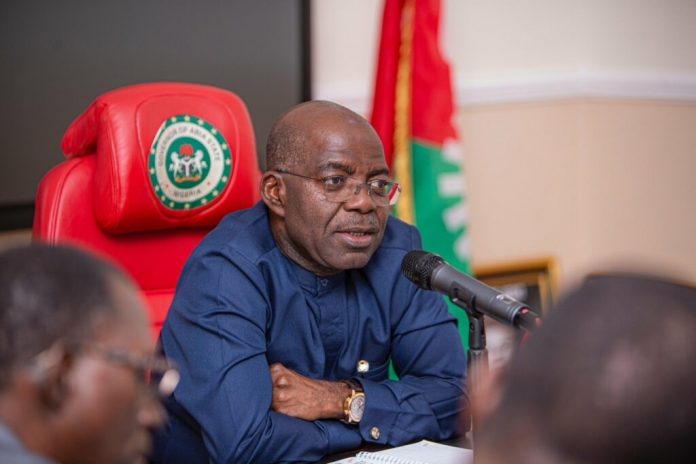
Over three days, the members of Abia State Global Economic Advisory Council spent time with His Excellency, Governor Alex Otti, and the entire leadership of the State, to review the last two years, pick lessons, and using those deepen the execution playbooks going forward.

Good People, Abia State is back in all categories. Our students are back on top, moving double digits, from 19th to 1st   or top 3 in the nation. Our teachers and workers are more motivated. Our businesses are getting support with new infrastructures being put in place to support their missions. The God’s Own State where prosperity comes via enterprise is becoming great again.

And the most fascinating part: as these things were being done, the state still has funds to be paying down debts incurred by previous governments including huge pension obligations which ran over more than a decade.  The national Debt Management Office (DMO) in Abuja ranked Abia first among all states and the FCT in public debt reduction over the last year.  Simply, Abia State is paying down debts incurred by previous governments faster than any state in the nation.

During a session, I used the One Oasis Strategy to challenge our leaders to redouble their efforts as we continue to advance Abia State. Our one oasis today is Mr. Governor as his leadership has brought uncommon goodwill to the state where institutions and people are coming to assist the state. For every company or government, there is a need for one oasis. Abia State has one, and around that, we can scale shared prosperity and abundance where everyone will know that God’s Own People would always have greener pastures. And as the years come, Abia will be a land of greener pastures.

And before you go, all humans are Abians because as God’s Own State, everyone who believes he/she is a child of God, is an Abian!

I thank all businessmen and women who are opening offices in Abia. If you have any issues, reach out to me. Our commissioners and perm secs are available to ensure whatever needs to be done must be done. I was with all of them up to 11pm looking at how Abia will rise higher. To Abians in the diaspora, something big is coming. The homeland has been stabilized, and the great Enyimba dance is about to begin.

..Abia State >> We’re open for your business and investments.

Solana’s $585M Token Unlock Creates Divide On Its ETF Inflows and Performance

0

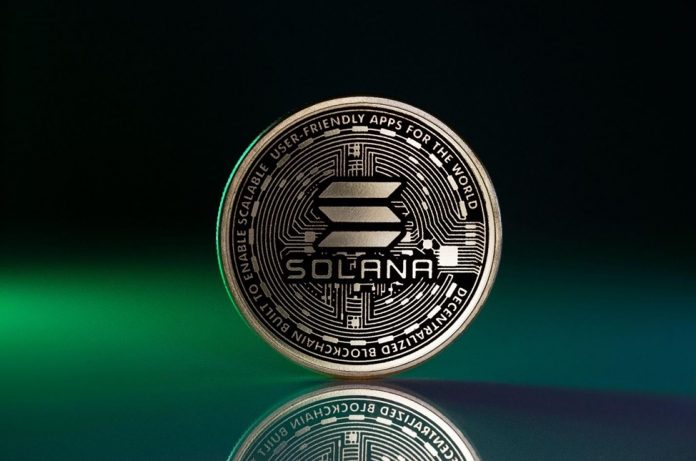
Solana’s price has surged past $160 following the launch of the first U.S.-listed Solana ETF with native staking support, driving bullish sentiment and increased on-chain activity. However, a looming $585M token unlock, representing about 2% of SOL’s market cap, raises concerns about potential selling pressure that could dampen the rally. While some argue the unlock is already priced in and not all tokens will be sold immediately, the market remains cautious, with mixed signals like an oversold RSI and cooling open interest. Long-term prospects depend on institutional ETF adoption and how the unlock impacts supply dynamics.

The Solana ETF launch and the $585M token unlock create a complex market dynamic with bullish and bearish implications, highlighting a divide in investor sentiment and potential outcomes. The first U.S.-listed Solana ETF with native staking support signals growing institutional interest and mainstream adoption. This boosts Solana’s credibility, attracts new capital, and increases on-chain activity (e.g., DeFi and NFT volumes), potentially driving SOL’s price higher.

SOL’s rally past $160 reflects optimism, with technical indicators like an oversold RSI suggesting room for further gains if buying pressure persists. Institutional adoption via ETFs could stabilize Solana’s ecosystem, enhance liquidity, and position it as a competitor to Ethereum, especially given Solana’s faster transaction speeds and lower costs. The unlock of tokens worth ~$585M (2% of SOL’s market cap) introduces potential selling pressure. If a significant portion hits the market, it could depress prices, especially if retail or early investors sell to lock in profits.

The scale of the unlock fuels caution, as evidenced by cooling open interest in futures markets. Investors may hesitate, fearing dilution or a price correction. Token unlocks often lead to choppy price action, as market participants speculate on how much will be sold versus held by long-term stakeholders.

The first U.S.-based Solana staking exchange-traded fund (ETF), the REX-Osprey Solana Staking ETF (ticker: SSK), launched on July 2, 2025, on the Cboe BZX Exchange. It recorded $12 million in inflows and $33 million in trading volume on its debut day, indicating strong initial investor interest. Other Solana-based investment products have also seen inflows, with $4.3 million reported for the week ending May 26, 2025, and earlier instances of $13.2 million in weekly inflows in September 2021 and $1.2 million in February 2023.

JPMorgan estimates that Solana ETFs could attract $3 billion to $6 billion in inflows within their first year if approved, reflecting growing institutional interest. Multiple firms, including VanEck, Franklin Templeton, Fidelity, Galaxy Digital, and Grayscale, have filed for spot Solana ETFs, with analysts estimating a 95% chance of SEC approval by the end of 2025. However, some sources note that Solana ETF inflows have been modest compared to Bitcoin and Ethereum ETFs, with Bitcoin ETFs amassing $110 billion and Ethereum ETFs $12 billion in assets since their launches.


Optimists believe the ETF launch and Solana’s fundamentals (high throughput, growing ecosystem) outweigh the unlock’s impact. They argue the unlock is likely priced in, and not all tokens will be sold immediately (e.g., vested tokens held by insiders or staked). Institutional ETF inflows could absorb any selling pressure. Skeptics focus on the unlock’s potential to flood supply, especially in a market sensitive to negative catalysts. They point to cooling open interest and macro uncertainties (e.g., broader crypto market trends) as risks that could amplify a price drop.

Monitor how many tokens are sold versus held/staked. Gradual distribution or staking could mitigate bearish impact. Strong institutional demand could offset unlock-related selling, sustaining the rally. Broader crypto market trends and macroeconomic factors (e.g., interest rates, risk appetite) will influence whether SOL maintains momentum or faces a correction.

The ETF launch fuels optimism for Solana’s long-term growth, but the token unlock introduces short-term risks. The divide between bullish institutional adoption and bearish supply concerns creates a tug-of-war. Investors should watch ETF inflows, unlock distribution, and broader market trends to gauge SOL’s next move. Balancing these factors, the rally may persist if institutional demand outpaces unlock-related selling, but volatility is likely.

Resetting Governance for Results: How Gov. Otti’s Q2 Strategy Retreat Sparked a Renewed Commitment to Execution, Excellence, and Abia’s Sustainable Transformation

0

By Ebere Uzoukwa, PhD

The recently concluded Abia State Q2 2025 Executive Strategy Retreat marked a watershed moment in the journey of transformational governance under the leadership of Governor Alex Chioma Otti, OFR. Held on July 2nd and 3rd at the International Conference Center in Umuahia, this high-level convergence was more than a bureaucratic ritual—it was a strategic reset, a platform for introspection, and a bold recommitment to execution, excellence, and inclusive development.

With the theme “Sustaining the Momentum: Leadership and Execution,” the retreat brought together members of the State Executive Council, senior government appointees, and distinguished members of the Abia Global Economic Advisory Council (AGEAC)—a coalition of world-renowned technocrats and development experts. This gathering came at a critical inflection point: midway into the administration’s first term, following 21 months of rigorous reforms, intense public service engagement, and foundational restructuring.

From his opening charge to the closing reflections, Governor Otti left no room for ambiguity. He reminded his team that governance is not a sprint of good intentions but a marathon of tangible results. With public expectations running high, he emphasized that the phase of planning was over and the only currency of trust going forward would be performance. The challenge now is not about what needs to be done—it is about how quickly, effectively, and efficiently government actors can deliver life-changing results to the people of Abia.

A critical highlight of the retreat was the Governor’s passionate insistence that knowledge, no matter how vast, is valueless if it is not converted to outcomes. This perspective underscored the retreat’s structure, which deliberately prioritized practical application over theoretical grandstanding. It became a forum for aligning individual and institutional roles, breaking down silos across MDAs, and sharpening strategic thinking for faster, smarter execution.

In a significant show of vision, Governor Otti invited the AGEAC to participate in the retreat—a masterstroke that injected global perspectives and mentorship into Abia’s governance process. Led by eminent figures such as Prof. Arunma Oteh, Mr. Bolaji Balogun, Mrs. Ifueko Omogui Okauru, Mr. Chidi Onyeukwu Ajaegbu and Prof. Ndubuisi Ekekwe, the council’s engagement with state officials was catalytic. It offered real-time knowledge sharing and coaching that are certain to elevate decision-making, sharpen institutional focus, and anchor governance in global best practices.

Governor Otti’s closing address, titled “A New Consciousness,” crystalized the intent of the entire exercise: to reawaken a sense of responsibility, excellence, and urgency among public servants. He acknowledged the critical support of his strategy and technical teams, development partners like PwC, and the silent hands that orchestrated the retreat’s success. Yet, beyond commendations, he laid down clear directives that repositioned the entire state machinery for outcome-driven performance.

Notably, the Governor unveiled bold infrastructure and economic development plans that reflect the administration’s strategic ambition. Most prominent is the upcoming Abia Medical City, a $1.3 billion ultra-modern medical and research facility set to be flagged off on July 10, 2025. Funded by MKP International Holding, the Medical City will not only revolutionize healthcare delivery in the region but also attract foreign direct investment, create jobs, reverse medical brain drain, and position Abia as a medical and academic hub in Africa.

Complementing this is the Enyimba Hotel and International Convention Centre Project, set to commence in the third quarter. Designed as a signature development to elevate Aba into a 21st-century commercial city, the project is financially structured and ready for execution—reflecting Governor Otti’s commitment to start-to-finish governance, where flag-offs are closely followed by completions.

The retreat also reviewed the progress of other key infrastructure projects including the Omenuko Bridge, Ohanku and Obohia Roads, urban transport renewal in Aba and Umuahia, and major upgrades at Abia State University, Uturu and College of Education, Arochukwu. These initiatives are not only on track but are being implemented with fiscal discipline, milestone-based contractor payments, and rigorous quality control. These achievements earned national validation when the Debt Management Office (DMO) ranked Abia first among all states and the FCT in public debt reduction over the last year—a resounding endorsement of Otti’s prudence, transparency, and result-focused spending.

However, the Governor’s most far-reaching announcement may well be his focus on human capital development. Recognizing that institutions are only as strong as the people who run them, Governor Otti directed all heads of MDAs to institutionalize continuous training, skills development, and performance assessment frameworks tailored to their functions. Critical focus areas such as ICT, communication, stakeholder engagement, and innovation are to be mainstreamed across the board, with performance metrics tied to responsibilities.

In a move that reflects his long-term vision, the Governor announced the creation of a Leadership and Civic Academy that will train 1,000 young Abians aged 16–20 during the August–September vacation period. This initiative, supported by AGEAC leaders like Mrs. Ifueko Omogui Okauru, will groom a new generation of ethical, visionary leaders through structured mentorship, character building, and exposure to modern civic values. It’s a strategic investment in the future—building capacity not just within government, but across communities and future institutions.

In all, the 2025 Q2 Strategy Retreat has significantly retooled the mindset and machinery of the Otti administration. It reaffirmed the state’s commitment to evidence-based planning, fiscally responsible execution, and people-centered development. It was not just a meeting—it was a movement: one that renewed the collective drive of government actors to deliver with integrity, speed, and accountability.

Governor Otti has once again demonstrated that under his watch, governance in Abia is no longer about motions—it is about measurable movement. His administration is not content with cosmetic changes; it is delivering structural transformations that will redefine the socio-economic profile of Abia State. From the boardroom to the communities, from executive speeches to real-life outcomes, the message is clear: a new Abia is not only possible—it is already emerging.

This is no time for complacency. The retreat has reignited the fire. The bar has been raised. The next chapter of governance in Abia will not be written in promises, but in executed projects, empowered people, and measurable progress. And with Governor Otti at the helm, Abia is not just rising—it is being redefined.

Dr. Ebere Uzoukwa is the Senior Special Assistant to the Governor of Abia State on Public Affairs.