DD
MM
YYYY

PAGES

DD
MM
YYYY

spot_img

PAGES

Home Blog Page 955

Robinhood Launches Over 200 Tokenized U.S. Stocks Amid Push For EU Expansion

0

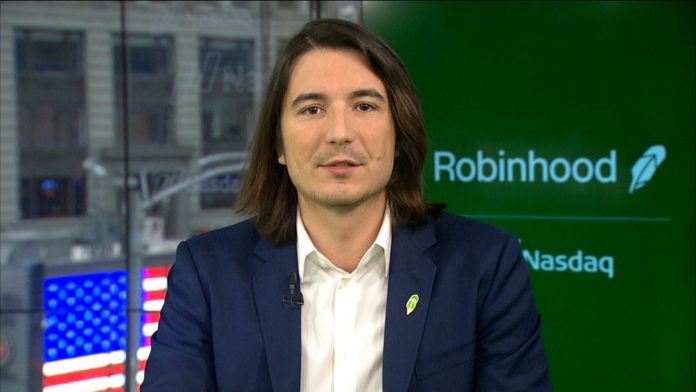
Robinhood has launched over 200 tokenized U.S. stocks and ETFs for EU customers, available on the Arbitrum Layer 2 blockchain. These tokens provide 24/5 trading, zero commissions (though other fees may apply), dividend support, and exposure to major U.S. equities like Nvidia, Apple, and Microsoft. The platform plans to expand to 2,000 tokenized offerings by the end of 2025 and has introduced tokenized shares of private companies like OpenAI and SpaceX, a first for broader retail access in the EU. Self-custody options for these tokens, enabling integration with DeFi platforms like MetaMask, are planned for the future.

Robinhood is rolling out crypto perpetual futures for eligible EU customers, offering up to 3x leverage with no expiration dates. These derivatives are routed through Bitstamp’s perpetual futures exchange, following Robinhood’s $200 million acquisition of Bitstamp. The rollout began in June 2025 and is expected to be fully available by the end of summer 2025, with a user-friendly interface to simplify trading.

In the U.S., Robinhood has introduced staking for Ethereum and Solana, allowing users to earn rewards by supporting blockchain network operations. This feature, already available in the EU, is now accessible to eligible U.S. customers through an intuitive app-based interface. EU and EEA users also have access to staking.

Robinhood is developing its own Ethereum-based Layer 2 blockchain, built on Arbitrum’s technology, optimized for tokenized real-world assets. Expected to launch in 2026, it will support 24/7 trading, self-custody, and seamless cross-chain bridging. Initially, tokenized stocks are issued on Arbitrum, but they will migrate to Robinhood’s blockchain once operational.

With a MiCA (Markets in Crypto-Assets) license, Robinhood Crypto has expanded to 31 EU countries, serving over 400 million people across 30 EU and EEA countries. This expansion transforms its EU app into an all-in-one investment platform, combining crypto trading, tokenized stocks, and perpetual futures. Additional features include smart exchange routing, advanced charting tools (expanding to crypto in August 2025), and tax lot management for U.S. users to optimize crypto trades.

Additional offerings include a 1% deposit boost (up to 2% if platform-wide deposits exceed $500M) for crypto transfers in the U.S. and EU from May 28 to July 7, 2025, and a forthcoming crypto cash-back credit card for U.S. customers. Robinhood’s stock (HOOD) surged over 8% to a record $90.49, reflecting investor confidence, with a 290% increase in 2025 and $255 billion in assets under custody.

These moves position Robinhood as a leader in blending traditional finance with blockchain, though U.S. users face regulatory hurdles for tokenized stocks and perpetual futures, pending approvals. Robinhood’s announcements on June 30, 2025, signal a bold pivot toward integrating traditional finance with blockchain technology, with significant implications for its users, the financial industry, and the crypto ecosystem.

Offering over 200 tokenized U.S. stocks and ETFs (with plans for 2,000 by year-end) on Arbitrum for EU customers lowers barriers to U.S. market exposure. 24/5 trading, zero commissions (though other fees apply), and fractional ownership make investing more accessible, especially for retail investors in the EU. Tokenized shares of private companies like OpenAI and SpaceX are a game-changer, giving retail investors rare access to high-growth, pre-IPO firms. This could disrupt traditional venture capital and private equity models, though regulatory scrutiny may intensify due to valuation and liquidity risks.

Planned self-custody options for tokenized assets, enabling use in DeFi platforms like MetaMask, could bridge traditional and decentralized finance. This may drive adoption of DeFi protocols but raises concerns about security, custody risks, and regulatory compliance. Tokenized stocks are limited to the EU due to U.S. regulatory restrictions (e.g., SEC oversight). This highlights a fragmented global regulatory landscape, potentially limiting U.S. user access and complicating Robinhood’s expansion strategy.

Offering crypto perpetual futures with up to 3x leverage via Bitstamp’s exchange appeals to sophisticated traders, increasing engagement and trading volume. The user-friendly interface could attract novice traders, but leverage introduces higher financial risks. By integrating futures post-Bitstamp acquisition, Robinhood competes directly with crypto exchanges like Binance and Coinbase. This could pressure competitors to lower fees or enhance offerings, benefiting consumers but squeezing margins.

Perpetual futures are heavily regulated in the U.S., and their EU-only rollout reflects caution. U.S. approval delays could hinder Robinhood’s ability to scale this offering globally, impacting revenue potential. Staking for Ethereum and Solana in the U.S. and EU provides retail investors with low-effort yield opportunities, potentially increasing platform retention and crypto adoption. However, staking rewards are volatile and subject to network risks (e.g., slashing).

Simplifying staking through an app interface lowers the technical barrier, bringing crypto’s yield-generating features to a broader audience. This could accelerate mainstream crypto use but may strain blockchain networks if participation surges. Staking is under scrutiny in the U.S. (e.g., SEC v. Coinbase), with debates over whether it constitutes a security. Robinhood’s U.S. rollout risks future regulatory crackdowns, potentially limiting growth.

Building an Ethereum-based Layer 2 blockchain with Arbitrum’s tech (launching 2026) gives Robinhood control over transaction costs, speed, and user experience for tokenized assets. This could reduce reliance on third-party chains and enhance scalability. Migrating tokenized stocks to its own blockchain aims to create a sticky ecosystem, encouraging users to stay within Robinhood’s platform. However, cross-chain bridging complexities could frustrate users if not executed seamlessly.

A custom blockchain optimized for real-world assets positions Robinhood against competitors like Coinbase and Kraken, who lack proprietary chains. However, development delays or technical issues could erode trust. Operating a blockchain invites regulatory oversight (e.g., MiCA compliance in the EU, potential SEC scrutiny in the U.S.). Adoption depends on developer support and DeFi integration, which may take years to mature.

Expanding to 31 EU/EEA countries with a MiCA license taps a 400-million-person market, diversifying revenue beyond the U.S. The all-in-one app (crypto, tokenized stocks, futures) strengthens Robinhood’s position as a global fintech leader. MiCA compliance gives Robinhood a first-mover advantage in the EU’s regulated crypto market, potentially outpacing U.S.-based competitors constrained by regulatory uncertainty.

Features like the 1% deposit boost (up to 2%) and advanced tools (e.g., charting, tax lot management) incentivize user activity, potentially increasing assets under custody ($255B as of June 2025). However, promotional costs could pressure short-term profitability. EU-centric features highlight U.S. regulatory constraints, potentially frustrating U.S. users and pushing them to unregulated platforms, which could harm Robinhood’s domestic market share.

Robinhood’s stock (HOOD) surged 8% to $90.49, reflecting investor optimism about its crypto pivot. The 290% stock rise in 2025 suggests strong market confidence, but volatility remains if regulatory or execution risks materialize. Combining traditional finance (stocks, ETFs) with crypto (staking, futures, tokenized assets) blurs lines between CeFi and DeFi, pressuring legacy brokers and crypto exchanges to innovate. This could accelerate the tokenization trend across industries.

While features enhance accessibility, they introduce risks like leverage losses, staking penalties, and blockchain vulnerabilities. Robinhood must prioritize education and security to maintain trust. The EU focus positions Robinhood against European fintechs (e.g., Revolut) and global crypto exchanges. Success hinges on seamless execution and regulatory navigation, especially as MiCA evolves.

Robinhood’s initiatives reshape retail investing and crypto, challenging traditional finance while embracing blockchain. The EU expansion and proprietary blockchain signal long-term ambition, but regulatory hurdles, technical challenges, and user risks could temper growth. The company’s ability to balance innovation with compliance will determine its success in this transformative phase.


Grammarly Acquires AI-powered Email Client Superhuman, Expanding AI Integration

0

Grammarly has announced the acquisition of Superhuman, the high-speed, AI-powered email client, marking its most ambitious step yet toward transforming into a full-scale AI productivity platform.

The deal, disclosed Tuesday, comes as Grammarly seeks to deepen its foothold in core professional workflows and bring its AI capabilities into a tool that professionals use every day: email.

Though neither Grammarly nor Superhuman disclosed the financial terms of the acquisition, the move is significant. Superhuman, founded by Rahul Vohra, Vivek Sodera, and Conrad Irwin, has raised more than $114 million from top-tier investors such as Andreessen Horowitz (a16z), IVP, and Tiger Global. The company was last valued at $825 million, according to data from venture analytics firm Traxcn.

Over 100 Superhuman employees, including CEO Rahul Vohra, will join Grammarly as part of the deal.

A Strategic Expansion into Email

Grammarly CEO Shishir Mehrotra said the acquisition aligns with the company’s vision of embedding AI deeply into daily professional tasks and enabling seamless collaboration between multiple AI agents.

“Email isn’t just another app; it’s where professionals spend significant portions of their day, and it’s the perfect staging ground for orchestrating multiple AI agents simultaneously,” Mehrotra said in a statement.

With the acquisition, Grammarly gains direct control over a well-loved email platform optimized for speed, intelligence, and user focus. It also brings in a layer of innovation that Superhuman had been building over recent months, including features that assist with scheduling, replying, triaging, and categorizing emails—using AI.

Superhuman CEO Rahul Vohra echoed the synergy between the two companies, stating that “Email is the main communication tool for billions of people worldwide and the number-one use case for Grammarly customers.” He added that joining forces with Grammarly would allow Superhuman to invest more in its core experience while pioneering a new way of working where AI agents assist users across daily communication tools.

Building the Future of AI Workflows

Grammarly’s ambitions go beyond spelling and grammar. In recent years, the company has been quietly transforming its business model to encompass full-spectrum productivity. In 2023, Grammarly acquired Coda, a collaborative document platform, and elevated Coda co-founder Shishir Mehrotra to CEO. Now, with Superhuman, Grammarly owns not just how people write and collaborate—but also how they communicate.

The company is pursuing a vision where multiple AI agents work in unison to help users handle their work more effectively. Email, given its frequency of use and complexity, is now central to that plan.

“The future of productivity will be shaped by AI agents that can handle tasks like drafting responses, prioritizing messages, managing schedules, and integrating across platforms,” Grammarly said in a blog post. “With Superhuman, we now have the foundation to make this vision a reality.”

Grammarly’s latest move positions it more directly against other tech giants like Google, Microsoft, and Salesforce, all of which are embedding AI across email and productivity suites. What differentiates Grammarly is its singular focus on agentic AI—that is, purpose-specific AI agents capable of working across tools, understanding user context, and executing semi-autonomous tasks.

The company also has the financial backing to support this vision. In May, Grammarly secured a $1 billion non-dilutive investment from General Catalyst. Rather than give up equity, Grammarly will repay the money as a capped percentage of revenue generated from projects funded with the capital. The investment gives Grammarly the fuel to scale its product vision without diluting existing shareholder value.

Grammarly plans to integrate Superhuman’s functionality into its broader suite while continuing to support Superhuman as a standalone email client. Users can expect features such as AI-powered triage, personalized summaries, and multi-agent task execution to begin appearing in both platforms in the coming months.

Additionally, Grammarly says its acquisition of Superhuman accelerates its goal of making email a command center for agentic AI—where users can draft responses, schedule meetings, file attachments, and automate workflows without switching apps.

The company is also eyeing enterprise adoption, with Superhuman’s speed and efficiency complementing Grammarly’s growing suite of enterprise tools. Email remains a universal and essential tool for professional communication, and owning the stack allows Grammarly to embed intelligent agents directly into one of the most time-consuming areas of work.

The acquisition comes amid heightened competition in the AI productivity space. Microsoft is embedding its Copilot AI across Outlook and Teams, Google is pushing Gemini into Gmail and Docs, and startups like Anthropic and Notion are racing to define how AI integrates with daily workflows.

With over 40 million daily users and more than 50 million weekly email-based corrections already running through its systems, Grammarly has the user base and data pipeline to make its agentic vision a reality. Owning Superhuman adds a premium, fast-moving frontend to that backend infrastructure.

Microsoft Says Its AI Diagnosed Medical Cases Four Times Better Than Doctors in Major New Study

0

Microsoft has unveiled results from a major internal study claiming its medical AI system, dubbed the AI Diagnostic Orchestrator, outperformed experienced human doctors by a wide margin in diagnosing complex medical cases.

In a blog post released Monday, the company said the AI system correctly diagnosed nearly 86% of clinical cases tested—four times more accurately than human physicians working under the same constraints.

The tech giant’s announcement comes as artificial intelligence continues to push deeper into healthcare, raising both hopes for innovation and urgent questions about the future role of doctors in an AI-driven medical environment.

Inside the Study: AI vs. Doctors

The Microsoft-led study involved 304 real-world clinical case studies taken from the New England Journal of Medicine, a source widely respected for its complexity and diagnostic rigor. In the trial, the AI and 21 practicing physicians from the U.S. and U.K. were asked to diagnose the cases in stages—mirroring real-life practice—by ordering tests, asking follow-up questions, and narrowing down differential diagnoses.

Physicians participating in the study had between five and 20 years of clinical experience but were restricted from using tools they would typically rely on—like reference books, second opinions, or digital assistants.

While the doctors achieved an average diagnostic accuracy of just 20%, Microsoft’s AI system, when paired with OpenAI’s new o3 large language model, correctly diagnosed 85.5% of the cases. Microsoft tested the AI with other models too, including those from Meta, Anthropic, and Google, but found the strongest results in the OpenAI collaboration.

Cost, Accuracy, and Efficiency

Beyond accuracy, Microsoft also claimed that its AI solved cases more cost-effectively, raising the possibility of reducing waste in healthcare—a key concern in the U.S., where nearly 20% of GDP is spent on health, and up to 25% of that is believed to be unnecessary or wasteful.

In Microsoft’s view, AI could address both cost and diagnostic quality simultaneously.

“Our findings also suggest that AI can reduce unnecessary healthcare costs,” the company wrote, pointing to misdiagnosis, redundant testing, and administrative delays as areas ripe for disruption.

Mustafa Suleyman, head of Microsoft AI and cofounder of DeepMind, called the study a “big step toward medical superintelligence,” adding that the cases used were “some of the toughest and most diagnostically complex” challenges that doctors face.

Does This Mean AI Will Replace Doctors?

Despite the eye-catching headline numbers, Microsoft was careful to say that the goal is not to replace doctors, but to augment them.

“This technology represents a complement to doctors and other health professionals,” the company stated.

“While this technology is advancing rapidly, clinical roles are much broader than simply making a diagnosis. They need to navigate ambiguity and build trust with patients and their families in a way that AI isn’t set up to do,” Microsoft added.

Healthcare professionals appear to agree. Dr. Shravan Verma, CEO of a Singapore-based health tech startup, told Business Insider last month that AI tools may be well suited for handling the “first mile” of healthcare—triage, information gathering, or simple diagnosis—but emphasized that “AI can’t replicate physicians’ presence, empathy, and nuanced judgment in uncertain or complex conditions.”

However, others in tech are more bullish. Microsoft co-founder Bill Gates previously said on the People by WTF podcast in April that AI could eventually help solve the global shortage of doctors, arguing that AI systems could deliver “medical IQ” at scale.

A Broader Trend in AI and Healthcare

Microsoft is the latest in a growing list of tech giants racing to make inroads in the health sector. Google has developed its own medical AI tools and partnered with the Mayo Clinic. Amazon has expanded into telehealth. OpenAI, whose language model powers Microsoft’s system, has also acknowledged the medical space as a key future target.

The trend has not gone unnoticed by regulators and ethicists. With such powerful tools emerging, calls for guardrails around algorithmic bias, patient data privacy, medical liability, and the ethics of automation are also intensifying.

While Microsoft’s AI Diagnostic Orchestrator may mark a breakthrough in accuracy, the question remains how such tools will be integrated into real-world clinics, where human judgment, trust, and complexity still define much of the patient-doctor interaction.

Microsoft, for now, is signaling that it sees a future in which AI is not a replacement but a co-pilot for physicians—one capable of drastically improving diagnostic speed and quality if used responsibly.

U.S. Senate Rejects Bill to Ban States’ AI Regulation 99-1

0

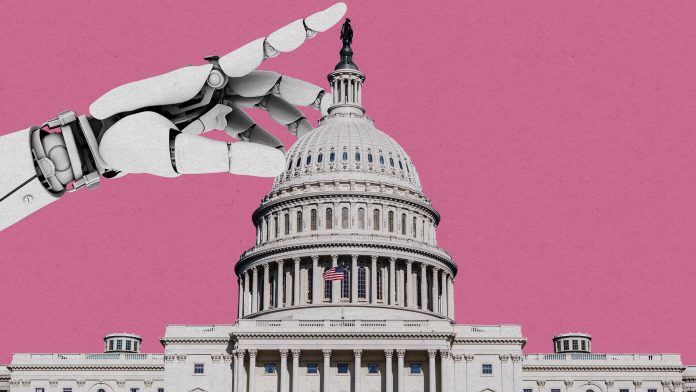
Senator Ted Cruz’s plan to impose a sweeping ban on state-level regulation of artificial intelligence collapsed on Tuesday, as the U.S. Senate voted 99-1 to strike the controversial measure from President Donald Trump’s sweeping domestic policy bill.

Cruz himself was forced to vote in favor of removing the provision, after it became clear that the opposition—both within and outside his party—had reached insurmountable levels.

The Texas Republican’s proposal would have blocked states from receiving billions in broadband funding if they passed laws governing AI technologies, such as rules targeting deepfakes, robocalls, algorithmic bias, or the use of AI in surveillance and autonomous vehicles. It had been quietly inserted into the broader GOP-backed budget legislation under the guise of a regulatory “pause,” but quickly drew backlash from both Democrats and Republicans.

Initially, the plan would have disqualified states from accessing a $42 billion federal broadband deployment fund if they enacted AI-related laws. After mounting criticism, Cruz attempted to dial it back by limiting the moratorium to five years and shrinking the financial penalty to just $500 million in AI grants. But the core of the proposal remained the same: tie state access to federal dollars to a prohibition on AI regulation.

Republican leadership tried to market the scaled-down version as a “temporary” freeze on regulation to allow the federal government to craft unified standards. Yet the revised provision still alarmed many lawmakers who saw it as a backdoor move to restrict state autonomy and provide legal cover for tech firms.

“Wolf in Sheep’s Clothing”

Democratic Senator Ed Markey of Massachusetts slammed the revised version as “a wolf in sheep’s clothing,” warning that it still gave the Trump administration too much power to punish states for attempting to protect consumers.

“Despite Republican efforts to hide the true impact of the AI moratorium,” he said, “the language still allows the administration to use federal broadband funding as a weapon against the states.”

Senator Maria Cantwell (D-Washington), who co-authored the amendment to strike the clause, said the GOP’s attempts to dress up the provision as a five-year pause did not change its core danger.

“This was another giveaway to tech companies,” she said, accusing Cruz of misleading assurances. “It gives AI and social media a brand-new shield against litigation and state regulation.”

Senator Marsha Blackburn (R-Tennessee), a conservative Republican who initially explored a compromise with Cruz, ultimately joined Cantwell to kill the measure. Blackburn argued that the bill, even in its updated form, would leave states unable to respond to urgent consumer protection needs, especially when it comes to children and data privacy.

“This provision could allow Big Tech to continue to exploit kids, creators, and conservatives,” Blackburn said. “Until Congress passes real, federally preemptive laws like the Kids Online Safety Act and an online privacy framework, we can’t tie the hands of our state legislatures.”

Cruz Retreats Under Pressure

Faced with bipartisan opposition, Cruz eventually withdrew support for his own measure. In a floor statement, he blamed “outside interests” for torpedoing the deal, insisting that the five-year moratorium had backing from President Trump and was intended to “protect kids and creative artists.” But critics said it was less about children and more about shielding Silicon Valley from oversight.

The failure marked a significant political blow to Cruz, who had been one of the most vocal champions of preempting state regulation of emerging technologies. Ironically, his plan lost steam just as his home state of Texas enacted its own AI legislation—undermining his case that states were unfit to legislate on the topic.

The final vote to remove the AI moratorium—99 in favor, 1 opposed—left Senator Thom Tillis (R-North Carolina) as the only lawmaker supporting it. Cruz’s decision to join the majority was seen as a reluctant concession to political reality.

Broad Coalition Rejected the Proposal

The resistance to the AI provision extended beyond Capitol Hill. Cantwell’s office cited unified opposition from 17 Republican governors, 40 state attorneys general, and policy organizations ranging from the Heritage Foundation to the Center for American Progress. The rare cross-ideological alliance highlighted just how deeply unpopular the provision had become.

“Despite several revisions by its author and misleading assurances about its true impact, this proposal would have opened the door to unchecked AI deployment while stripping states of their right to act,” Cantwell said after the vote.

Lawmakers also emphasized that the federal government has yet to pass comprehensive AI legislation, meaning states remain the only line of defense for consumer protection in this rapidly advancing sector. In 2023 alone, at least 24 states introduced or passed some form of AI-related laws and regulations that could have been invalidated or chilled under Cruz’s plan.

What’s Next for AI Regulation?

The Senate’s overwhelming rejection of the moratorium leaves the door open for states to continue setting their own standards while Congress continues to work on a federal framework. The episode also served as a warning shot to federal lawmakers attempting to sneak sweeping tech policy changes into must-pass legislation.

“The Senate came together tonight to say that we can’t just run over good state consumer protection laws,” Cantwell said.

Even as the broader budget bill advances—now cleared of the Cruz amendment—many lawmakers are calling for a standalone debate on AI legislation, not backdoor policy crafted in closed-door budget negotiations.

Connecticut’s House Bill 7082 Prohibits State And Local Government From Crypto

0

Connecticut Governor Ned Lamont signed House Bill 7082 into law, prohibiting state and local government entities from accepting, holding, or investing in cryptocurrencies, including Bitcoin. The legislation, effective October 1, 2025, also bans the state from establishing a crypto asset reserve, making Connecticut one of the few U.S. states to explicitly reject such initiatives.

The bill, which passed unanimously in both the House and Senate, aims to protect public funds from the volatility and regulatory uncertainties of digital assets. It also imposes strict regulations on crypto businesses, requiring licensing, consumer risk disclosures, and protections for minors, such as parental consent for users under 18. However, it does not ban residents from owning, trading, or investing in Bitcoin or other cryptocurrencies, contrary to some misleading reports. The legislation focuses solely on public funds and state-level activities, aiming to shield taxpayer money from the volatility and regulatory uncertainties of digital assets.

Matt Hougan of Bitwise, view it as a shortsighted move that could hinder Connecticut’s ability to innovate in the digital economy. By barring state investment in digital assets, Connecticut may miss out on potential long-term financial benefits seen in states like Texas, which allocated $10 million to a Bitcoin reserve. This move contrasts with states like Texas, Arizona, and New Hampshire, which are pursuing Bitcoin reserves.

Critics argue the ban may stifle blockchain innovation, while supporters, including State Representative Jason Doucette, emphasize consumer and taxpayer protection. The law reflects Connecticut’s cautious approach amid a national debate, with 48 state-level crypto reserve proposals under consideration across the U.S. By prohibiting state and local entities from investing in or holding cryptocurrencies, Connecticut prioritizes fiscal stability, shielding public funds from the volatility of digital assets like Bitcoin, which have seen price swings of over 50% in recent years.

This could set a precedent for other states wary of crypto’s risks. The law’s licensing requirements and consumer protections, including mandatory risk disclosures and parental consent for minors, aim to curb fraud and enhance transparency in crypto businesses. This could strengthen consumer confidence but may deter smaller crypto firms due to compliance costs. Critics argue the ban could hinder blockchain and fintech innovation, potentially driving startups to crypto-friendly states like Texas or Wyoming.

Connecticut risks missing out on economic growth in a sector projected to reach a global market size of $13.2 billion by 2027. The unanimous bipartisan support for the bill reflects a rare consensus on crypto skepticism, potentially influencing other states to adopt similar restrictions, especially those prioritizing fiscal conservatism.

States like Texas, Arizona, and New Hampshire are embracing crypto, with initiatives to establish Bitcoin reserves or tax incentives for blockchain businesses. For example, Texas has passed laws allowing state-chartered banks to custody crypto, aiming to become a digital asset hub. These states view crypto as a hedge against inflation and a driver of economic innovation.

Connecticut joins states like New York, which has stringent crypto regulations (e.g., the BitLicense), in prioritizing consumer protection and financial stability over innovation. These states cite risks like market volatility, fraud, and environmental concerns from crypto mining. State-level crypto reserve proposals pending, the divide reflects competing visions: economic opportunity versus risk management. Connecticut’s ban aligns with the latter, potentially isolating it from the pro-crypto momentum in states betting on digital assets as a future economic driver.