DD
MM
YYYY

PAGES

DD
MM
YYYY

spot_img

PAGES

Home Blog Page 962

Germany’s Accelerated Arms Purchases Strengthen Its Military And NATO’s Posture, Even as Inflation Drops

0

The German government is accelerating arms purchases to counter potential threats, particularly from Russia, following its 2022 invasion of Ukraine. Draft legislation aims to simplify and expedite Bundeswehr procurement by reducing legal hurdles, allowing national-level contracts without EU-wide tenders, and permitting awards despite legal challenges from unsuccessful bidders. This is part of a broader push to modernize the military, with defense spending set to rise from €95 billion in 2025 to €162 billion by 2029, aligning with NATO’s 5% GDP target.

The focus is on rapid delivery, prioritizing air defense and ammunition, with new laws expected by year-end to minimize delays. German arms makers are expanding production, but U.S. companies may also benefit due to their larger capacity. The German government’s push to speed up arms purchases has significant implications, both domestically and internationally, and highlights divides in political, economic, and social spheres.

Germany’s increased defense spending (from €95 billion in 2025 to €162 billion by 2029, targeting NATO’s 5% GDP goal) signals a stronger commitment to collective defense, particularly in response to Russia’s aggression in Ukraine. This bolsters NATO’s eastern flank but may escalate tensions with Russia. A more militarized Germany could reshape its role in European security, potentially reducing reliance on U.S. defense leadership while fostering closer ties with allies like France and Poland.

Accelerated arms purchases could prompt neighboring countries, including non-NATO states, to bolster their own militaries, potentially destabilizing the region. German arms manufacturers like Rheinmetall are scaling up production, creating jobs and economic growth. However, U.S. firms may capture significant contracts due to their larger production capacity, potentially diverting economic benefits abroad.

The massive defense budget increase could strain public finances, potentially diverting funds from social programs, infrastructure, or green energy initiatives, especially as Germany navigates economic challenges like inflation and energy costs. Streamlined processes (e.g., bypassing EU tenders, awarding contracts despite legal challenges) could reduce costs and delays but risks transparency and accountability, potentially leading to corruption or mismanagement.

While the Russian threat has galvanized support for rearmament, pacifist-leaning groups and parts of the public may oppose increased militarization, especially if social spending is cut. The urgency to pass procurement laws by year-end suggests strong political will but could face resistance from opposition parties or coalition members wary of rushed legislation.

Prioritizing air defense and ammunition strengthens Germany’s deterrence and readiness, addressing Bundeswehr shortcomings exposed since 2022. The sustained budget increase signals a shift from Germany’s historically restrained military posture, potentially reshaping its global image.

Former Chancellor Olaf Scholz’s coalition (SPD, Greens, FDP) supports rearmament, but the Greens’ pacifist wing and left-leaning voters may resist, favoring diplomacy over militarization. The far-right AfD could exploit this to criticize government spending priorities. Some Germans prioritize domestic issues (e.g., healthcare, education) over defense, creating tension between security hawks and social welfare advocates.

While German companies benefit, U.S. defense giants may dominate major contracts due to scale, potentially frustrating local industry and workers expecting economic gains. Defense industry growth may favor industrial hubs (e.g., Bavaria, where Rheinmetall operates), leaving other regions feeling neglected.

Bypassing EU-wide tenders could strain relations with smaller EU states reliant on open procurement. Countries like France may push for European-made arms, creating friction with Germany’s pragmatic approach. Germany’s focus on NATO commitments may alienate neutral EU states like Austria or Ireland, deepening divides over European security visions.

Younger, urban, or progressive Germans may view rearmament skeptically, fearing escalation, while older or eastern Germans, closer to Russia, may support it due to historical and geographic concerns. Germany’s diverse population, including Ukrainian and Russian diaspora, may have polarized views, with some supporting arms for Ukraine and others fearing broader conflict.

Germany’s accelerated arms purchases strengthen its military and NATO’s posture but risk economic strain, political friction, and regional tensions. The divide—between militarization and pacifism, national and EU interests, and domestic vs. foreign economic gains—could shape Germany’s path forward. Balancing transparency, public support, and strategic urgency will be critical to navigating these challenges.

Germany’s Inflation Drops To 2% In June 2025, Matching The ECB’s Target

German inflation fell to 2% in June 2025, aligning with the European Central Bank’s target, down from 2.2% in May. This marks the lowest rate since March 2021, driven by stable goods prices despite rising services costs. Core inflation, excluding food and energy, held steady at 2.7%. The drop supports expectations for potential ECB rate cuts, with markets anticipating a possible reduction in September. However, persistent high services inflation and upcoming wage increases could keep core inflation elevated, prompting cautious ECB policy outlooks.

Regional variations in Germany showed inflation rates between 1.4% and 2.6%. The alignment with the ECB’s 2% target reduces immediate pressure for aggressive monetary tightening, supporting expectations of a potential rate cut in September 2025, as markets anticipate. Lower inflation could allow the ECB to prioritize growth over inflation control, especially if other Eurozone countries follow suit.

Persistent core inflation at 2.7%, driven by services, suggests underlying price pressures remain. Upcoming wage increases in Germany could further sustain core inflation, prompting the ECB to maintain a cautious approach, balancing growth and price stability. Analysts expect the ECB to monitor services inflation and wage trends closely before committing to significant policy shifts.

Lower inflation, particularly in goods, could stabilize or improve real wages, enhancing consumer spending power. This is critical for Germany, Europe’s largest economy, where consumer confidence has been fragile post-pandemic. Stable inflation may encourage business investment by reducing uncertainty about costs. However, high services inflation could offset this, as businesses in labor-intensive sectors face rising costs.

As a bellwether for the Eurozone, Germany’s inflation aligning with the ECB target could signal broader stabilization. However, if other countries (e.g., southern Eurozone nations) experience higher inflation, the ECB may face challenges in setting a one-size-fits-all policy, potentially deepening Eurozone economic divergences.

Inflation ranged from 1.4% to 2.6% across German states in June 2025. For instance, North Rhine-Westphalia saw 2.0%, while Saxony recorded 2.6%. These differences reflect varying economic structures, with industrial regions facing different cost pressures than service-oriented urban areas like Berlin.

Lower inflation in some regions (e.g., 1.4% in certain states) could indicate weaker demand or economic activity, potentially exacerbating regional inequalities. Higher inflation in states like Saxony may reflect stronger local wage growth or energy costs, impacting living standards differently.

The data highlights a split between stable goods prices (contributing to the overall 2% rate) and rising services costs (driving core inflation at 2.7%). Sectors like hospitality and healthcare, reliant on labor, face higher cost pressures due to wage demands, while manufacturing benefits from stable input costs. Small businesses in service sectors may struggle with rising labor costs, while larger industrial firms could see improved margins, widening the gap between sector profitability.

Upcoming wage increases, particularly in unionized sectors, could sustain services inflation, benefiting workers in those industries but potentially squeezing lower-income households reliant on fixed incomes or goods-heavy consumption. Despite the headline 2% rate, high services inflation affects urban and middle-class households disproportionately, as they spend more on services like dining, healthcare, and transportation. This could widen inequality if wage growth is unevenly distributed.

Germany’s alignment with the 2% target contrasts with potentially higher inflation in southern Eurozone countries (e.g., Italy, Spain), where energy and food prices may remain volatile. This could strain ECB policy, as Germany may favor looser policy while others require tighter measures, deepening economic fragmentation. The drop to 2% inflation in Germany signals a potential turning point for ECB policy, supporting expectations of rate cuts but tempered by persistent core inflation pressures.

The regional divide (1.4%–2.6% across states) and sectoral split (goods vs. services) highlight uneven economic pressures, which could exacerbate inequalities within Germany and the Eurozone. Policymakers will need to navigate these divides carefully, balancing growth with inflation control, while addressing regional and socioeconomic disparities to ensure cohesive economic recovery.


As Dogecoin (DOGE) Looks Primed for Another Collapse, Holders Flock to Little Pepe (LILPEPE) Ahead of a 16,712% Rally

0

Dogecoin is losing its ground again, and investors are switching to another fast-developing meme project, Little Pepe. The DOGE token continues to suffer low volume and sentiment, but $LILPEPE is already becoming popular due to a successful presale and a new Layer 2 application. The performance difference has resulted in an obvious rotation between meme coin holders, who want to chase greater upside potential.

Dogecoin (DOGE) Under Pressure of Selling as the Momentum Slows

Dogecoin has declined by 0.81% in 24 hours, in its persistent decline due to the absence of new investment. With a market cap at $23.79 billion, trading volume decreased 19.4 percent over 24 hours, a token of diminishing conviction. The decreased activity and this price weakness is an indication of risk to near term owners.

DOGE remains technically vulnerable, with its uncapped supply model creating persistent inflationary pressure. Despite strong community roots, it has failed to regain the hype seen during its 2021 rally driven by viral trends. As key support levels weaken, more retail investors are looking for higher-upside plays in the memecoin sector.

Elon Musk’s influence on Dogecoin has faded, and no major catalysts appear in the short term. Without new technological upgrades or utility integrations, DOGE risks further capital flight. Dogecoin’s legacy status may no longer be enough to support upward momentum.

Little Pepe (LILPEPE) Gains Rapid Momentum Ahead of Stage 3 Completion

The Little Pepe memecoin has already gained prominence in the memecoin market with more than 2.29 billion tokens sold. The presale is ongoing at the price of $0.0013 in its Stage 4 after successfully completing Stage 3. This presale momentum indicates an increased level of confidence by investors in its long-term prospects.

LILPEPE operates on a dedicated Layer 2 blockchain meme token, optimized to be utilised with very low fees and has the potential to operate at quick transfer times. The tokenomics model enables the distribution of 26.5% and 13.5% to presale and staking rewards to ensure long-term growth. The zero-tax policy and the orientation of decentralization also make it more attractive to users who are native to DeFi. The sentiment towards Little Pepe is growing, especially with its ongoing presale stages. Its roadmap is related to aggressive marketing, future exchanges listings, and Layer 2 development.

Investors Rotate from DOGE to LILPEPE in Search of Asymmetric Returns

The sideways price movement characteristic of DOGE has frustrated many holders particularly when technical indicators are not giving much momentum. By contrast, LILPEPE has speculative value, community presale pricing analysis suggests potential upside could exceed 16,712%. As new capital flows in, Little Pepe appears positioned to outperform in the coming meme cycle.

LILPEPE’s design focuses on real utility within the meme sector rather than riding social media trends alone. Its unique Layer 2 integration offers a new model for scalability, efficiency, and meme token deployment. That technical foundation gives it a market edge over older projects like DOGE. Its massive $777K giveaway in LILPEPE tokens is further increasing token adoption and community engagement, playing a key role in boosting its market performance.

Little Pepe has a fixed supply structure and tiered pricing model for its presale stages, which attracts traders who did not get early DOGE profits. With interest rolling over and early phases getting full, a quick rush in price may ensue. The meme coin market is changing, and the supporters are now placing bets on those projects that are visionary, fast, and organized.


For More Details About Little PEPE, Visit The Below Link:

Website: https://littlepepe.com

Vanadi Coffee’s Shareholders Approve €1B Bitcoin Investment Plans

0

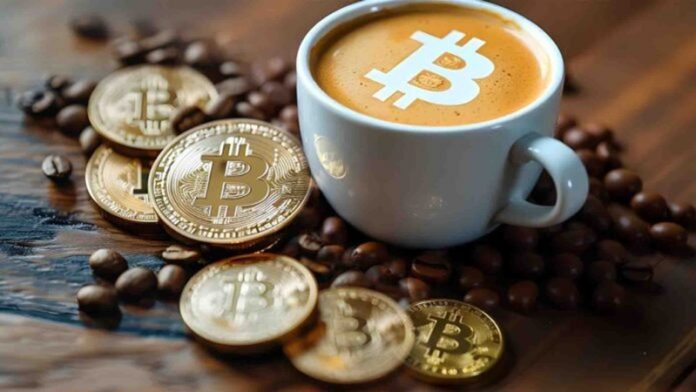
Shareholders of Vanadi Coffee S.A. (VANA.MC), a publicly traded Spanish coffee chain based in Alicante, approved a plan to invest up to €1 billion (approximately $1.17 billion) in Bitcoin, aiming to transform the company into Spain’s largest publicly listed Bitcoin holder. The decision, spearheaded by Chairman Salvador Martí, follows the company’s financial struggles, with a reported net loss of €3.3 million ($3.86 million) in 2024, a 15.8% increase from the previous year, against annual revenue of $2.28 million.

The company’s stock, which debuted at €3.28 ($3.73) in July 2023, had fallen 91.46% to €0.28 ($0.32) by June 2025, though it surged 242.96% in June following Bitcoin acquisition announcements. Vanadi has already purchased 54 BTC, valued at approximately €5.8 million ($6.8 million), with an additional 20 BTC acquired at an average price of €93,444 per Bitcoin, held in custody by Bit2Me. The company plans to fund the €1 billion investment through stock issuance and convertible bonds, purchasing Bitcoin in tranches to minimize market impact.

Inspired by MicroStrategy’s treasury strategy, Vanadi aims to redefine its business model, using Bitcoin as a primary reserve asset and a hedge against inflation, while appealing to tech-savvy investors and customers. The move is high-risk due to Vanadi’s small scale (six locations), limited crypto experience, and Spain’s conservative regulatory environment for digital assets. Critics, like Jacob King of WhaleWire, call it a potential publicity stunt, citing the company’s financial instability and Bitcoin’s volatility (e.g., a recent price drop from $111,000 to $105,000).

A successful pivot could position Vanadi as a pioneer in European corporate Bitcoin adoption, but failure risks exacerbating losses and shareholder dilution. The stock’s recent rally reflects investor enthusiasm, but analysts warn of significant volatility and regulatory challenges ahead. The decision by Vanadi Coffee S.A. (VANA.MC) to invest €1 billion in Bitcoin has significant implications, both for the company and the broader market, while highlighting a divide in perspectives on corporate cryptocurrency adoption.

By allocating a substantial portion of its treasury to Bitcoin, Vanadi aims to emulate MicroStrategy’s model, which saw its stock soar by adopting Bitcoin as a reserve asset. If Bitcoin’s price appreciates significantly (e.g., past its June 2025 high of $111,000), Vanadi could see substantial gains, boosting its balance sheet and stock value. The company’s 242.96% stock surge in June 2025 reflects investor optimism about this strategy.

Vanadi’s small scale (six locations, €2 million in 2024 revenue, €3.3 million net loss) makes this a high-stakes gamble. Bitcoin’s volatility (e.g., recent 5.4% drop from $111,000 to $105,000) could exacerbate losses, especially given the company’s already strained finances. Funding the €1 billion through stock issuance and convertible bonds risks shareholder dilution and increased debt, potentially destabilizing the company further if Bitcoin underperforms.

The stock’s rally suggests strong retail investor enthusiasm, particularly among crypto advocates who view Bitcoin as a hedge against inflation and fiat devaluation. Vanadi’s move could attract a new investor base, including younger, tech-savvy individuals, and position it as a pioneer in European corporate Bitcoin adoption. However, traditional investors may see this as reckless, given Vanadi’s core business struggles and limited crypto expertise.

The 91.46% stock decline since its 2023 IPO underscores underlying operational weaknesses, and critics like Jacob King of WhaleWire argue this could be a publicity stunt to mask financial woes. Spain’s conservative stance on cryptocurrencies, coupled with evolving EU regulations (e.g., MiCA framework), could complicate Vanadi’s strategy. Compliance with tax reporting, custody standards, and potential capital controls may increase costs and scrutiny.

Operationally, managing €1 billion in Bitcoin requires robust cybersecurity and custody solutions. While Vanadi uses Bit2Me for custody, any security breaches or mismanagement could lead to significant losses, further eroding investor trust. If successful, Vanadi’s move could inspire other European companies to allocate treasury funds to Bitcoin, accelerating corporate adoption. This aligns with trends seen in the U.S., where companies like MicroStrategy and Tesla have embraced Bitcoin.

Conversely, failure could deter other firms, reinforcing skepticism about cryptocurrencies as corporate assets. Bitcoin’s price could also face pressure if Vanadi’s large-scale purchases (or potential liquidations) impact market dynamics. The decision has sparked a clear divide in sentiment, reflecting broader debates about Bitcoin’s role in corporate finance. Supporters view Bitcoin as a store of value and a hedge against inflation, especially in a low-interest-rate environment.

They argue Vanadi’s pivot could diversify its revenue stream, attract new customers (e.g., via crypto payments), and signal innovation. The stock’s June rally and posts on X praising the move (e.g., “Vanadi is the MicroStrategy of Europe!”) reflect this enthusiasm. These stakeholders see Bitcoin as a transformative asset, and Vanadi’s bold strategy as a way to redefine its struggling business. They believe the company’s small size allows for agility in capitalizing on crypto market trends.

Critics, like Jacob King, argue that Vanadi’s core business is too weak to justify such a risky pivot. With €3.3 million in losses and minimal revenue, allocating €1 billion to a volatile asset like Bitcoin is seen as speculative and irresponsible. Skeptics point to regulatory risks in Spain and the EU, as well as Bitcoin’s price swings (e.g., 20% corrections in 2025), as red flags.

Traditionalists view this as a desperate move to prop up a failing company, potentially at the expense of shareholder value. They argue Vanadi should focus on stabilizing its coffee business rather than chasing crypto trends. Some analysts take a wait-and-see approach, acknowledging the potential for high rewards but emphasizing the execution risks. They note that Vanadi’s success hinges on Bitcoin’s long-term price trajectory, effective treasury management, and regulatory compliance.

Regulators may view this as a test case for corporate crypto adoption in Europe, potentially influencing future policies on digital assets in corporate treasuries. Vanadi’s €1 billion Bitcoin investment is a high-risk, high-reward strategy that could either redefine the company as a crypto trailblazer or exacerbate its financial struggles. The divide between crypto enthusiasts and traditional skeptics mirrors broader debates about Bitcoin’s legitimacy as a corporate asset.

ZachXBT Traces Recent NFT Hacks To North Korean IT Workers

0

Blockchain investigator ZachXBT revealed that North Korean IT workers, likely hired as developers, were behind hacks targeting NFT projects tied to Pepe creator Matt Furie and the ChainSaw platform, as well as another project called Favrr. The attacks, which began on June 18, 2025, resulted in approximately $1 million in losses. The hackers gained control of smart contracts, minted new NFTs, and dumped them, crashing floor prices to zero. Specific losses included ~$310,000 from ChainSaw-related projects (Replicandy, Peplicator, Hedz, and Zogz) and ~$680,000 from Favrr.

ZachXBT traced the stolen funds through three wallets, with some ETH converted to stablecoins and moved to the MEXC exchange. He identified suspicious patterns, including a Favrr CTO, Alex Hong, whose unverified work history and deleted LinkedIn profile raised red flags. GitHub accounts linked to the attackers showed Korean language settings and activity in Asia/Russia time zones, further pointing to North Korean involvement. ZachXBT criticized the lack of transparency from Furie and ChainSaw, noting a deleted warning post and disabled communications.

The Matt Furie hacks are part of a broader campaign, with North Korean IT workers infiltrating over 25 crypto projects since June 2024. These operations are highly coordinated, often involving multiple actors posing as independent freelancers across platforms like Upwork or GitHub. The Lazarus Group, suspected in these attacks, is known for long-term campaigns that combine reconnaissance, infiltration, and exploitation.

For example, they’ve used similar tactics in high-profile heists like the $1.5 billion Bybit hack in February 2025. North Korean hackers target the crypto industry’s reliance on pseudonymous interactions and lack of standardized vetting. Many projects, including those tied to Matt Furie, failed to conduct basic due diligence, such as verifying identities or auditing code contributions, allowing hackers to operate undetected.

He emphasized that basic due diligence could have prevented these hires, highlighting North Korea’s ongoing crypto theft tactics, with TRM Labs linking them to ~$1.6 billion in stolen crypto in 2025. The hacks expose vulnerabilities in NFT and DeFi projects, particularly in smart contract management and developer vetting. Inadequate due diligence when hiring developers can lead to catastrophic breaches, as seen with the ~$1 million in losses across ChainSaw and Favrr projects.

The involvement of North Korean IT workers underscores the growing sophistication of state-sponsored cyberattacks targeting crypto and NFT ecosystems. With ~$1.6 billion in crypto stolen by North Korea in 2025 (per TRM Labs), these actors pose a persistent threat, leveraging insider access to exploit projects. Matt Furie and ChainSaw’s lack of transparency—deleting warnings and disabling communications—erodes trust in their projects. Failure to address the breach publicly may deter investors and collectors, further impacting NFT market confidence.

The investigation highlights the need for rigorous vetting of developers, including verifying work histories and scrutinizing online profiles (e.g., GitHub, LinkedIn). Projects must adopt stricter hiring practices to prevent infiltration by malicious actors. High-profile hacks tied to state actors could draw increased regulatory attention to the crypto and NFT space, potentially leading to stricter compliance requirements for platforms and exchanges like MEXC, where stolen funds were traced.

The dumping of minted NFTs to crash floor prices demonstrates how hacks can destabilize markets, harming collectors and investors. This may push projects to implement stronger safeguards, like multi-signature wallets or audited contracts. North Korea’s use of crypto theft to fund state activities (e.g., weapons programs) raises alarms for global security, potentially prompting international efforts to curb such cyberattacks through sanctions or coordinated law enforcement.

Tether Raising $1B Through SPAC For A Publicly Traded Crypto Reserve

0

Reeve Collins, a co-founder of Tether, and Chinh Chu, a former Blackstone executive, are raising $1 billion through a Special Purpose Acquisition Company (SPAC) called M3-Brigade Acquisition V Corp to create a publicly traded crypto reserve fund. The fund aims to hold a diversified portfolio of digital assets, including Bitcoin (BTC), Ethereum (ETH), and Solana (SOL), focusing on long-term stability and institutional investment. Cantor Fitzgerald is advising on the deal, with Wilbur Ross, former U.S. Secretary of Commerce, and Gabriel Abed, Binance board chairman, serving as vice chairs.

Jaime Leverton, former CEO of Hut 8, will lead the venture. The fundraising is ongoing, and the $1 billion target may change based on investor interest. This initiative reflects growing institutional confidence in cryptocurrencies, aligning with a broader trend of public companies adopting crypto treasuries. The $1 billion SPAC raise led by Tether co-founder Reeve Collins to launch a crypto reserve vehicle has significant implications for the crypto market and highlights a growing divide in how cryptocurrencies are perceived and adopted.

The involvement of high-profile figures like Chinh Chu (ex-Blackstone) and Wilbur Ross, along with Cantor Fitzgerald’s advisory role, signals increasing institutional acceptance of cryptocurrencies. A publicly traded crypto reserve fund could normalize digital assets as a legitimate asset class, attracting traditional investors. The fund’s diversified portfolio (Bitcoin, Ethereum, Solana) may set a precedent for institutional-grade crypto investment vehicles, offering a safer entry point for risk-averse investors compared to direct crypto purchases.

By holding a diversified basket of major cryptocurrencies, the fund could act as a stabilizing force, reducing volatility for included assets. Large-scale institutional buying could also boost liquidity, making it easier for other investors to enter or exit positions. The fund’s focus on long-term stability may counter perceptions of crypto as a speculative bubble, potentially encouraging broader adoption.

A SPAC-backed crypto fund will likely face intense regulatory oversight, especially given Tether’s controversial history with transparency and reserve backing. This could set a benchmark for compliance in the crypto space, influencing future regulations. Success could pave the way for more regulated crypto investment vehicles, while failure might reinforce skepticism among regulators and traditional finance.

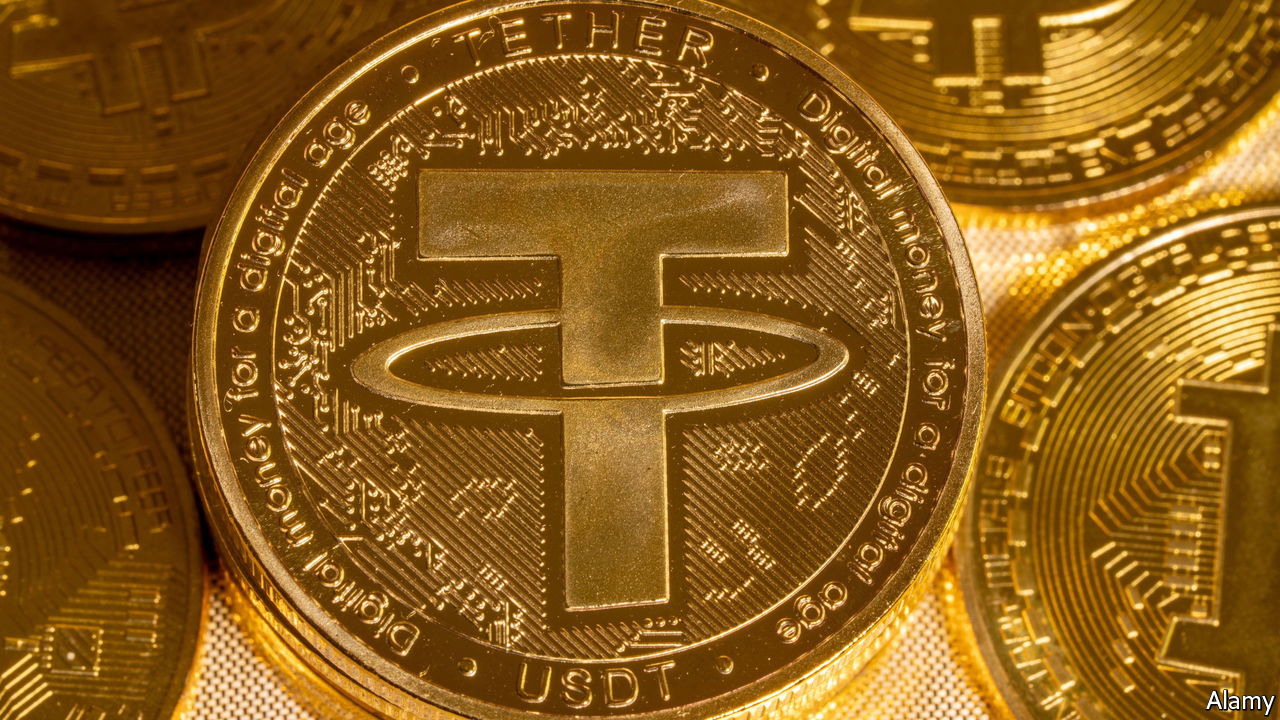
Tether, the issuer of the USDT stablecoin, remains a dominant force in crypto markets. This move could strengthen Tether’s ecosystem by linking it to a broader investment vehicle, potentially increasing demand for USDT as a trading pair within the fund. However, Tether’s past regulatory issues (e.g., fines for misrepresenting reserves) could cast a shadow, raising questions about the fund’s credibility.

The fund targets institutional and accredited investors, signaling a shift toward “Wall Street-ification” of crypto. This could marginalize retail investors, who may lack access to such vehicles or feel priced out as institutional money drives up asset prices. Retail investors, who fueled much of crypto’s early growth, may view this as a departure from the decentralized ethos of cryptocurrencies. The involvement of traditional finance heavyweights could alienate those who see crypto as a rebellion against centralized systems.

The fund’s structure, tied to a SPAC and traditional finance, leans heavily centralized, contrasting with the decentralized ideals of many crypto purists. This could deepen the ideological split between those who embrace institutional integration and those advocating for peer-to-peer, trustless systems. Tether itself, as a centralized stablecoin issuer, embodies this tension, and its involvement may amplify debates about centralization in crypto.

The fund’s focus on long-term stability clashes with the speculative trading culture prevalent in crypto markets. While it may attract conservative investors, it could alienate speculators who thrive on volatility, creating a divide between those seeking steady returns and those chasing high-risk, high-reward opportunities. In regions with less developed financial infrastructure, crypto is often a lifeline for unbanked populations or a hedge against currency devaluation.

A Wall Street-backed fund may seem disconnected from these use cases, potentially widening the gap between developed markets (focused on investment) and emerging markets (focused on utility). The $1 billion SPAC crypto reserve vehicle could accelerate institutional adoption and market maturity, but it risks deepening divides between centralized and decentralized visions, institutional and retail investors, and speculative versus stable strategies.