DD
MM
YYYY

PAGES

DD
MM
YYYY

spot_img

PAGES

Home Blog Page 988

Implications of Digital Warfare Using Cryptocurrencies

0

Israeli authorities recently arrested three individuals suspected of spying for Iran, with payments allegedly made in cryptocurrencies. This incident highlights the escalating digital dimension of the Israel-Iran conflict, where digital assets are increasingly used to fund espionage and cyberattacks. A 27-year-old Tel Aviv resident was detained for tasks like photographing officials’ homes and military sites, reportedly receiving thousands of dollars in crypto.

This follows earlier cases, such as the October 2024 arrest of seven Israeli Jews from Haifa, originally from Azerbaijan, for over 600 espionage missions, also paid in digital currencies. The use of crypto in these operations raises concerns about its role in enabling state-sponsored espionage, as it offers anonymity and cross-border efficiency. Meanwhile, Iran’s intelligence services are reportedly shifting to aggressive, mass-recruitment strategies via social media, exploiting digital platforms to target vulnerable individuals.

This evolving landscape underscores a new age of digital warfare, blending traditional espionage with cutting-edge technology.  Cryptocurrencies enable state and non-state actors to fund espionage, cyberattacks, or terrorism with reduced risk of detection. Blockchain’s pseudonymous nature complicates tracking, especially when privacy-focused coins or mixers are used, as seen in the alleged Iranian payments to Israeli spies.

Digital assets facilitate rapid, borderless transactions, allowing adversaries like Iran to orchestrate operations in Israel or elsewhere without reliance on traditional banking systems, which are subject to sanctions and monitoring. The Israel-Iran case exemplifies hybrid warfare, blending physical espionage with digital tools. This trend could intensify, with nations leveraging cryptocurrencies to fund proxies, sabotage, or disinformation campaigns, blurring lines between war and peace.

Regulatory Challenges: Governments struggle to regulate cryptocurrencies without stifling innovation. The misuse of digital assets in espionage underscores the need for global coordination on anti-money laundering (AML) and counter-terrorism financing (CTF) frameworks, but enforcement varies widely.

Vulnerable Populations Targeted: Iran’s reported use of social media to recruit spies, coupled with crypto payments, exploits economically or socially vulnerable individuals. This tactic could proliferate, creating insider threats in targeted nations.

Counterintelligence Strain: Intelligence agencies like Israel’s Shin Bet face increased pressure to adapt to digital threats. Tracking crypto transactions requires specialized expertise and tools, diverting resources from traditional counterespionage efforts.

Advanced nations like Israel possess robust cyber defenses and blockchain analysis capabilities, while less-resourced states or groups rely on off-the-shelf tools or crypto’s inherent anonymity. However, even sophisticated actors like Iran can exploit gaps in global crypto regulation. Wealthier nations can invest in AI-driven threat detection and cybersecurity, while poorer ones are more vulnerable to digital manipulation or recruitment via crypto incentives. This creates uneven resilience against hybrid threats.

Democratic states face constraints balancing privacy rights with security needs, limiting aggressive crypto surveillance. Authoritarian regimes like Iran face fewer such hurdles, enabling faster deployment of digital warfare tactics. Governments and intelligence agencies are increasingly aware of crypto’s risks, but public understanding lags, making civilians easy targets for recruitment or scams tied to espionage, as seen in the Israeli arrests.

While global powers push for unified crypto regulations, regional conflicts like Israel-Iran exploit regulatory fragmentation. Sanctions on Iran, for instance, incentivize its use of crypto to bypass financial isolation, deepening regional instability. This divide amplifies the complexity of digital warfare, where technological, economic, and geopolitical disparities shape how nations engage in and defend against emerging threats.

Google Gemini Now Core to Search as Sundar Pichai Unveils AI-Powered Vision at I/O 2024

0

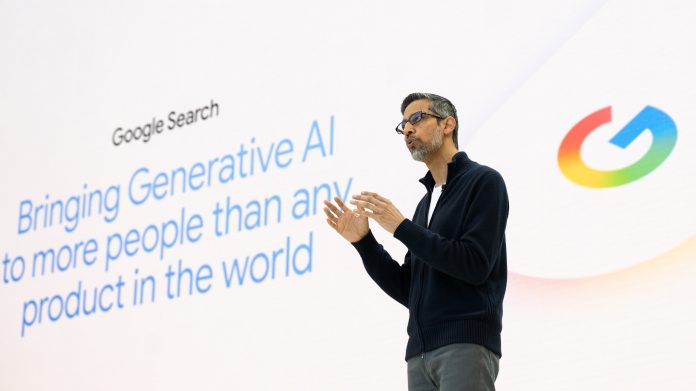
Alphabet and Google CEO Sundar Pichai delivered a sweeping keynote at the 17th annual Google I/O developer conference on Tuesday, casting a clear message: artificial intelligence isn’t just an add-on—it’s becoming the foundation of Google’s entire ecosystem.

“We are shipping faster than ever,” Pichai said, highlighting that Google has announced over a dozen new models, made research breakthroughs, and launched more than 20 major AI products and features since last year’s I/O. Leading the pack is Gemini 2.5 Pro, which Pichai claimed now sweeps the LLMArena leaderboard in all categories, cementing its place as a leading large language model globally.

But beyond performance metrics, Pichai’s address signaled a profound shift in how users interact with Google’s core products—from Search and Gmail to Google Docs and Meet. Gemini, once a model, is now the thread running through the company’s ambitions, with AI woven deeply into the user experience.

Gemini Replaces Traditional Search, Gains “AI Mode”

Perhaps the boldest shift is Google’s new AI Mode in Search, a feature that’s currently rolling out under Google Labs. Billed as a “total reimagining” of the Google search experience, AI Mode offers an “end-to-end” AI-driven interface. Rather than presenting links and snippets, this new mode integrates directly with Gemini 2.5 and a user’s personal data to generate tailored responses.

“For those who want an end-to-end AI search experience, we are introducing an all-new AI mode,” Pichai said.

While Google has long dominated web search, this move reflects growing pressure from AI-native services like Perplexity AI, ChatGPT, and others that offer direct, conversational answers instead of traditional search results. But the shift raises critical questions—particularly about the potential impact on web traffic for publishers and businesses who rely on referrals from Google. For now, Google is rolling it out gradually and hasn’t disclosed plans for wider implementation.

Gemini Will Soon Know You—Really Know You

A centerpiece of Google’s AI vision is “Personal Context”, a controversial new feature that allows Gemini to scan across a user’s Google apps—Gmail, Drive, Docs, Calendar—to understand routines, preferences, tone of communication, and even vacation history.

“With your permission, Gemini models can use relevant context across your Google Apps, in a way that is private, transparent and fully under your control,” Pichai said.

One application of this is Personalized Smart Replies. These go beyond the existing short auto-responses by drawing from a user’s own documents and communication history to draft longer, more personalized messages.

To demonstrate, Pichai offered an example: a friend asking for travel advice. Rather than writing a fresh reply, Gemini would comb through your past trip notes, reservations, and email tone, and generate a message that mimics how you typically write—making it appear like you wrote it yourself.

Some see convenience; others see something far more dystopian.

“Gemini matches my typical greetings, captures my tone, style, and favorite word choices… and automatically generates a reply,” said Pichai. While aimed at boosting productivity, critics argue this approach risks devaluing human communication, blurring the lines between genuine interaction and machine-generated mimicry.

The feature is expected to roll out to Gmail subscribers this summer.

Real-Time Translation, AI in Meetings, and SynthID

On a more promising front, Pichai introduced real-time bi-directional voice translation during video calls using Project Starline—a futuristic video conferencing initiative. The feature is now integrated into Google Meet for English and Spanish, with plans to expand to more languages soon. Powered by AI-generated speech, the tool enables live conversations across language barriers, with an avatar voicing translations instantly.

Meanwhile, in an almost self-aware nod to AI overload, Google also launched SynthID Detector, a web tool that helps users identify whether content has been AI-generated. The feature will support detection for text, audio, images, and video.

Given the rise of AI-generated misinformation and deepfakes, SynthID aims to bring some level of transparency, though skeptics are already wondering: will users now need to run their friends’ emails or texts through AI detectors to check if they were written by a person or a machine?

Big AI Vision, Bigger Risks

Tuesday’s announcements confirm that Google sees Gemini not as a tool, but as the interface of the future. It’s set to power your email replies, search results, translations, and even social conversations.

But the company’s AI push also raises critical questions about privacy, data use, authenticity of communication, and Google’s responsibility in shaping the very fabric of digital interaction. While Pichai stressed user consent and transparency, the move toward deeply personalized AI inevitably brings trade-offs—between convenience and control, between speed and sincerity.

However, one thing is clear: Google is betting that users will embrace a world where machines speak like us, think like us, and even write for us. Time will tell whether that vision empowers or alienates users.

How Web3 and Cryptocurrency Are Transforming the iGaming Landscape

0

The iGaming industry is changing thanks to the growing influence of Web3 technologies and cryptocurrency adoption. Blockchain ecosystems are now much more mainstream, and, according to crypto analytics firms Vaults and Artemis, over $112 billion is locked in decentralised finance protocols. It’s a figure that reflects a major influx of institutional capital and mature asset managers into the space.

While often used interchangeably, Web3 and cryptocurrency represent different aspects of this transformation. Cryptocurrencies like Bitcoin and Ethereum are digital assets used for payments or wagering. Web3, on the other hand, refers to a broader shift toward a decentralised, user-owned internet built on blockchain technology.

In the iGaming space, crypto enhances convenience and accessibility, while Web3 is driving deeper innovations — from smart contract-powered games to player-governed ecosystems. This wider acceptance of blockchain — and the values it represents, such as decentralisation, transparency, and user ownership — is increasingly shaping how players interact with digital platforms.

Crypto Market to Hit $150 Billion by 2030

The crypto casino market is projected to grow from $70 billion in 2024 to $150 billion by 2030. Indeed, in terms of transactions, the sector is already comparable to traditional platforms. This new era of players demands seamless Web3 experiences: instant settlement, token-based rewards, smart contract security, and borderless access. For operators and platform providers alike, the challenge is clear — adapt to a decentralised future, or risk being left behind.

As these technologies mature, iGaming platforms that integrate such features will appeal to a new wave of crypto-savvy users whose expectations range from being uninhibited by geographical restrictions to community-driven experiences.

Legacy systems that can’t support decentralised wallets, on-chain data integration, or real-time crypto transactions will quickly fall behind. Innovative providers of iGaming software solutions, such as companies like Gamingtec, allow operators to adopt emerging technologies without overhauling their entire platform.

Built around a proprietary Player Account Management (PAM) system known as CORE, Gamingtec gives operators the agility to implement blockchain-compatible features like crypto payments or smart contract-based loyalty systems without disrupting their core platform. Equally important is the use of a modern tech stack including ReactJS for front-end delivery, and NodeJS for back-end services. This blend of technologies offers the flexibility to integrate with, for instance, Web3 APIs and decentralised ID systems. As platforms embrace such forward-thinking technology, iGaming providers are giving themselves the agility to evolve and maintain a leading role in the expanding market.

Exciting Opportunities

The possibilities are undoubtedly exciting. For instance, interoperability promises to revolutionize gaming by letting players carry their achievements, skills, and digital assets seamlessly across multiple games and platforms. Meanwhile, communities like SocialFi are making iGaming more engaging. These Web3 innovations open ways for operators to attract new audiences while increasing player retention through crypto payments and gamification. Similarly, for developers, it provides opportunities to explore fresh monetization models and tap into global communities.

Web3 and cryptocurrency are redefining iGaming by introducing faster and more transparent experiences. As adoption grows and licensing frameworks mature, operators that embrace decentralised technologies now will be best positioned to lead. A borderless future for iGaming beckons that is blockchain-driven and built for the next generation of digital players.

Defi Development Corp Partners With Kraken On DFDV Tokenized Stocks

0

DeFi Development Corp. (Nasdaq: DFDV), a U.S. public company focused on accumulating Solana (SOL) as its primary treasury reserve, has partnered with Kraken to tokenize its stock on the Solana blockchain, marking it as the first U.S.-listed crypto treasury strategy to trade on-chain. The tokenized stock, trading under the ticker DFDVx, will be listed on Kraken’s xStocks platform alongside major companies like Apple, Tesla, and Nvidia.

This initiative, part of the xStocks alliance with Kraken, Backed, and Solana, aims to bridge traditional capital markets with decentralized finance (DeFi) by enabling 24/7 trading, faster settlement, and integration into DeFi applications. The move aligns with growing demand for real-world assets (RWAs) on Solana, with DFDV planning to explore further DeFi integrations, liquidity initiatives, and on-chain financial tools.

CEO Joseph Onorati described the tokenization as a “DeFi lego block,” opening new use cases for blending equity ownership with on-chain finance. The company, formerly Janover Inc., has seen its stock surge over 500% since April 2025, with shares trading at $24.70 as of June 24, 2025.

The partnership between DeFi Development Corp. (DFDV) and Kraken to tokenize DFDV stock on the Solana blockchain has significant implications for both traditional finance (TradFi) and decentralized finance (DeFi), while highlighting the growing divide between those embracing blockchain innovation and those resistant to it. Tokenizing DFDV stock on Solana allows it to trade 24/7 on Kraken’s xStocks platform, offering faster settlement and lower costs compared to traditional stock exchanges. This makes equity ownership more accessible and liquid, especially for global investors.

As a “DeFi lego block,” tokenized DFDV stock can be used in DeFi protocols for lending, borrowing, or collateralization, creating new financial products that blend equity with on-chain finance. The move aligns with the growing trend of tokenizing RWAs on Solana, which could drive mainstream adoption of blockchain technology in capital markets.

DFDV’s first-mover advantage as the only U.S.-listed crypto treasury strategy with tokenized stock positions it to attract crypto-native investors and institutions exploring blockchain-based assets. On-chain trading and potential DeFi integrations could enhance liquidity for DFDV stock, reducing spreads and improving price discovery.

The partnership reinforces Solana’s position as a leading blockchain for RWAs, competing with Ethereum and newer chains like Aptos. DFDV’s strategy of accumulating Solana (SOL) as its primary treasury reserve, combined with tokenized stock, appeals to investors seeking exposure to crypto market growth without direct coin ownership.

The 500%+ surge in DFDV’s stock price since April 2025 reflects strong market enthusiasm, though volatility remains a risk. Tokenizing a U.S.-listed stock on a regulated platform like Kraken sets a precedent for compliant blockchain innovation, potentially encouraging other public companies to follow. Increased regulatory attention could arise as tokenized securities blur the lines between TradFi and DeFi, requiring clear frameworks to prevent misuse.

Companies like DFDV and platforms like Kraken are embracing blockchain to enhance efficiency, accessibility, and innovation. They see tokenization as a way to democratize finance and integrate with DeFi’s open ecosystem. Traditional financial institutions, regulators, and investors wary of crypto’s volatility and regulatory uncertainty may resist tokenization, viewing it as speculative or risky. This divide is evident in the slow adoption of blockchain by legacy banks compared to fintechs.

Tokenized stocks on Solana enable global investors, including those in underbanked regions, to access U.S. equities with minimal barriers (e.g., no need for a traditional brokerage account). Those without crypto wallets, blockchain knowledge, or internet access remain excluded, highlighting a digital divide that DeFi must address to achieve true democratization.

While tokenized on Solana, DFDVx trading occurs on Kraken, a centralized platform, creating a hybrid model that retains some custodial risks and oversight. DeFi purists may argue that true decentralization requires fully permissionless systems, revealing a philosophical divide within the crypto community about how to integrate TradFi.

Jurisdictions supporting tokenization (e.g., U.S. with compliant platforms) are enabling innovation, but inconsistent global regulations create a divide between crypto-friendly and restrictive regions. Regulators in some countries may view tokenized securities as a threat to financial stability, widening the gap between markets that embrace DeFi and those that suppress it.

DFDV’s partnership with Kraken to tokenize its stock is a bold step toward merging TradFi and DeFi, offering enhanced liquidity, accessibility, and innovation while reinforcing Solana’s RWA ecosystem. However, it amplifies the divide between blockchain adopters and skeptics, centralized and decentralized models, and inclusive versus exclusive financial systems.

Aptos Token Unlock On July 12, 2025, Presents Both Opportunities And Risks

0

Aptos (APT) is set to unlock 11.31 million tokens, representing 1.76% of its circulating supply, valued at approximately $45.24 million, on July 12, 2025. This follows a pattern of monthly unlocks, with recent ones in May and June 2025 valued at $65 million and $53-$59 million, respectively. Historically, APT’s price reaction to unlocks has been inconsistent—post-unlock price changes ranged from a 3.6% increase in April to a 7.8% drop in May. The tokens will be distributed to the community, core contributors, the foundation, and investors, which could introduce volatility if recipients sell.

However, Aptos’ price has shown resilience, recently trading at $4.56 with a 3% daily gain, bolstered by strong network activity (6.7 million weekly active addresses) and its selection as a top candidate for Wyoming’s WYST stablecoin project. The unlocking of 11.31 million Aptos (APT) tokens, worth $45.24 million and representing 1.76% of its circulating supply, on July 12, 2025, has several implications for the Aptos ecosystem, its token price, and stakeholders.

If recipients (community, core contributors, foundation, or investors) sell their unlocked tokens, the increased supply could depress APT’s price, especially in a bearish or neutral market. Historical data shows mixed outcomes—post-unlock price drops (e.g., 7.8% in May 2025) contrast with gains (e.g., 3.6% in April 2025). The unlock’s size (1.76% of circulating supply) is relatively modest, suggesting that a liquid market with strong demand might absorb the new tokens without significant disruption. APT’s recent price resilience ($4.56, up 3% daily) and high network activity (6.7 million weekly active addresses) could mitigate sell-off impacts.

Tokens allocated to the community and core contributors incentivize participation, development, and governance. This could strengthen Aptos’ decentralized ecosystem, especially as it competes with high-throughput blockchains like Solana. Funds directed to the Aptos Foundation may support marketing, partnerships, or technical upgrades, while investor unlocks could enhance liquidity and attract institutional interest. However, investor sales might signal profit-taking, potentially undermining confidence.

Aptos’ selection as a top candidate for Wyoming’s WYST stablecoin and its robust network metrics (e.g., high transaction volume) could overshadow unlock concerns, maintaining bullish sentiment if fundamentals remain strong. Repeated unlocks (e.g., $65M in May, $53-$59M in June 2025) may create a psychological overhang, where traders anticipate sell-offs, amplifying volatility. Negative sentiment on X posts about unlocks could exacerbate this.

Community Members receive tokens, empowering them to stake, vote, or trade, fostering long-term engagement. Community-focused unlocks align with Aptos’ goal of decentralization. If large holders (e.g., investors) sell, community members’ token value could decline, reducing their financial incentive to participate. Unlocked tokens reward developers and team members for their work, potentially boosting morale and innovation (e.g., enhancing Aptos’ Move programming language or scaling solutions).

Contributors may sell to realize gains, especially if they received tokens at lower valuations, adding to supply pressure. Early investors, such as VCs, gain liquidity to sell or reallocate capital, which could attract new investors seeking exposure to Aptos. Selling could signal a lack of long-term confidence, spooking retail investors. Investors also face dilution risks from recurring unlocks.

Tokens allocated to the foundation support strategic initiatives (e.g., partnerships like Wyoming’s WYST project), enhancing Aptos’ adoption. Mismanagement or perceived over-allocation to the foundation could spark community backlash, as seen in some X posts criticizing tokenomics in similar projects. Strong ecosystem growth and positive news (e.g., network activity, partnerships) could drive price appreciation, benefiting holders.

Short-term traders may face losses if unlocks trigger sell-offs. The divide here is between long-term holders (optimistic about fundamentals) and short-term speculators (sensitive to supply shocks). A bullish crypto market could absorb the unlock with minimal price impact, while a bearish market might amplify selling pressure. Tracking on-chain data post-unlock (e.g., wallet movements to exchanges) will reveal whether recipients hold or sell.

The Aptos token unlock on July 12, 2025, presents both opportunities and risks. While it supports ecosystem growth by rewarding contributors and funding development, it risks short-term price volatility if recipients sell. The divide lies in stakeholder incentives—community and contributors gain long-term benefits, while investors and traders face immediate financial decisions. Aptos’ strong fundamentals and network activity suggest resilience, but market conditions and recipient behavior will determine the unlock’s net impact.