

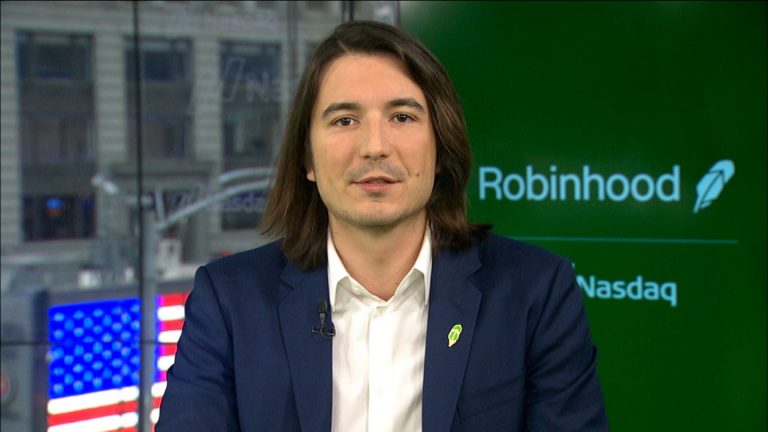
Robinhood announced “Robinhood Ventures” introducing Robinhood Ventures Fund I (RVI)—a closed-end fund designed to give everyday retail investors exposure to private companies, traditionally reserved for wealthy individuals and venture capitalists.
This move builds on Robinhood’s earlier efforts, like tokenized private stocks in the EU, to open up opaque private markets, which now represent over $10 trillion in U.S. company value. RVI is structured as a publicly traded closed-end fund, with shares intended to list on the New York Stock Exchange under the ticker symbol “RVI” (pending SEC approval).
Investors can buy and sell shares through brokerages, including Robinhood itself. The fund will build a concentrated portfolio of private companies “at the frontiers of their industries,” holding investments long-term through IPOs and beyond. It will span multiple sectors, with Robinhood inviting startups to apply via email.
Operated by Robinhood Ventures DE, LLC—a new wholly owned subsidiary registered as an investment adviser with the SEC. Robinhood filed an initial registration statement (Form N-2) with the SEC on September 15, 2025, to begin the public offering process. The filing is not yet effective, and full details will come via prospectus.
Register for Tekedia Mini-MBA edition 20 (June 8 – Sept 5, 2026).
Register for Tekedia AI in Business Masterclass.
Join Tekedia Capital Syndicate and co-invest in great global startups.
Register for Tekedia AI Lab.
Robinhood CEO Vlad Tenev emphasized the initiative’s goal: “For decades, wealthy people and institutions have invested in private companies while retail investors have been unfairly locked out. With Robinhood Ventures, everyday people will be able to invest in opportunities once reserved for the elite.”
This launch comes amid a trend where U.S. public companies have dropped from ~7,000 in 2000 to ~4,000 today, while private firms balloon in value—fueled by AI, fintech, and crypto. Similar funds exist (e.g., ARK Venture Fund), but RVI stands out for its NYSE listing and retail focus.
However, critics note risks: private investments are volatile, illiquid, and unregulated compared to public stocks, potentially exposing Main Street to venture capital’s high failure rates. On X, reactions range from excitement about “closing the fintech loop” (broker —bank —VC) to skepticism, like calling it “a casino dressed as financial literacy.”

Democratization of Private Markets
Historically, private company investments (e.g., venture capital, pre-IPO startups) have been limited to accredited investors (high-net-worth individuals or institutions). RVI, as a publicly traded closed-end fund listed on the NYSE, allows retail investors to gain exposure to private markets without needing millions in assets.
Private companies, especially in tech, AI, and fintech, have driven massive wealth creation (e.g., early investments in companies like SpaceX or Airbnb). RVI could enable everyday investors to capture some of this upside, narrowing the wealth gap historically widened by exclusive VC access.

Traders are eyeing $HOOD stock momentum, with targets around $122–$127. Robinhood’s branding as a platform for the “everyday investor” strengthens, aligning with its mission to disrupt traditional finance. This could attract a new wave of users to its ecosystem.
Private company investments are inherently riskier than public stocks. They lack transparency, face higher failure rates (e.g., ~70% of VC-backed startups fail), and are less liquid. RVI’s closed-end structure may mitigate some illiquidity, but share prices could still be volatile, especially if tied to speculative sectors like AI or crypto.
Private markets are less regulated than public ones, with fewer disclosure requirements. Retail investors may lack the expertise to assess these risks, potentially leading to losses if hyped investments underperform.
Robinhood’s gamified platform and marketing could draw inexperienced investors expecting quick gains, underestimating the long-term, high-risk nature of VC-style investing. RVI positions Robinhood as a competitor to traditional VC firms, wealth managers, and platforms like ARK Venture Fund or Destiny Tech100.
With retail investors gaining access, private companies may face increased scrutiny or pressure to deliver returns, especially if RVI’s portfolio becomes a public benchmark. Startups applying to RVI via Robinhood’s open call may also compete more fiercely for inclusion.
A successful RVI could boost $HOOD stock, as seen in X posts speculating on price targets ($122–$127). However, any missteps (e.g., poor fund performance or regulatory issues) could hurt Robinhood’s reputation and share price.
The SEC’s review of RVI’s Form N-2 filing will be critical. Any delays or rejections could stall the launch, while strict conditions might limit the fund’s appeal. Investors should monitor the prospectus for clarity on fees, holdings, and risks.
Regulators may scrutinize how Robinhood markets RVI to retail investors, ensuring it doesn’t oversimplify the risks of private investments. RVI could normalize VC-style investing for retail audiences, shifting cultural perceptions of wealth-building from traditional stocks to speculative, high-growth startups.
Robinhood may need to invest heavily in investor education to ensure users understand private market risks, or face backlash if losses mount. RVI expands Robinhood’s business beyond trading commissions and payment-for-order-flow, potentially stabilizing revenue through management fees.
With U.S. private company value exceeding $10 trillion (per Robinhood’s announcement), RVI taps into a growing trend of companies staying private longer. This could accelerate retail demand for private market exposure. RVI’s focus on “frontier” industries aligns with the AI and tech boom.
Overexposure to volatile sectors could amplify risks if market sentiment shifts. If RVI succeeds, other platforms may launch similar funds, potentially overcrowding private markets and inflating valuations, which could hurt returns.