

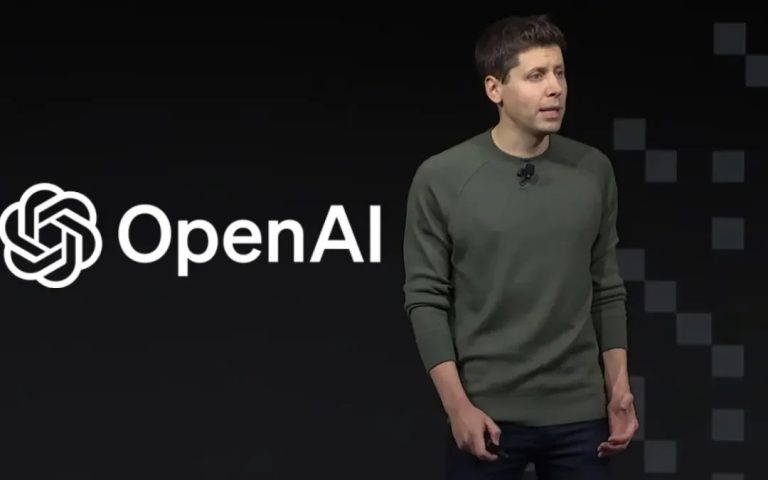
Business leaders and economists have long speculated that artificial intelligence is riding an investment bubble — and now Sam Altman, the man at the heart of the boom, has said so himself.
In a rare moment of candor, the OpenAI CEO told reporters over dinner in San Francisco that the AI sector is indeed overinflated, fueled by investor excitement that far outpaces the industry’s immediate fundamentals.
“Are we in a phase where investors as a whole are overexcited about AI? My opinion is yes,” Altman said, drawing a direct comparison to the dot-com bubble of the late 1990s.
Register for Tekedia Mini-MBA edition 20 (June 8 – Sept 5, 2026).
Register for Tekedia AI in Business Masterclass.
Join Tekedia Capital Syndicate and co-invest in great global startups.
Register for Tekedia AI Lab.
Altman’s comments land at a moment when AI startups are securing record-breaking sums of capital with little more than proof-of-concept technology and small engineering teams. Venture firms, hedge funds, and sovereign wealth funds have poured billions into early-stage AI companies, sending valuations soaring to levels typically reserved for the likes of Microsoft or Alphabet.
Altman warned that this surge resembles past bubbles where “smart people get overexcited about a kernel of truth.” He pointed out that while the internet truly reshaped the world, many investors lost fortunes before the winners of that era emerged.
“That’s not rational behavior,” Altman said of today’s funding race. “Someone’s gonna get burned there, I think. Someone is going to lose a phenomenal amount of money — we don’t know who — and a lot of people are going to make a phenomenal amount of money.”

A Boom Without Revenue
Data support his warning. Nearly 500 AI startups are now valued at over $1 billion, with average valuations around $5.4 billion each, despite minimal revenues and, in some cases, no clear path to monetization. Another 1,300 young firms command valuations north of $100 million. Notably, companies founded by OpenAI alumni, such as Safe Superintelligence and Thinking Machines, have already raised billions in their first year of existence.
This investor appetite has created a paradox: while the promise of AI breakthroughs is undeniable, the financial ecosystem around them may be unsustainable in the near term. Analysts say valuations are not based on earnings or market share, but on speculative bets about who will dominate the future of artificial general intelligence (AGI).
Altman’s Balancing Act
For Altman, acknowledging the bubble does not mean doubting AI’s future. On the contrary, he stressed that, like the internet crash, any short-term correction would not erase the technology’s long-term transformative potential.

“Tech was really important. The internet was a really big deal. People got overexcited,” Altman said.
He believes AI will follow a similar path, producing extraordinary economic value even if early investors face heavy losses.
That confidence is evident in OpenAI’s own ambitions. Altman revealed that the company is preparing to spend “trillions of dollars” on building advanced data centers, a level of infrastructure investment that would rival or surpass the scale of entire national power grids. The remark underscores his belief that OpenAI must leverage today’s market boom to cement its lead before capital becomes scarce.
Lessons from the Past, Stakes for the Future
The AI bubble debate fits into a broader historical pattern: new technologies often ignite speculative frenzies before settling into more realistic valuations. The dot-com era gave birth to Amazon and Google, but also wiped out thousands of companies. Electric vehicles, blockchain, and renewable energy each saw similar cycles of hype and correction.
What makes AI different is the sheer breadth of its promised impact — from reshaping labor markets to altering geopolitics. Investors betting big on AI are not just chasing returns, but positioning themselves for what many believe is the defining technological shift of the century.
Altman’s admission thus gives voice to what many insiders have whispered: that this market cannot sustain itself at its current pace. But his trillion-dollar spending vision also signals that the most powerful players intend to ride out any crash, emerging stronger on the other side.