

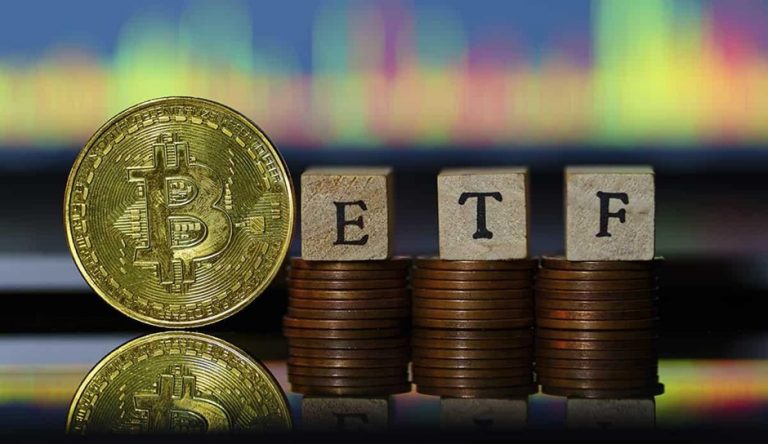
Spot exchange-traded funds (ETFs) for Solana (SOL) and Ethereum (ETH) have been recording consistent net inflows over the past few weeks, driven by institutional interest in high-yield and growth-oriented assets.
In contrast, Bitcoin (BTC) ETFs have faced substantial outflows amid broader market volatility, profit-taking, and macroeconomic pressures like tightening liquidity. This divergence highlights a rotation of capital toward altcoins, even as BTC and ETH prices hover near yearly lows (BTC around $82,000–$86,000, ETH under $2,800).
SOL ETFs, launched in late October 2025, offer staking yields of 5–7%, attracting investors seeking productive returns that BTC ETFs lack. They’ve maintained an unbroken streak of positive flows, signaling strong conviction despite a 15% SOL price dip this month.
ETH ETFs have shifted from heavy outflows earlier in November to recent inflows, buoyed by DeFi exposure and products like BlackRock’s ETHA. BTC ETFs are experiencing their worst month since launch, with cumulative outflows approaching records, as investors de-risk amid a stalled rally and leveraged liquidations.
Register for Tekedia Mini-MBA edition 20 (June 8 – Sept 5, 2026).
Register for Tekedia AI in Business Masterclass.
Join Tekedia Capital Syndicate and co-invest in great global startups.
Register for Tekedia AI Lab.
This pattern suggests “smart money” is repositioning into yield-bearing alts like SOL, potentially forming a support floor for prices. However, volatility persists—SOL tests $139 resistance, while BTC/ETH risk deeper corrections if outflows accelerate.
The Federal Reserve’s monetary policy remains a pivotal driver for risk assets like cryptocurrencies, influencing liquidity, investor sentiment, and capital flows into ETFs.
In November 2025, the Fed has shown signs of internal division following its October 29 rate cut, with hawkish undertones tempering expectations for further easing.

However, dovish signals—such as comments from New York Fed President John Williams—have boosted December rate cut probabilities to 69–84%, alongside the planned end of quantitative tightening (QT) on December 1. This mixed environment has exacerbated crypto volatility, contributing to Bitcoin’s recent drawdown while supporting altcoin ETF inflows as a hedge.
The Fed’s September and October 2025 cuts totaling 50 basis points, bringing the federal funds rate to 3.75%–4.00% aimed to balance cooling inflation with employment goals, but minutes from the October FOMC revealed a 10-2 vote with dissenters wary of over-easing.
Upcoming December 10–11 meeting odds favor a 25-basis-point cut, but persistent inflation data could pivot to a pause or hike, per divided policymaker views.

Richmond Fed’s Jefferson speech: Signals steady balance sheet post-December, passive reserve decline. Powell era of consensus ends with split on cuts. BTC tests $85K support; increased X chatter on risk-off. FOMC minutes release: Opposition to December cut grows; inflation uncertainty highlighted.
BTC -12% weekly drop; $3.79B BTC ETF outflows. Dovish Williams comments spike Dec cut odds to 69%+; QT end confirmed for Dec 1. Optimism builds—BTC rebounds slightly to $85K; SOL/ETH ETF inflows accelerate +$50M+ daily.
Impacts on Cryptocurrency Markets and ETFs
Fed policy shifts create a “liquidity lever” for crypto: Easing cuts, QT end reduces yields on safe assets, driving capital to high-beta plays like BTC/ETH/SOL, while tightening prompts de-risking and outflows.
November’s hawkish tilt has amplified BTC’s sensitivity, but anticipated dovish pivots could catalyze a reversal. Bitcoin directly tied to macro liquidity. Hawkish signals triggered a 2025 downturn, with BTC falling below $86K amid $3.79B in ETF redemptions—its worst monthly outflows since launch.
Historical patterns show rate cuts spark 10–20% rallies within a week; the December pivot could establish a $85K floor and reverse flows, as lower rates lower BTC’s opportunity cost and fuel institutional adoption now 71% of holdings.
BTC’s low beta to equities/bonds positions it as a hedge, but leverage unwinds exacerbate drops. Ethereum benefits from DeFi yields but mirrors BTC on liquidity shocks. Early November saw rapid outflows (ETH price < $3,100), but recent dovish odds shifted to +$78M inflows.
A policy easing would amplify this via ETF demand (e.g., BlackRock’s ETHA), potentially pushing ETH toward $3,500 if QT ends inject broader liquidity. Solana less macro-sensitive due to staking yields (5–7%), enabling resilience. Inflows hit +$53M (Nov 25), extending a 21-day streak amid BTC weakness—investors rotate for “productive” alts.
Dovish shifts could supercharge this, with SOL ETFs drawing pension/hedge fund allocations, targeting $150+ if risk-on sentiment returns. Uncertainty has led to a “liquidity reset,” with declining stablecoin supply and leverage liquidations pressuring prices.
Yet, 96% of institutions view crypto as a long-term allocation, accelerated by ETF access and regulatory clarity. Risks include negative economic surprises decoupling crypto from Fed support. A confirmed December cut could add $1–2B in weekly ETF inflows across assets, per analyst models.