

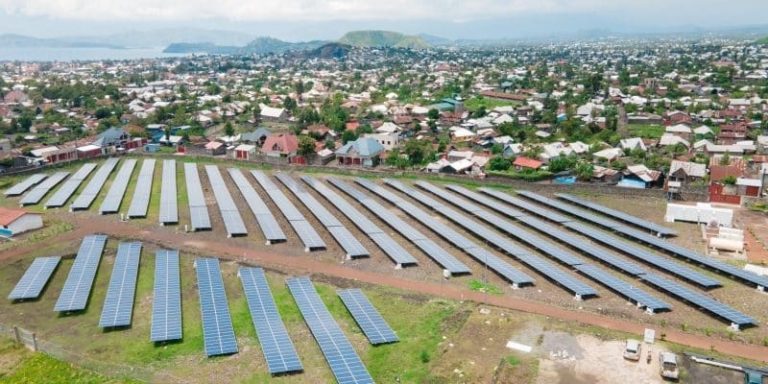
Sun King, the world’s largest off-grid solar energy provider, has secured an $80 million naira-denominated loan to accelerate access to electricity across Nigeria.
The financing is supported by a World Bank-backed initiative, with contributions from the International Finance Corporation (IFC) and Stanbic IBTC Bank.
The new funding will power Sun King’s ambitious plan to deliver solar energy solutions to 4 million Nigerian households over the next four to five years, providing a sustainable alternative to the country’s unreliable national grid and expensive, polluting fuel generators.
Register for Tekedia Mini-MBA edition 20 (June 8 – Sept 5, 2026).
Register for Tekedia AI in Business Masterclass.
Join Tekedia Capital Syndicate and co-invest in great global startups.
Register for Tekedia AI Lab.
According to the World Bank, over 85 million Nigerians more than 40% of the population lack access to reliable electricity. The national grid delivers only about 5,000 megawatts daily, far short of the estimated 30,000 megawatts needed. This shortfall has forced millions to depend on diesel and petrol generators, which now produce more than twice the electricity supplied by the national grid.
Sun King aims to change that narrative by expanding its reach with affordable, clean energy solutions. Since its entry into the Nigerian market in 2018, the company has already connected over 1.2 million homes to solar power. Its pay-as-you-go model allows low-income families to access solar home systems and energy-efficient appliances like lanterns, lighting kits, fans, and televisions through flexible instalments.
Speaking on the funding, Anish Thakkar, Co-Founder Sun King said,

“Off-grid solar provides the fastest and most scalable pathway to universal electrification across Africa. This investment exemplifies the kind of bold, all-hands-on-deck approach required to deliver reliable, affordable energy to millions at the pace Mission 300 calls for. With structured financing tailored to local needs, we can dismantle affordability barriers and scale up the proven impact of off-grid solar solutions. We commend IFC and Standard Bank for their leadership in advancing sustainable energy access.”
Also commenting, Dahlia Khalifa, IFC Regional Director for Central Africa and Anglophone West Africa said,
“Millions of Nigerians still live without reliable access to electricity, which limits opportunity and undermines resilience. This investment enables scalable local-currency solutions that empower households and businesses with clean, affordable solar power. Beyond energy access, it supports rural employment, boosts productivity, and brings us closer to our shared goal of inclusive, sustainable development.”

The expansion is also expected to generate around 10,000 new jobs including roles for sales agents, technicians, and support staff thereby stimulating economic growth in underserved rural and peri-urban areas.
This investment aligns with Nigeria’s renewable energy ambitions, including its commitment to achieving net-zero carbon emissions by 2060. The government has supported green initiatives through policies and financing tools, such as its planned $186 million green bond issuance in 2025 to fund clean energy and reforestation projects.
Despite the promise of solar, Nigeria’s off-grid energy market still faces challenges. These include high import tariffs on solar equipment, currency instability, and logistical hurdles in reaching remote communities. Some experts caution that while off-grid solar offers vital relief, it should complement rather than replace efforts to build a stronger, centralized electricity grid.
Even so, Sun King’s global experience having brought solar power to 29 million people across Africa and South Asia — makes it well-positioned to deliver meaningful impact in Nigeria. Its strong local partnerships and community distribution networks have fueled growth, and the new funding will allow it to deepen its presence, especially in northern regions with the lowest electrification rates.
As Nigeria continues to confront its longstanding energy crisis, Sun King’s expansion represents a hopeful step forward. By combining international support with private-sector innovation, the initiative sets a blueprint for scalable, sustainable electrification in Africa.
Share this:
- Click to share on Facebook (Opens in new window) Facebook
- Click to share on X (Opens in new window) X
- Click to share on WhatsApp (Opens in new window) WhatsApp
- Click to share on LinkedIn (Opens in new window) LinkedIn
- Click to email a link to a friend (Opens in new window) Email
- Click to print (Opens in new window) Print