

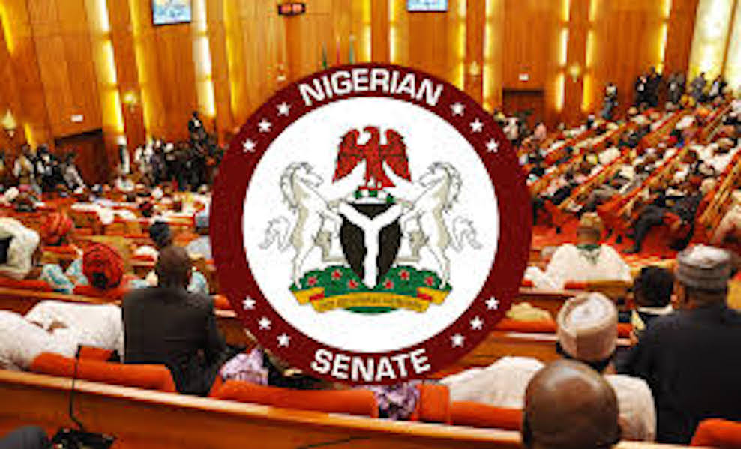
Nigeria’s Senate has given the green light to two out of four ambitious tax reform bills proposed by President Bola Tinubu, signaling progress in the administration’s effort to reset the country’s battered fiscal system.
But in a clear indication of the political sensitivity surrounding tax policy, lawmakers rejected the proposed increase in Value-Added Tax from 7.5 to 10 percent, choosing instead to offer minor concessions that would allow VAT input claims on fixed assets, overhead costs, and administrative expenses.
The approved bills—the Nigeria Revenue Service Establishment Bill and the Joint Revenue Board Establishment Bill—mark a decisive step toward centralizing and professionalizing tax administration. The former repeals the long-standing Federal Inland Revenue Service (FIRS), paving the way for a new revenue body, while the latter creates a coordinating framework to harmonize tax collection between the federal and subnational governments, a long-standing challenge in Nigeria’s fragmented tax landscape.
Register for Tekedia Mini-MBA edition 20 (June 8 – Sept 5, 2026).
Register for Tekedia AI in Business Masterclass.
Join Tekedia Capital Syndicate and co-invest in great global startups.
Register for Tekedia AI Lab.
Two additional tax bills, the Nigeria Tax Administration Bill and the Nigeria Tax Bill, are scheduled to be debated and potentially passed on Thursday.
The legislative breakthrough comes nearly a year after Tinubu assumed office with a mandate to fix Nigeria’s sluggish economy and expand the tax net. His proposals, transmitted to the National Assembly earlier this year, were part of a broader campaign to reform what many experts have described as an inefficient and poorly enforced tax regime.
“These bills will add immense value to governance and transform how taxes are collected and shared in Nigeria,” Senate President Godswill Akpabio said on the floor, shortly after the upper chamber passed the bills following a rigorous clause-by-clause review. He commended lawmakers for their discipline and signaled that the chamber was ready to work overtime to conclude the pending legislation.

Senate Pushes Back on VAT Hike, Proposes Development Levy Instead
However, Tinubu’s proposed VAT increase, framed by the presidency as necessary to boost government revenue, proved a step too far for senators, given consideration to the rising cost of living and widespread public discontent. In rejecting the hike, the Senate sought to protect already strained Nigerian households from what would have been another inflationary shock.
Instead, the lawmakers devised an alternative strategy: a new 4 percent development levy on certain revenue streams, ring-fenced to continue funding agencies central to education, technology, and national security.
According to the Senate’s resolution, the development levy will be distributed as follows:

- TETFUND – 50%
- Nigerian Education Loan Fund – 15%
- NITDA – 10%
- NASENI – 10%
- National Cybersecurity Fund – 5%
- Defence Security Fund – 10%
Akpabio warned that phasing out funding for these agencies, as initially proposed, would have crippled vital sectors. He noted that Nigeria cannot afford to undermine the institutions that drive innovation, security, and human capital development.
The decision to preserve their funding also reflects broader concerns over youth unemployment, insecurity, and Nigeria’s fragile tech ecosystem.
The Long Walk to The Tax Reforms
The road to Senate approval was filled with friction. The proposed reforms, though technically driven, sparked controversy among interest groups and lawmakers, particularly those wary of how tax changes might affect businesses and ordinary citizens already grappling with high inflation and economic stagnation. Northern leaders were particularly against the reforms, alleging that it would put the region at a significant economic disadvantage.
Deputy Senate President Barau Jibrin shed light on the behind-the-scenes negotiations that resulted in the approval of the bills, revealing that the elders’ committee played a pivotal role in resolving contentious issues. The committee reportedly engaged with religious leaders, regional representatives, and other civil society groups to cool tensions and build consensus.
“It is time to congratulate the entire Senate and, in particular, the committee on finance and the elders’ committee for the wisdom and leadership shown in these bills,” Jibrin said, praising the maturity lawmakers demonstrated in navigating the legislative maze.
Final Passage Expected as House Approves All Four Bills
Both chambers of the National Assembly are now aligned on the direction of fiscal reform, with the House of Representatives already passing all four tax bills. Once the Senate concludes deliberations on the remaining two bills, the final versions will be harmonized and transmitted to President Tinubu for assent.
Many believe the passage of these bills would be one of the most substantial overhauls of Nigeria’s tax architecture in decades. The reform package is expected to simplify compliance, improve tax equity, and widen the tax base—an urgent goal as oil revenues continue to dwindle and public debt soars.