

The Treasury market is being pulled in opposing directions — tariff-driven inflation risk on one side and geopolitical safe-haven demand on the other — leaving yields modestly higher but directionally uncertain.
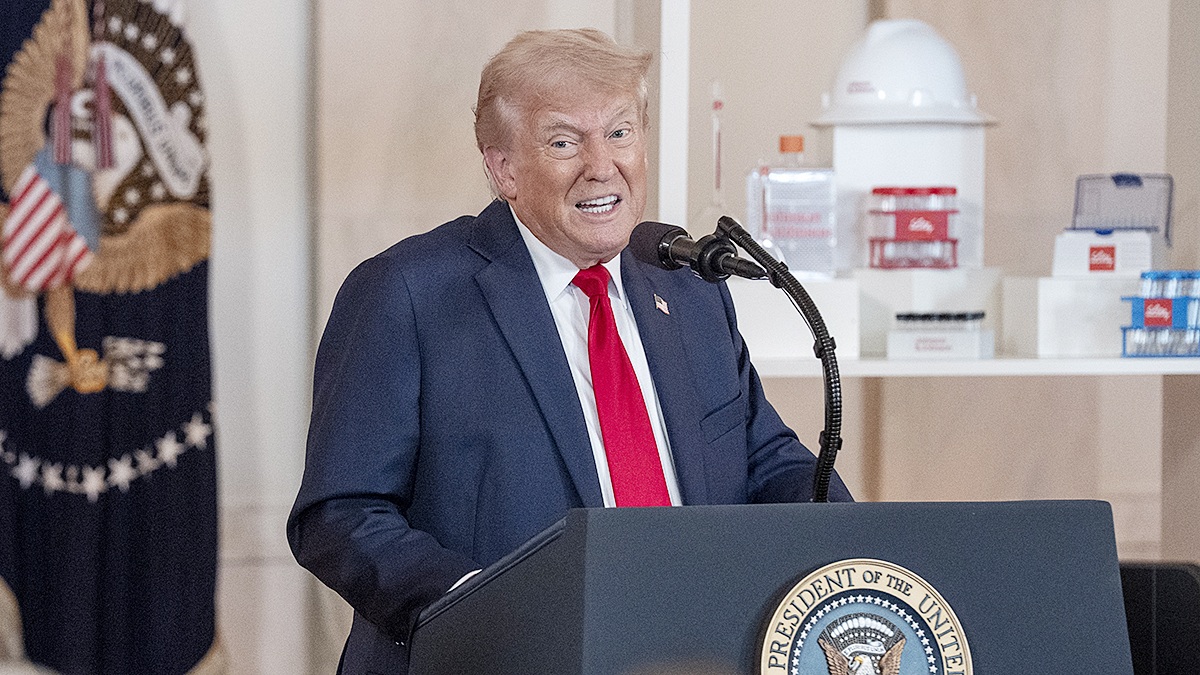
U.S. Treasury yields ticked up Tuesday as investors reassessed trade policy risk following last week’s Supreme Court ruling against President Donald Trump’s use of the International Emergency Economic Powers Act and prepared for his State of the Union address.
The benchmark 10-year yield rose about 1 basis point to 4.042%. The 30-year bond yield gained less than 1 basis point to 4.704%, while the 2-year note climbed nearly 2 basis points to 3.457%. Because yields move inversely to prices, the move signals mild selling pressure in government bonds rather than a sharp repositioning.
Register for Tekedia Mini-MBA edition 20 (June 8 – Sept 5, 2026).
Register for Tekedia AI in Business Masterclass.
Join Tekedia Capital Syndicate and co-invest in great global startups.
Register for Tekedia AI Lab.
While the adjustments were small in absolute terms, the underlying drivers are structurally significant.
On Friday, the Supreme Court of the United States ruled 6-3 that Trump had improperly relied on the International Emergency Economic Powers Act to impose broad “reciprocal” tariffs. Within hours, the president announced a new 15% universal tariff rate, though only a 10% levy has been formalized so far.
The rapid pivot underscores the administration’s determination to preserve tariff leverage despite judicial constraints. From a market perspective, that persistence reduces the probability of a near-term de-escalation in trade friction.

Trump’s comments Monday — warning that countries attempting to “play games” would face even higher duties — added to the sense that trade tensions remain an active policy instrument rather than a negotiating tactic nearing resolution.
Inflation Channel vs. Growth Channel
For bond markets, tariffs matter through two primary transmission mechanisms.
First, the inflation channel. Higher import duties can raise input costs for manufacturers and retailers. If companies pass those costs through, headline inflation may rise, complicating the Federal Reserve’s path back toward its 2% target. That risk is particularly relevant for the 2-year note, which is closely tied to expectations for short-term policy rates.

Second, the growth channel. Escalating tariffs can dampen global trade volumes, reduce corporate margins, and delay capital expenditure decisions. That drag can weigh on GDP growth and corporate earnings, which tends to support Treasurys via safe-haven demand.
The modest steepening across the curve suggests investors are currently giving slightly more weight to inflation risk than to an outright growth shock, though neither force is dominant.
Term Premium and Supply Dynamics
Beyond immediate macro implications, the longer end of the curve is sensitive to fiscal expectations and Treasury supply.
If Trump outlines additional fiscal measures in his address — such as infrastructure spending, industrial subsidies, or tax adjustments — markets may reassess borrowing needs. Higher projected issuance can lift the term premium, pushing 10- and 30-year yields higher independently of near-term rate expectations.
Recent Treasury auctions have seen mixed demand metrics, and foreign participation remains closely watched. With trade tensions escalating, the question of whether major trading partners maintain steady purchases of U.S. debt carries strategic importance, even if no immediate disruption has materialized.
Geopolitical tensions have added a separate layer of complexity. Speculation about a potential U.S. strike on Iran has contributed to intermittent safe-haven flows into Treasurys. Analysts at Deutsche Bank noted that the risk-off tone has supported demand for government bonds at times, limiting upward pressure on yields.
Such geopolitical catalysts often compress yields temporarily, particularly at the long end, as investors seek liquidity and safety. However, if tensions were to push energy prices materially higher, the inflation implications could reverse that dynamic.
Dollar, Equities, and Cross-Asset Signals
Treasury movements cannot be read in isolation. The dollar’s resilience and equity market performance help contextualize the bond market’s response.
A stronger dollar can offset some imported inflation by lowering the cost of foreign goods in domestic currency terms. Meanwhile, equity volatility serves as a gauge of risk sentiment. If stocks begin to price in a sharper trade-related slowdown, a more pronounced rally in Treasurys could follow.
So far, the relatively muted bond move suggests markets view the tariff escalation as economically material but not yet systemic.
Trump’s address to Congress will be scrutinized for clarity on three fronts: the timeline for raising tariffs to 15%, potential sector-specific measures, and broader fiscal priorities.
Any signals suggesting expanded use of alternative trade authorities, such as Section 122 of the Trade Act, could reinforce expectations of sustained tariff policy. Conversely, hints of negotiation frameworks or exemptions might temper rate volatility.
Investors will also watch for commentary on inflation, manufacturing, energy policy, and defense spending, all of which intersect with bond market fundamentals.
The Treasury market is not reacting to a single shock but to an evolving policy regime. Judicial intervention has not curtailed tariff strategy; it has redirected it. Inflation risks remain plausible, growth risks are non-trivial, and geopolitical uncertainty persists.
The result is a market in suspension, yields edging higher, but without conviction, as investors wait for clearer signals on whether trade escalation becomes entrenched policy or a transitional phase in a broader negotiation cycle.