

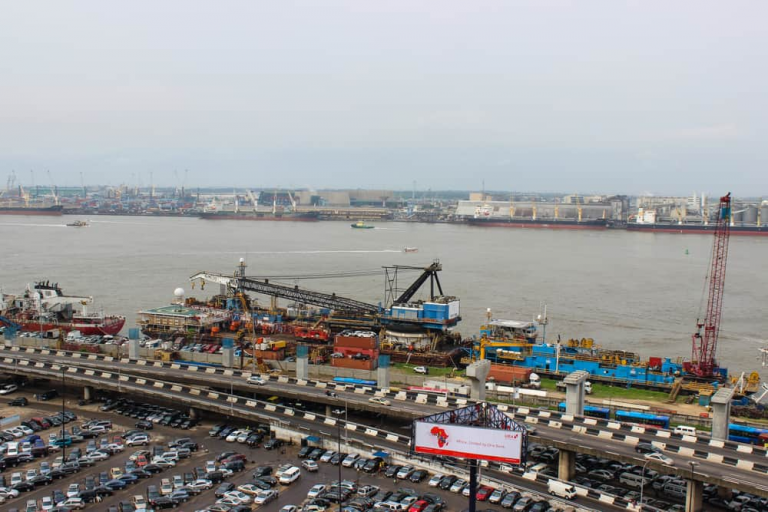
In a fresh escalation of his trade agenda, President Donald Trump’s administration unveiled steep new fees on Chinese-built vessels docking at U.S. ports on Thursday, aiming to curb China’s stranglehold on global shipbuilding and revive American maritime industries.
Announced by U.S. Trade Representative (USTR) Jamieson Greer, the policy targets what the USTR calls China’s “unreasonable” practices that burden U.S. commerce, signaling a robust push to reclaim economic sovereignty.
“Ships and shipping are vital to American economic security and the free flow of commerce,” Greer declared. “The Trump administration’s actions will begin to reverse Chinese dominance, address threats to the U.S. supply chain, and send a demand signal for U.S.-built ships.”
Register for Tekedia Mini-MBA edition 20 (June 8 – Sept 5, 2026).
Register for Tekedia AI in Business Masterclass.
Join Tekedia Capital Syndicate and co-invest in great global startups.
Register for Tekedia AI Lab.
Analysts believe that this move, layered atop Trump’s existing 145% tariffs on Chinese imports, is likely to inflame the U.S.-China tariff war, jeopardize delicate negotiations with Beijing, and deepen economic woes as inflation surges and recession fears mount.
The new fees stem from a year-long USTR investigation, launched in April 2024 under the Biden administration and finalized in January 2025, which exposed China’s state-driven ascent to over 50% of global shipbuilding output, up from less than 5% in 1999. Through massive subsidies, forced technology transfers, and discriminatory policies, China now produces 1,700 commercial vessels annually, dwarfing the U.S.’s five. Chinese-built ships account for 98% of the global trade fleet, a dominance the USTR deems a threat to U.S. economic and national security, particularly given the Navy’s reliance on Chinese-built tankers.
The policy, enacted under Section 301 of the Trade Act of 1974, imposes a phased fee structure to penalize Chinese vessel operators, owners, and Chinese-built ships while incentivizing U.S. shipbuilding.

Starting October 14, 2025, Chinese operators face fees of $50 per net ton per voyage, rising to $140 by April 17, 2028, capped at five charges per vessel annually. Non-Chinese operators using Chinese-built vessels will pay $18 per net ton ($120 per container) in October 2025, escalating to $33 ($250 per container) by 2028. Foreign-built car carriers will incur $150 per Car Equivalent Unit from mid-October. At the same time, liquefied natural gas (LNG) vessels face restrictions beginning in 2028, mandating that 1% of U.S. LNG exports use U.S.-built ships, increasing to 15% by 2047. Exemptions cover Great Lakes and Caribbean shipping, U.S. territories, bulk exports like coal and grain, and empty vessels, shielding key U.S. sectors from immediate disruption.
A novel incentive allows operators to suspend fees for up to three years by ordering U.S.-built vessels, provided delivery occurs within that timeframe. Failure to deliver triggers immediate fee repayment, a measure designed to spur domestic shipyards. This aligns with Trump’s “Make Shipbuilding Great Again” executive order of March 31, 2025, which envisions a revitalized U.S. maritime sector bolstered by tax credits and regulatory reforms.
Unions like the United Steelworkers and International Association of Machinists hailed the policy as a lifeline for American workers, with bipartisan support evident in calls for the SHIPS for America Act to further boost shipyard capacity.

The fees, significantly softened from a February proposal of up to $1.5 million per port call, reflect intense pushback from over 300 trade groups during March hearings. The National Retail Federation, American Soybean Association, and maritime executives like Seaboard Marine’s Edward Gonzalez warned that steep levies would inflate shipping costs, disrupt supply chains, and erode U.S. export competitiveness. Agriculture exporters reported vessel booking challenges beyond May, while coal industries feared cargo diversion to Mexican and Canadian ports. The USTR’s concessions, charging per voyage, exempting bulk exports, and phasing fees over the years—aim to mitigate these concerns, but the policy still poses risks.
A 15,000-container ship could face $1.8 million in fees by October 2025, costs likely passed to importers and consumers, exacerbating inflation already fueled by Trump’s broader tariffs. Since April 2, when Trump imposed a 10% universal import tariff and 145% duties on Chinese goods, consumer prices have spiked, apparel by 17%, vehicles by 8.4%, and food by nearly 3%—reducing household purchasing power by an estimated $2,100 annually. Inflation is projected to hit 4% by summer, with core PCE potentially reaching 4.7%, threatening the consumer spending that drives 70% of U.S. GDP.
Escalating the Tariff War
Trump’s maritime fees are likely to escalate the U.S.-China tariff war, complicating delicate negotiations with Beijing. China, which retaliated to the 145% tariffs with an 84% duty on U.S. goods, suspended rare earth metal exports, and curbed Hollywood films and Boeing deliveries, has dismissed Trump’s trade measures as “discriminatory trade bullying.” On Thursday, China’s Ministry of Foreign Affairs called the tariff escalation a “numbers game” with negligible impact, signaling defiance. The new fees, targeting a sector where China holds near-total control, are seen as a direct challenge, likely prompting further retaliation—potentially targeting U.S. agricultural exports or tightening technology restrictions.
This escalation dims prospects for productive talks, despite Trump’s claim of a “very good relationship” with Xi Jinping, who has reached out repeatedly. Trump’s Thursday hint at pausing further tariff hikes, citing risks to consumer spending, suggested a willingness to negotiate, possibly tying trade concessions to TikTok’s U.S. divestiture. However, the maritime fees, announced the same day, undermine this olive branch, as Beijing perceives them as an attack on a strategic industry. Analysts warn that China could impose reciprocal port fees or restrict U.S. carriers, further disrupting global shipping, where 80% of trade relies on sea transport.
The fees also strain U.S. allies, already reeling from tariffs on Japan (24%), South Korea (25%), and Canada (auto tariffs). The European Union, warning of “burdensome” costs, is preparing countermeasures, while smaller ports like Oakland risk losing traffic as carriers reroute to avoid fees.
However, there is another layer to the challenges. U.S. shipbuilding, producing just 0.13% of global output, cannot scale quickly to replace Chinese vessels, even with incentives. Critics argue that penalizing carriers reliant on Chinese ships, virtually all major operators, could paralyze trade without viable U.S. alternatives. The SHIPS for America Act might bolster domestic yards, but experts estimate a decade-long ramp-up, leaving the U.S. vulnerable to supply chain disruptions and higher costs in the interim.