

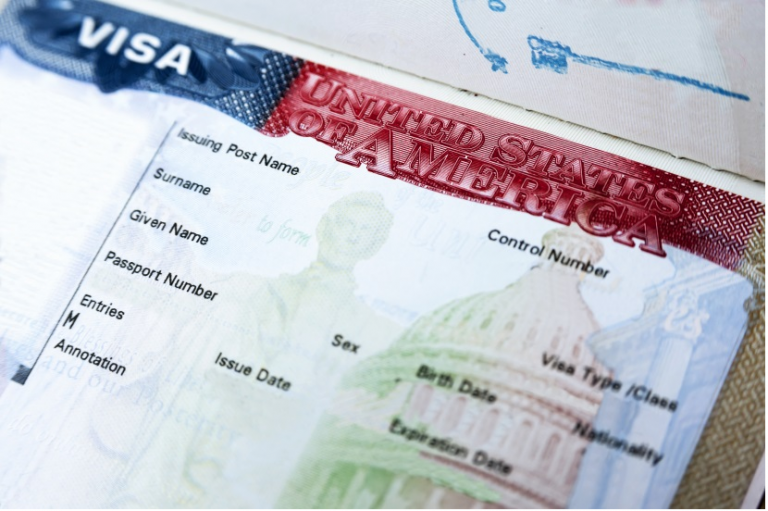
The Trump administration is moving to clamp down on the U.S. diversity visa lottery program, linking the policy shift to a fatal attack connected to a recipient of the scheme, in what critics describe as the latest use of a violent incident to justify a broader tightening of legal immigration.
The move followed confirmation on Thursday that the suspect in a shooting at Brown University, Claudio Neves Valente, a 48-year-old Portuguese national, had obtained permanent U.S. residency through the diversity visa program. Hours after authorities said Neves Valente was found dead in New Hampshire, Homeland Security Secretary Kristi Noem announced that her department would pause processing diversity visa applications, calling the program “disastrous.”
“To ensure no more Americans are harmed,” Noem said in a post on X, the Department of Homeland Security would halt processing tied to the lottery. She added that Neves Valente “should never have been allowed in our country,” though she did not cite any evidence that he posed a known security risk at the time of his entry in 2017.
Register for Tekedia Mini-MBA edition 20 (June 8 – Sept 5, 2026).
Register for Tekedia AI in Business Masterclass.
Join Tekedia Capital Syndicate and co-invest in great global startups.
Register for Tekedia AI Lab.
The immediate scope and legal reach of the pause remained unclear on Friday. Most diversity visa applicants apply from outside the United States, and the program is administered primarily by the State Department rather than DHS. A department spokesperson nonetheless said the program posed a threat to public safety and that officials were working “to put in place all necessary measures,” without detailing what those measures would involve or how long any suspension might last.
The announcement fits into a broader pattern since Trump returned to the White House in January, having pledged to impose sweeping restrictions on both legal and illegal immigration. In late November, after an Afghan national was accused of attacking U.S. National Guard members, the administration rapidly rolled out new curbs, including halting Afghan immigration processing, ordering reviews of approved asylum cases, and expanding an existing travel ban to cover roughly 20% of countries worldwide.
Administration officials have framed these steps as necessary national security measures. Immigration advocates say they show a consistent strategy of leveraging isolated criminal cases to advance long-standing goals of reducing lawful immigration pathways.

Reuters quoted Jorge Loweree, a managing director at the American Immigration Council, saying the same pattern was now playing out with the diversity visa lottery.
“This isn’t about any one individual,” Loweree said. “What we’re seeing is this administration using these cases, these stories, as a pretext to their own end, which is to target people from countries that they deem to be undesirable.”
The diversity visa program, created by Congress in 1990, makes up to 55,000 immigrant visas available each year to applicants from countries with historically low levels of immigration to the United States. Winners are selected through a lottery system and, once approved, can obtain permanent residency and eventually U.S. citizenship.

The program has long been defended by supporters as a way to broaden the geographic makeup of U.S. immigration, particularly benefiting applicants from parts of Africa, Eastern Europe, and Central Asia.
Trump has opposed the program for years. During his first term, he repeatedly called for its elimination, most notably after a 2017 vehicle-ramming attack in New York City carried out by an Uzbek national who had entered the U.S. through the lottery. That attacker, Sayfullo Saipov, was sentenced in 2023 to eight consecutive life terms.
In the current case, authorities say Neves Valente entered the U.S. in 2017, during Trump’s first presidency. Officials have not indicated that he was flagged for security concerns at the time. He was found dead on Thursday night in a storage facility in Salem, New Hampshire, and is also suspected in the killing of a Massachusetts Institute of Technology professor, Nuno Loureiro, two days after the Brown University shooting. Neves Valente had attended Brown more than 20 years ago and was a former classmate of Loureiro in Portugal.
Data from the State Department, published by Reuters, indicates how rare Portuguese participation in the program has been. Only 118 Portuguese nationals have entered the U.S. through the diversity visa lottery in the past decade. By contrast, the largest recipients in fiscal year 2024 were Nepal, Uzbekistan, Kenya, Egypt, and Russia, with about 41% of diversity visa recipients coming from African countries.
The administration’s move also comes amid existing uncertainty around the program. Even before details of the Brown University suspect’s immigration status became public, registration for the fiscal year 2027 diversity visa lottery, which typically opens in October, had already been delayed. The State Department said in November that changes to the program would push back registration to an unspecified date.
That delay, combined with Noem’s announcement, has heightened concern among immigration lawyers and advocates that the administration may be laying the groundwork for a more permanent rollback, potentially inviting legal challenges given that the program is mandated by Congress.
Now, the episode has reignited a familiar debate in Washington: whether violent acts by individuals should drive broad immigration policy, and whether the diversity visa lottery, a small but symbolically charged program, will once again become a casualty of that fight.