

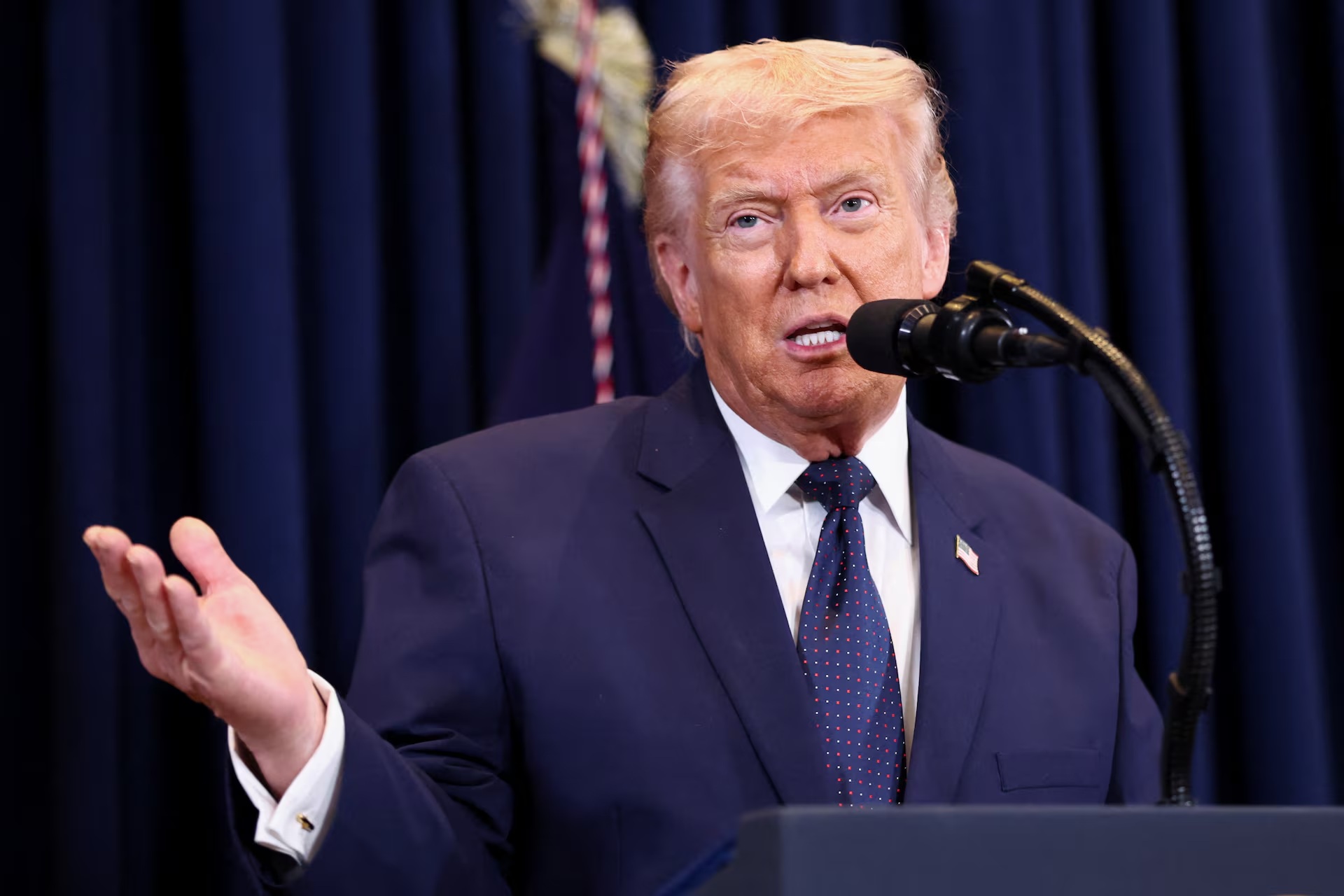
President Trump issued this ultimatum over the weekend. On Sunday, April 5, 2026, he posted on Truth Social an expletive-laden threat: Tuesday will be Power Plant Day, and Bridge Day, all wrapped up in one, in Iran.
This stems from an ongoing U.S.-Iran confrontation tied to the Strait of Hormuz, the narrow waterway through which about 20% of global oil and gas transits. Iran has restricted or blocked shipping there amid the conflict which escalated after Israeli strikes and U.S. involvement, disrupting energy markets and raising oil prices. Trump has repeatedly demanded Iran fully reopen the strait to international shipping or face U.S. strikes on its energy infrastructure, power plants, and bridges.
He has extended similar deadlines multiple times in recent weeks e.g., 48 hours, then 5 days, then 10 days to April 6, often citing ongoing talks. The latest shift to Tuesday 8 p.m. ET appears to be another short extension, giving Iran roughly until early Wednesday in some time zones. Trump has said in interviews with Fox News, Axios, and the Wall Street Journal that negotiations are active and there’s a good chance of a deal, while also warning he could blow everything up and take over the oil if not.
The Strait of Hormuz is a narrow waterway in the Middle East that serves as the primary maritime exit from the Persian Gulf to the Gulf of Oman and the Arabian Sea. It is widely regarded as the world’s most critical energy chokepoint due to the enormous volume of oil and natural gas that passes through it daily.
Register for Tekedia Mini-MBA edition 20 (June 8 – Sept 5, 2026).
Register for Tekedia AI in Business Masterclass.
Join Tekedia Capital Syndicate and co-invest in great global startups.
Register for Tekedia AI Lab.
The strait lies between Iran to the north and Oman’s Musandam Peninsula to the south with the United Arab Emirates also nearby. It stretches roughly 104 miles in length, but its width varies: up to about 60 miles at the widest and as narrow as 21–24 miles at the narrowest point. Shipping traffic is confined to even tighter designated lanes—typically about 2 miles wide in each direction, separated by a buffer zone—because parts of the strait are too shallow for large tankers.
This geography makes it highly vulnerable to disruption: a relatively small number of ships, mines, missiles, or attacks can create major bottlenecks. The strait handles an outsized share of global energy supplies like Oil: Approximately 20–21 million barrels per day of crude oil, condensate, and petroleum products transit the strait. This equates to roughly 20% of global petroleum liquids consumption and about 25% of all seaborne traded oil. In recent years, flows have hovered around these levels despite some fluctuations from OPEC+ cuts or other factors.
LNG (Liquefied Natural Gas): About 19–20% or up to ~22% in some estimates of global LNG trade passes through it, primarily exports from Qatar (the world’s top LNG exporter) and some from the UAE. Much of this goes to Asia. It’s also carries a notable share of fertilizers and other commodities, with estimates suggesting it accounts for around 11% of total global maritime trade volume in some contexts

Iranian and International Reactions
Iran has pushed back defiantly, calling the threats reckless, rejecting temporary ceasefires or conditional reopening of the strait, and warning of broad retaliation including against Gulf energy targets. Iranian officials describe U.S. proposals as extremely ambitious and illogical.
Mediators including allies are reportedly pushing last-ditch ideas like a 45-day ceasefire. Markets remain jittery over potential oil shocks and escalation. Critics including some U.S. Democrats have called the rhetoric juvenile or warned that striking civilian power infrastructure could violate international humanitarian law and cause widespread blackouts affecting hospitals, water, and civilians.

Trump’s team frames it as necessary pressure to restore freedom of navigation and protect U.S. and allied interests. This fits a pattern of Trump’s maximum pressure style—loud public ultimatums combined with extensions when talks show any progress. Recent events include the downing of U.S. aircraft (F-15E and A-10) over/near Iran, with crews rescued in high-risk operations that Trump called an “Easter miracle.”
Israel has also conducted strikes on Iranian targets like the South Pars petrochemical hub. As of Monday, April 6, Trump is scheduled to speak to the press, and the clock is ticking toward the Tuesday evening deadline. Further short delays are possible if diplomacy advances, but the threat of targeted strikes on critical infrastructure remains on the table. The situation is fluid, with high stakes for energy markets, regional stability, and the risk of wider escalation.