

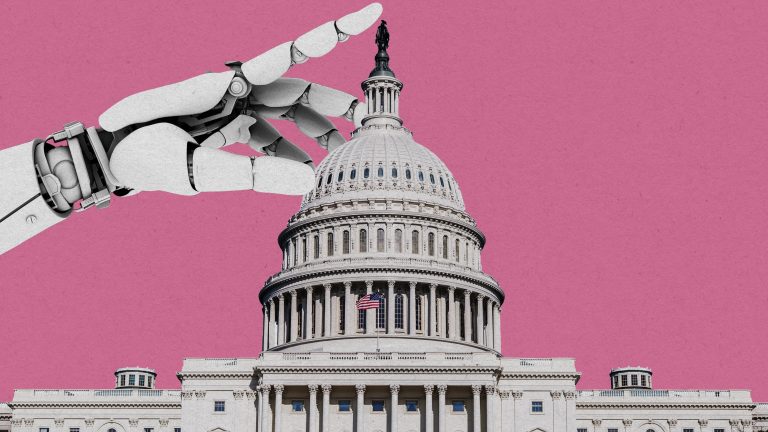
Senator Bernie Sanders has reignited the debate over a “robot tax” as fears mount that artificial intelligence and automation could wipe out tens of millions of American jobs within the next decade.
The Vermont lawmaker, who serves as the ranking member of the Senate Health, Education, Labor, and Pensions Committee, unveiled a new report this week warning that the United States is on the brink of an employment crisis driven by rapid advances in AI. The document projects that AI and automation could eliminate up to 100 million jobs across the country over the next ten years, transforming the labor market faster than any prior technological revolution.
“The agricultural revolution unfolded over thousands of years. The industrial revolution took more than a century,” the report said. “Artificial labor could reshape the economy in less than a decade.”
Register for Tekedia Mini-MBA edition 20 (June 8 – Sept 5, 2026).
Register for Tekedia AI in Business Masterclass.
Join Tekedia Capital Syndicate and co-invest in great global startups.
Register for Tekedia AI Lab.
A Robot Tax to Slow the Corporate Rush Toward Automation
To mitigate what he calls the “human cost of artificial labor,” Sanders proposes introducing a robot tax on large corporations that replace human workers with machines or AI systems. The revenue from this tax, he said, would be directed toward retraining displaced workers, expanding unemployment insurance, and strengthening the social safety net.
The concept of taxing automation is not new, but Sanders’s report marks one of the most comprehensive policy pushes yet from a senior U.S. senator. The proposal also reflects a growing sense of urgency in Washington as AI begins to transform industries ranging from manufacturing and logistics to customer service and software development.
The idea once drew support from Bill Gates, who in 2017 argued that robots performing human work should be taxed at the same rate as people, ensuring that funding for schools, healthcare, and welfare programs doesn’t evaporate as automation spreads. Sanders echoed this view in his 2023 book, It’s OK to Be Angry About Capitalism, where he wrote: “If workers are going to be replaced by robots, as will be the case in many industries, we’re going to need to adapt tax and regulatory policies to assure that the change does not simply become an excuse for race-to-the-bottom profiteering by multinational corporations.”

Beyond Taxation: A Blueprint for a Fairer Future of Work
The report goes further than taxation. It calls for a 32-hour workweek without a reduction in pay, greater worker representation on corporate boards, and stronger pro-union legislation to give employees a voice in how automation is implemented. Sanders argues that these reforms are necessary to ensure that technological progress benefits workers and not just corporate shareholders.
The senator’s report also includes a striking experiment. His staff asked ChatGPT to forecast which professions are most likely to be replaced by AI in the next decade. The model estimated that 89% of fast food and counter workers, 62% of retail salespeople, and 54% of software developers could see their roles automated. Other fields, from call centers to transport and data entry, are also listed among the most vulnerable.
“While this basic analysis reflects all the inherent limitations of ChatGPT, it represents one potential future in which corporations decide to aggressively push forward with artificial labor,” the report cautions.

A Growing Policy Flashpoint
Sanders’s robot tax proposal lands amid intensifying debate in Washington about how to regulate AI’s expansion into the workforce. President Donald Trump’s administration has largely focused on accelerating AI innovation and strengthening U.S. dominance in emerging technologies, while lawmakers like Sanders are warning that unchecked automation could deepen inequality and hollow out the middle class.
Economists remain divided on this issue. Supporters say a robot tax could slow mass layoffs and fund the social transitions needed in an AI-driven economy. Critics, however, warn that it could stifle innovation and drive companies to move automation offshore.
Still, with AI advancing at a pace unseen in previous industrial shifts, Sanders argues that doing nothing is no longer an option.
“We can’t allow corporations to replace millions of American workers with machines without ensuring those workers share in the enormous gains in productivity and wealth that AI will create,” he said.
The senator’s call underscores a widening ideological divide over the future of work—between those racing to automate and those demanding that humanity not be left behind in the process.