

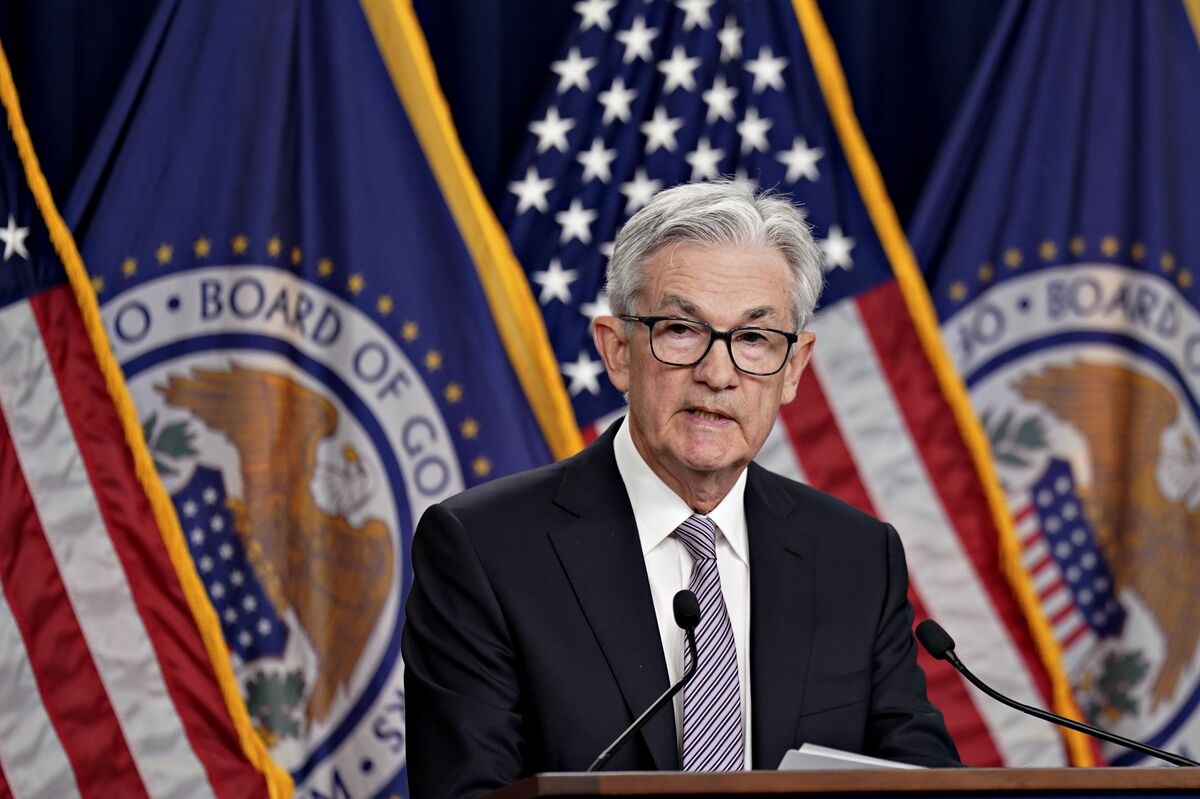
The U.S. Federal Reserve officially concluded its Quantitative Tightening (QT) program, which began in June 2022 and involved allowing up to $95 billion in securities to mature each month without reinvestment, effectively draining approximately $2.4 trillion from the financial system.
This marked the end of the largest balance-sheet reduction in the Fed’s history, freezing its holdings at around $6.57 trillion.
The decision, broadly supported by FOMC members with one dissenter calling for an immediate halt, was driven by emerging liquidity strains in money markets, including rising short-term borrowing costs and depleting bank reserves now hovering at about $3 trillion roughly 10% of U.S. GDP.
To stabilize the system, the Fed shifted to rolling over maturing Treasuries capping reductions at $5 billion monthly while maintaining $35 billion in mortgage-backed securities runoff, but reinvesting MBS proceeds into Treasury bills.
Register for Tekedia Mini-MBA edition 20 (June 8 – Sept 5, 2026).
Register for Tekedia AI in Business Masterclass.
Join Tekedia Capital Syndicate and co-invest in great global startups.
Register for Tekedia AI Lab.
This pivot comes amid dovish signals: Markets now price in an 87% chance of a 25 basis-point rate cut at the December 10-11 FOMC meeting, with cumulative easing expected into 2026.
On December 2, the Fed injected $13.5 billion via overnight repurchase agreements—the second-largest liquidity boost since COVID—highlighting acute short-term funding demand that exceeded Dot-Com bubble levels.
Ending QT halts liquidity contraction, potentially easing fiscal pressures and supporting risk assets. Historically, similar pauses (e.g., 2019) preceded crypto rallies, with analysts forecasting Bitcoin highs by late January 2026 amid M2 growth and ETF inflows.

However, elevated bank unrealized losses and the Bank of Japan’s 81% odds of a December hike could introduce volatility. On X, sentiment echoes this: Users note the injection as an “early easing” signal, boosting hopes for crypto expansion.
SEC Chair Paul Atkins Signals Crypto “Innovation Exemption” for January 2026
In a December 2, 2025, CNBC interview, incoming SEC Chair Paul Atkins announced the agency will launch a landmark “Innovation Exemption” for crypto firms in January 2026, allowing pilot launches of on-chain products like tokenized assets, DeFi tools, and blockchain settlements without full securities registration.

Atkins emphasized the SEC has “sufficient authority” to proceed without congressional approval, framing it as an end to four years of “repression” under prior leadership that drove innovation overseas.
First proposed in July 2025, the exemption—delayed by a federal shutdown—provides temporary regulatory relief under SEC oversight, categorizing assets as digital commodities, collectibles, tools, or tokenized securities once decentralization is proven.
It builds on Bitcoin ETF approvals, aiming to boost IPOs and token issuances while coordinating with the CFTC on areas like prediction markets. This could spark a “new bull run” by enabling faster capital raises and reducing enforcement fears, potentially accelerating the $18.4 billion tokenized asset market.
Atkins’ pro-innovation stance contrasts sharply with Gary Gensler’s era, positioning the U.S. for leadership in blockchain. X discussions highlight excitement, with users calling it the “biggest green light since ETFs” for ICOs and DeFi.
These developments align with a pro-risk policy thaw under the incoming Trump administration, where Atkins a crypto advocate was nominated in November 2025. Combined with QT’s end, they signal surging liquidity for high-beta assets like crypto—potentially mirroring 2021’s rally but with institutional guardrails.
Watch December’s rate decision for confirmation, as cross-agency coordination (SEC-CFTC) will shape 2026’s “Regulation Crypto” rollout. While optimistic, risks like geopolitical tensions or BOJ hikes persist; diversified positioning remains prudent.