

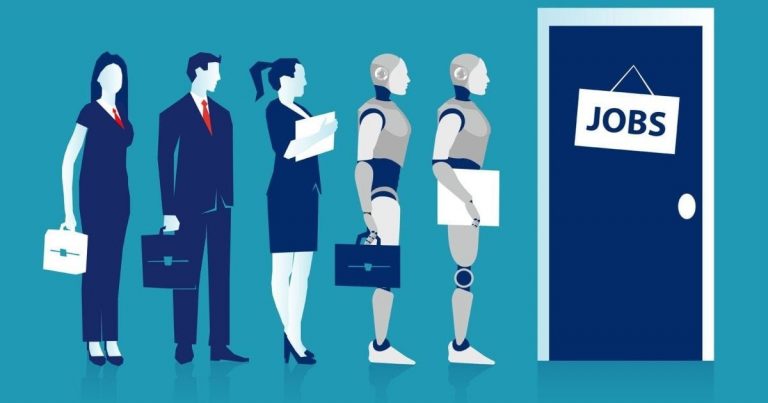
Recent data from Challenger, Gray & Christmas, a leading outplacement firm, reveals a sharp escalation in US layoffs, signaling potential strain in the labor market. In October 2025, US employers announced 153,074 job cuts—a 175% increase from the 55,597 cuts in October 2024 and a 183% jump from September 2025’s 54,064 cuts.
This marks the highest total for any October since 2003, when 171,874 layoffs were recorded, and represents the worst single-month figure in the fourth quarter since the 2008 financial crisis.
Through October, announced cuts reached 1,099,500, up 65% from the first 10 months of 2024. This already exceeds full-year 2024 totals (761,358) by 44% and is the highest since the COVID-19 peak in 2020, when over 2 million cuts occurred through October.
Warehousing led with 47,878 cuts, driven by overcapacity and post-pandemic adjustments. Technology followed with 33,281 cuts, heavily influenced by AI adoption. Other notable sectors included retail and finance, with plant/store closures contributing significantly.
Register for Tekedia Mini-MBA edition 20 (June 8 – Sept 5, 2026).
Register for Tekedia AI in Business Masterclass.
Join Tekedia Capital Syndicate and co-invest in great global startups.
Register for Tekedia AI Lab.
Over 50,000 cuts, the top driver amid rising expenses and slowing consumer spending. A growing factor, with experts drawing parallels to disruptive tech shifts in 2003.
Broader uncertainty, including tariffs, immigration policy changes, and federal workforce reductions, exacerbated the surge. This surge contrasts with the historically low-firing job market of recent years, where fourth-quarter monthly averages hovered around 42,927 cuts from 2013–2023 down from 74,733 in 2003–2013.
Hiring intentions have also plummeted to 2011 levels, per Challenger’s data, raising concerns about a softening economy. Federal Reserve officials, who have cut rates twice since September 2025 with another expected in December, cite these trends as evidence of cooling labor demand.

Analysts attribute the spike to a mix of factors: lingering pandemic-era overexpansion, AI-driven restructuring freeing up resources for tech integration, and macroeconomic headwinds like inflation and policy shifts under the Trump administration.
While not yet at recessionary depths, the pace suggests companies are proactively trimming to build resilience—though it could prolong job searches in a competitive market.
The Impact of AI on Tech Jobs
As of November 2025, artificial intelligence (AI) is profoundly reshaping the tech sector, accelerating a shift from routine coding and support roles to higher-level strategic and AI-integrated positions.

While AI has driven over 77,000 tech layoffs in the first half of the year alone—often tied to automation of repetitive tasks—it’s also fueling demand for specialized skills like machine learning engineering and AI ethics.
A polarized job market: entry-level and mid-tier roles face contraction, but overall tech employment is projected to grow modestly through 2033, per the U.S. Bureau of Labor Statistics (BLS), as AI augments productivity rather than fully replacing humans in complex engineering tasks.
This transformation echoes historical tech shifts (e.g., the rise of cloud computing), but AI’s speed—fueled by tools like ChatGPT and generative models—has amplified concerns. A Stanford study highlights a 13% employment drop for early-career (22-25) workers in AI-exposed tech occupations since 2022, concentrated in automatable roles like basic software testing.
Meanwhile, experienced professionals in the same fields saw 6-9% growth, underscoring a “barbell” effect: juniors squeezed, seniors thriving. AI excels at standardizable, data-heavy tasks, hitting entry- and mid-level tech roles hardest.
From an analysis of 180 million U.S. job listings, creative execution and ops roles declined 20-33% year-over-year, while strategic AI roles surged. At Risk (Declines of 20%+ in 2025): Software Developers/Engineers (Entry-Level): Routine coding automated by tools like GitHub Copilot; 90% of basic tasks could be AI-handled soon.
In Demand (Growth of 15%+):AI/ML Engineers & Prompt Engineers: Explosive need for building and fine-tuning models; Python, SQL, and AWS top skills lists. Shortages persist; AI creates more data to analyze.
AI Ethicists & Integration Specialists: Roles bridging tech and human oversight; projected to add 11 million jobs globally by 2027 (WEF). AI threats demand human-AI hybrid defenses.
Industries like finance and consulting (adjacent to tech) face similar white-collar squeezes, with 40% of employers planning workforce reductions via AI. However, BLS case studies on electrical and aerospace engineering show resilience, with 6-8% growth despite productivity gains from generative AI
PwC’s 2025 AI Jobs Barometer, analyzing 1 billion ads, finds AI-exposed sectors including tech see 25% faster wage growth but higher volatility. Goldman Sachs estimates 6-7% U.S. workforce displacement overall, but “frictional unemployment” fades within 2 years as new roles emerge—echoing the internet boom
Yet, entry barriers are rising: Indeed reports fewer junior hires, with AI handling “no-brainer” tasks. Critics like Anthropic’s Dario Amodei warn of 10-20% unemployment spikes if unchecked, concentrating wealth in AI firms
Positively, AI could add $13 trillion to global GDP by 2030, creating unforeseen jobs like AI trainers—much like “app developer” post-iPhone. PwC notes AI boosts value in augmentable jobs by 14%.
Target Hybrids: Seek roles in AI deployment, not pure coding; demand for cloud-AI integration is up 30%. Advocate for retraining (e.g., U.S. apprenticeships aiming for 1M slots) and regulations on AI transparency
AI isn’t “coming for” all tech jobs—it’s redefining them. While 2025 marks a painful transition, historical precedents suggest net gains if workers and policymakers pivot fast.