

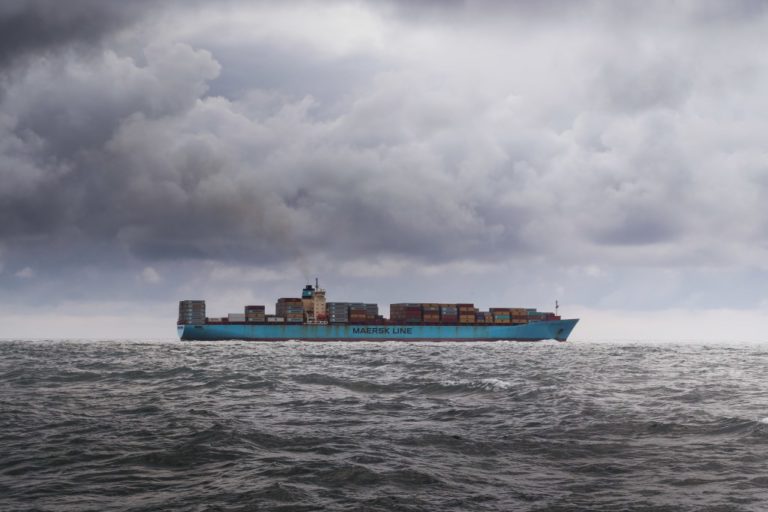
A U.S. special operations team, supported by conventional forces, boarded a commercial cargo ship in the Indian Ocean—several hundred miles off the coast of Sri Lanka.
The vessel was traveling from China to Iran, and U.S. intelligence had been tracking the shipment. The team seized and destroyed cargo consisting of dual-use components items with potential civilian and military applications believed to be destined for Iranian entities involved in missile production or conventional weapons programs.
This was described as a rare at-sea interdiction aimed at disrupting Iran’s efforts to rebuild its military capabilities following reported damage from earlier conflicts. After the operation, the ship was allowed to proceed without the seized materials.
The ship’s name, flag, and ownership were not publicly disclosed. U.S. Indo-Pacific Command declined to comment, and neither China nor Iran immediately responded to the reports. This marks one of the few known instances in recent years where U.S. forces directly intercepted cargo of Chinese origin bound for Iran.
Register for Tekedia Mini-MBA edition 20 (June 8 – Sept 5, 2026).
Register for Tekedia AI in Business Masterclass.
Join Tekedia Capital Syndicate and co-invest in great global startups.
Register for Tekedia AI Lab.
Reports from multiple sources, including The Wall Street Journal, The New York Times, Reuters, and Al Jazeera, consistently describe the cargo as: Dual-use items — meaning components with both legitimate civilian applications and potential military uses.
Potentially useful for Iran’s conventional weapons programs, particularly in rebuilding missile stockpiles damaged in prior conflicts. Believed by U.S. intelligence to be destined for Iranian entities involved in missile procurement or production.
No public reports specify exact items (e.g., microelectronics, guidance systems, propellants, or machinery). One U.S. official emphasized to The New York Times that the components “could be used either for civilian applications or to make conventional weapons,” and the shipment was destroyed after seizure.

This vagueness aligns with the sensitive nature of the operation, described as a rare at-sea boarding of a China-to-Iran shipment. Neither China nor Iran has publicly commented on the specifics of the cargo.
Iran’s fuel smuggling economy is a massive illicit trade driven primarily by the country’s heavily subsidized domestic fuel prices, which create enormous profit opportunities when fuel is exported to neighboring countries or sold on international markets.
This phenomenon drains billions from Iran’s state budget annually, exacerbates domestic shortages, and involves organized networks, including allegations of involvement by powerful entities like the Islamic Revolutionary Guard Corps (IRGC).

Iran maintains some of the world’s lowest fuel prices through government subsidies, a policy dating back decades to support domestic consumption and social stability.
Gasoline is often around $0.02–$0.04 per liter for subsidized quotas such as 60 liters/month at ~15,000 rials/liter. Diesel is typically around $0.07–$0.12 per liter. In contrast, neighboring countries charge market. Pakistan, Afghanistan, Turkey, and Iraq is often around $0.70–$1.00+ per liter.
This gap allows smugglers to buy fuel cheaply in Iran and resell it abroad for 10–20 times the cost, yielding huge profits with minimal risk. The devalued Iranian rial due to sanctions and inflation further widens this disparity, making Iranian fuel artificially cheap in dollar terms.
Daily volume estimates between 2024–2025 is around 20–30 million liters of fuel which mostly are diesel and gasoline, though some reports cite 12–50 million liters depending on the source and period.
Annual economic losses to Iran: $3–5 billion in subsidized fuel diverted equivalent to a significant portion of the national energy subsidy budget, which exceeds $50 billion yearly in some estimates. Value to smugglers: Up to $4 billion in revenue, with much of it “pure profit” after low acquisition costs.
Smuggling accounts for 10–20% of Iran’s total refined fuel production, forcing the country’s oil exporter to import gasoline/diesel at higher global prices to meet domestic demand.