

Artificial intelligence could transform the global trading system, boosting the value of goods and services trade by nearly 40% by 2040, but without adequate safeguards, it also risks deepening inequality, the World Trade Organization (WTO) warned on Wednesday.
In its latest World Trade Report, the WTO projected that global trade could rise between 34% and 37% under various scenarios as AI reduces costs and enhances productivity. Global GDP, the report added, could expand by 12-13% in the same period, underlining AI’s disruptive potential for the world economy.
“AI could be a bright spot for trade in an increasingly complex trading environment,” said WTO Deputy Director General Johanna Hill, presenting the findings.
Register for Tekedia Mini-MBA edition 20 (June 8 – Sept 5, 2026).
Register for Tekedia AI in Business Masterclass.
Join Tekedia Capital Syndicate and co-invest in great global startups.
Register for Tekedia AI Lab.
She acknowledged the turbulence facing the multilateral trading system, including this year’s wave of tariffs imposed by U.S. President Donald Trump’s administration, but noted that AI was fundamentally reshaping how economies connect.
According to the report, businesses could achieve significant savings in logistics, regulatory compliance, and communications, while AI-driven translation tools would lower barriers for small producers and retailers seeking entry into international markets. The WTO estimated that such technologies could help raise export growth in low-income countries by as much as 11% — provided these nations invest in strengthening their digital infrastructure.
However, the organization cautioned that the gains from AI will not be automatic. Without targeted investments and inclusive policies, the report said, AI could exacerbate the divides between advanced and developing economies.

“The effects of the development and deployment of AI are raising concerns that many workers, and even entire economies, could be left behind,” the WTO warned.
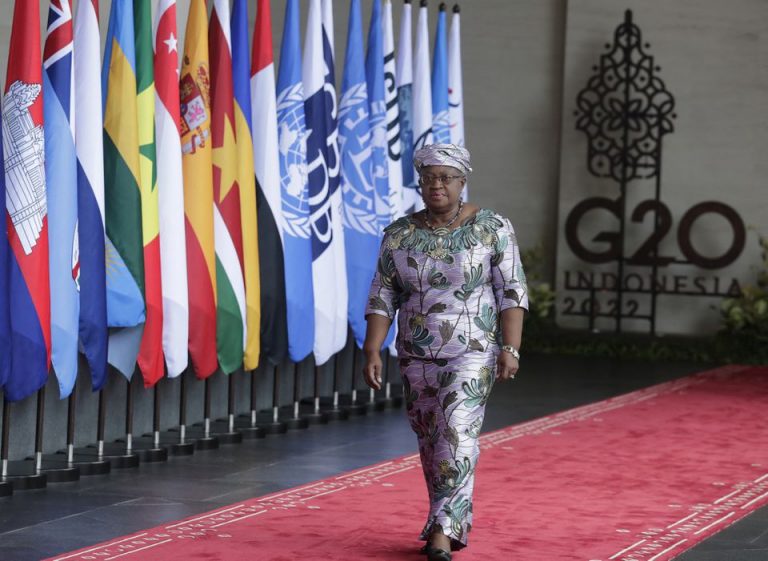
Director General Ngozi Okonjo-Iweala, speaking at the launch event in Geneva, stressed the importance of proactive policymaking to mitigate the risks.
“AI could upend labor markets, transforming some jobs whilst displacing others. Managing these shifts demands investment in domestic policies to enhance education, skills, retraining and social safety nets,” she said.

To ensure the benefits of AI are distributed more equitably, the WTO recommended predictable trade policies under its rules framework, as well as lowering tariffs on raw materials critical to AI technologies, such as semiconductors.
Divergent Futures
The WTO report also opens the door to several possible futures for global trade as AI adoption accelerates.
In the first possible outcome, advanced economies integrate AI rapidly, streamlining supply chains and cutting costs while boosting exports. This could reinforce existing trade imbalances if developing nations cannot match the same pace, widening the gap between wealthy and poorer regions. Under this pathway, low-income countries risk losing competitiveness in sectors like textiles, agriculture, and light manufacturing, where AI-enabled logistics and compliance systems will favor countries with robust digital infrastructure.
In a more inclusive future, however, international cooperation and targeted investments help bridge the gap. If low-income nations succeed in building out digital infrastructure and skills training, AI-driven translation and communication tools could enable even micro and small businesses to plug into global supply chains. The WTO estimates that such a trajectory could lift exports in low-income economies by up to 11%, giving them a foothold in higher-value global markets.
There is also a risk scenario where fragmented AI policies and trade restrictions — such as tariffs on semiconductors or competing governance frameworks in the U.S., Europe, and China — slow the adoption of AI across borders. This would blunt the projected gains in global trade and GDP, while reinforcing geopolitical divides.
The findings place the WTO at the heart of an emerging debate on how artificial intelligence could reshape globalization itself. Proponents see the potential for AI to make cross-border commerce cheaper and faster, improving supply chain efficiency and enabling even small firms to compete globally. But labor groups and development economists warn that countries lacking strong digital infrastructure or retraining systems risk being left behind as AI accelerates change.
The WTO’s analysis makes clear that AI’s impact on trade and growth will be profound but uneven, leaving policy choices in the next decade as the deciding factor between shared prosperity and deepening global divides.