

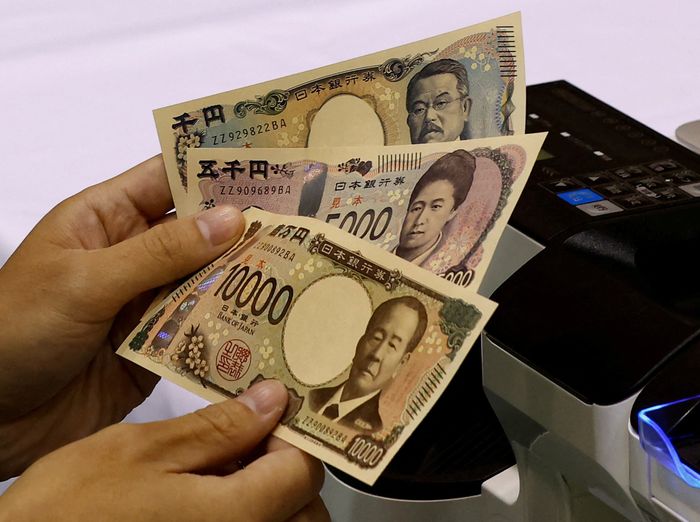
The yen weakened on Wednesday even as expectations firmed that the Bank of Japan could raise interest rates next month, underscoring the unusual volatility gripping global currency markets.
Investors initially pushed the yen higher after Reuters reported that the BOJ is preparing markets for a possible hike as soon as December, but the currency later reversed sharply, becoming the weakest performer against a broadly softer dollar.
According to sources familiar with internal discussions, who spoke to Reuters, the BOJ has revived earlier hawkish language as concerns grow over rapid yen depreciation and as political pressure to keep rates near zero begins to ease. The yen hit an intraday high of 155.66 per dollar before sliding 0.3% to 156.51, a notable move given the dollar’s weakness on the day.
Register for Tekedia Mini-MBA edition 20 (June 8 – Sept 5, 2026).
Register for Tekedia AI in Business Masterclass.
Join Tekedia Capital Syndicate and co-invest in great global startups.
Register for Tekedia AI Lab.
The currency has been under sustained pressure in recent months, weighed down by doubts about Japan’s deteriorating fiscal position. Traders remain acutely sensitive to signals that the Ministry of Finance could step in to defend the yen — especially during periods of thin liquidity.
“There is a possibility of intervention over Thanksgiving, but if the market’s fear of intervention is sufficient to stop dollar/yen from rising, it sort of reduces the possibility,” said Jane Foley, head of FX strategy at Rabobank London.
She added that Tokyo has a history of intervening during exceptionally light trading sessions because such conditions allow authorities to “get more bang for their buck,” a dynamic that explains why markets are on alert for action toward the end of the week.

Dollar Softens as Traders Bet on a Dovish Fed and Potential Policy Shift
Beyond Japan, the dollar struggled across major currencies after benign U.S. economic data strengthened expectations of a Federal Reserve rate cut in December. Markets are also reacting to political developments in Washington, where momentum is building around the selection of a new Fed chair.
Bloomberg News reported that White House economic adviser Kevin Hassett has emerged as the frontrunner to replace Jerome Powell. Hassett has previously argued — like Trump — that U.S. interest rates are too high. U.S. Treasury Secretary Scott Bessent said on Tuesday there was a strong chance the president would announce his pick before Christmas.
“(Hassett) would be on the dovish side definitely, when you compare with some of the other members that were discussed,” said Ales Koutny, head of international rates at Vanguard in London.

But he noted that markets are about to receive a flood of long-delayed U.S. economic data.
“At the end of the day, we have had three months without economic data from the U.S. and we’re going to get a lot … markets will be much more driven by actual fundamental data rather than an appointment for the Fed chair.”
The CME FedWatch tool now shows traders pricing in an 85% chance of a 25-basis-point cut in December, a sharp shift from expectations earlier in the quarter.
The euro, which rose 0.4% against the dollar on Tuesday, held steady at $1.1570.
Sterling Swings Ahead of British Budget After Surprise OBR Forecast Release
The pound also saw sharp intraday moves as investors digested a surprise release of updated forecasts from Britain’s Office for Budget Responsibility (OBR). The figures offered a brighter view of the country’s economic trajectory, prompting an initial rally in sterling before the currency fell back.
The UK budget announcement was made at 1230 GMT, with investors beginning to make fiscal plans for 2025.
Sterling was last down 0.24% at $1.3139 and softer against the euro at 88.06 pence.
Kiwi and Aussie Dollars Firm as Policy Paths Diverge in Asia-Pacific
The New Zealand dollar strengthened after the Reserve Bank of New Zealand cut interest rates to 2.25% — a move widely expected — but signaled that its easing cycle is likely over. Signs of early economic recovery helped lift the kiwi nearly 1% to $0.5669, marking its strongest level in more than two weeks as traders scaled back expectations for additional cuts.
Across the Tasman Sea, the Australian dollar rose 0.4% to $0.6490 following data showing inflation accelerated for a fourth consecutive month in October. The pickup in price pressures has effectively shut the door on further policy easing by the Reserve Bank of Australia.
Rabobank’s Jane Foley said the broader global picture is shifting: “We’re getting to the point where a significant number in G10 countries have already potentially completed their rate cutting cycles, and where their next move could be interest rate hikes.”
A Market on Edge
Taken together, the day’s currency movements paint a picture of markets caught between evolving political signals, shifting inflation trends, and diverging central bank strategies. The yen’s reversal stands out as a pointer that even as the BOJ hints at tightening, doubts linger over Japan’s fiscal trajectory and the potential for official intervention.
And with the U.S. Federal Reserve, the UK Treasury, and Asia-Pacific policymakers all pulling markets in different directions, traders are bracing for a volatile end to the year.