

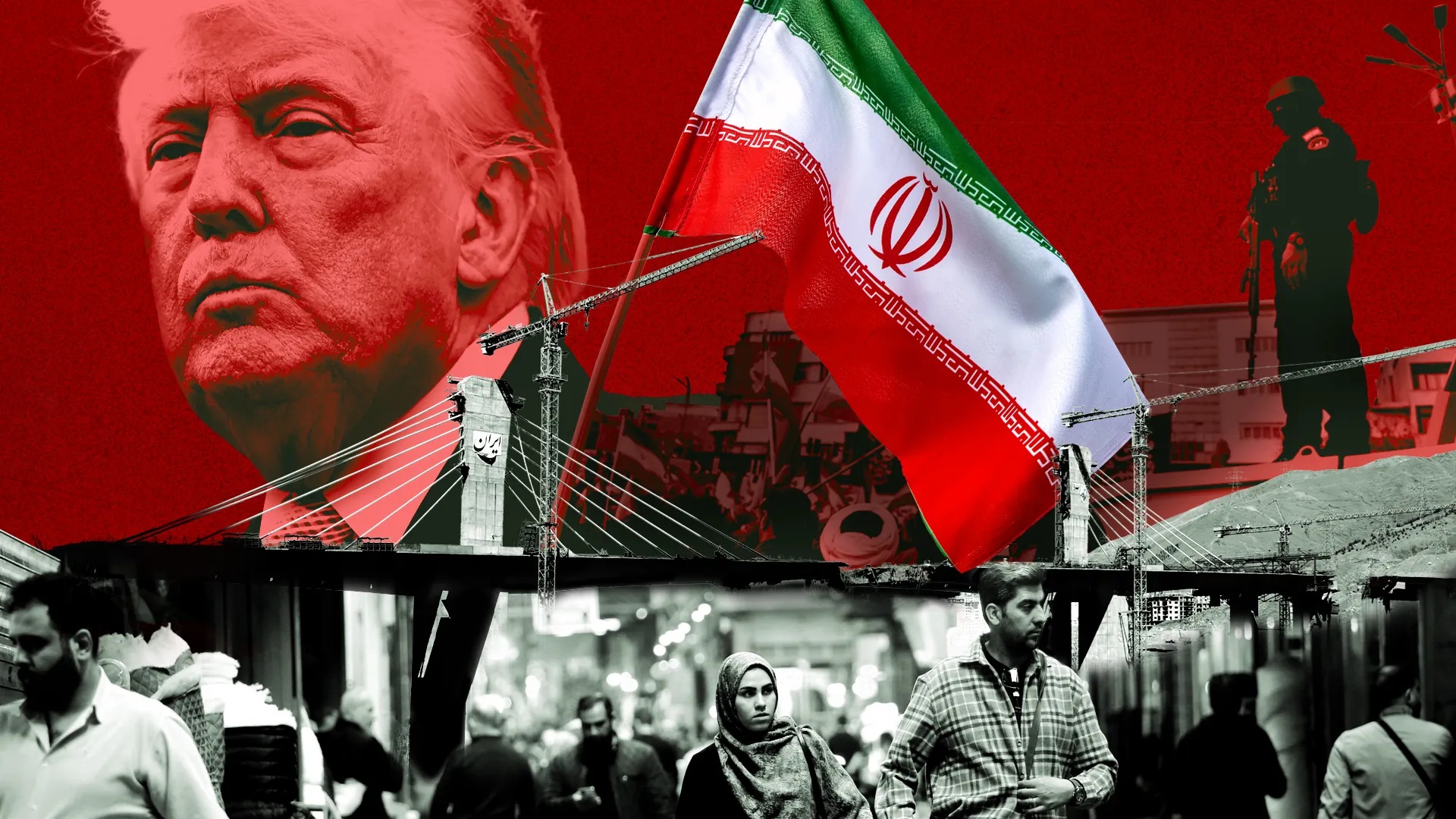
A landmark $300 billion private investment vehicle, already more than half committed by global companies, forms a central economic pillar of the tentative U.S.-Iran framework agreement, designed to give both sides powerful commercial incentives to finalize a comprehensive end to their four-month war.
The fund, which will be entirely financed by private capital rather than government money or grants, represents one of the most ambitious private-sector reconstruction efforts in modern Middle East history.
A source with direct knowledge of the negotiations, cited by Reuters, described it as a deliberate mechanism to align economic interests with diplomatic progress ahead of Friday’s planned signing in Geneva.
Register for the next Tekedia Mini-MBA.
Register for Tekedia AI in Business Masterclass.
Join Tekedia Capital Syndicate and co-invest in great global startups.
“The fund is designed to give both sides an economic incentive to conclude a final deal to end the war,” the source said, speaking on condition of anonymity because the full details have not yet been publicly announced.
While the existence of such a fund had been reported earlier, the scale of early commitments and its strictly private nature are being revealed for the first time. Companies based in the United States, Gulf Arab states, Asia, South America, and Africa have already pledged financing, with investments spanning energy, logistics, manufacturing, and transport infrastructure.
According to the report, the fund will not become operational until a final agreement is reached. During the 60-day memorandum of understanding period, administrators will work with Iranian authorities and investors to identify and scope specific projects. It is separate from parallel negotiations over sanctions relief and the release of frozen Iranian assets.

A Pragmatic Path Around Sanctions and Reparations
Iranian officials had initially sought roughly $400 billion in direct compensation for war damages, according to a senior Iranian source, but the U.S. side ruled out any government payments. The private Reconstruction and Development Fund emerged as a creative alternative.
Regional countries are expected to participate through loans, credit lines, and direct project financing. Damaged sites likely to benefit include the Mobarakeh Steel complex, refineries, airports, and broader infrastructure hit during the conflict.
For Iran, a country with the world’s second-largest proven natural gas reserves and fourth-largest oil reserves, the fund offers a potential bridge back into global capital markets after decades of isolation. With a young, educated population of over 92 million and a diversified industrial base, Iran holds significant untapped potential in petrochemicals, mining, tourism, and agriculture — sectors long starved of foreign direct investment.

U.S. President Donald Trump pushed back firmly against any suggestion of American financial involvement.
“We’re not investing, we’re not putting up 10 cents,” he said on the sidelines of the G7 Summit in France. “I would say they won’t be doing it for a while until they find out the behavior. It’s a behavior thing, but we are not investing.”
Vice President JD Vance, in a CBS interview, framed the fund as an opportunity for Iran if it meets key conditions, including dismantling elements of its nuclear program and accepting rigorous inspections.
The fund’s structure reflects a hard-nosed realism: private capital is being mobilized where governments cannot or will not tread directly. By tying investment commitments to verifiable progress on the final deal, negotiators hope to create self-reinforcing momentum.
Pakistan played a mediating role in shaping the fund’s concept.
If successful, the initiative could mark a turning point for Iran’s economy, which has been largely cut off from major foreign investment for four decades. Analysts expect a successful reopening of the Strait of Hormuz, combined with new capital inflows, to ease global energy supply concerns and potentially stabilize oil markets that have been volatile since the conflict began on February 28.
However, risks remain substantial as the 60-day framework is not a final agreement but a structured negotiating window covering nuclear issues, sanctions, and regional security. Any significant breach during this period could unravel commitments.
Details on fund governance and administration are still being finalized.
For international companies, analysts note that the fund represents both opportunity and calculated risk. Participants from South Korea, Japan, Singapore, Malaysia, and the U.S. have made pledges, but the source declined to provide a full list, noting that final commitments will depend on the definitive peace agreement.
The initiative also signals shifting dynamics in the Gulf, where economic pragmatism is increasingly intersecting with security concerns. Gulf states, which have their own complex relationships with Iran, see potential upside in stability and reconstruction contracts, even as they remain cautious about long-term behavior.
As Washington and Tehran prepare for Friday’s signing ceremony, the $300 billion private fund stands as a pragmatic bet that financial self-interest can help lock in peace where diplomacy alone has struggled.